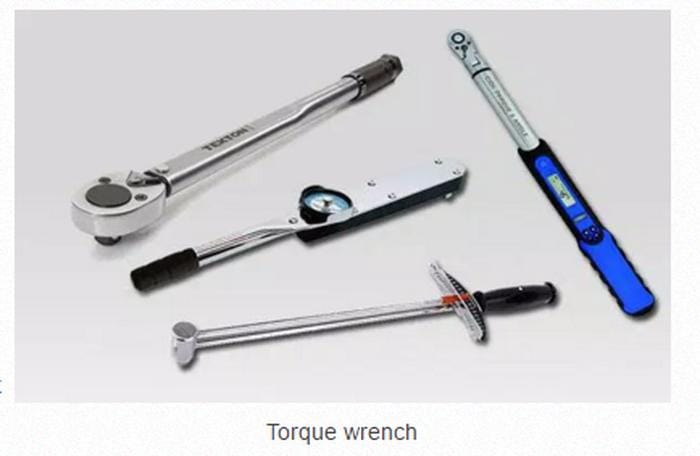
Even with the most advanced suspension system, it takes just one loose lug nut to cause your car’s wheel to misbehave and transmit deranging and dangerous vibrations in the steering wheel. In case of proper wheel fitting, it all shrinks down to the amount of torque is applied to the nut in order to tighten it, as well as how the torque is applied. One should keep in mind that both less tightening and over-tightening of the nuts produces undesired effects: vibrations, brake disk damage or may even cause the wheel to come off in extreme cases. A torque wrench is the best option to tight the lug nuts properly.
What exactly is torque?
When you are tightening your vehicle’s lug nut, you are using a wrench to apply a rotational force around the axis of the nut, thus causing it to rotate and go further in the inner thread of the suspension sub-assembly. Torque is measured either in Newton-Meters (Nm) or Pounds per Feet (lb-ft), depending on the international system used.
How much torque is needed?
Unfortunately, there isn’t a standard torque value for all vehicles currently in production. Given their different specs, each car model features a different amount of torque required to properly tighten its lug nut. You can find the appropriate torque tightening value for your car lug nut in the owner manual. Usually, producers indicate a torque value between 70 and 100 lb-ft to properly fit the nut inside the thread and keep it locked into position. Choosing a random value between the two extremes may not feature immediate threat, but may cause problems on the long run.
As mentioned above, both too much and too little torque applied when screwing the lug nut can have undesired consequences. Let’s have a look at each particular case to better understand what happens.
Too much torque
When applying a huge amount of force on the wrench, a higher amount of torque will be transferred to the lugnut and thus, cause it to go further into the inner thread. There are two possible consequences of this, as follows: if the material the lug nut is made of can’t handle the torsion factor imposed by the wrench, the head will twist and eventually rip, causing the rest of the lugnut to remain stuck inside the rim. Even if the lugnut manages to withstand the increased amount of torque, the amount of friction with the surface of the rim and with the end of the thread, locking it permanently into position. When you will try to remove it, it may prove to be impossible.
Too little torque
In short words, if you don’t apply enough torque on the lugnut, it won’t screw properly and self-lock within the wheel thread. As the car moves, the tire develops vibrations due to irregularities found on the road. These vibrations travel through the shock absorber, but also through the rim, and into the lugnuts. Insufficient torque allows the lugnut to react to vibrations and slowly get loose, until it eventually falls out of the rim. Even if just one of the four or five lugnuts isn’t properly tightened and the wheel won’t fall, the vibrations will be generated up to the steering wheel, also causing tire damage.
Image gallery
- Add new comment
- 227 views