
After either suffering some external damage or following a breakdown, a conscious decision has to be made as a car owner. This decision is whether to buy genuine branded car parts or to go for non-genuine ones to get your car back on the road. There are plenty of pros and cons in this debate so here are the most important points to consider when facing this decision.
Genuine Parts
Genuine car parts are those made and sold by the manufacturer of your particular car. They will come from the same production line as your car and are then made available to officially registered retailers.
Pros
Easy to find: Unless you drive a bizarrely rare or old car, which parts may or may not exist still, finding genuine parts are incredibly easy. Parts dealers for all the major manufactures are readily available up and down the UK.
Assurance of quality: Unlike non genuine parts, of which there is a great deal of variation in quality, genuine parts will always be of the highest quality. This is because they are tested in the manufacturing process of your car model and therefore come off the exact same production line.
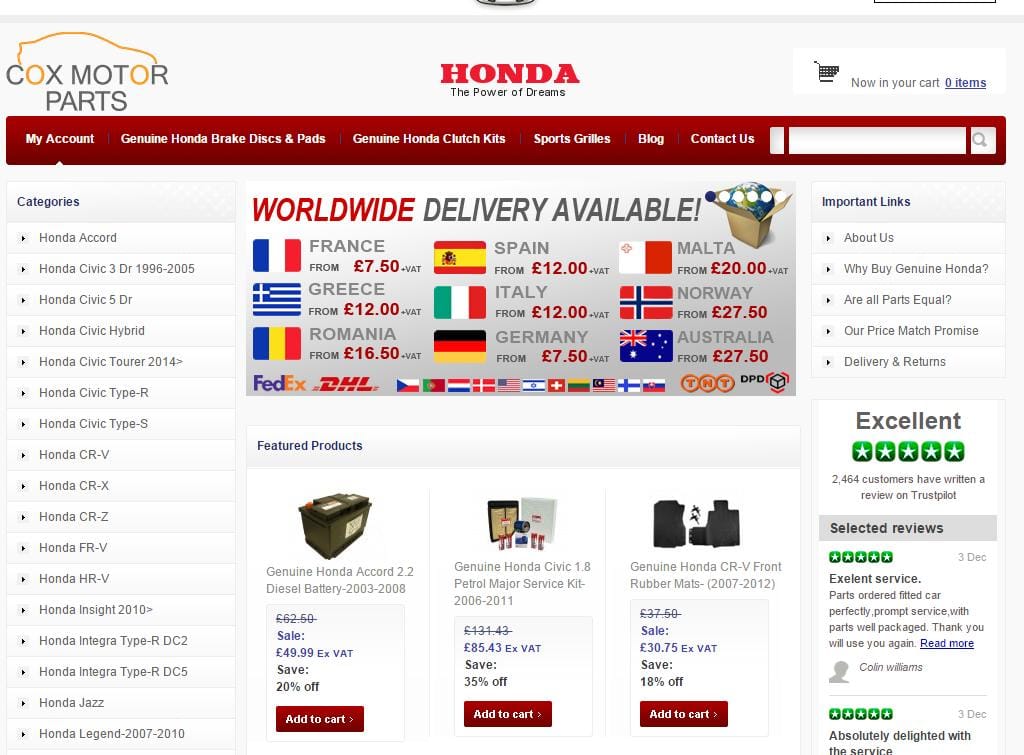
Warranty: Because of their trusted quality, most, if not all genuine parts traders will sell you parts along with a warranty. This is something you won’t get with non genuine parts which leave you venerable to further breakdowns if the parts turn out to be poor. For example Cox Motor Parts are a genuine Honda parts dealer and any part sold by them is covered by the Honda UK replacement Warranty, something which non genuine parts cannot promise.
Cons
Cost: As any market for any product dictates, from cereal to games console controllers, buying the branded item is always going to be slightly more expensive.
Superior quality: While buying genuine parts is certainly a guarantee of a level of quality, there is no saying it is above and beyond the standard of non genuine parts. Non genuine parts can be of the same quality, its just there is little guarantee.
Non Genuine
Non Genuine parts come generally in four forms:
- Parallel: Approved by the manufacture but not made in the same factories.
- Counterfeit: Mascaraing as genuine parts, they have fake serial numbers and have not been approved by the official manufacturer.
- Salvaged: Taken from cars which have been written off or are otherwise destined for scrap.
- Aftermarket: Not produced or approved by the official manufacturer and have no proof of safety testing.
Pros
Cost: the flip side of genuine parts being more expensive is that non genuine parts are consistently cheaper. If you find yourself desperate for a repair but don’t have the money for a genuine part your local garage might well be able to get hold of a non-genuine part at a fraction of the price.
Availability: The beauty of non genuine parts is that you can find them everywhere. Chances are any garage around the county will stock or will have easy access to non-genuine parts of some description which means you can get back on the road much quicker than if you were stuck waiting around for genuine parts.
Cons
Safety: All non genuine parts, be it aftermarket to counterfeit, have not been through the same rigorous testing that genuine parts have, culminating in Euro NCAP tests.. The only parts likely to have had the same testing is a salvage part providing it is genuine to begin with, but they have a safety issue of their own. Despite what the salvager might think, if the part has been involved in a substantial crash, it could itself be damaged, putting your safety immediately in danger.
Quality: As motioned above, there are four common non genuine parts on the market, all of which can massively vary in quality. Parallel parts are the most likely to be as good as the real thing, whereas aftermarket or counterfeit might well not only perform as well, but not even fit as it should.
Advice
Despite the opportunity to get parts of the same quality for a smaller price, it is probably not worth the risk. Going genuine gives you proven quality, a trusted name and most importantly a warranty, so handing over slightly more cash is definitely worth it.
Image gallery
- Add new comment
- 416 views