Home

Car Division

Main navigation

  • Ford
  • Renault
  • Skoda
  • Toyota
  • Volkswagen
User account menu
  • Contact

Breadcrumb

  1. Home
  2. News
  3. Ignition System Diagnostics and Troubleshooting

Ignition System Diagnostics and Troubleshooting

Ignition System Diagnostics and Troubleshooting

Rough idle, hard starts, fuel economy that makes no sense – nine times out of ten, people start chasing fuel system problems when the ignition is actually the culprit. If you already know you want to dig into the ignition system diagnosing and figure out what's going on, here's what actually matters.

How It All Works

The whole job of the ignition system is to put a spark in the right cylinder at the right moment. That's it. But the timing has to be exact – we're talking fractions of a second, repeated thousands of times a minute. Get that wrong and the engine tells you immediately.

The main parts involved:

•        Spark plugs – they're what actually fires the spark inside the combustion chamber. Material determines lifespan: nickel plugs are the cheap baseline, iridium and platinum ones last noticeably longer.

•        Ignition coils – take 12V from the battery and step it up to tens of thousands of volts. On most modern mid-range and premium cars, each cylinder gets its own coil. Budget cars and older designs (pre-2018 mostly) still use coil packs shared across two or more cylinders.

•        Crankshaft position sensor (CKP) – tells the ECU where the crankshaft is in its rotation so it knows when to fire each cylinder.

•        ECU – processes all the sensor data and coordinates the timing. Everything goes through it.

What Fails and How

The frustrating thing about ignition system problems is they all look the same on the surface – misfires, rough idle, sluggish acceleration, Check Engine light, worse fuel economy. Difficult cold starts are usually an early sign something's off. The symptoms don't tell you which part failed. That's what ignition diagnosis is for.

Carbon fouling is the most common issue by far. Rich mixture, oil consumption, just general age – all of it leads to deposits on the electrodes that kill the spark. Beyond that, the electrode gap widens over time. Past 30,000–60,000 km, the gap can get wide enough that the plug simply can't reliably fire on a cold engine. Cracked insulators are less common but worth knowing about – when the insulator cracks, current leaks to ground and you get no spark at all.

A coil with a damaged winding either produces an inconsistent spark or drops the cylinder completely. Worth knowing: a poorly installed spark plug will kill a coil faster than anything else. The coil keeps arcing to the block instead of through the plug, runs hot, and eventually fails. So if you're replacing a coil, always check the plug that goes with it.

Bad connector contacts are annoying to diagnose – the fault comes and goes, doesn't always show up on a scanner, but often you can actually see corrosion or damage if you look. High-voltage wire cracks work the same way: they arc to ground, but the damaged spot is usually findable by eye. A dying CPS is different – either the engine won't start at all, or it cuts out without warning while driving. No gradual deterioration, just stops working.

How to Diagnose It

Don't start with a scanner. Start with your eyes and a multimeter – that handles a surprising percentage of cases in the ignition system testing process.

Visual check first

Pull the plugs. A healthy one has a light gray-brown coating – that's normal. Black and sooty means rich mixture or oil burning. White or partially melted insulator means it was running too hot or too lean. Check the gap while you have them out (spec is in your owner's manual, typically 0.8–1.1 mm). Then look at the wiring: cracks, damaged insulation, black scorch marks near connectors that suggest arcing.

Testing spark plugs

On older cars, the classic test still works: connect the plug to the coil wire, hold the body against the block, crank the engine, and see what you get. But do not perform this on vehicles with individual ignition coils. Good spark is bright and blue-white. Anything yellow or faint, or nothing at all – the plug is done. Don't touch the terminal or wire while the engine is cranking. On modern engines with individual coils this doesn't really apply – you're limited to a multimeter resistance check for insulation breakdown.

Testing coils

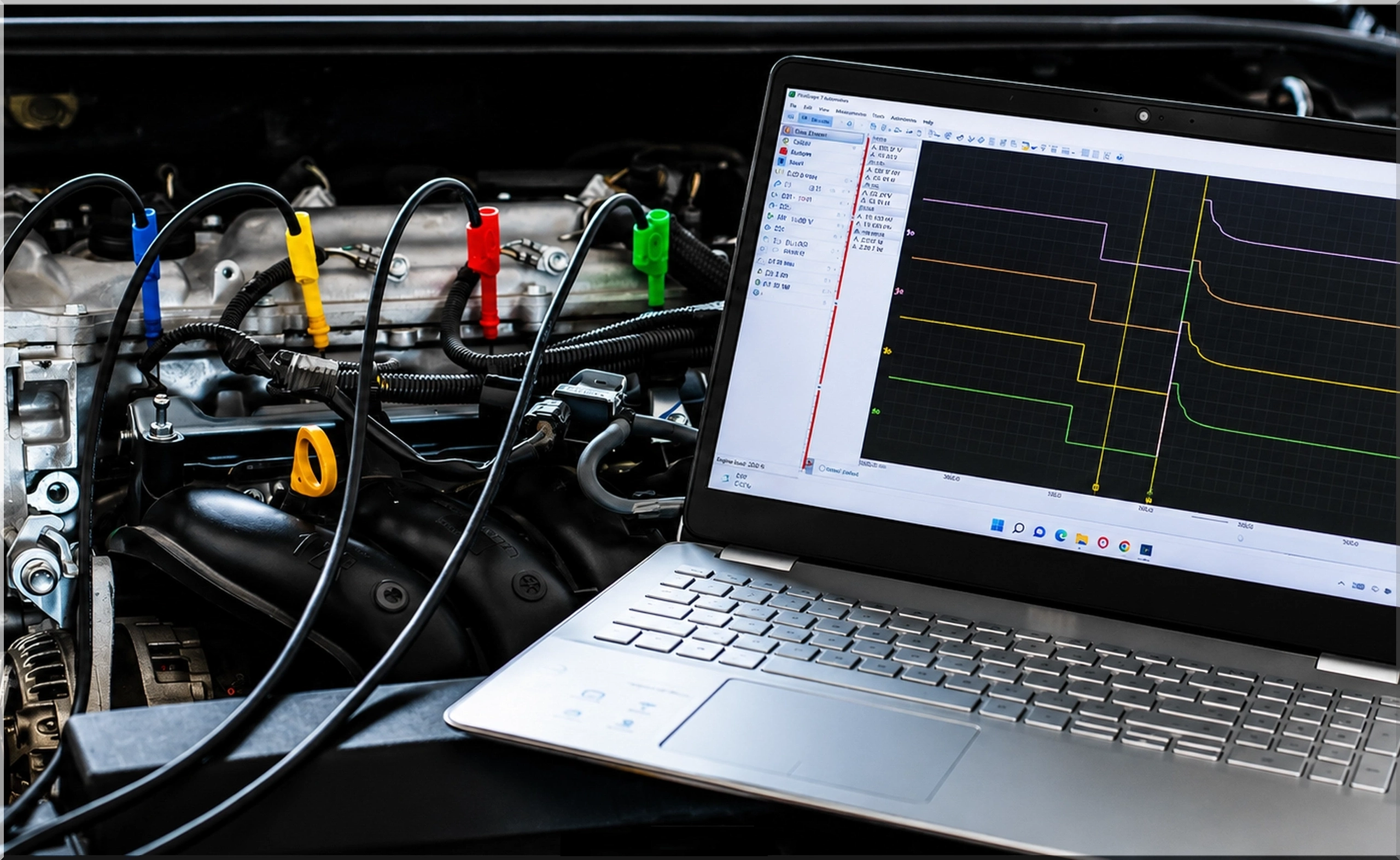
In the past, you could measure primary and secondary winding resistance with a multimeter, but by 2026, this method has become almost useless for DIY diagnostics. The vast majority of modern coils now feature a built-in transistorized igniter. A clear rule of thumb: if a coil has 3 or 4 pins in its connector, a regular multimeter is powerless to evaluate it. For these units, swapping the suspect coil with a neighboring one is your only real diagnostic option at home. If the misfire moves to the new cylinder, the coil is faulty; if it stays put, the coil is fine — look at the wiring, the injector, or engine compression. In a professional shop, an oscilloscope would be used for a definitive test.

OBD-II scanner

A cheap Bluetooth adapter and a phone app is enough. P0300 means random misfires; P0301 through P0308 point at a specific cylinder. That immediately tells you where to focus. Live data is also useful – watch RPM behavior, CKP signal, injection timing in real time. If the misfire only shows up cold and disappears after the engine warms up, it's almost always plugs or coils.

Routine check intervals: plugs every 15,000–30,000 km for standard ones. Modern iridium and platinum spark plugs, which have been standard for most cars over the past 10 years, can easily last for 80,000–100,000 km. Removing spark plugs too often from modern aluminum cylinder heads increases the risk of damaging the threads. Wiring and connectors at every service – especially on vehicles over seven or eight years old.


Troubleshooting Ignition System Step by Step

Here's the order that makes sense for most situations, whether it's a cylinder-specific misfire or a no-start.

Step 1. Swap the coil.

Move it to a neighboring cylinder. Misfire follows the coil – replace the coil. Misfire stays in the same cylinder – the coil is fine, keep looking: injector, wiring, compression.

Step 2. Check the plug in the affected cylinder.

This is where most single-cylinder misfires come from. Fouled or worn plug – replace it, clear the code, see if the problem goes away. If you don't know when the plugs were last changed, just replace the whole set. They're cheap enough that it's not worth the guesswork.

Step 3. Check connectors and wiring.

Coil connectors, CKP connector, anything that looks corroded or mechanically damaged. Oxidized contacts – clean with fine sandpaper or contact cleaner spray. Damaged wire – replace it. No twisting, no tape.

Step 4. Look at the CKP.

Engine dying at speed for no apparent reason, or starts fine cold but won't restart after it's warm – classic CKP failure. Testing it properly means oscilloscope mode on a multimeter or an actual oscilloscope. If you don't have that, swapping in a known-good sensor is a reasonable approach.

Before you start – a few basics:

•        Disconnect the negative battery terminal before working on electrical components.

•        Don't touch bare wires or connectors with the engine running.

•      No open flames near the fuel system. Obvious, but worth saying.

Bottom Line

The ignition system is one of those things that affects everything – how the car starts, how it drives, how much it costs to fuel up. A problem caught early is a cheap fix. Left alone, it turns into something more complicated.

Most of what's covered here you can do at home with a multimeter and a basic OBD reader. Where it gets beyond that – ECU issues, CKP signal analysis, low compression – bring it to a shop. Some things cost less when someone gets them right the first time.

FAQ

What is the best diesel engine diagnostic tool? A mid-range OBD-II scanner with live data covers most situations. If you work on diesels regularly, spend a bit more on one that supports DPF regeneration and injector coding.

How often should diesel engine diagnostics be performed? Once a year as a baseline. High mileage or an older engine - twice a year.

Can I perform engine diagnosis without professional equipment? Partly. A scanner, compression tester, and fuel pressure gauge cover a lot. Injector calibration and high-pressure pump testing you won't do at home, but you can narrow the problem down before going to a shop.
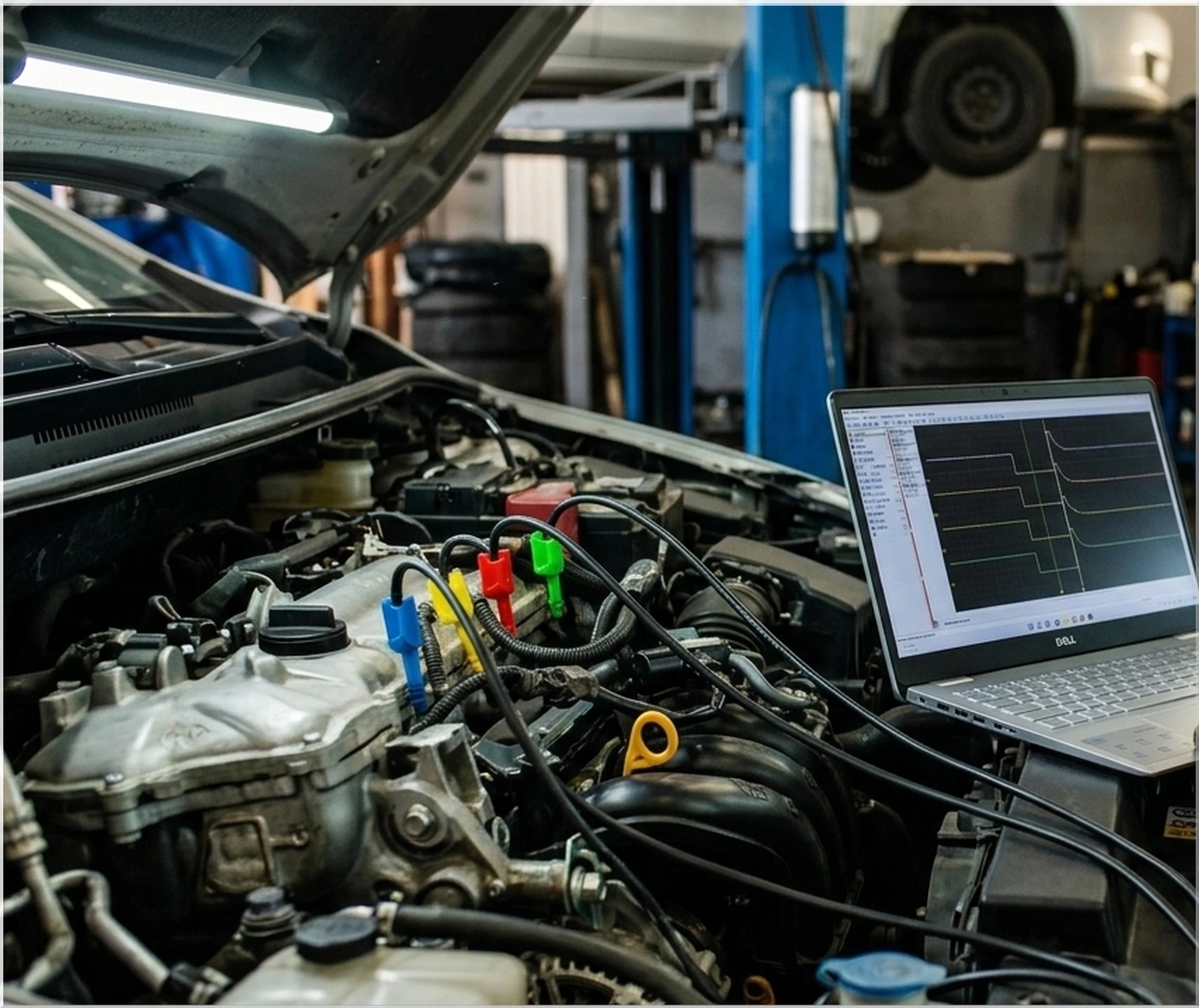
Image gallery
Ignition System Diagnostics

Category

  • News

Tags

  • Ignition System Diagnostics
  • Engine misfire troubleshooting
  • Spark plug replacement
  • Engine troubleshooting
By Car Division, 10 May, 2026
  • Add new comment
  • 118 views

New Toyota Aygo X Hybrid: Is the 76 MPG City King Worth $27,000?

Toyota Aygo X Hybrid

Toyota

Toyota Aygo X Hybrid

The 2026 Toyota Aygo X Hybrid arrives as a calculated response to a shrinking city car market. Toyota transformed its entry-level model by adding a full hybrid powertrain... read more

Renault 4 Price Drop: New B-SUV Value Leader Starts Under $31700

Renault 4

Renault

Renault 4

Renault just made a massive move in the European electric vehicle market. The French automaker slashed prices on the Renault 4 E-Tech, bringing the starting price for the 40... read more

Skoda Kushaq 2027: New 8-Speed Automatic and Premium Specs

Skoda Kushaq 2027

Skoda

Skoda Kushaq

The 2027 Skoda Kushaq represents a calculated engineering shift for a model that carries the weight of the European manufacturer’s growth in emerging markets. This update addresses... read more

2025 Volvo XC60 Review: Features, Specs, Pricing, and How It Compares

Volvo XC60

Volvo

Volvo XC60

The 2025 Volvo XC60 continues to redefine expectations in the luxury midsize SUV segment. With its timeless Scandinavian design, state-of-... read more

2025 Subaru Forester: Practical Performance and Road-Ready Technology

2025 Subaru Forester

Subaru

2025 Subaru Forester

The 2025 Subaru Forester enters the compact SUV market with fresh powertrain tweaks, enhanced driver aids, and refined design. It remains a strong choice for daily... read more

Dacia Jogger Hybrid 155 Review 2026: Budget 7-Seater With More Power And Tech

2026 Dacia Jogger Hybrid

Dacia

Dacia Jogger Hybrid

The 2026 Dacia Jogger keeps doing what few family cars still manage: it carries seven people, swallows a shocking amount of luggage, and avoids the price creep that has wrecked the... read more

2027 Skoda Slavia Facelift: 8-Speed Automatic, Price and Specs

2027 Skoda Slavia Facelift

Skoda

Skoda Slavia facelift

Skoda has given its India-built Skoda Slavia the mechanical and equipment update it needed. The refreshed saloon keeps the locally developed MQB-A0-IN platform and familiar turbo-... read more

2026 Renault Boreal: Global C-SUV with 163 HP Turbo Engine Power

2026 Renault Boreal: Global C-SUV with 163 HP Turbo Engine Power

Renault

Renault Boreal

Global Strategy: Renault Expands C-Segment ReachRenault Boreal is not aimed at Europe. This new SUV is built to grow the French brand’s business in 70+ countries... read more

New VW Tayron Plug-in Hybrid: 5-Star SUV with 7 Seats

VW Tayron Plug-in Hybrid

Volkswagen

Volkswagen Tayron

Positioned Between Tiguan and Touareg, the Tayron Delivers What Volkswagen PromisedThe 2025 Volkswagen Tayron enters the European SUV market as a new midsize option... read more

New Ford F‑150 Lobo Street Truck: Bold Factory Build Targets Street Style Enthusiasts

Ford F‑150 Lobo Street Truck

Ford

Ford F‑150 Lobo

Ford’s decision to release the 2025 F‑150 Lobo wasn’t made on a whim. Internal market data showed a steady uptick in owner‑built street trucks—lowered suspensions, aftermarket wheels... read more

Renault Filante Targets Premium Hybrids With 250 HP and Flagship Tech

Renault Filante Targets Premium Hybrids With 250 HP and Flagship Tech

Renault

Renault Filante

Renault Filante represents a strategic shift, not a styling exercise. Renault built this model to reset how the brand competes outside Europe, focusing on premium crossovers... read more

Toyota C-HR Electric SUV 2026: Charging, NACS Port, AWD and 338 HP

Toyota C-HR Electric SUV 2026

Toyota

Toyota C-HR

Toyota returns to the compact crossover segment with a high-voltage strategy. The 2026 Toyota C-HR departs from its hybrid origins to join the brand's growing battery... read more

New 2025 Opel Mokka Adds Hybrid and Boosts EV Range to 250 Miles

New 2025 Opel Mokka Adds Hybrid and Boosts EV Range to 250 Miles

Opel

Opel Mokka

Overview: What’s New in the 2025 Opel MokkaThe 2025 Opel Mokka arrives with key updates that directly respond to market demands. It adds a mild-hybrid powertrain,... read more

The Future is Here: The Toyota Mirai Review

The New Toyota Mirai Offers an Electrifying Ride

Toyota

Toyota Mirai

The Toyota Mirai is a hydrogen fuel cell vehicle that promises to revolutionize the automotive industry. The Mirai, which means “future” in Japanese, is one of the... read more

2026 Škoda Enyaq RS: Full Specs, Pricing, and What’s New

2026 Škoda Enyaq RS: Full Specs, Pricing

Skoda

Škoda Enyaq RS

The 2026 Škoda Enyaq RS and Enyaq Coupé RS redefine Škoda’s electric SUV lineup. These flagship EVs combine enhanced performance, efficient... read more

The 2025 Skoda Elroq: A Comprehensive Review of Skoda's New Electric SUV

The 2025 Skoda Elroq: A Comprehensive Review of Skoda's New Electric SUV

Skoda

2025 Skoda Elroq

Skoda has entered again the fray EV market with their latest model—the 2025 Skoda Elroq. This compact electric SUV is poised to attract both urban drivers... read more

New Dacia Sandero vs Clio, Fabia, and i20: Which Budget Hatchback Wins?

Dacia Sandero

Dacia

Dacia Sandero

The new Dacia Sandero continues to uphold its reputation for offering affordable and practical transportation, now enhanced with updated features and a refreshed... read more

Audi Q8 e-tron: Electric Luxury SUV Blends Refinement with practicality (but not quite)

Audi Q8 e-tron: Electric Luxury SUV Blends Refinement with practicality (but not quite)

Audi

Audi Q8 e-tron

Electric vehicles (EVs) are rapidly carving a niche in the luxury car market, and the 2024 Audi Q8 e-tron is a prime example. This midsize electric SUV... read more

Skoda Elroq 60 and Sportline Variants: Features, Performance, and Pricing

Skoda Elroq Sportline

Skoda

Skoda Elroq

Skoda has significantly expanded its Elroq electric SUV lineup, introducing the Elroq 60, Elroq 60 Sportline, and Elroq 85 Sportline... read more

Volkswagen ID. Cross: New Electric Compact SUV Revealed

2027 Volkswagen ID. Cross

Volkswagen

Volkswagen ID. Cross

Volkswagen has started showing the near-production Volkswagen ID. Cross in Amsterdam, and the message lands cleanly: this compact EV SUV targets the busiest part of the European... read more

Like us!

Car Division

Latest news

VW Golf GTI EDITION 50

New VW Golf GTI EDITION 50 Unveiled with Nürburgring Victory

Škoda L&K 130: Plug-In Hybrid Pickup Marks 130 Years of Cycling Legacy

Škoda L&K 130: Plug-In Hybrid Pickup Marks 130 Years of Cycling Legacy

New Audi A5 Sedan Redesign Boosts Power, Tech, and Cargo Space

New Audi A5 Sedan Redesign Boosts Power, Tech, and Cargo Space

Renault Symbioz and Renault Espace

Renault Unveils Hybrid Symbioz and Espace With 1,100 KM Range

Ford F‑150 Lobo Street Truck

New Ford F‑150 Lobo Street Truck: Bold Factory Build Targets Street Style Enthusiasts

New 2026 Audi Q5 e-hybrid: More Power, Smarter Charging, Longer EV Range

New 2026 Audi Q5 e-hybrid: More Power, Smarter Charging, Longer EV Range

Renault Vision 4rescue: Renault 4 E-Tech for Emergency Services

Renault Vision 4rescue: Renault 4 E-Tech for Emergency Services

2026 Toyota Aygo X Hybrid Review: Best Small Hybrid for City Driving?

2026 Toyota Aygo X Hybrid Review: Best Small Hybrid for City Driving?

Dacia Bigster Mild Hybrid G-140: A Practical, Efficient, and Affordable C-SUV

Dacia Bigster Mild Hybrid G-140: A Practical, Efficient, and Affordable C-SUV

New 2025 Opel Mokka Adds Hybrid and Boosts EV Range to 250 Miles

New 2025 Opel Mokka Adds Hybrid and Boosts EV Range to 250 Miles

Pagination

  • Previous page
  • 15
  • Next page

Partners

»Spare wheel  »Gerane  »Electric cars

Popular Car Division' news

Volkswagen ID. Polo: Budget EV to Rival Gas Cars in 2026

Volkswagen ID. Polo: Budget EV to Rival Gas Cars in 2026

Renault Espace full hybrid

Renault Austral, Espace and Rafale Get Major 2026 Updates

2026 Nissan Sentra Pricing, Specs and Tech: Smart Buy Under $30K

2026 Nissan Sentra Pricing, Specs and Tech: Smart Buy Under $30K

Renault Kadjar an assertive crossover

Renault Kadjar an assertive crossover

2012 Kia Rio 3-door

2012 Kia Rio 3-door

2014 Toyota Highlander

2014 Toyota Highlander mid-size SUV

2012 Kia K2

Kia K2 quality and customer satisfaction

Brazilian police closes fake Lamborghini and Ferrari factory

Brazilian police closes fake Lamborghini and Ferrari factory

Skoda Octavia Essence: A compelling choice for budget-minded families

Skoda Octavia Essence: A compelling choice for budget-minded families

2013 Kia K9

Kia K9: A New Level of Luxury Auto Design

Pagination

  • Previous page
  • 15
  • Next page
Ford
Renault
Skoda
Toyota
Volkswagen
Peugeot
Citroën
Audi
Opel
Mercedes-Benz
Fiat
BMW
Nissan
Dacia
Kia
Honda
Chevrolet
Hyundai
Porsche
Mazda
Mitsubishi
Volvo
Mini
Jeep
RSS feed
2024 Toyota Crown Sport Hybrid Redefines the Sedan Segment with SUV-Inspired Design and Performance
Dacia Logan
Renault Espace full hybrid
Toyota C-HR Electric SUV 2026
Skoda Superb Combi iV
Dacia Sandero Stepway 2026
Dacia Dokker Camperiz
2012 Kia Ray EV

Copyright © 2026 CAR DIVISION  All Rights Reserved  Privacy policy  ·Contact  ·Facebook·rss

Powered by Drupal