
Wheel alignment is critical to a vehicle's safety, handling and tire life. The advantages of doing an alignment on passenger cars, pickups and commercial trucks go far beyond extending the life of the tires. And in business, that’s no mere rhetorical flourish. It’s as much a statement of fact as it is doing business: For auto shops and professional service centers, picking the right wheel alignment machine is critical to satisfying the customer and making a profit. As there are multiple machine types and other vehicles become more complicated in their design, it is very important to understand what the relevant alignment system is for each vehicle type.
Francis Fernandes Wheel Alignment Machine Specifications and their need for different vehicles. Understanding the need for wheel alignment machine and the need for it for a certain type of vehicle are important for its quality. No matter the make and model, whether an old car, a new car, or something in the middle, we offer an array of tools and supplies to suit the needs of all types of vehicles on the road. Carefully selected acquisitions that enhance the functional ability of the workshop also promote the reputation of the workshop as a technically outstanding workshop.
The Fundamentals of Wheel Alignment
Before we get too far into choosing equipment — let’s remind ourselves what wheel alignment is. Coordination is the fitting of the wheels to the car maker's standard. The three primary alignment angles — camber, caster and toe — influence the way a car drives and handles, but the settings also affect tire wear.
Signs of mis-alignment include drifting, repeated movements in one direction, tire wear and vibration of the steering wheel. This contradiction is also intensified according to the vehicles, the loading condition and the frequency of uses. This emphasizes the significance of the part that a wheel alignment machine can take in pinpointing and correcting mistakes in alignment point measurements with a high level of accuracy and repeatability.
Choosing Based on Vehicle Class and Size
Passenger Vehicles
Conventional sedans, hatches and coupes aren't bucket-of-spanners heavy and are used to getting across town without drama. For these vehicles, a mid-level wheel alignment machine with CCD (Charged Coupled Device) sensors or 3D imaging technology is usually good enough. These devices provide a reliable combination of accuracy and affordability, so auto shops can process high numbers without worrisome accuracy.
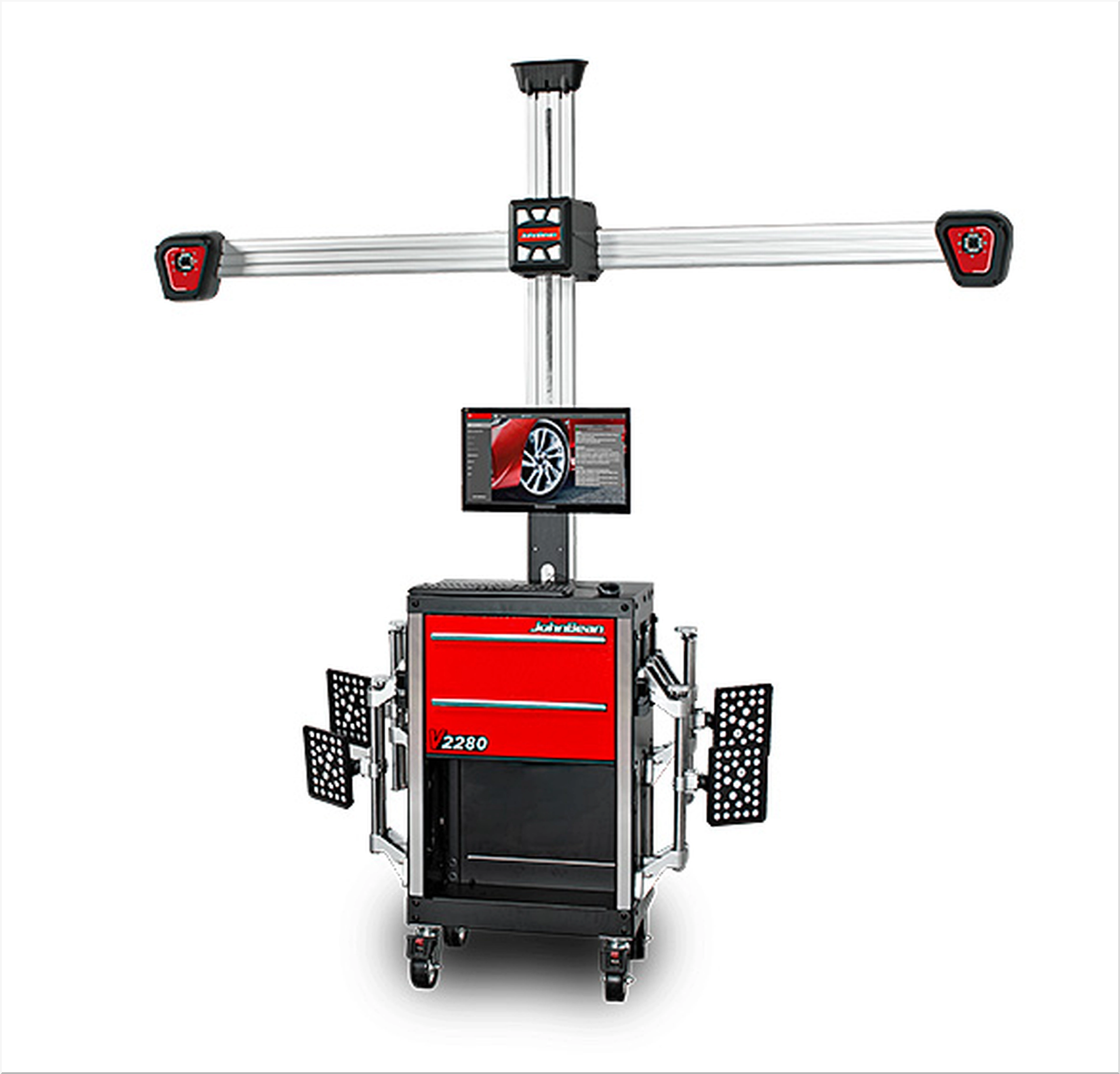
Contemporary 3D docking systems are now either fast or easy-to-use. Equipped with high-res cameras and reflector targets, these systems instantly measure wheel angles, simultaneously showing the results on easy-to-use software. Alignment of such vehicles with low ground clearance or with sophisticated suspensions is facilitated by this visual guidance.
SUVs and Light Trucks
Greater size, clearance from ground, and load carrying tendencies of SUVS and light trucks add another level of complication. They sometimes have different suspension geometry to cars, and can have adjustable ride height or off-road modes.
That is when stores appreciate the wheel alignment machine with higher range and stronger hardware. For bigger vehicles, systems will have broader clamps and longer arms that are capable of carrying heavier loads. That’s why it’s important that the alignment machine has these features to continue operating accurately and safely during maintenance.
Heavy-Duty Vehicles and Commercial Fleets
The requirements are even more particular when it comes to buses, delivery vans or tractor-trailers. These trucks with often two or more axles, undergo more wear due to load stress and mileage.
Heavy-duty alignment equipment are designed to combat these issues with heavy-duty sensors, hydraulic lifts and wider platforms. Wireless capabilities are standard on these machines for added flexibility. Pit or flush-mount lifts are commonly used for better ergonomics. Purchasing such a machine not only increases the life of your equipment, but leads to continue commercial service compliance.
Key Features That Differentiate a Quality Alignment Machine
Sensor Technology
The core of any wheel alignment machine lies in its sensor technology. More traditional CCD-based systems are still performing well in the market, but the 3D alignment machines now dominate with superlative speed, accuracy and digital diagnostics. The sensor based on should feature high-resolution real-time feedback to make it possible to align even vehicles with sophisticated suspensions.
Software Interface
Software user interface is intuitive with simple graphics, OEM spec libraries and guided steps to decrease operator errors and training time. Newer programs are capable of automatic VIN decoding and work with shop management systems that increase the speed of the process and minimize paperwork.
Mobility and Installation
Whether on a budget or in a small garage where a fixed machine would not be viable, Mobile Wheel Aligners are a good option to have. On the other hand, stationary systems with lifts, in particular, make more sense for high, fixed-location traffic shops.
Precision and Repeatability
No matter the type of vehicle, the key is to accomplish repeatable and precise alignment. Find units that self-calibrate, use lasers to measure, and have a low margin of error. These key features are the reasons why every alignment is factory-set and no preliminary tuning is needed.
Matching Equipment to Use Case
Independent Repair Shops
Smaller or independent repairs shops often find that a middle-of-the-road machine offers good bang for the buck. For most cars and light trucks a space saving, mid-tier wheel alignment system using critical sensor technology and user-friendly features to fit the needs of your business will provide the fastest return on investment. A camera that enables fast set ups - like auto camera positioning or wireless - can save time and aid customer rotation.
Dealership Service Centers
Franchise and OEM dealership will want to ensure that their alignment machine can fit on all cars and trucks that a customer purchases. Factory installed, OEM spec level, and automatic data logging is important. Such services as this can also need software updates for new vehicles, which more sophisticated machines can offer.
Fleet Maintenance Operations
Fleet managing companies for commercial cars should purchase heavy duty alignment systems. Machines need to be capable of fast throughput, able to track the history of alignment data, with the ability to support various axle configurations. For fleet managers, alignment machines that communicate with digital maintenance records means predictive service and reduced downtime.
Budget Considerations and ROI
Although price does make a difference but it cannot be the only consideration. A less expensive machine with deficiencies in capacity will cost you more over the long run in inaccurate alignments, frequent recalibrations or limits to the kind of service you can do. Instead, a proper wheel alignment machine will soon pay for itself in efficiencies, higher caliber service, and fewer unsatisfied customers.
Additionally, consider after-sales support, training opportunities, and costs for replacement parts or calibration services. So much comes down to the quality of the vendor - one that has a history of troubleshooting and maintaining can mean the difference in how happy or unhappy you end up being in the long term.
Adopting the new trend of Alignment technology
Alignment machines need to be equally advanced as cars become more and more sophisticated. Most of today’s cars include ADAS (Advanced Driver-Assistance Systems), which rely heavily on accurate alignment for proper operation. Some alignment systems now incorporate ADAS calibration into the alignment machine.
Closer integration is becoming a trend – with cloud-based diagnostics, remote help and data analytics offered by connected alignment systems. These features enable workshops to gain better operational visibility, technician productivity and asset utilization.
The transition to electric vehicles (EVs) creates additional factors of alignment. EVs have a tendency to be heavier, given their battery weight and the fact that their suspensions are generally packaged differently to handle regenerative braking or a lower center of gravity. Visionary operations should make sure their selected alignment machines are able to meet these unique demands going forward to remain competitive in the changing market.
Real-World Insight: Why Precision Matters
Here in the real world, the shops with first-rate alignment machines do the job, period, and treat customers right, to boot. A customer whose car drives smoothly, who has extended tire life and who gets improved gas mileage as a result of realignment is much more likely to return to the same dealer for service.
One regional tire and auto repair chain, for example, reports it has reduced the number of alignment rechecks by 30% after it bought a new 3-D wheel alignment machine. Anecdote was also open to the notion, he said, that quality across locations had become more consistent and the chain had seen a “massive increase” in customer satisfaction ratings and online reviews.
The ability to produce reliable, repeatable outcomes, to earn a reputation for professionalism, is especially important amid intense competition, when customer loyalty is closely tied to trust and transparency.
Final Thoughts
Choosing the right wheel alignment machine for your shop is not an easy decision, but it’s the in-depth research that will make sure you buy the best one which will suit your needs. Alignment is not one size fits all for passenger car to heavy The correct one means more accuracy in your service measurement system, lower downtime and better service quality on all levels.
If it were me making the decision, I'd be more inclined to put my faith in technology, precision and long term after sales. Evaluate how well the capabilities of the machines mesh with your customer base, shop size and service goals. But with careful planning and a commitment to excellence, these capabilities and practices can become permanent fixtures of your business, offering tangible performance and lasting customer loyalty.
The automotive technology is forever evolving, so the tools that make you stay ahead, might make throw you into the Jurassic ages a couple of years from now! By selecting a top-notch, state of the art wheel alignment machine, the workshop is ready to address current issues – and ready for opportunities in the coming years.
Image gallery



- Add new comment
- 167 views