
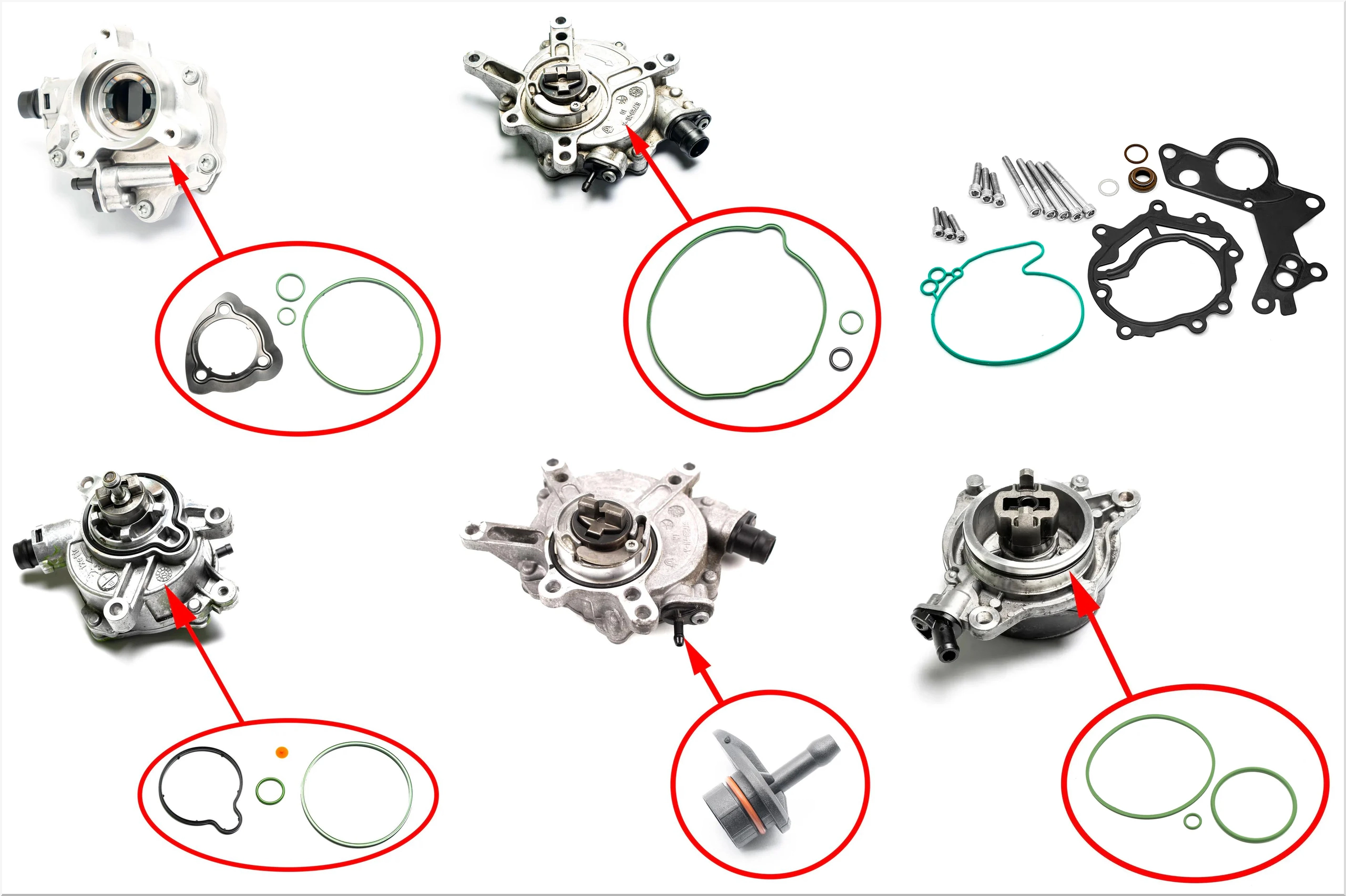
Vacuum pumps generate negative pressure for brake assist, turbo actuators, and emissions controls. Most failures result from internal wear of the pump components. The shafts, rotors, and housings maintain their original condition. Seals, diaphragms, and gaskets break down with time, which leads to leaks, pressure loss, and reduced vacuum efficiency. The problems that affect braking response also impact how effectively actuators perform their functions. A vacuum pump rebuild kit enables users to restore their equipment by replacing worn-out parts while maintaining original operational capacity.
Operation of Automotive Vacuum Pumps
Automotive vacuum pumps function through mechanical transmission, which uses either camshaft drive or accessory belt drive. The system uses either diaphragms, vanes, or pistons to create negative pressure through air displacement. Oil lubricates the bearings and sliding surfaces.
Clearances are tight to maintain a vacuum and prevent friction. Axial and radial loads are controlled by housing geometry and thrust surfaces. Hardened seals or fatigued membranes reduce vacuum output and accelerate component wear. Continuous exposure to heat, oil, and contaminants accelerates degradation. The system requires intact seals, aligned rotors, and unharmed membranes for proper operation.
Common Failures
Vacuum pump wear follows predictable patterns. Components exposed to constant pressure cycling and friction deteriorate over time. Internal seals, membranes, and gaskets gradually lose their effectiveness, which directly impacts vacuum output. Frequent failures:
- oil leaks from worn shaft or housing seals;
- membrane fatigue causing vacuum loss;
- compressed or hardened gaskets reduce airtightness;
- minor rotor or vane misalignment causing noise;
- rare housing cracks from thermal stress.
The brake assist system and actuator response system will experience performance problems because even minor leaks will cause the vacuum system to lose pressure. The system failures will not generate fault codes, which makes it challenging to identify them at an early stage.
Vacuum Pump Rebuild Kit Components
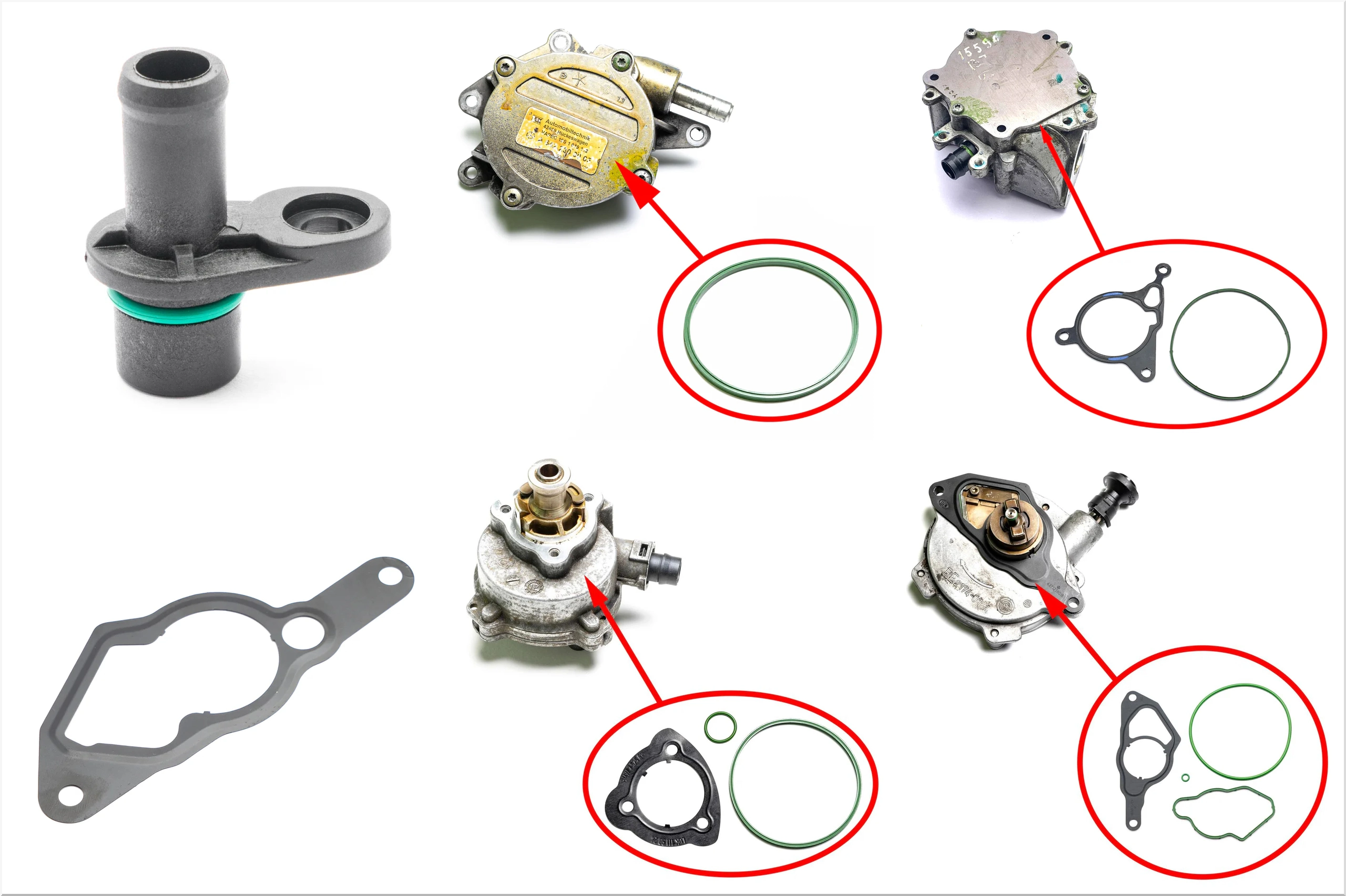
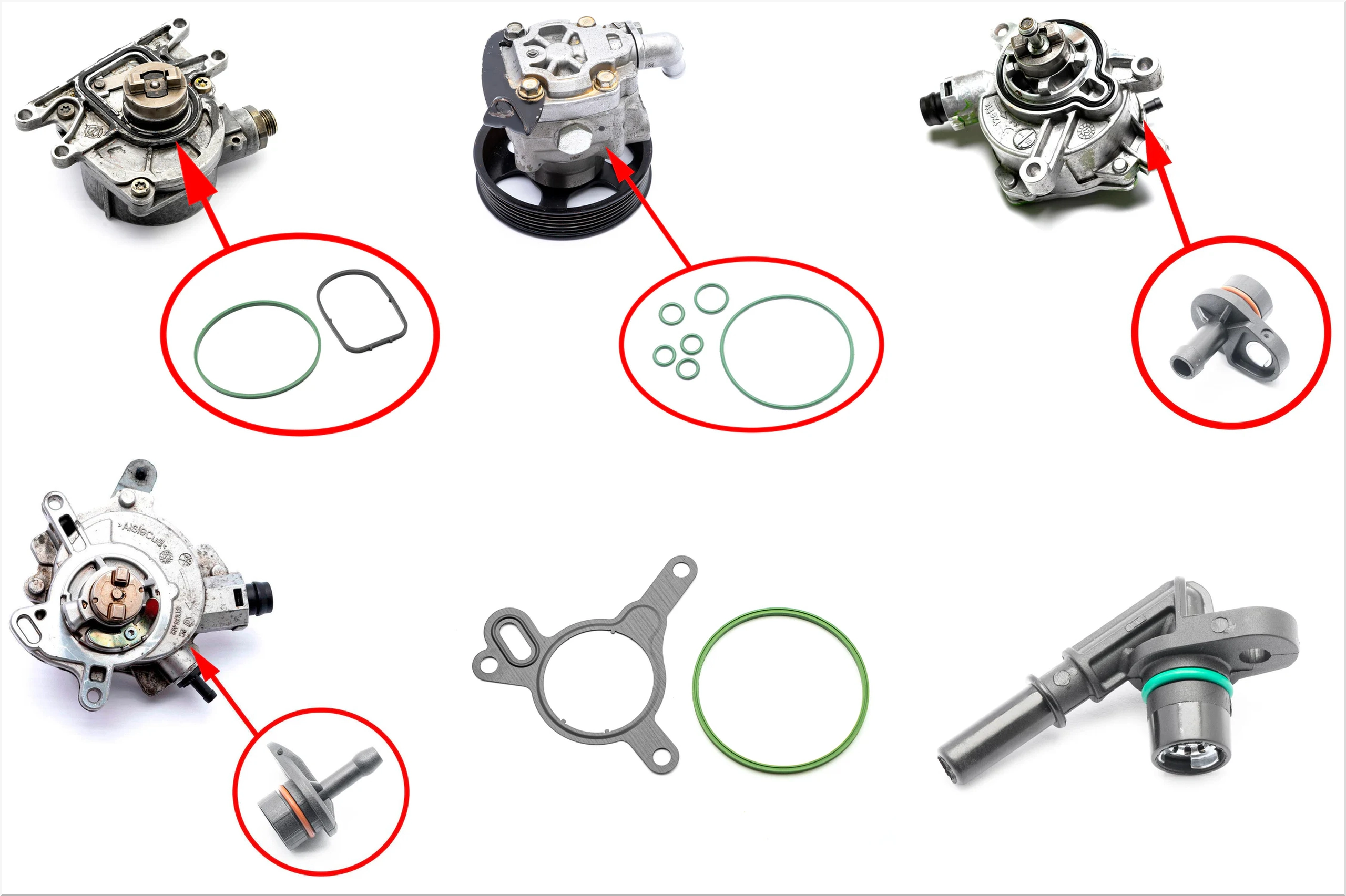
Over time, specific vacuum pump parts are exposed to continuous stress and wear, losing sealing efficiency and vacuum generation capacity. Rebuild kits supply components that typically wear over time:
- replacement diaphragms or membranes;
- shaft and housing seals;
- flat gaskets for mating surfaces;
- o-rings for internal vacuum and oil passages;
- retaining clips and fasteners.
Housings, rotors, and shafts are reused. The kit restores vacuum efficiency and sealing without altering core geometry. Proper installation returns the pump to OEM tolerances.
Rebuild Process
Rebuilding begins with pump removal. Housings are separated, and internal parts like diaphragms, vanes, or rotors are extracted. Surfaces are cleaned and inspected for scoring or minor deformation. Components from the rebuild kit are installed: seals and gaskets are fitted to original dimensions, membranes aligned for full stroke and airtight operation.
Clearances of rotating and sliding components are checked to ensure proper vacuum and smooth operation. The pump is bench-tested to confirm vacuum output and oil sealing before reinstalling.
Main steps:
- Remove the pump and disconnect the vacuum and oil lines.
- Disassemble housings and remove internal components.
- Clean and inspect all surfaces.
- Install membranes, seals, gaskets, and clips from the rebuild kit.
- Reassemble the pump and verify clearances.
- Bench-test vacuum output and sealing.
- Reinstall and reconnect lines.
Advantages of Rebuilding
Rebuilding is more economical than full replacement. It preserves original rotor and housing tolerances and prevents fitment issues. Downtime is minimized since kits are often readily available. Only worn components are replaced, reducing waste.
Full system replacement becomes essential when there is destruction of either the rotor, the shaft, or the housing components. The rebuild kits enable equipment restoration because they bring back both the vacuum function and the mechanical strength to match the conditions of a new pump.
Seal, diaphragm, and gasket wear constitute the main cause of vacuum pump failures. A vacuum pump rebuild kit restores vacuum output, sealing, and internal tolerances. After proper rebuilding, including clearance checks and bench tests, the pump functions as intented. Rebuilding proves to be an efficient, dependable, and economical method for repairing pumps that have usable components.
Image gallery
- Add new comment
- 216 views