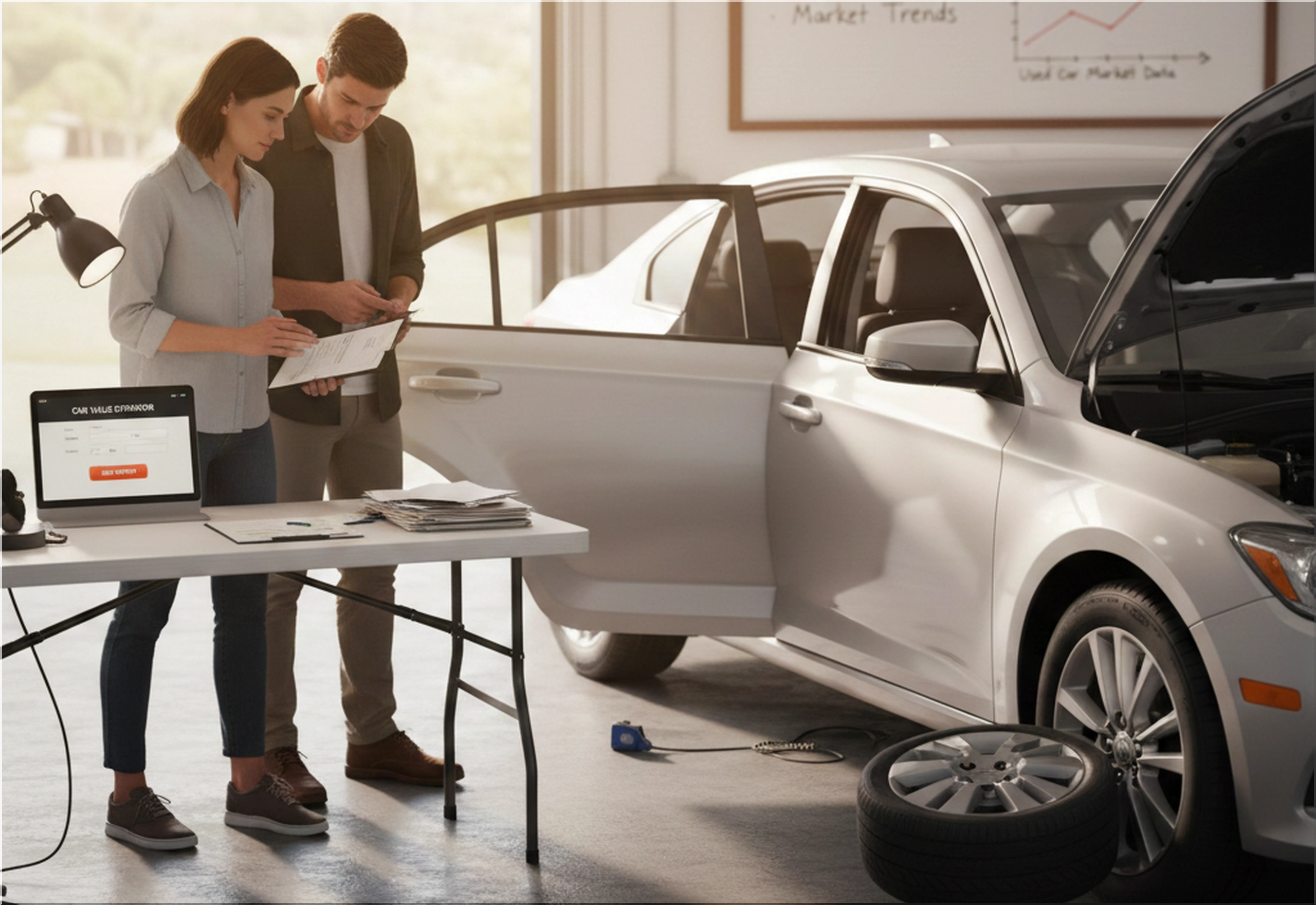
Whether you plan to sell, trade-in, or just want to know what it is worth, understanding your car's value is useful for any owner. The price of a used car is influenced by many different elements, from its physical condition to wider market trends. Getting a clear picture of its worth helps you set a realistic price for a private sale or gives you a good starting point for negotiating a trade-in with a dealer.
Valuing a vehicle is not an exact science, but you can arrive at a solid estimate by looking at a few specific areas. A car that has been well cared for will almost always be worth more than a similar model that has been neglected. Taking the time to gather the right information puts you in a much stronger position, no matter what you plan to do with your car next.
Factors That Determine a Car's Worth
Several core factors combine to determine the value of a used car. While some are out of your control, others depend entirely on how the vehicle has been treated throughout its life.
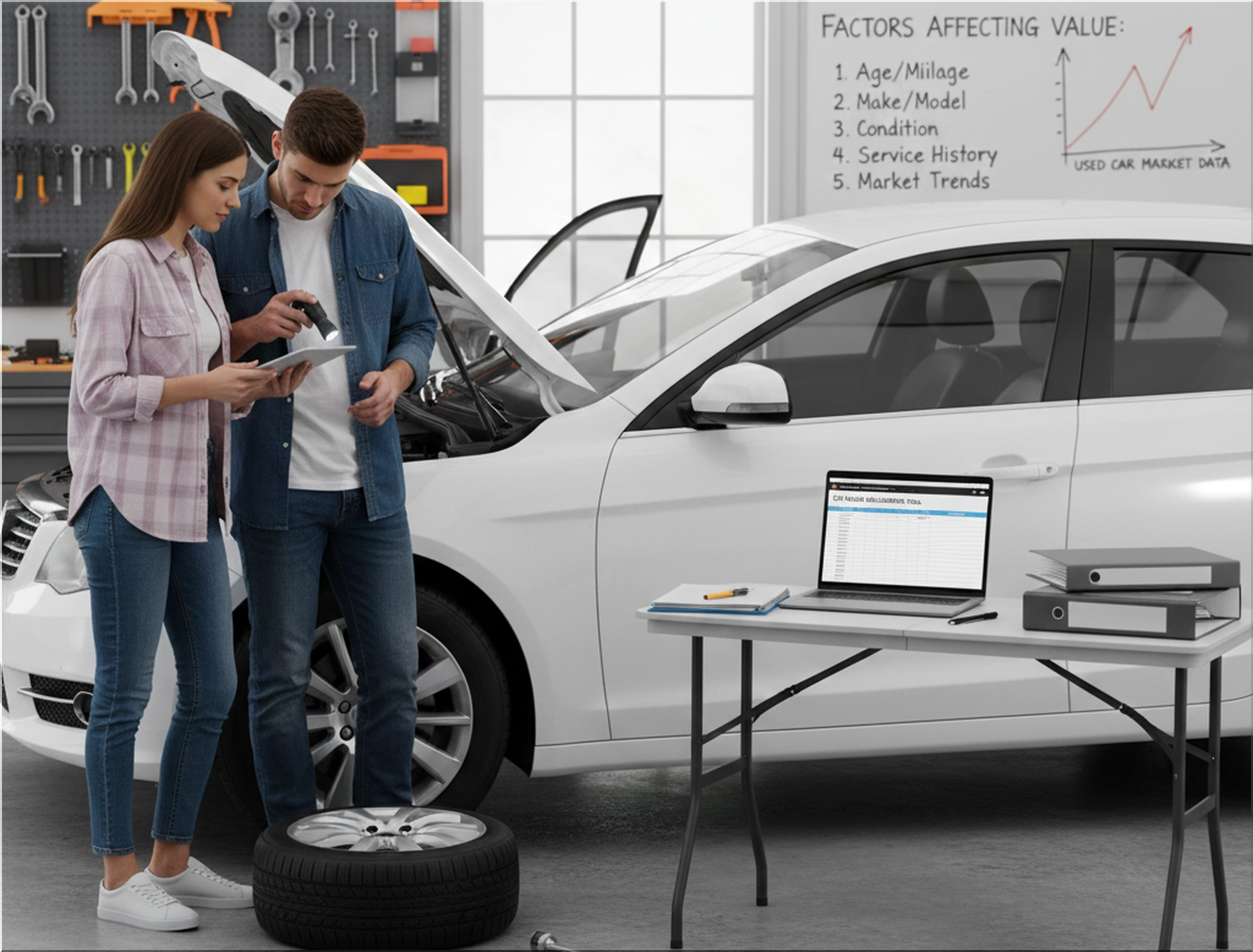
- Age and Mileage: Depreciation starts the moment a new car is driven. Generally, the older a car is and the more miles it has covered, the lower its value will be. High mileage suggests more wear and tear on the engine, transmission, and other key parts. Buyers often see lower mileage as a sign of a car with more life left in it.
- Make and Model: The brand and specific model of a car play a large part in its resale value. Some manufacturers have a reputation for reliability and durability, which helps their vehicles hold their value better than others. Popular models that are in high demand also tend to have stronger resale prices.
- Condition: The overall condition is a major consideration. This includes the mechanical state of the engine, the appearance of the bodywork, and the cleanliness of the interior. Scratches, dents, and worn upholstery can lower the price, while a clean, well-maintained car is more attractive to potential buyers.
- Service History: A complete and documented service history is one of the most important factors. It proves to a buyer that the car has been maintained according to the manufacturer's recommendations. A full service history can significantly increase a car's value, sometimes by a considerable margin.
How to Find Your Car's Value
There are several ways to get a valuation for your car, and using more than one method will give you a more accurate picture. Online valuation tools are a popular first step. Many websites offer free estimates based on your car's registration, mileage, and condition. These tools use data from live and historic sales to calculate an approximate market value, but they should be treated as a guide.
Another approach is to research private sales of similar cars. Look at online marketplaces for vehicles of the same make, model, year, and with comparable mileage. This will show you what other private sellers are asking for and helps you understand the current market for your specific car. Remember that the asking price is not always the final selling price.
You can also get a trade-in valuation from a dealership. This figure is often lower than what you might get from a private sale because the dealer needs to account for their own costs and profit margin. However, it provides a useful benchmark, especially if you are considering part-exchanging your car for another one.
The Impact of a Full Service Record
A car's service history provides a detailed timeline of its maintenance and repairs. A full record shows that the vehicle has been looked after, which builds trust and confidence with a potential buyer. Many buyers will not even consider a used car without a complete service history, as its absence can suggest hidden problems. A vehicle with a well-documented past is simply easier to sell and often commands a higher price.
Imagine two identical cars for sale. They are the same make, model, and year, with similar mileage. One has a folder full of receipts and a service book with stamps from every scheduled maintenance. The other has no records at all. A buyer is far more likely to choose the car with the documented history, even if it has a slightly higher price tag, because it represents a safer purchase.
Preparing for a Valuation
Knowing your car's value is important for insurance purposes, not just for selling. It helps ensure you have the right level of cover and can be a factor in how claims are settled. A precise and honest assessment of your vehicle is always beneficial.
Taking the time to research prices and gather all your documentation will help you get an accurate figure. Understanding all the elements that contribute to a vehicle’s price is the first step. A thorough car value check gives you the knowledge to make confident decisions about your vehicle's future.