
1984: The Year Peugeot Revolutionized the Auto Industry with the 205 and Quasar
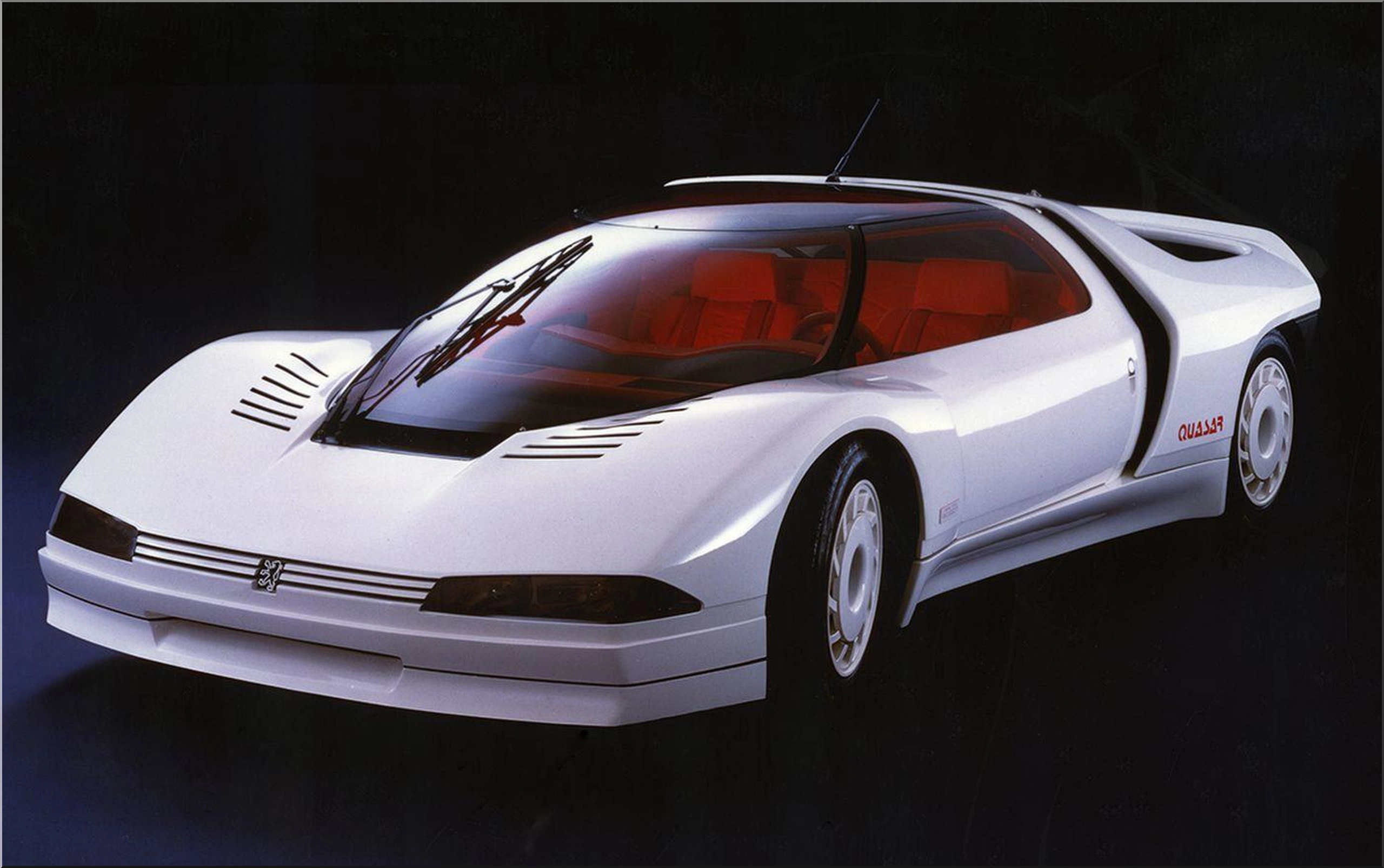
In 1984, Peugeot, one of France's iconic car manufacturers, embarked on a journey that would reshape its image in the automotive industry. Two models launched that year symbolized Peugeot’s ambition to combine practicality with futuristic innovation. The Peugeot 205, a compact car designed for mass-market appeal, became an instant success. On the other hand, the Quasar concept car hinted at the future of design and technology, showcasing Peugeot's dreams of high-tech, performance-driven vehicles.
Peugeot 205: A Game-Changer in the Supermini Segment
1984 marked the birth of the Peugeot 205, a car that would go on to define the French automaker’s fortunes for years to come. The 205's launch couldn't have come at a better time for Peugeot, which was in desperate need of a model that could rival popular cars like the Volkswagen Golf and the Renault 5.
What Made the Peugeot 205 Stand Out?
The Peugeot 205 was an instant hit for several reasons:
- Compact size: Measuring just 3.7 meters in length, the 205 was perfect for European urban driving.
- Fuel efficiency: With the oil crises of the 1970s still fresh in people's minds, the 205’s fuel efficiency appealed to drivers looking for economic options.
- Stylish design: The car had a fresh, modern design, thanks to the collaboration between Peugeot's in-house team and Pininfarina, the legendary Italian design firm.
- Varied engine options: From the small, economical 1.0L engine to the sportier 1.6L GTI, the 205 had something for everyone.
- Affordability: Starting at around $5,500 (converted to today's USD), the car offered excellent value for money.
A Global Success
The 205 wasn’t just popular in France; it took Europe by storm. Peugeot positioned the car to appeal to a broad range of drivers, from young urbanites to families seeking an affordable second car. Its versatility, paired with its affordable price and reliable performance, made it a bestseller, with over 5 million units produced by the time its production ended in 1998. This widespread success also allowed Peugeot to break into new markets and gain global recognition.
Peugeot 205 GTI: A Cult Favorite
While the standard Peugeot 205 models were lauded for their practicality, it was the high-performance Peugeot 205 GTI that cemented the car’s legendary status.
- Engine performance: The 1.6L engine delivered 105 horsepower, later upgraded to 1.9L and 130 horsepower.
- Sporty handling: With its stiff suspension and quick steering, the GTI became a favorite among driving enthusiasts.
- Rally success: The 205 became a force in rally racing, further boosting its reputation. The 205 Turbo 16 claimed two World Rally Championships in 1985 and 1986.
The Peugeot 205 GTI became one of the most celebrated hot hatches of the era, a symbol of the fun-to-drive spirit that car enthusiasts sought in compact cars.
The Quasar: Peugeot's Vision for the Future
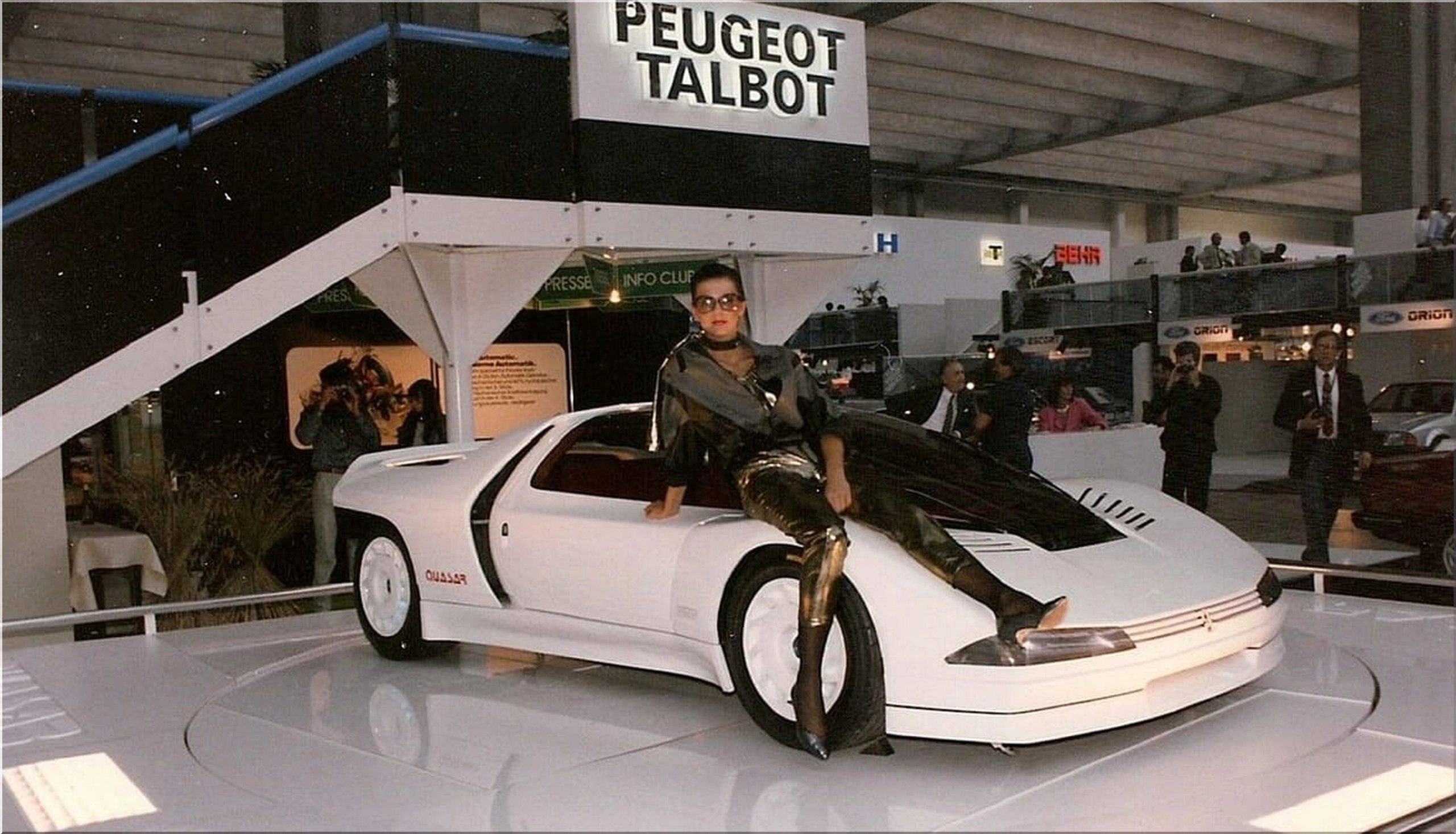
While the Peugeot 205 was a car designed for the masses, Peugeot also used 1984 to showcase its futuristic ambitions. Enter the Peugeot Quasar, a concept car that, while never destined for mass production, represented the bold vision of what Peugeot could become.
A Bold Design
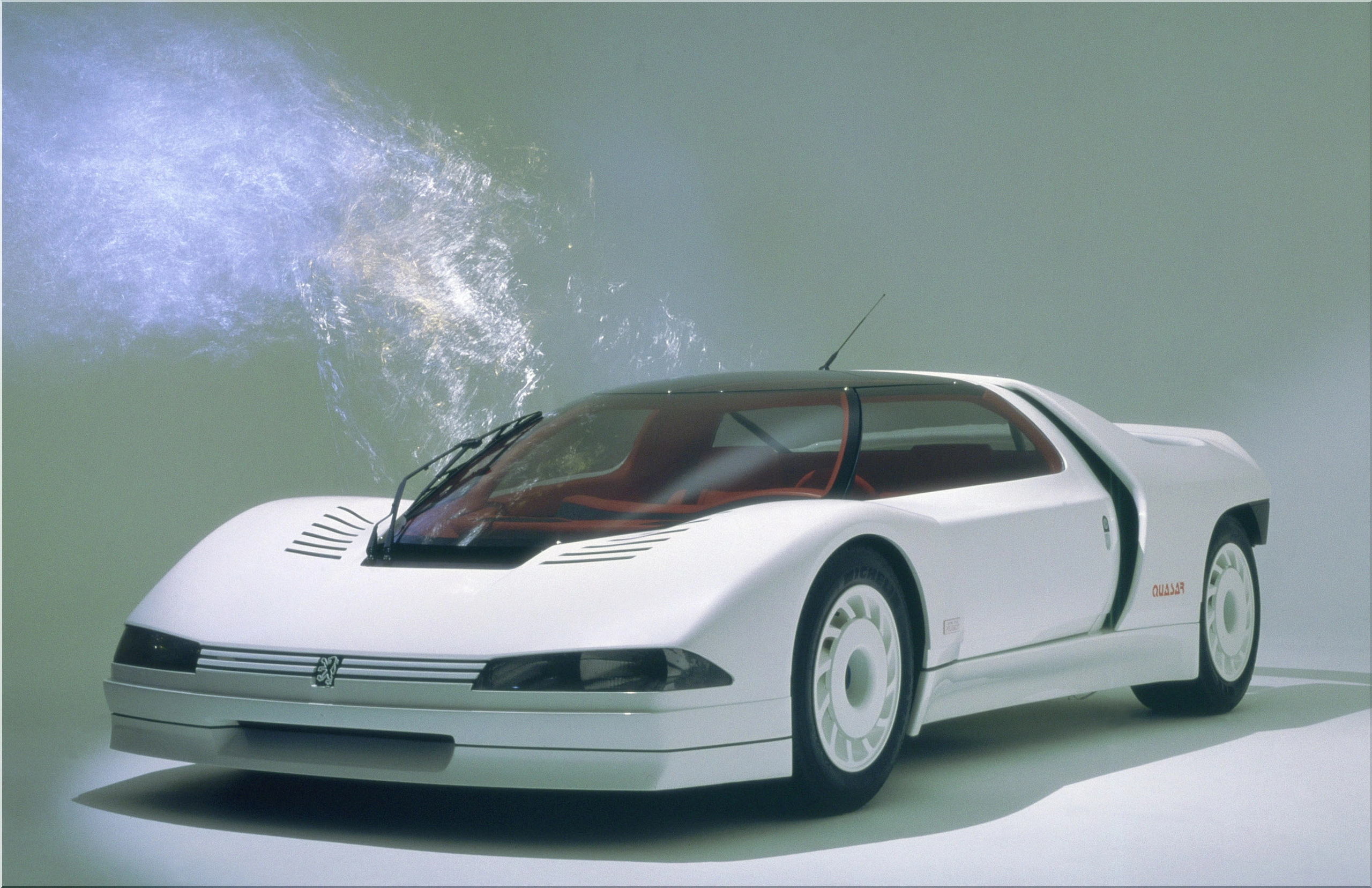
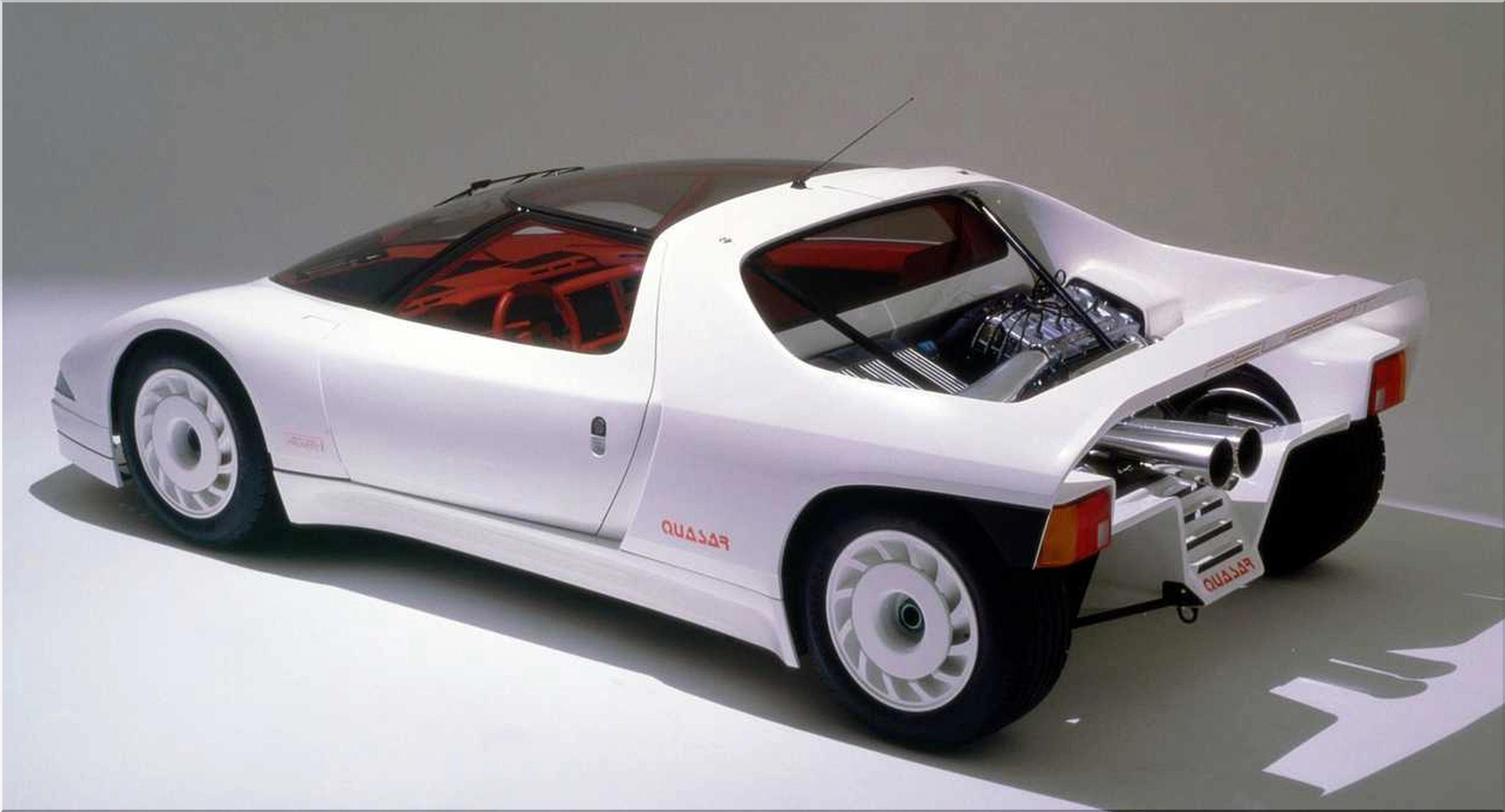
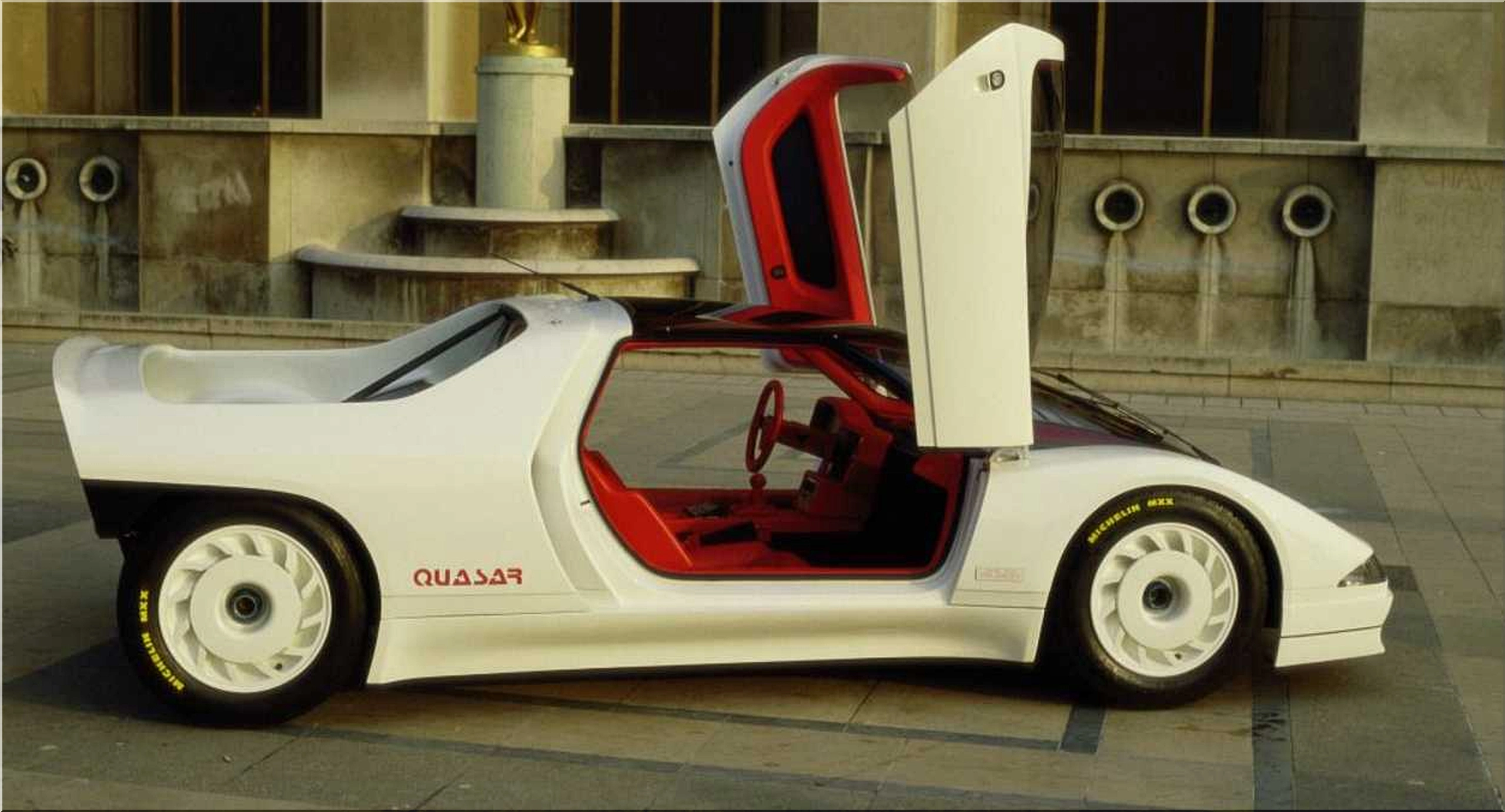
The Peugeot Quasar was unlike anything Peugeot had ever built. The concept car's design was avant-garde:
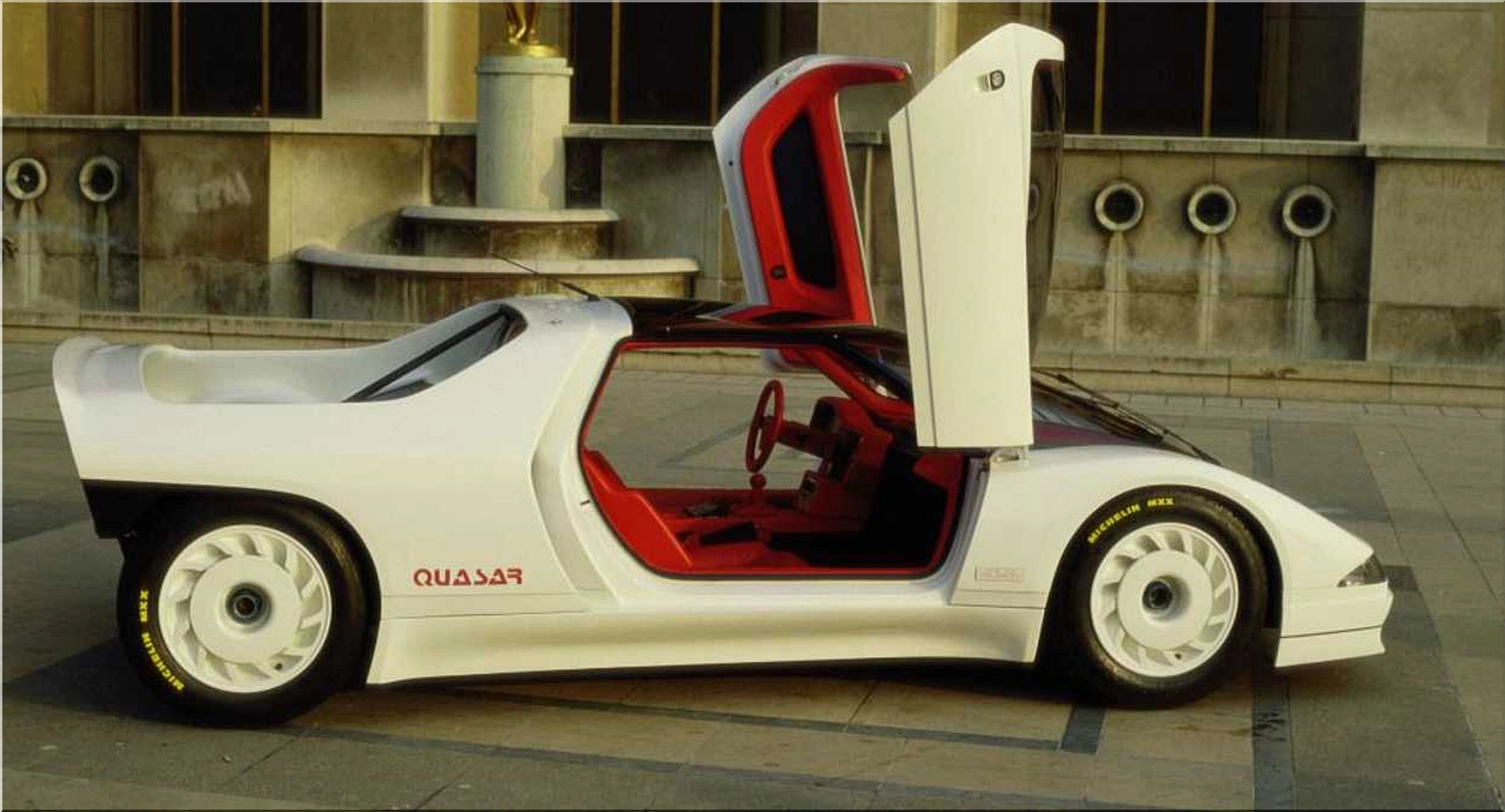
- Gull-wing doors: The Quasar featured dramatic gull-wing doors that opened upwards, emphasizing its futuristic aspirations.
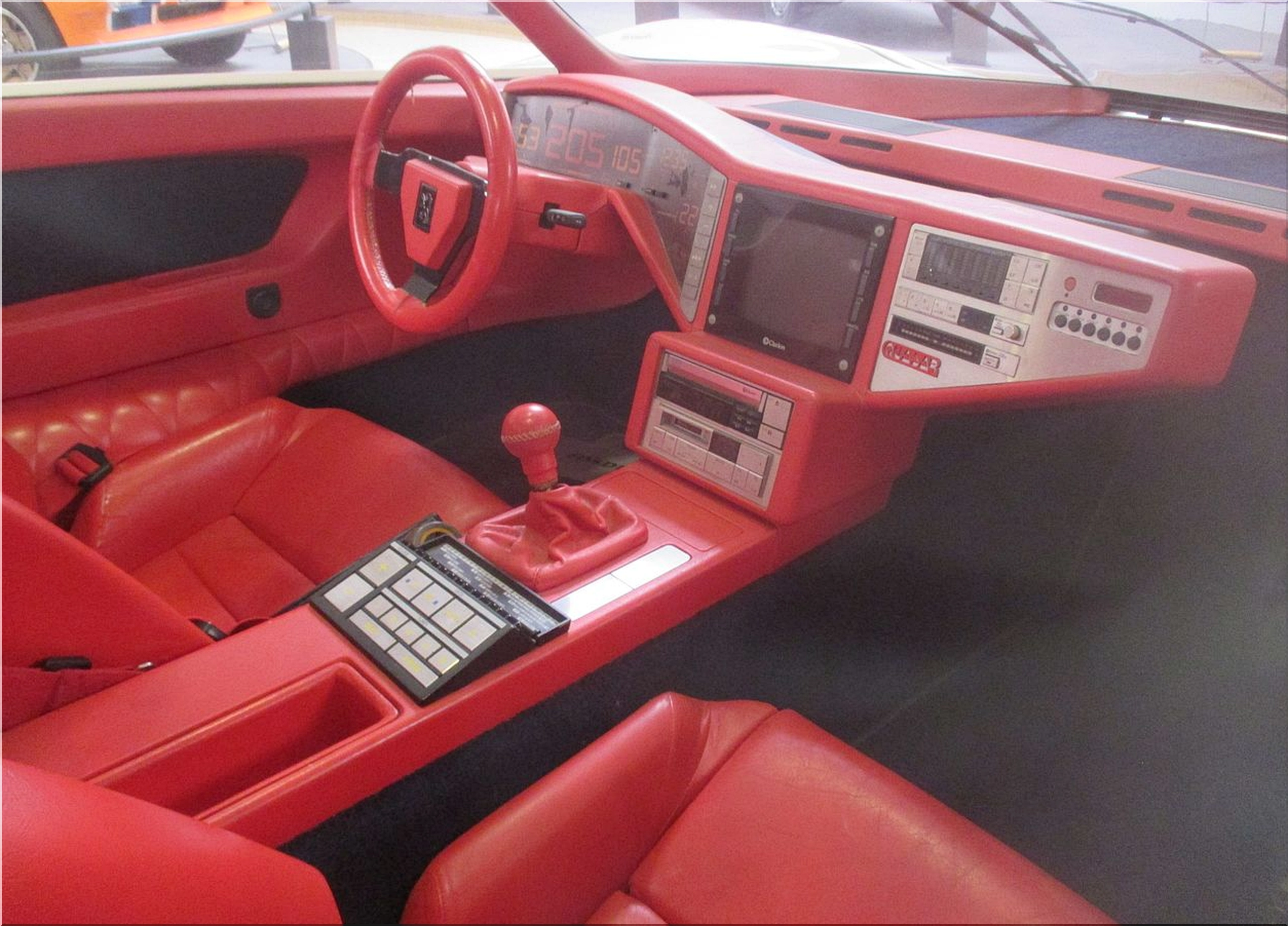
- Aerospace-inspired dashboard: The interior looked more like a spaceship than a car, with a high-tech digital display and control layout that seemed straight out of science fiction.
- Low-slung body: With its sharp, angular lines, the Quasar looked fast even when standing still.
- Glass canopy: The cockpit was enclosed in a glass canopy, offering 360-degree visibility and a futuristic vibe.
High-Tech Innovation
The Quasar wasn't just a design exercise; it packed cutting-edge technology for its time:
- Advanced aerodynamics: The car was built with an aerodynamic body that minimized drag, highlighting Peugeot’s desire to innovate in terms of performance.
- Turbocharged power: The Quasar housed a 1.6L turbocharged engine, producing an impressive 600 horsepower, making it a genuine performance vehicle.
- All-wheel drive: With an advanced all-wheel-drive system, the Quasar was designed to offer superior handling, showcasing what could be possible in high-performance cars of the future.
A Concept That Inspired Generations
Though the Quasar never made it to production, it represented Peugeot's vision of the future and solidified the brand’s commitment to innovation. While Peugeot focused on practical, affordable cars like the 205, the Quasar demonstrated that the company was also exploring the boundaries of automotive technology and design.
The Quasar’s legacy can be seen in many future Peugeot models, as the company would continue to experiment with cutting-edge designs and high-performance engineering in the decades that followed.
The Impact of the 205 and Quasar on Peugeot's Future
The simultaneous launch of the Peugeot 205 and the Quasar in 1984 represented a dual-pronged strategy for the automaker:
- Mass-market success: The 205 became a volume seller, helping Peugeot stabilize financially and reinforcing its reputation for producing affordable, reliable cars.
- Futuristic branding: The Quasar positioned Peugeot as an innovator, willing to push the boundaries of technology and design.
This combination of pragmatism and visionary ambition has become a hallmark of Peugeot’s strategy for decades. Today, the 205 is remembered as one of the most important cars in Peugeot's history, while the Quasar remains a symbol of the company’s forward-thinking mentality.
Lessons from 1984 for Modern Automakers
The story of Peugeot in 1984 offers several key lessons for automakers today:
- Diverse offerings: Balancing practical models like the 205 with concept cars such as the Quasar allowed Peugeot to cater to a broad spectrum of consumers and build brand prestige.
- Design innovation: Bold, innovative design—whether in mass-market cars or concept vehicles—helps brands stand out and create long-lasting customer loyalty.
- Technological exploration: Even if concept cars don’t make it to production, they allow automakers to experiment with new technology, potentially setting the stage for future innovations.
Image gallery
Peugeot's Legacy: From 1984 to Today
Peugeot's accomplishments in 1984 laid the foundation for its future. The Peugeot 205 continued to be a top seller through the 1990s, and its influence is still felt today in modern Peugeot models like the Peugeot 208. Meanwhile, the spirit of innovation demonstrated by the Quasar continues to drive Peugeot's approach to concept cars and high-performance models.
The dual launch of the 205 and Quasar demonstrated Peugeot's ability to combine mass-market appeal with ambitious visions for the future. As the automotive industry continues to evolve, Peugeot's 1984 strategy of blending practicality with innovation remains a powerful example of how to achieve success in a competitive market.
Image gallery
Conclusion: A Defining Year for Peugeot
1984 was a pivotal year for Peugeot, marked by the introduction of two iconic vehicles—the Peugeot 205 and the Quasar concept car. The 205's mass-market success revitalized the brand and established Peugeot as a major player in the supermini segment, while the Quasar concept car showed that Peugeot was willing to dream big and explore the future of the auto industry.
Through this combination of mass appeal and cutting-edge design, Peugeot demonstrated that it could not only compete in the present but also envision a bold future. The lessons from 1984 still resonate today as automakers continue to balance practicality and innovation in a fast-evolving market.
- Add new comment
- 189 views