Rough idle, hard starts, fuel economy that makes no sense – nine times out of ten, people start chasing fuel system problems when the ignition is actually the culprit. If you already know you want to dig into the ignition system diagnosing and figure out what's going on, here's what actually matters.
How It All Works
The whole job of the ignition system is to put a spark in the right cylinder at the right moment. That's it. But the timing has to be exact – we're talking fractions of a second, repeated thousands of times a minute. Get that wrong and the engine tells you immediately.
The main parts involved:
• Spark plugs – they're what actually fires the spark inside the combustion chamber. Material determines lifespan: nickel plugs are the cheap baseline, iridium and platinum ones last noticeably longer.
• Ignition coils – take 12V from the battery and step it up to tens of thousands of volts. On most modern mid-range and premium cars, each cylinder gets its own coil. Budget cars and older designs (pre-2018 mostly) still use coil packs shared across two or more cylinders.
• Crankshaft position sensor (CKP) – tells the ECU where the crankshaft is in its rotation so it knows when to fire each cylinder.
• ECU – processes all the sensor data and coordinates the timing. Everything goes through it.
What Fails and How
The frustrating thing about ignition system problems is they all look the same on the surface – misfires, rough idle, sluggish acceleration, Check Engine light, worse fuel economy. Difficult cold starts are usually an early sign something's off. The symptoms don't tell you which part failed. That's what ignition diagnosis is for.
Carbon fouling is the most common issue by far. Rich mixture, oil consumption, just general age – all of it leads to deposits on the electrodes that kill the spark. Beyond that, the electrode gap widens over time. Past 30,000–60,000 km, the gap can get wide enough that the plug simply can't reliably fire on a cold engine. Cracked insulators are less common but worth knowing about – when the insulator cracks, current leaks to ground and you get no spark at all.
A coil with a damaged winding either produces an inconsistent spark or drops the cylinder completely. Worth knowing: a poorly installed spark plug will kill a coil faster than anything else. The coil keeps arcing to the block instead of through the plug, runs hot, and eventually fails. So if you're replacing a coil, always check the plug that goes with it.
Bad connector contacts are annoying to diagnose – the fault comes and goes, doesn't always show up on a scanner, but often you can actually see corrosion or damage if you look. High-voltage wire cracks work the same way: they arc to ground, but the damaged spot is usually findable by eye. A dying CPS is different – either the engine won't start at all, or it cuts out without warning while driving. No gradual deterioration, just stops working.
How to Diagnose It
Don't start with a scanner. Start with your eyes and a multimeter – that handles a surprising percentage of cases in the ignition system testing process.
Visual check first
Pull the plugs. A healthy one has a light gray-brown coating – that's normal. Black and sooty means rich mixture or oil burning. White or partially melted insulator means it was running too hot or too lean. Check the gap while you have them out (spec is in your owner's manual, typically 0.8–1.1 mm). Then look at the wiring: cracks, damaged insulation, black scorch marks near connectors that suggest arcing.
Testing spark plugs
On older cars, the classic test still works: connect the plug to the coil wire, hold the body against the block, crank the engine, and see what you get. But do not perform this on vehicles with individual ignition coils. Good spark is bright and blue-white. Anything yellow or faint, or nothing at all – the plug is done. Don't touch the terminal or wire while the engine is cranking. On modern engines with individual coils this doesn't really apply – you're limited to a multimeter resistance check for insulation breakdown.
Testing coils
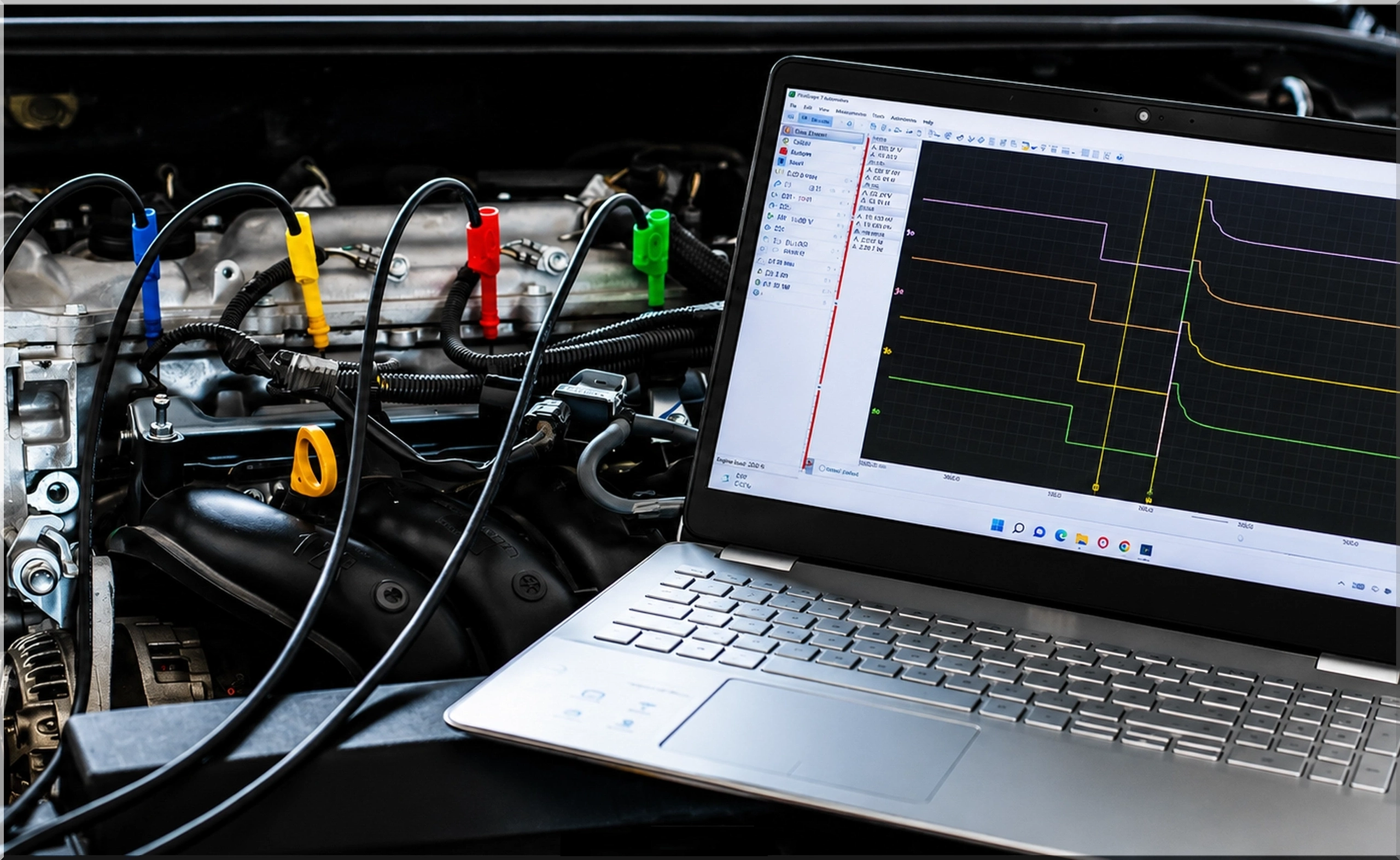
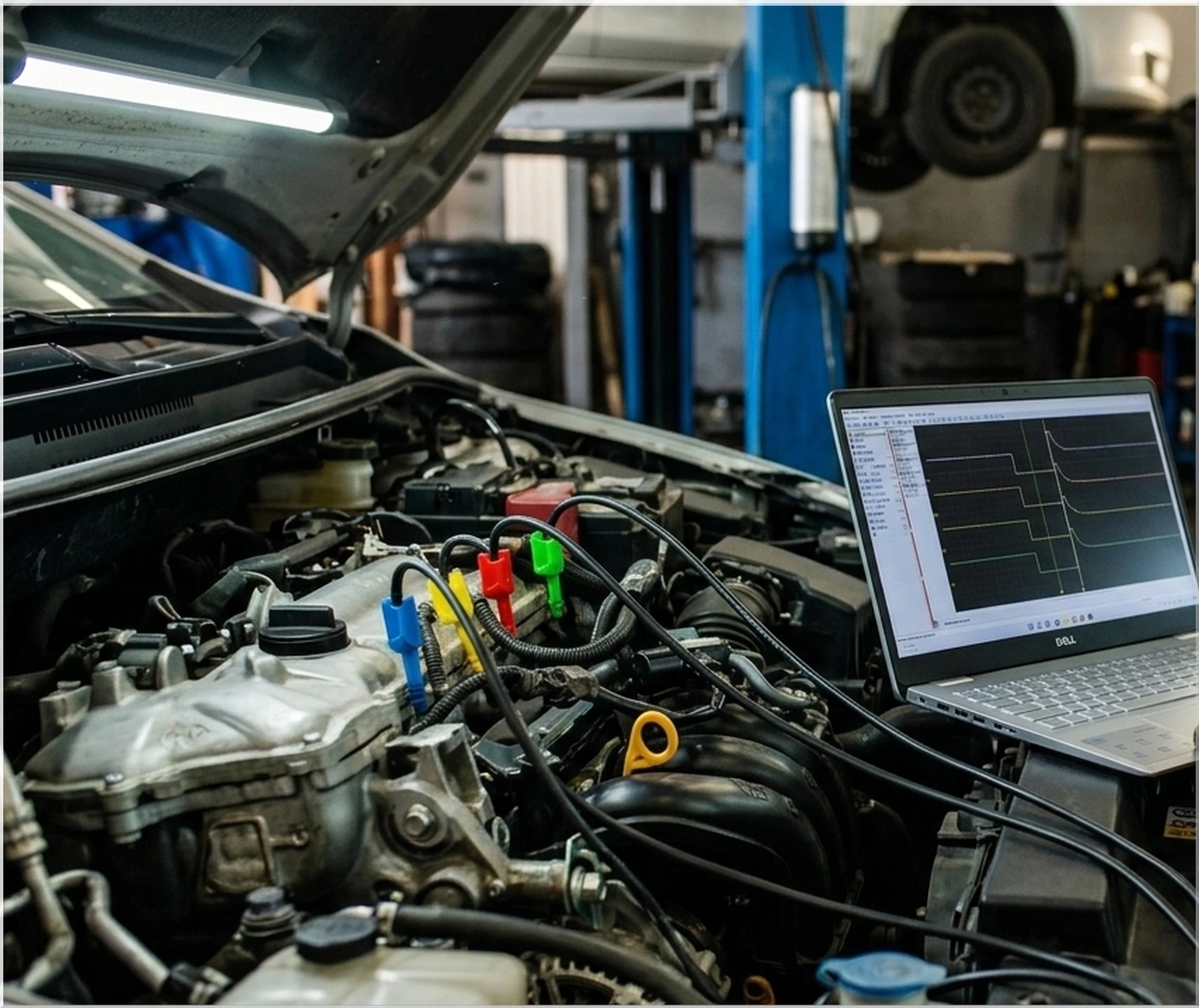
In the past, you could measure primary and secondary winding resistance with a multimeter, but by 2026, this method has become almost useless for DIY diagnostics. The vast majority of modern coils now feature a built-in transistorized igniter. A clear rule of thumb: if a coil has 3 or 4 pins in its connector, a regular multimeter is powerless to evaluate it. For these units, swapping the suspect coil with a neighboring one is your only real diagnostic option at home. If the misfire moves to the new cylinder, the coil is faulty; if it stays put, the coil is fine — look at the wiring, the injector, or engine compression. In a professional shop, an oscilloscope would be used for a definitive test.
OBD-II scanner
A cheap Bluetooth adapter and a phone app is enough. P0300 means random misfires; P0301 through P0308 point at a specific cylinder. That immediately tells you where to focus. Live data is also useful – watch RPM behavior, CKP signal, injection timing in real time. If the misfire only shows up cold and disappears after the engine warms up, it's almost always plugs or coils.
Routine check intervals: plugs every 15,000–30,000 km for standard ones. Modern iridium and platinum spark plugs, which have been standard for most cars over the past 10 years, can easily last for 80,000–100,000 km. Removing spark plugs too often from modern aluminum cylinder heads increases the risk of damaging the threads. Wiring and connectors at every service – especially on vehicles over seven or eight years old.
Troubleshooting Ignition System Step by Step
Here's the order that makes sense for most situations, whether it's a cylinder-specific misfire or a no-start.
Step 1. Swap the coil.
Move it to a neighboring cylinder. Misfire follows the coil – replace the coil. Misfire stays in the same cylinder – the coil is fine, keep looking: injector, wiring, compression.
Step 2. Check the plug in the affected cylinder.
This is where most single-cylinder misfires come from. Fouled or worn plug – replace it, clear the code, see if the problem goes away. If you don't know when the plugs were last changed, just replace the whole set. They're cheap enough that it's not worth the guesswork.
Step 3. Check connectors and wiring.
Coil connectors, CKP connector, anything that looks corroded or mechanically damaged. Oxidized contacts – clean with fine sandpaper or contact cleaner spray. Damaged wire – replace it. No twisting, no tape.
Step 4. Look at the CKP.
Engine dying at speed for no apparent reason, or starts fine cold but won't restart after it's warm – classic CKP failure. Testing it properly means oscilloscope mode on a multimeter or an actual oscilloscope. If you don't have that, swapping in a known-good sensor is a reasonable approach.
Before you start – a few basics:
• Disconnect the negative battery terminal before working on electrical components.
• Don't touch bare wires or connectors with the engine running.
• No open flames near the fuel system. Obvious, but worth saying.
Bottom Line
The ignition system is one of those things that affects everything – how the car starts, how it drives, how much it costs to fuel up. A problem caught early is a cheap fix. Left alone, it turns into something more complicated.
Most of what's covered here you can do at home with a multimeter and a basic OBD reader. Where it gets beyond that – ECU issues, CKP signal analysis, low compression – bring it to a shop. Some things cost less when someone gets them right the first time.
FAQ
What is the best diesel engine diagnostic tool? A mid-range OBD-II scanner with live data covers most situations. If you work on diesels regularly, spend a bit more on one that supports DPF regeneration and injector coding.
How often should diesel engine diagnostics be performed? Once a year as a baseline. High mileage or an older engine - twice a year.
Can I perform engine diagnosis without professional equipment? Partly. A scanner, compression tester, and fuel pressure gauge cover a lot. Injector calibration and high-pressure pump testing you won't do at home, but you can narrow the problem down before going to a shop.
Image gallery
- Add new comment
- 172 views