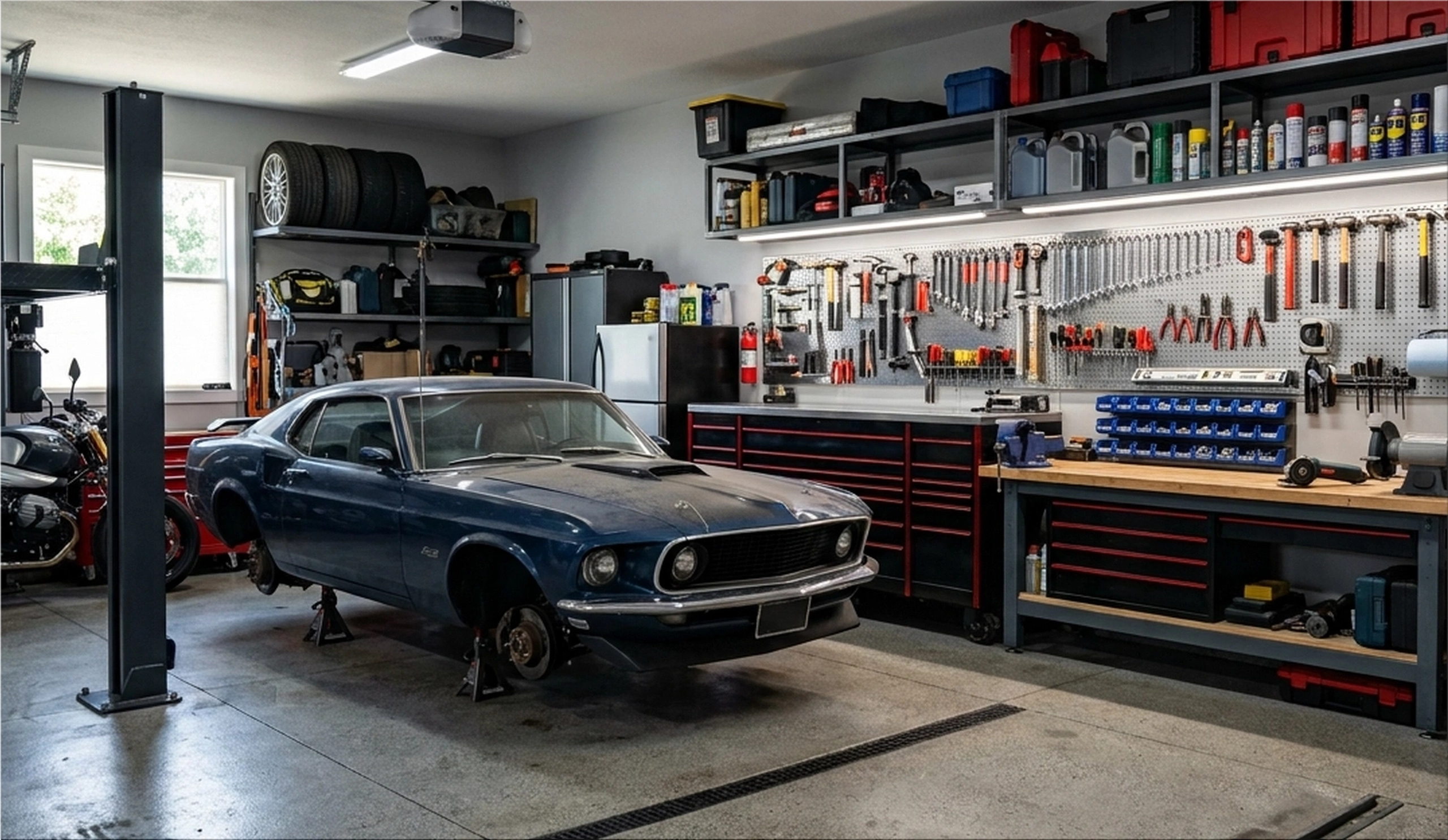
Most people who start working on their own cars go through the same phase. They buy a cheap socket set from a discount store, realize it strips bolts, buy a better one, realize they have nowhere to put any of it, and end up with tools spread across three shelves, a plastic bin, and the top of the washing machine. Getting a proper garage setup is less about buying expensive tools and more about buying the right things in the right order. Here is what actually matters.
A Decent Socket Set, Not a Massive One
The instinct is to buy the biggest socket set you can find. Two hundred and fifty pieces sounds impressive until you realize 180 of those pieces are sizes you will never use and they all came in a plastic tray that breaks in six months.
Start with a quality 3/8" drive set covering metric sizes from 8mm to 19mm. That handles the majority of fasteners on most modern vehicles. Add a 1/2" drive set for larger bolts like suspension components and lug nuts. A 1/4" drive set comes in handy for tight spaces and sensors. Three sets, focused ranges, quality ratchets. That beats one enormous set of mediocre sockets every time.
A Torque Wrench
This is the tool people skip and then regret. Tightening wheel lug nuts by feel is how brake rotors warp and wheels come loose. Overtorquing cylinder head bolts causes warping. Over or under on suspension fasteners creates safety problems down the road.
A 1/2" drive click-type torque wrench covering 20 to 150 ft-lbs handles most jobs. A smaller 3/8" drive model in the 10 to 80 ft-lb range covers spark plugs, sensors, and other precision fasteners. Buy from a known brand and calibrate it every couple of years if you use it regularly.
Jack Stands and a Quality Floor Jack
The stock scissor jack that came with your car is for roadside emergencies, not garage work. A hydraulic floor jack with a 2 to 3 ton rating is faster, more stable, and safer for any real repair work. Low-profile jacks work better for cars that sit close to the ground.
Jack stands are not optional. Never work under a vehicle supported only by a jack. They fail. Jack stands don't. Get two minimum, four if you plan to do any suspension or brake work where all four corners need to come up. Steel stands in the 3-ton range are worth a few extra dollars over the budget aluminum versions.
A Toolbox That Can Actually Grow With You
This is where a lot of home mechanics underinvest early and pay for it later. A small portable toolbox runs out of space fast. Once you factor in sockets, wrenches, screwdrivers, pliers, specialty tools, and fluids, you need more room than you expect.
A rolling cabinet with multiple drawers is the right long-term choice. It does not have to be a professional-grade brand to start, but it does need enough drawers to keep categories separated. Sockets in one drawer, wrenches in another, screwdrivers in a third. Mixing everything together defeats the purpose of having a toolbox at all.
Once the box is sorted, drawer organization becomes the next problem. Foam inserts deteriorate. Cheap plastic trays crack. A modular system that clips directly into the drawer and holds tools securely is worth the investment, especially when you are halfway through a job and need to find something fast. Automotive Accessories NA makes toolbox drawer organizers designed specifically for this purpose, including magnetic screwdriver attachments and modular tool mats that keep everything locked in place and easy to reconfigure as your collection grows.
A Set of Combination Wrenches
Ratcheting box-end wrenches have largely replaced standard combination wrenches for a lot of jobs, but you still need both. Open-end wrenches get into spots a socket cannot reach. A full metric set from 8mm to 19mm covers the vast majority of fasteners on modern vehicles.
Invest in a decent brand here. Cheap wrenches round off fasteners and you end up spending more fixing the damage than you saved buying the tool. Snap-On, GearWrench, and Craftsman Professional are all solid options depending on your budget.
Screwdrivers and Pliers
This sounds basic because it is, but people either own a dollar-store set that strips screws or they overinvest in specialty drivers they don't need yet. A solid starting set covers Phillips in sizes 1, 2, and 3, flathead in a few widths, and a couple of Torx drivers since modern vehicles use them constantly. Impact-rated screwdrivers are worth the small extra cost because they hold up better under real use.
For pliers, you need standard slip-joint pliers, needle-nose pliers, and locking pliers. Diagonal cutters come in handy for zip ties and wire work. A set of snap ring pliers saves a lot of frustration on suspension and transmission jobs.
Penetrating Oil and a Heat Gun
Two underrated items that make hard jobs easier. Penetrating oil loosens seized fasteners that would otherwise strip or snap. Apply it, wait, apply again, and let it work before reaching for a breaker bar. It does not work instantly but it works.
A heat gun is the next step when penetrating oil is not enough. Heating the metal surrounding a seized bolt causes expansion that often breaks the corrosion bond. It is safer and more controlled than an open flame and doubles as a useful tool for shrink tubing, vinyl wrapping, and interior trim work.
A Decent Scan Tool
Modern cars communicate problems through their OBD2 port and a basic code reader only tells you part of the story. A mid-range scan tool that displays live data is significantly more useful. You can watch sensor readings in real time, see whether an O2 sensor is responding correctly, check fuel trims, and clear codes after a repair.
You do not need a professional-grade diagnostic tool as a home mechanic. A quality mid-range option in the $150 to $300 range covers everything a home garage needs for most makes and models.
Build the List, Not the Collection
The mistake most people make is buying tools reactively, grabbing whatever the job in front of them requires, and ending up with a random assortment that has gaps and duplicates. A better approach is building the core list first, buying quality over quantity, and adding specialty tools as specific jobs require them.
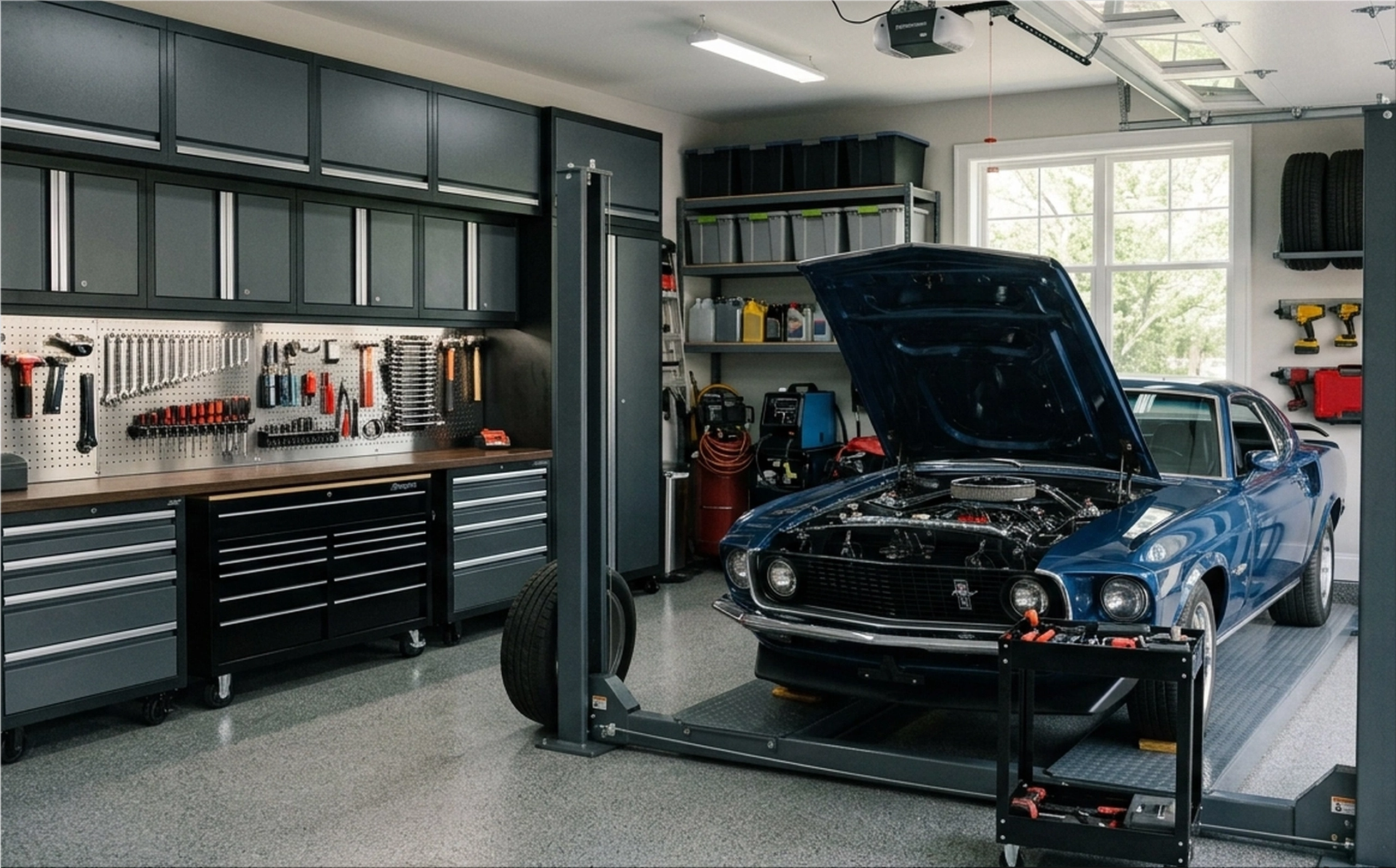
The garage does not need to look like a dealership service bay. It needs to have the right tools, in the right place, ready to use when you need them. That combination of quality equipment and proper organization is what separates a frustrating garage from one that actually works.
Image gallery
- Add new comment
- 65 views