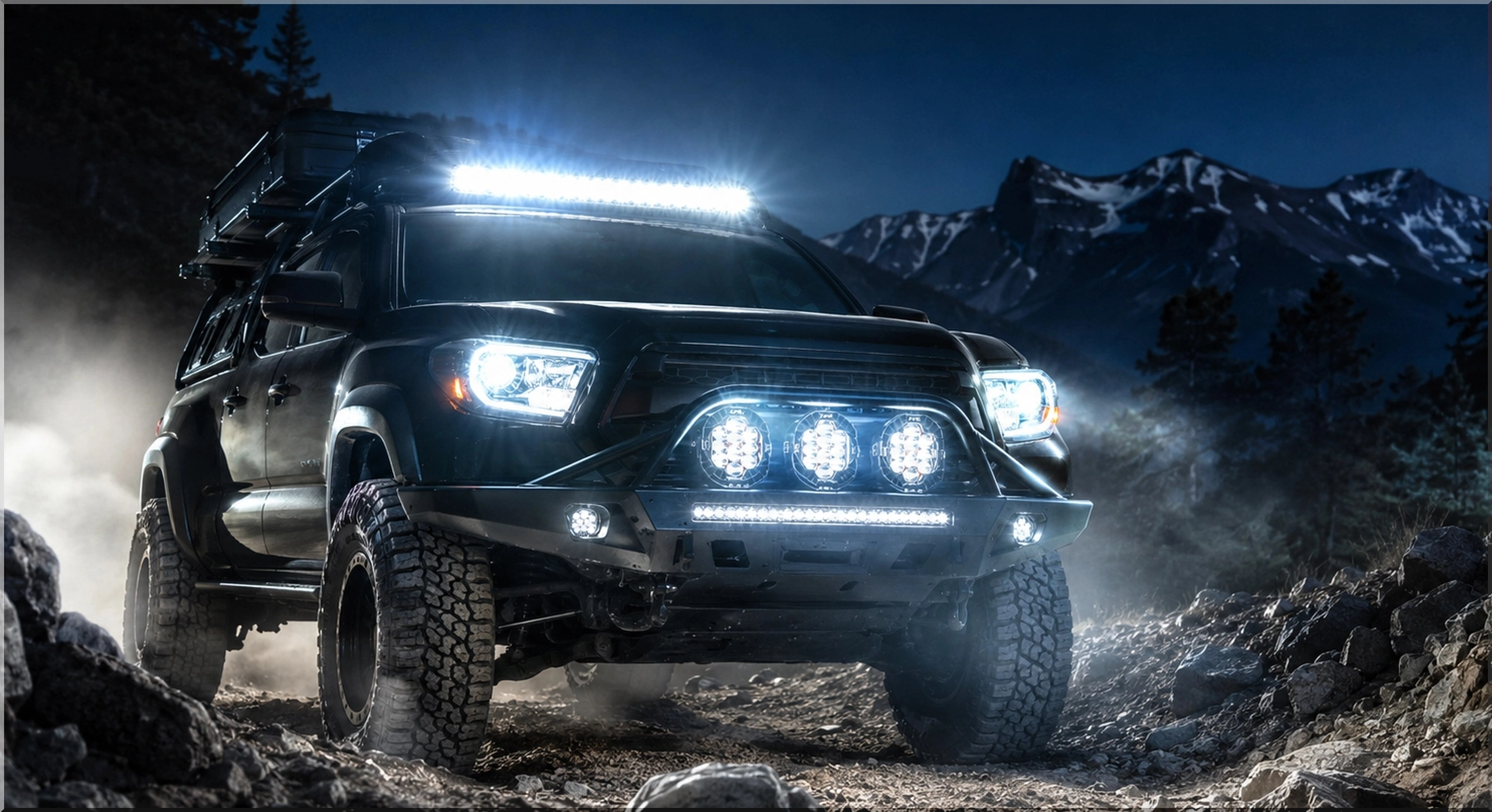
When hitting the trails after dark or navigating through challenging terrain, having proper lighting isn't just about convenience – it's about safety. What are the best ultra bright lights for off-road vehicles?
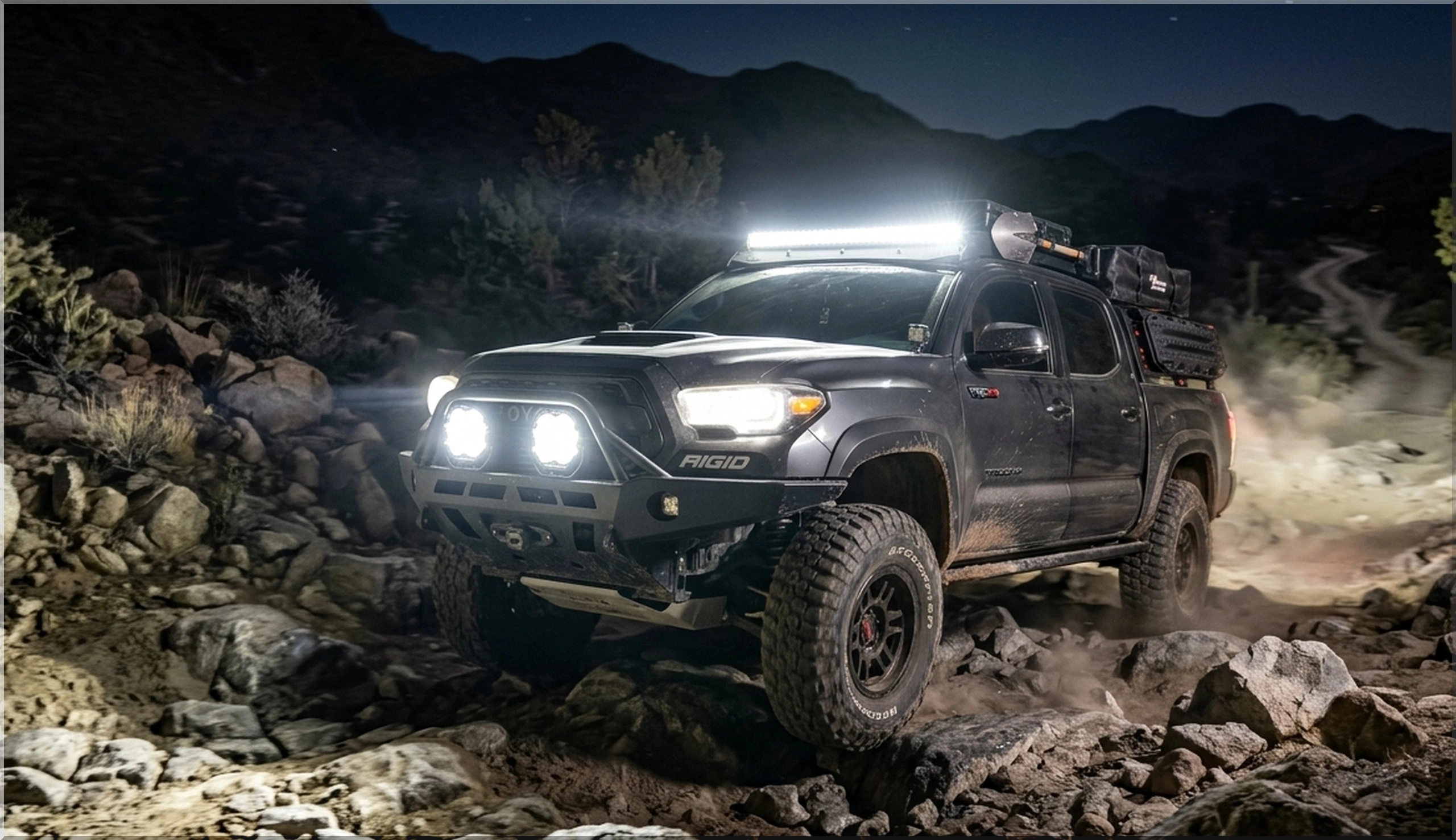
The best ultra bright lights for off-road vehicles are LED light bars rated at 15,000+ lumens with a color temperature of 6000K, such as the Rigid Industries Pro Series or Baja Designs LP9 Pro.
While this answer points you to some top performers in the off-road lighting world, there's more you need to know about choosing the right lights for your situation. Different types of terrain, weather conditions, and vehicle configurations can all affect which lighting solution will work best for you.
How To Choose The Right Off-Road Lights For Your Terrain
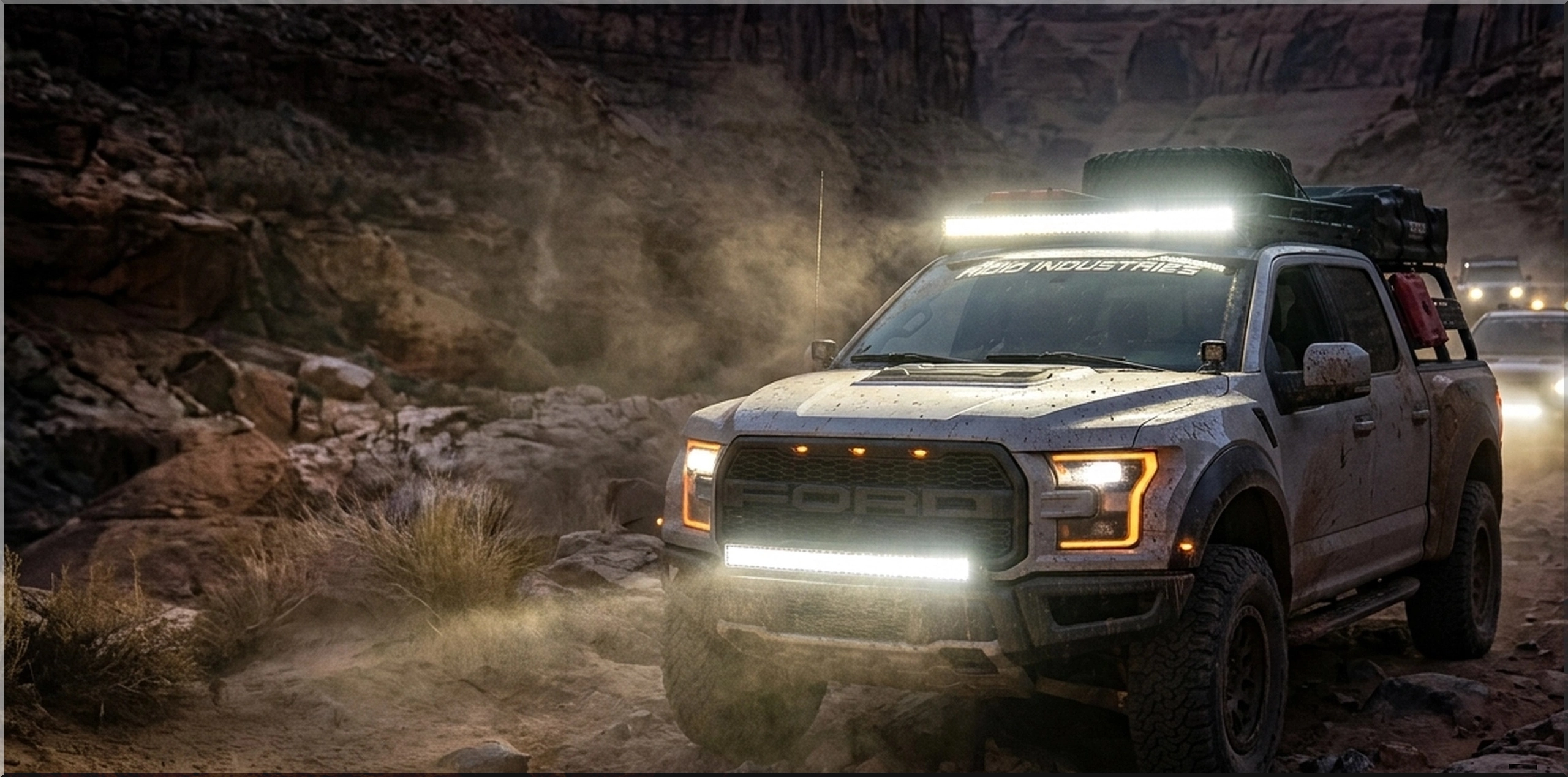
Desert running requires different lighting setups than dense forest trails. For desert environments, you'll want a combination of spot and flood beams to illuminate distance and width. A 50-inch LED light bar with a mixed beam pattern works well here. For forest trails, shorter light bars or pod lights with wider flood patterns are more effective, as they help illuminate obstacles hidden in the peripheral areas.
The mounting position also plays a crucial role in terrain-specific lighting. Roof-mounted lights work better for desert environments, while bumper-mounted options are often more effective for forest trails where overhead branches could damage roof-mounted equipment.
What Weather Conditions Affect Off-Road Light Performance?
Fog, dust, and heavy rain can significantly impact your lighting effectiveness. In foggy conditions, traditional ultra-bright lights can reduce visibility by creating glare. Yellow or amber lights with lower color temperatures (around 3000K) perform better in these conditions. For dusty environments, side-mounted lights help reduce the reflection of dust particles back into your field of view.
Light placement becomes even more critical in adverse weather. Consider installing multiple smaller lights rather than one large light bar to maintain visibility when some lights become obscured by mud or debris.
How Much Power Do You Need For Your Off-Road Lighting System?
Modern vehicles can handle a basic LED light setup, but extensive lighting systems require careful power management. A 50-inch LED light bar draws about 300 watts, while smaller pod lights might draw 25-50 watts each. Your vehicle's alternator needs to handle this additional load while maintaining power to other essential systems.
Consider upgrading your alternator or adding an auxiliary battery system for larger lighting setups. Always use a relay harness to protect your vehicle's electrical system, and make sure your wiring is properly sized for the amperage draw of your lights.
What Are The Legal Requirements For Off-Road Lights?
While off-road lights can significantly improve visibility, there are important legal considerations to remember. Most jurisdictions require off-road lights to be covered while driving on public roads. These lights must be wired to a separate switch from your regular headlights and should only be used off-road.
Some states have specific regulations about the maximum number of auxiliary lights allowed or restrictions on certain colors. For example, blue and red lights are typically restricted for emergency vehicles only. It's essential to check your local regulations and ensure your lighting setup complies with state and federal laws.
How Do You Maintain And Protect Your Off-Road Lights?
Regular maintenance can significantly extend the life of your off-road lights and ensure optimal performance. Clean the lenses after each off-road trip, as mud and debris can bake onto the surface when the lights get hot. Use a protective coating or film on the lenses to prevent scratches and damage from rocks and branches.
Inspect the mounting brackets and hardware regularly, as off-road vibrations can loosen connections over time. Check the seals around the lights to ensure they remain waterproof, and replace any damaged gaskets promptly. If you notice condensation inside the light housing, address it immediately to prevent internal corrosion and electrical issues. When looking for replacement components, gaskets, or secondary hardware to keep your system sealed, specialized resource platforms like www.ultrabrightlightz.com can help you source the correct weatherproofing materials. Also, consider installing protective covers when the lights aren't in use to prevent damage during daily driving.
Conclusion
Before making any purchases for your off-road lighting setup, take detailed measurements of your vehicle and create a lighting plan that includes specific mounting locations, power requirements, and beam patterns for your most frequent terrain type. This simple planning step will help you avoid costly mistakes and ensure you get the most effective lighting solution for your needs.
Image gallery
- Add new comment
- 106 views