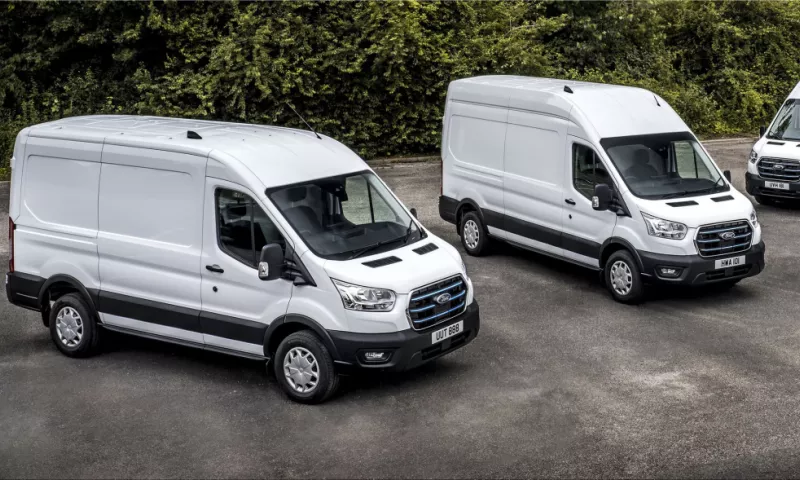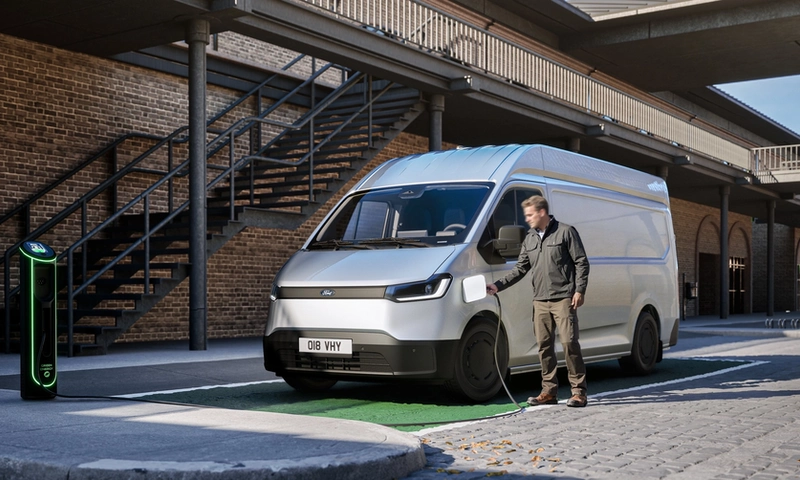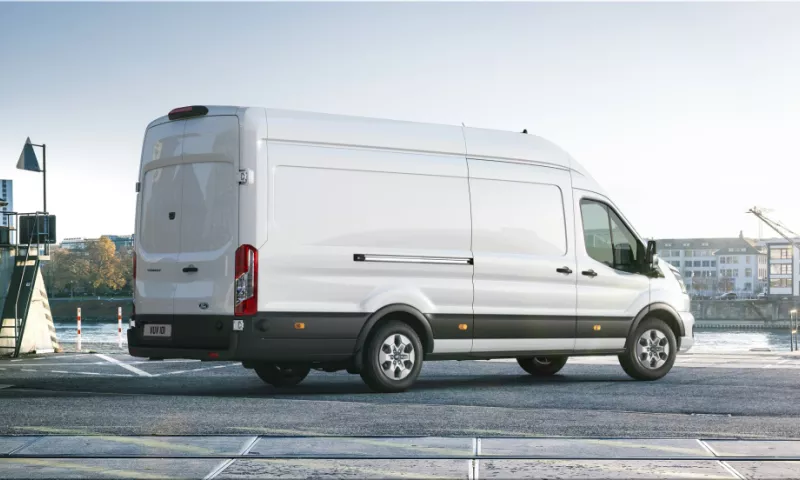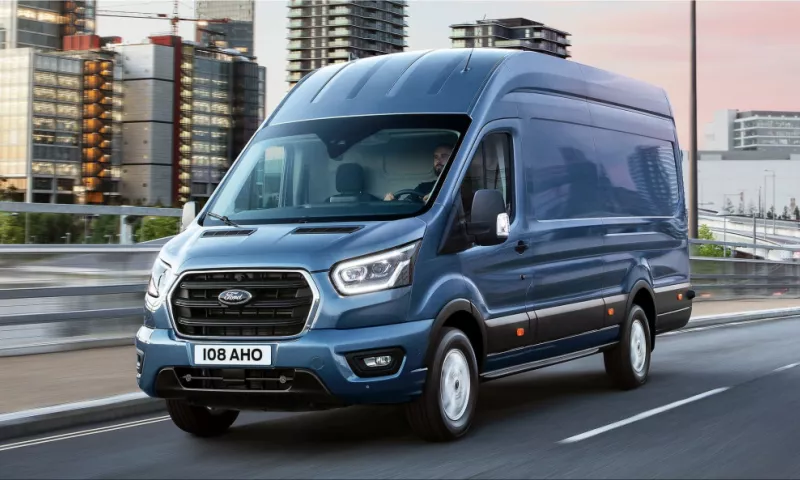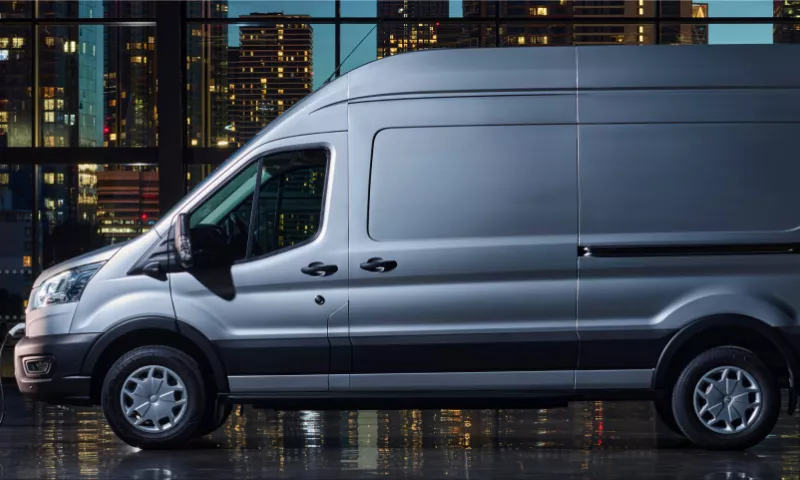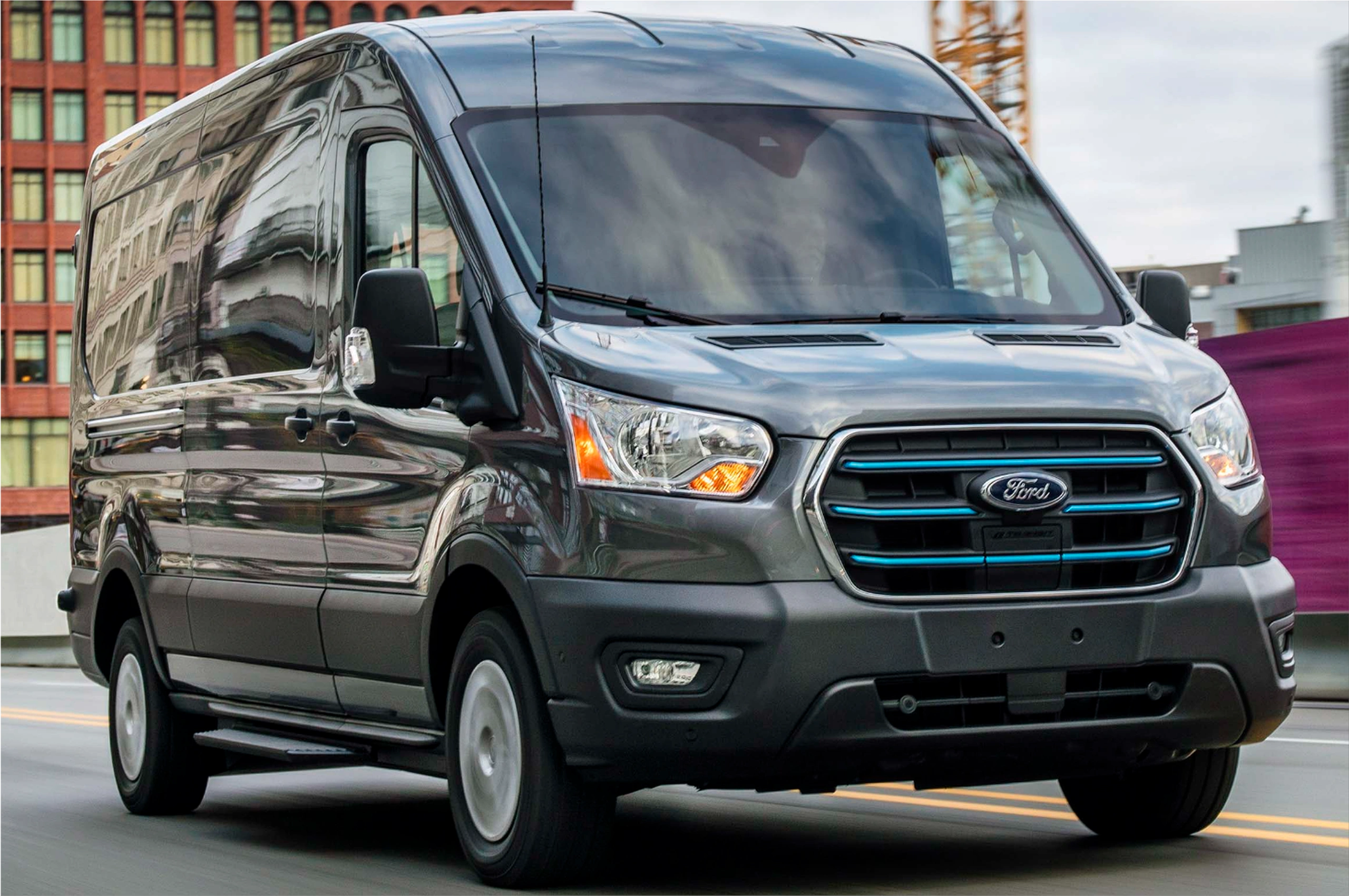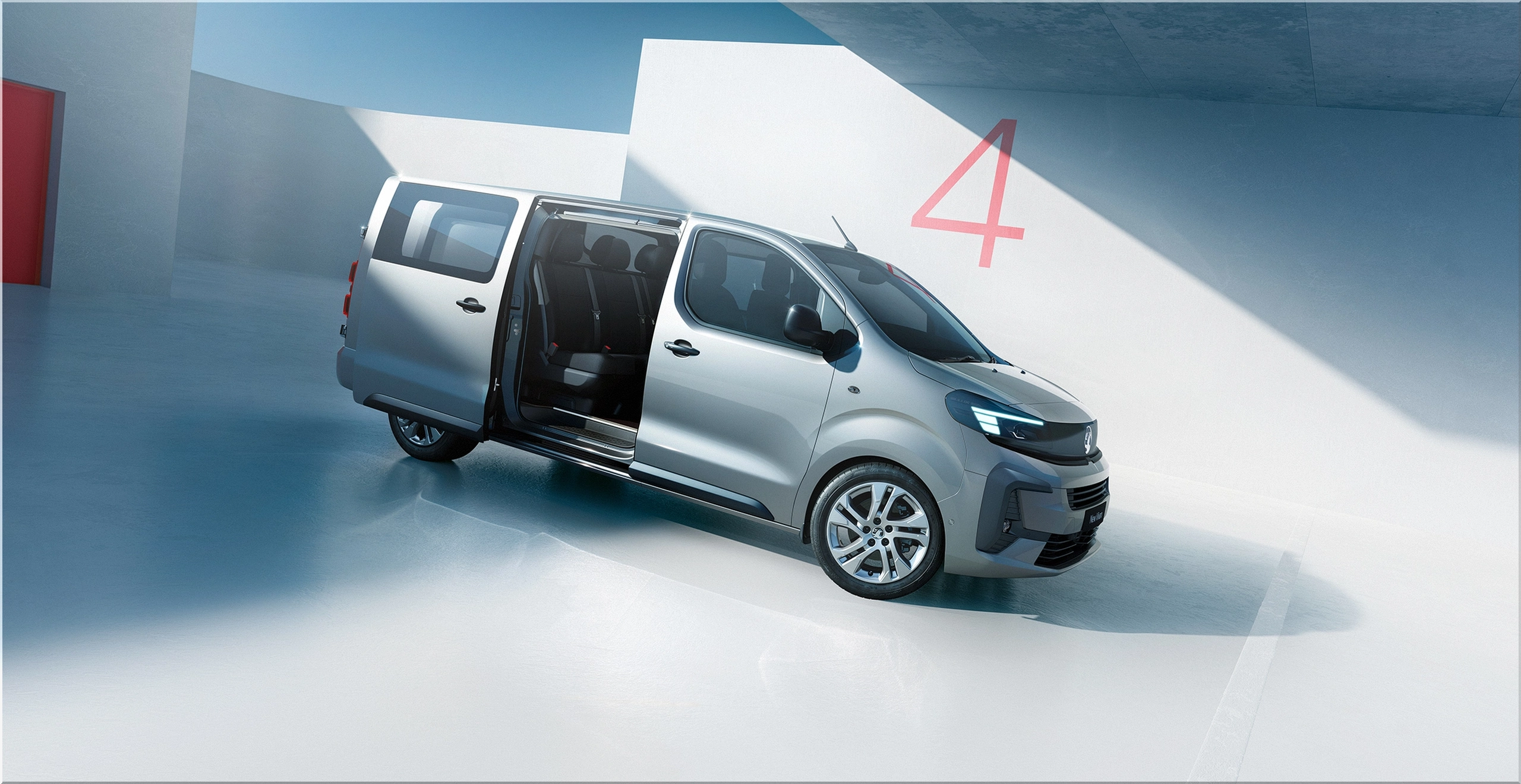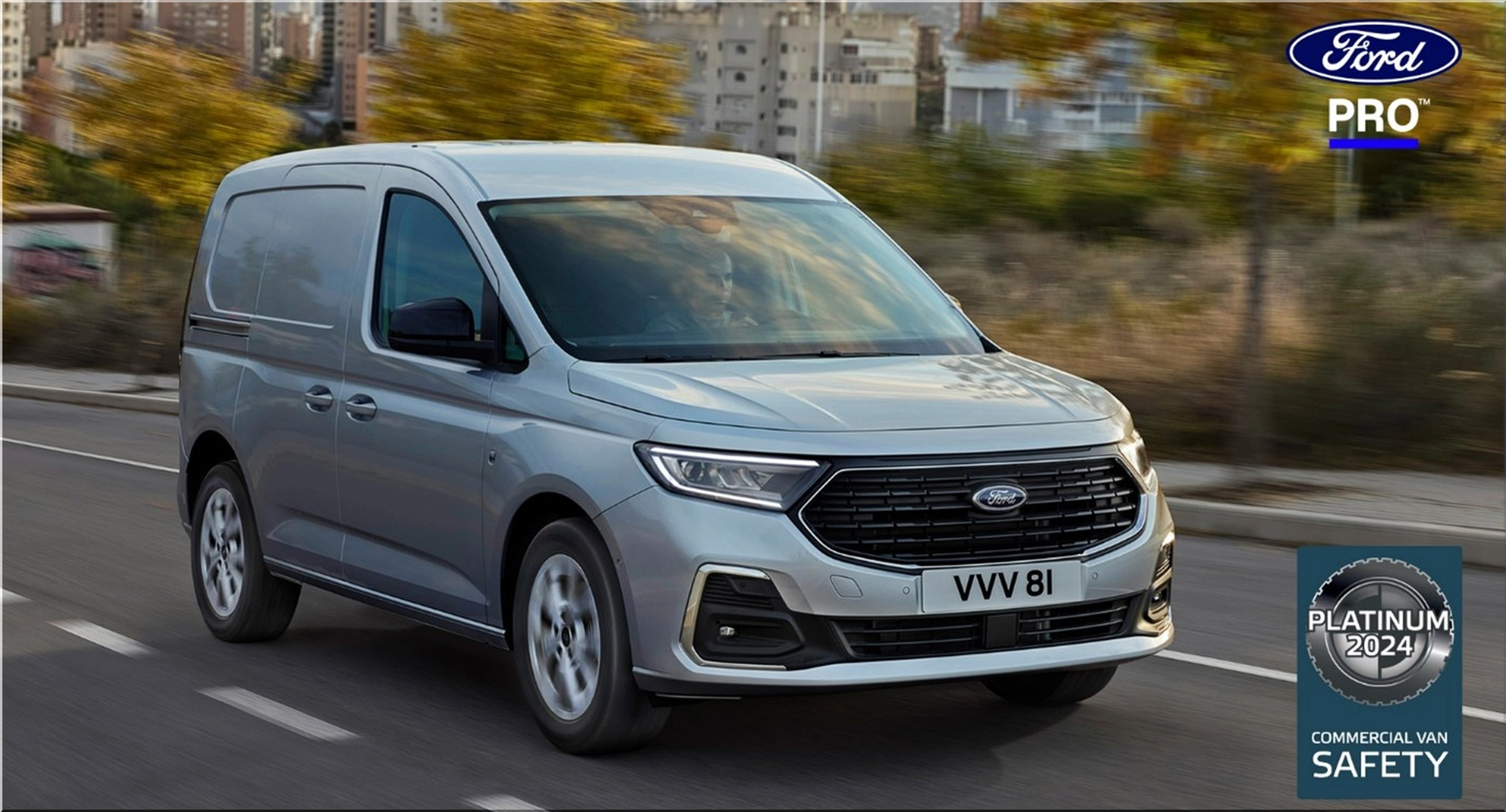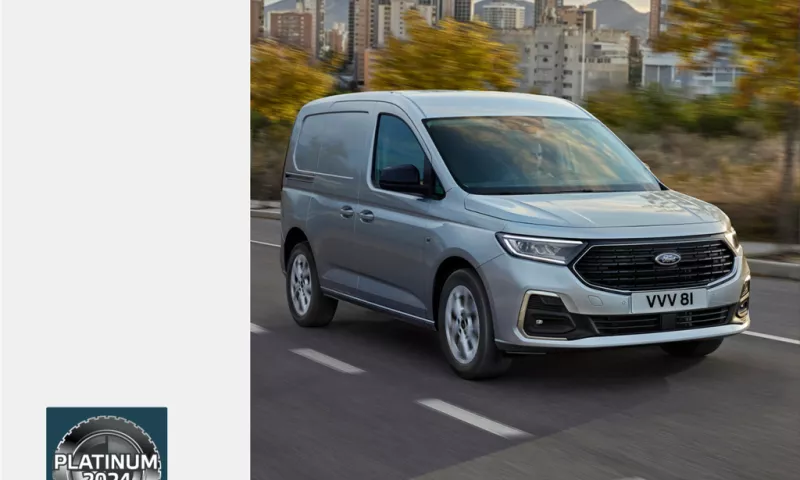
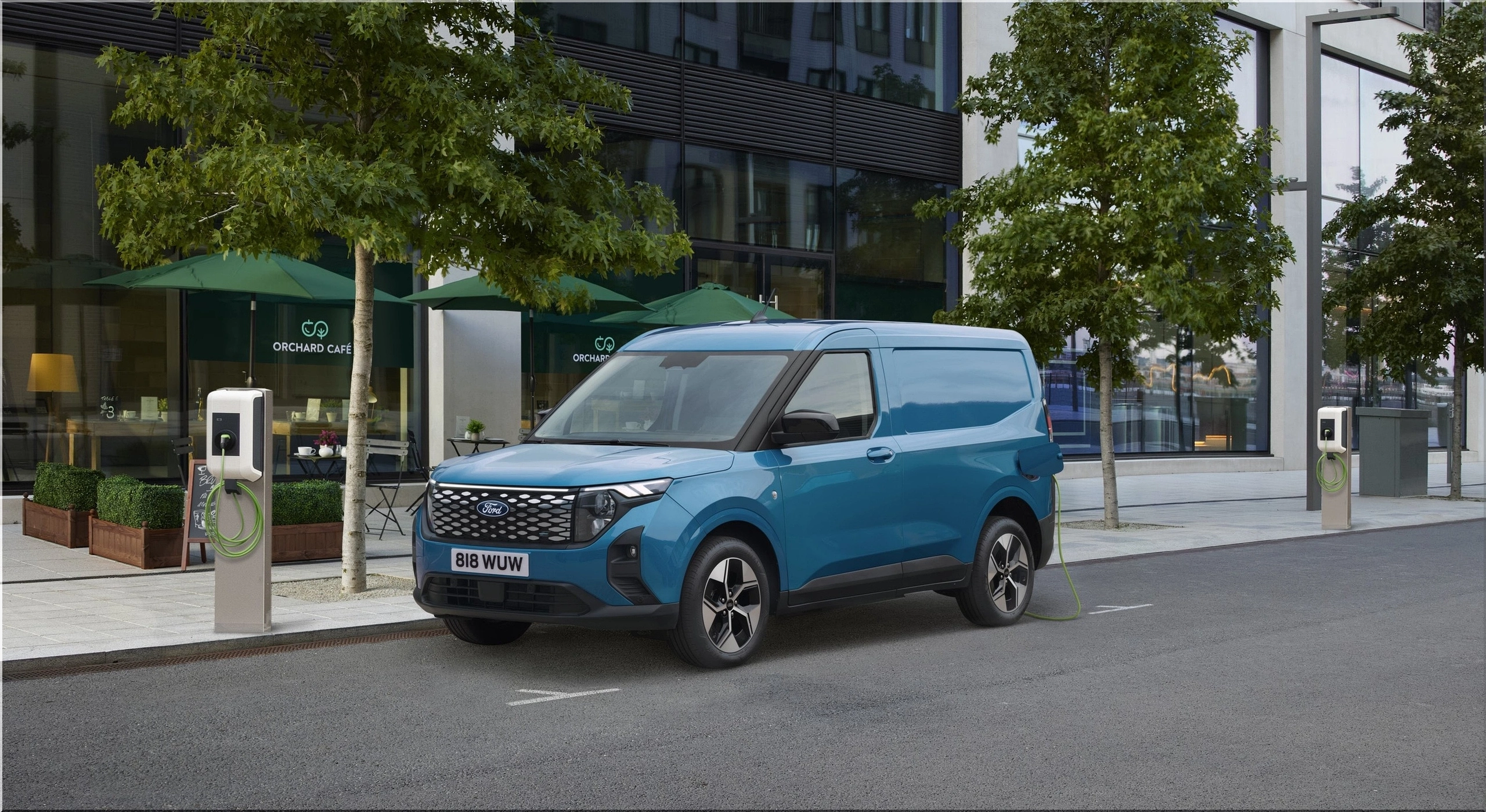
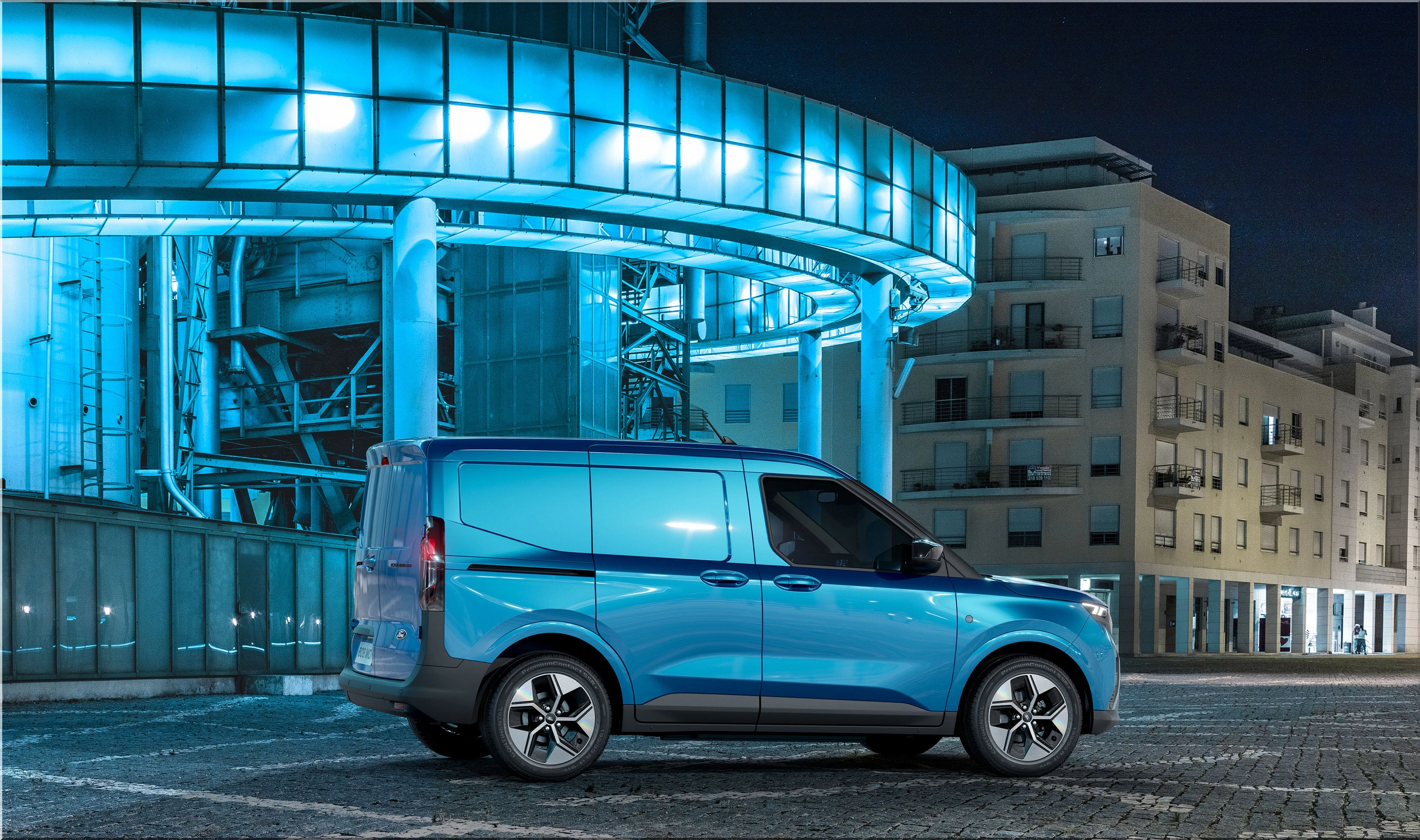
Ford Pro recently announced a suite of significant technical upgrades for the E-Transit Courier, its compact fully electric van, designed to sharpen its competitive edge in the European light commercial vehicle market. These updates focus on expanding the usable energy within the battery pack, slashing charging intervals, and integrating high-speed data architecture to streamline fleet management. By pushing the WLTP driving range to 334 km, Ford E-Transit targets the "sweet spot" of urban delivery requirements while addressing the primary concern of fleet operators: uptime.
Image
Engineering the 46 kWh Battery Architecture
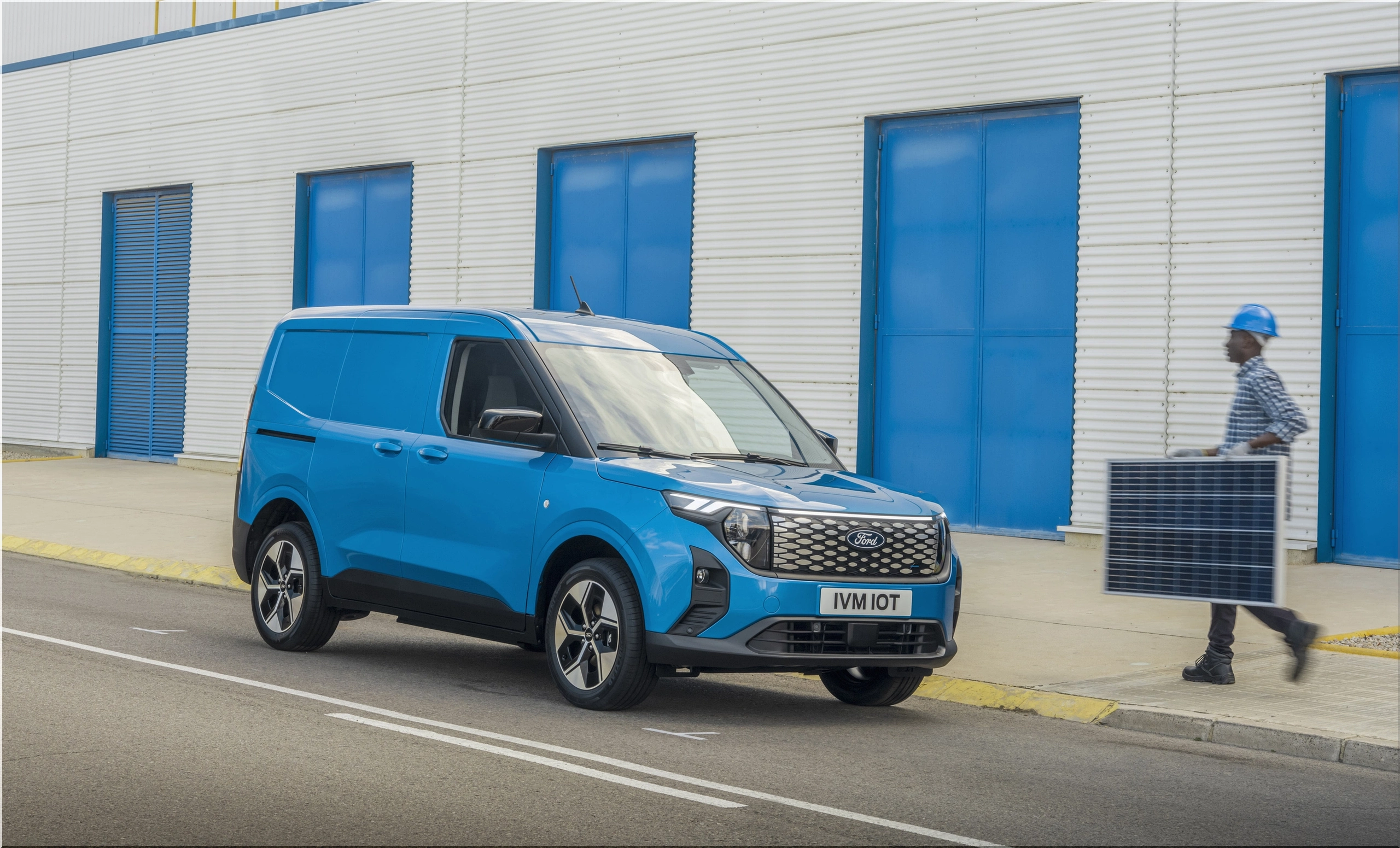
The heart of the update lies in the revised lithium-ion battery chemistry and management system. Ford engineers increased the usable battery capacity from 43 kWh to 46 kWh, a strategic move that extracts more energy without significantly increasing the vehicle's curb weight or compromising its 1,543 lbs (approx. 700 kg) payload capacity. This 7% increase in physical capacity translates to a more than 10% gain in total driving range due to improved thermal management and regenerative braking calibration.
Looking at the physics of urban delivery, a 334 km range (approximately 207 miles) provides a substantial buffer for multi-drop routes that involve heavy stop-and-go traffic. In these environments, electric motors outperform internal combustion engines by maintaining peak torque from zero RPM, ensuring the E-Transit Courier remains agile even when fully loaded. The extra 3 kWh acts as a critical reserve for running climate control systems or the new onboard power hardware without inducing range anxiety during the final leg of a shift.
High-Speed Charging and Operational Uptime
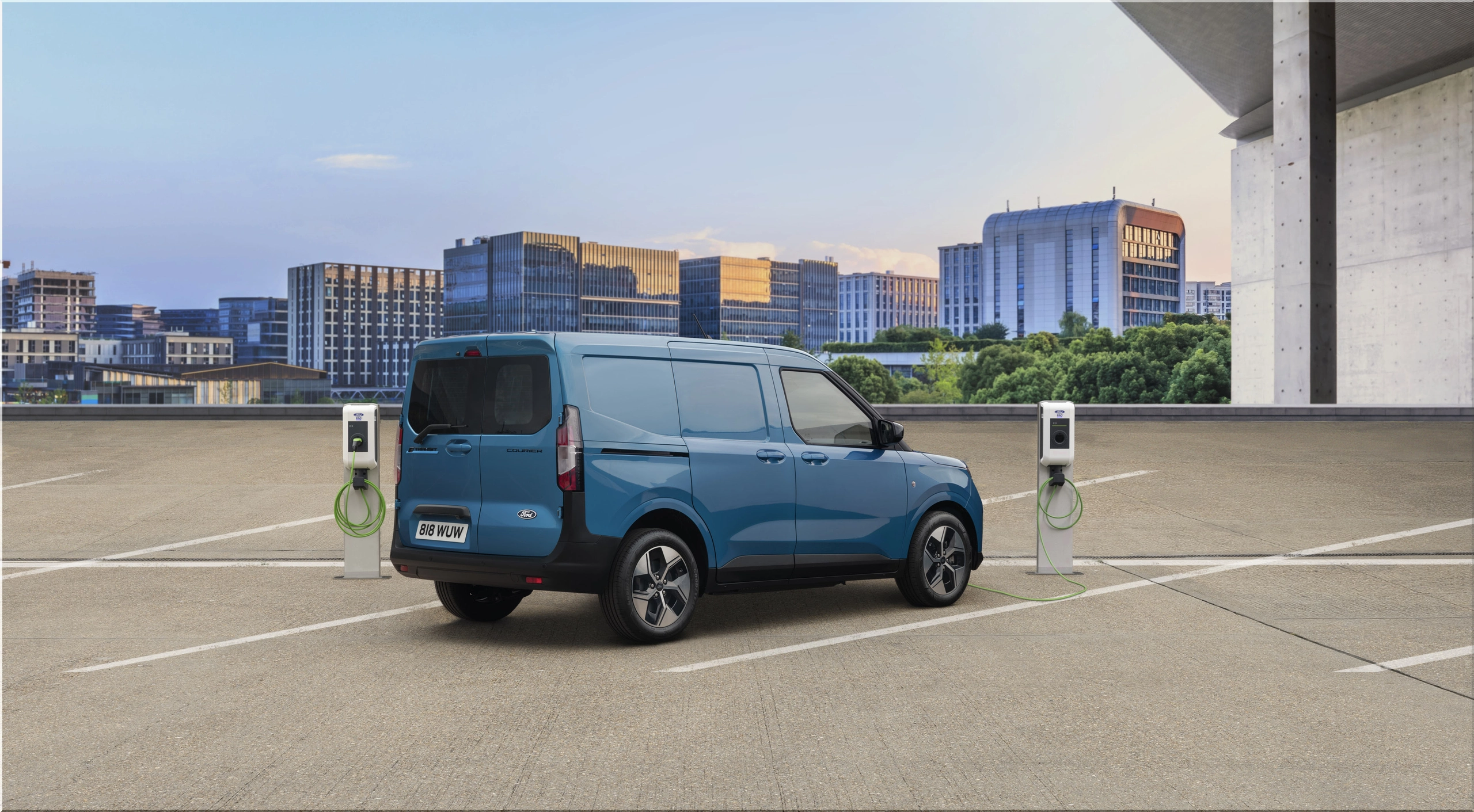
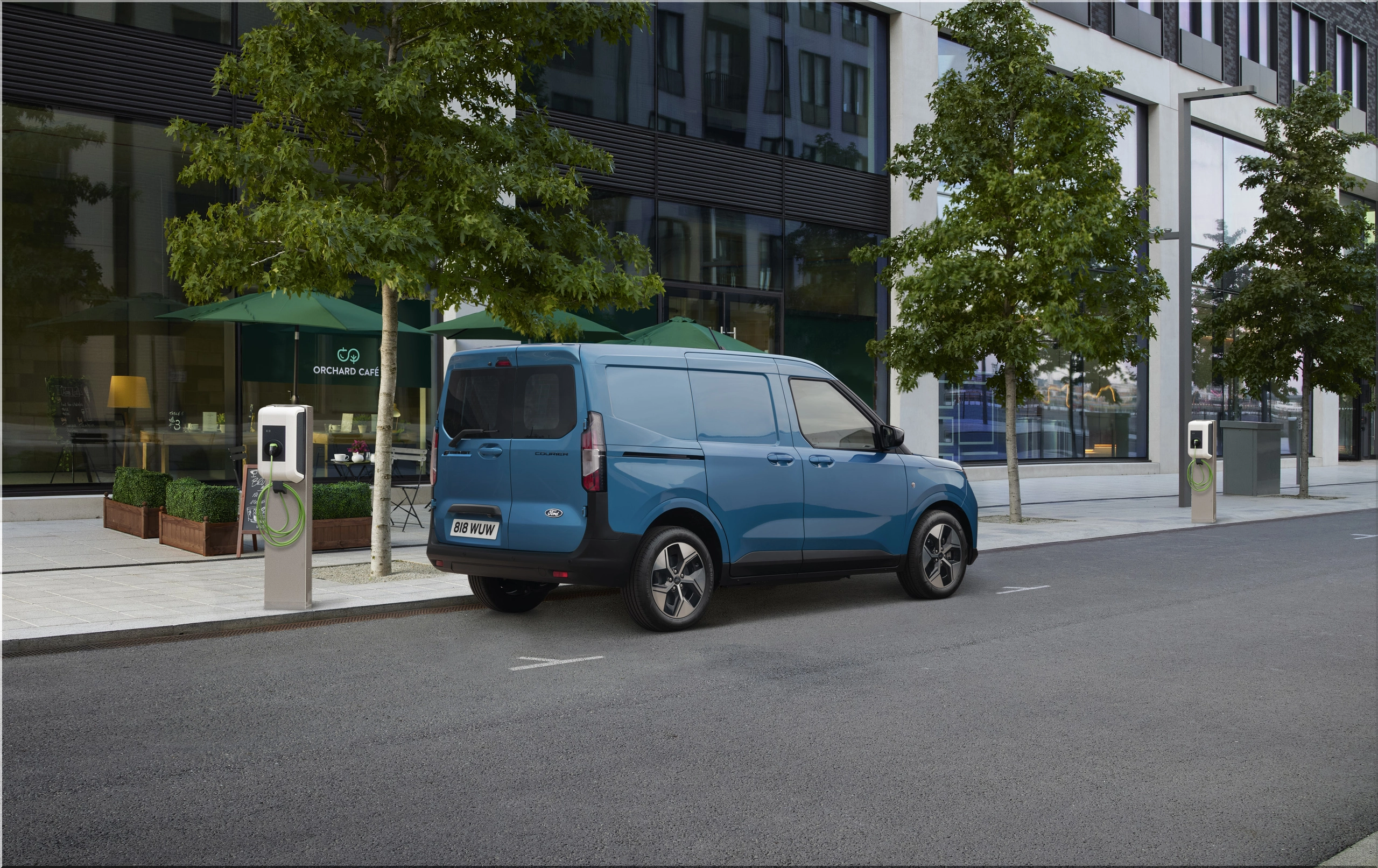
To minimize the time a vehicle spends tethered to a cord, Ford Pro optimized the DC fast-charging curve. The E-Transit Courier now supports 100 kW DC fast charging, allowing the system to replenish 114 km (71 miles) of range in approximately 10 minutes. This capability is vital for "splash and dash" scenarios where a driver needs a quick boost during a lunch break to complete an afternoon route.
For standard depot-based operations, the onboard AC charger handles the workload efficiently.
- 100 kW DC Fast Charge: 10% to 80% state of charge in under 30 minutes.
- 11 kW AC Charger: 10% to 80% charge in roughly 3 hours.
- 7.4 kW Wallbox: Full replenishment in under 5 hours.
Pro-Tip: State of Charge (SoC) Management
For maximum battery longevity and charging speed, fleet managers should instruct drivers to arrive at DC fast chargers with a 10% SoC. Charging speeds naturally taper off after 80% to protect cell chemistry, making the 10% to 80% window the most cost-effective "power-up" period.
Pro Power Onboard: The Mobile Power Station
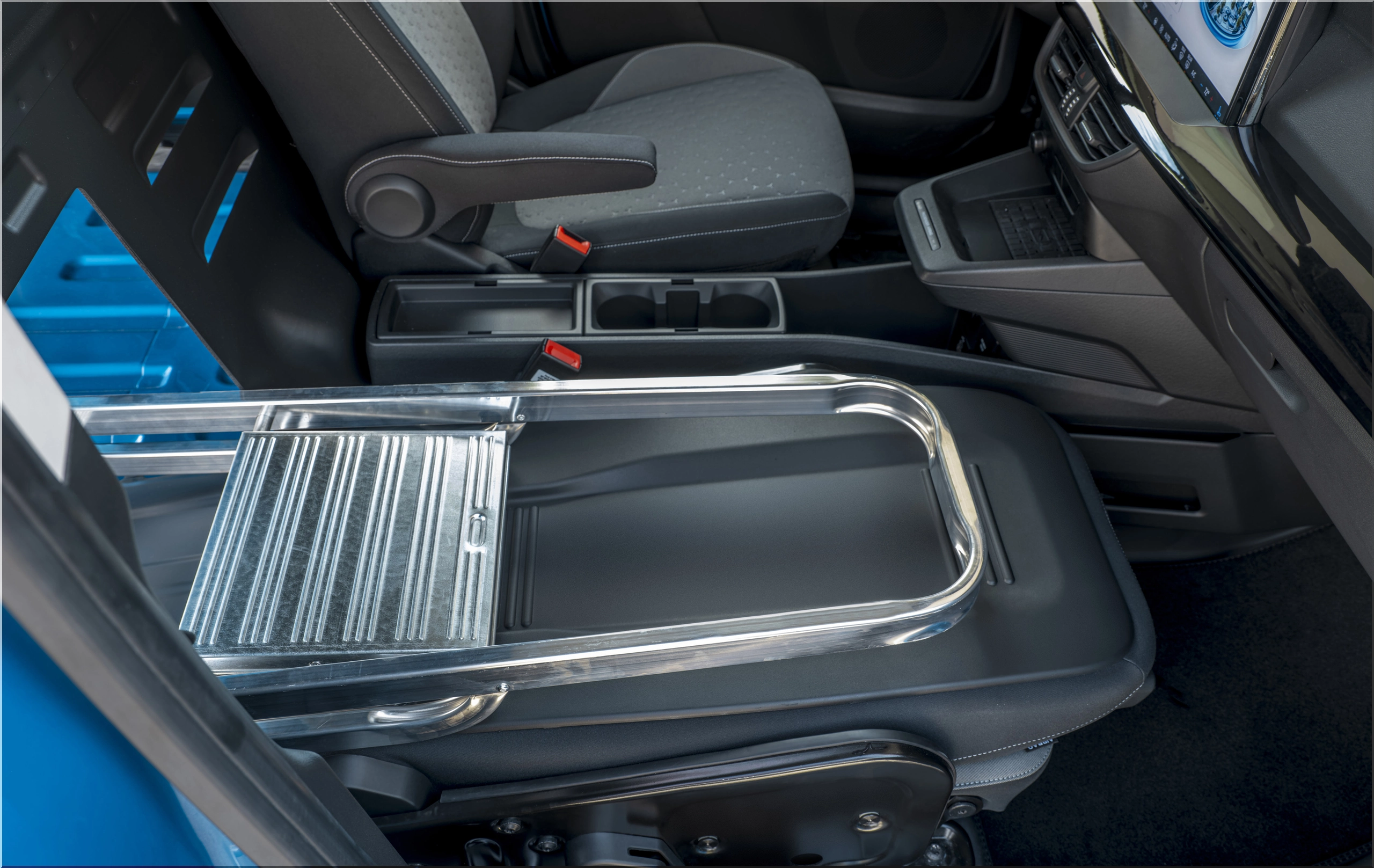
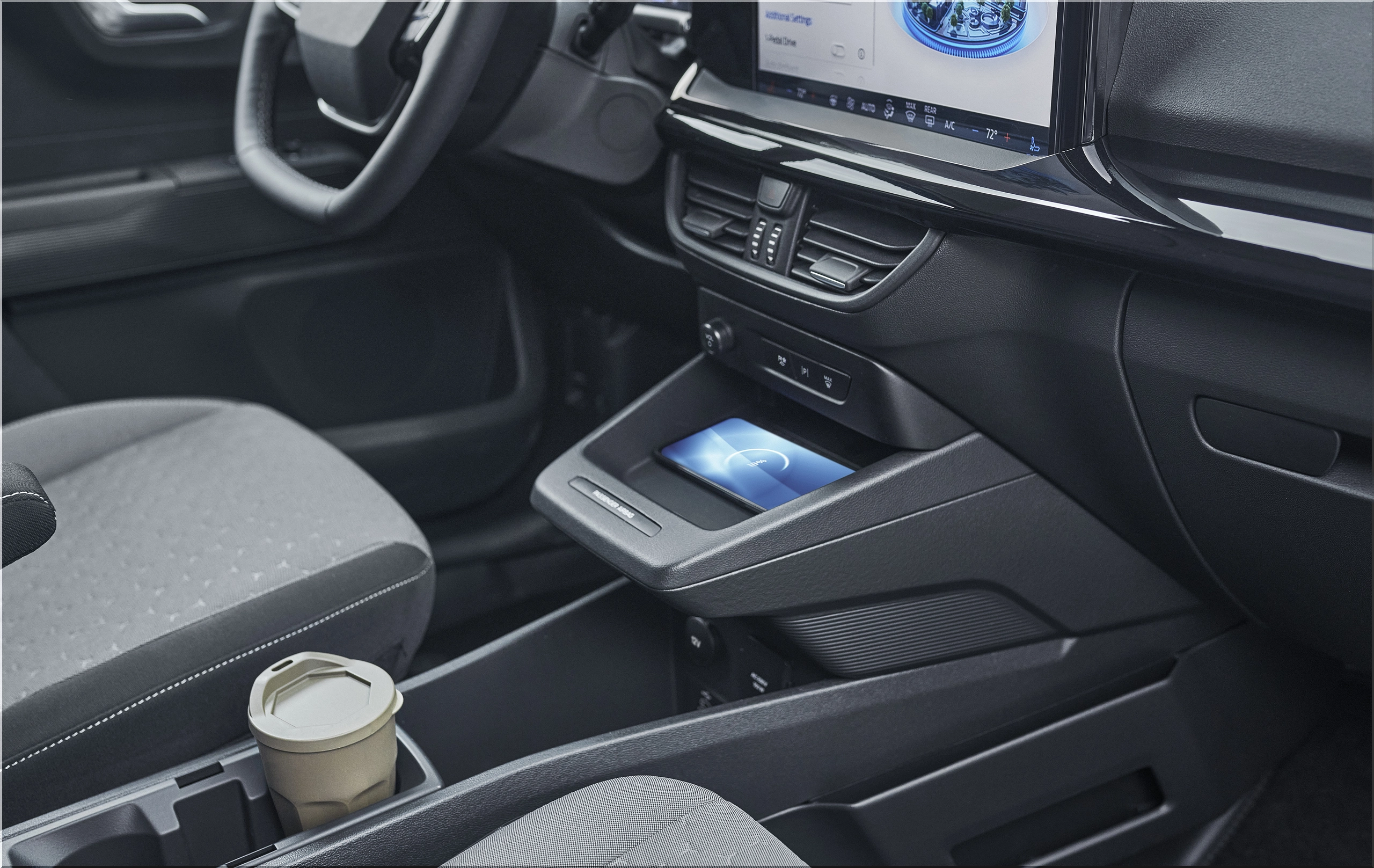
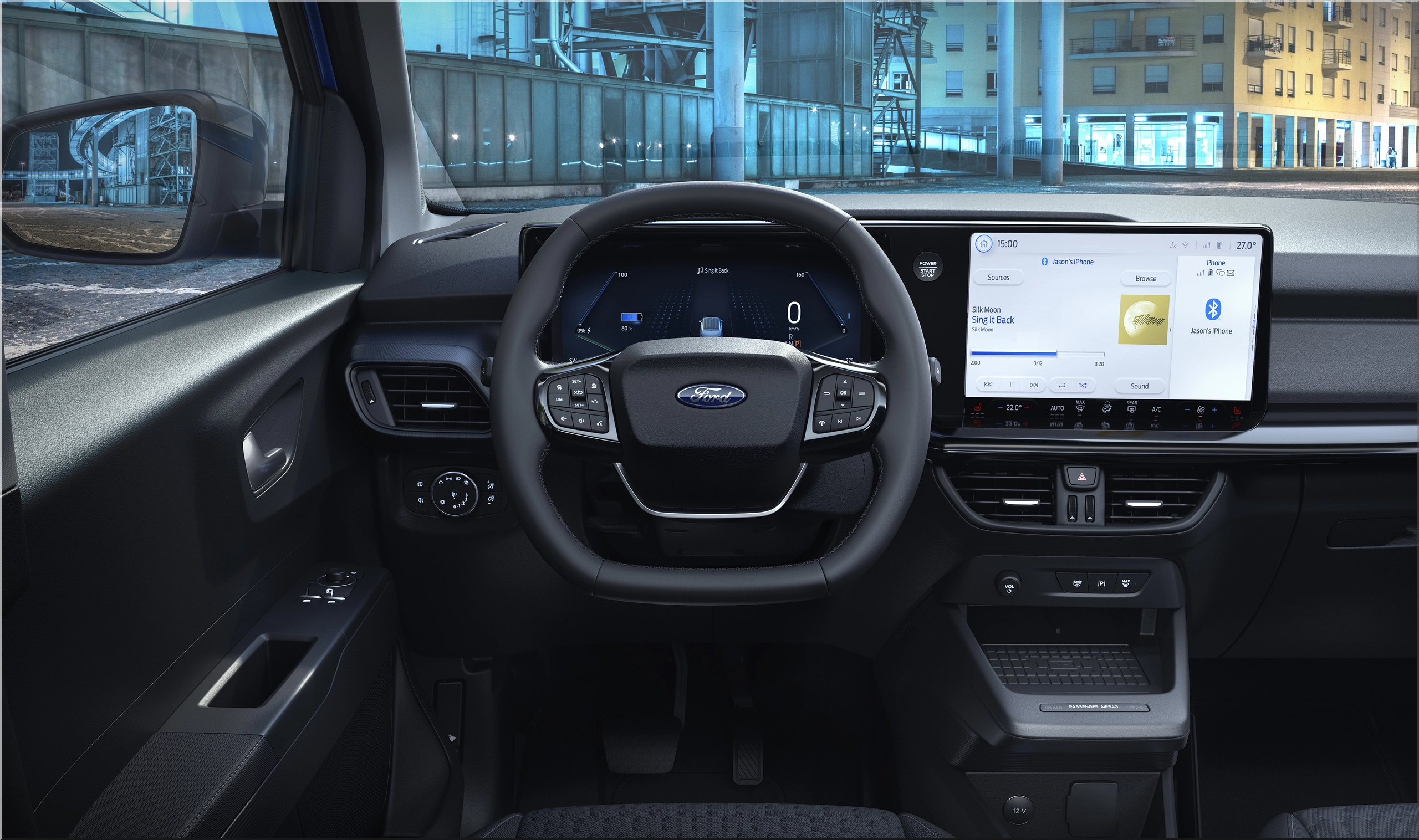
The introduction of Pro Power Onboard technology shifts the van from a simple transport vessel to a functional workstation. This system provides 400W of power through a 230V socket integrated into the dashboard. While 400W is not intended to run heavy industrial machinery like large table saws, it is perfectly calibrated for charging cordless tool batteries, powering high-brightness LED work lights, or running a laptop for onsite administrative tasks.
By drawing energy directly from the main high-voltage traction battery, the system eliminates the need for separate portable generators or idling an engine. The cabin's primary touchscreen provides a real-time interface to monitor energy consumption, ensuring that using the outlet never unexpectedly compromises the vehicle's ability to reach its next destination.
5G Connectivity and the Electroverse Network
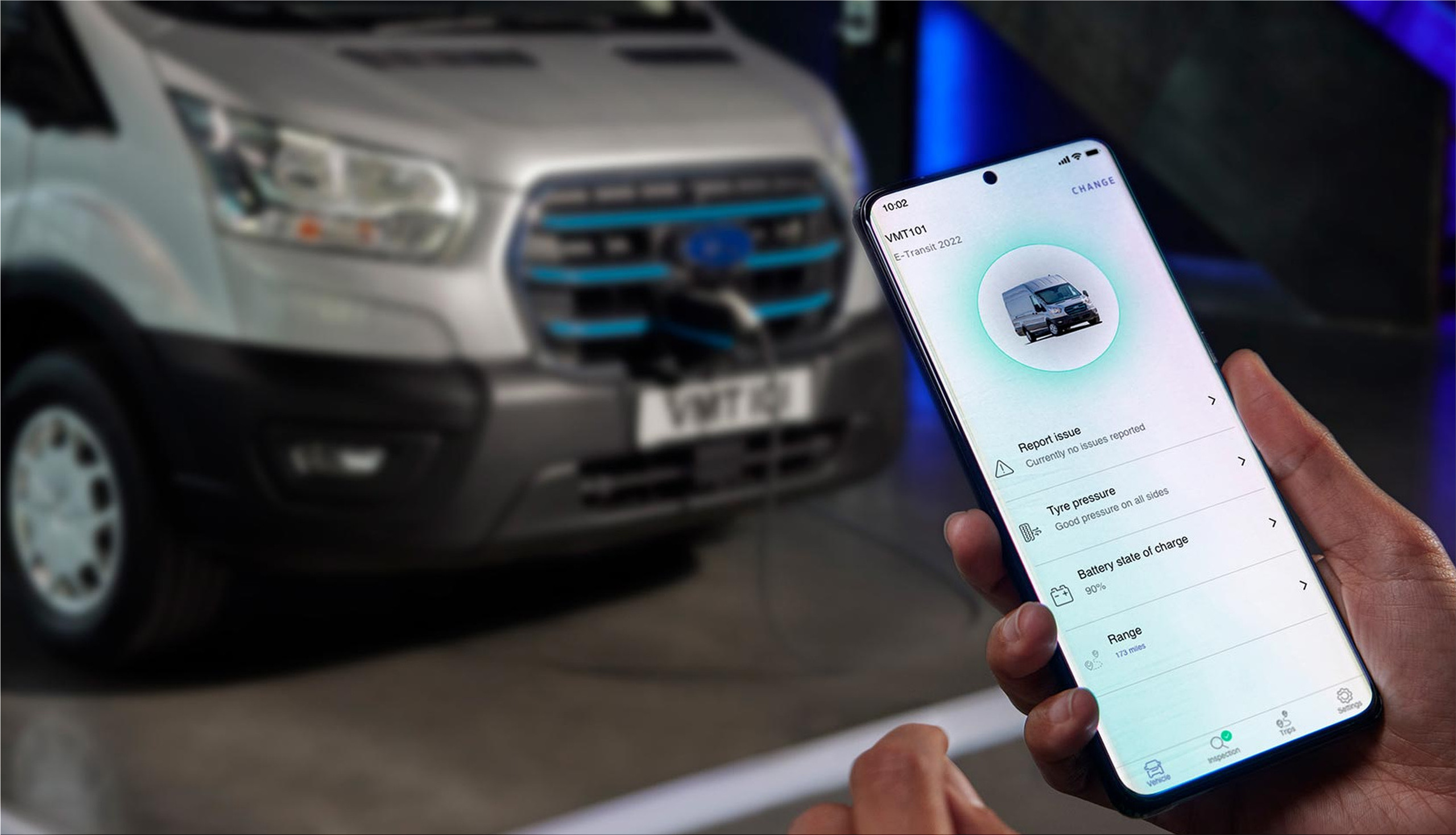
Information flow is now as critical as cargo flow. Ford integrated a 5G modem into the E-Transit Courier to support real-time data exchange between the driver and the fleet headquarters. This high-bandwidth connection enables Intelligent Route Planning, which calculates the most energy-efficient paths based on live traffic, terrain, and ambient temperature.
Image
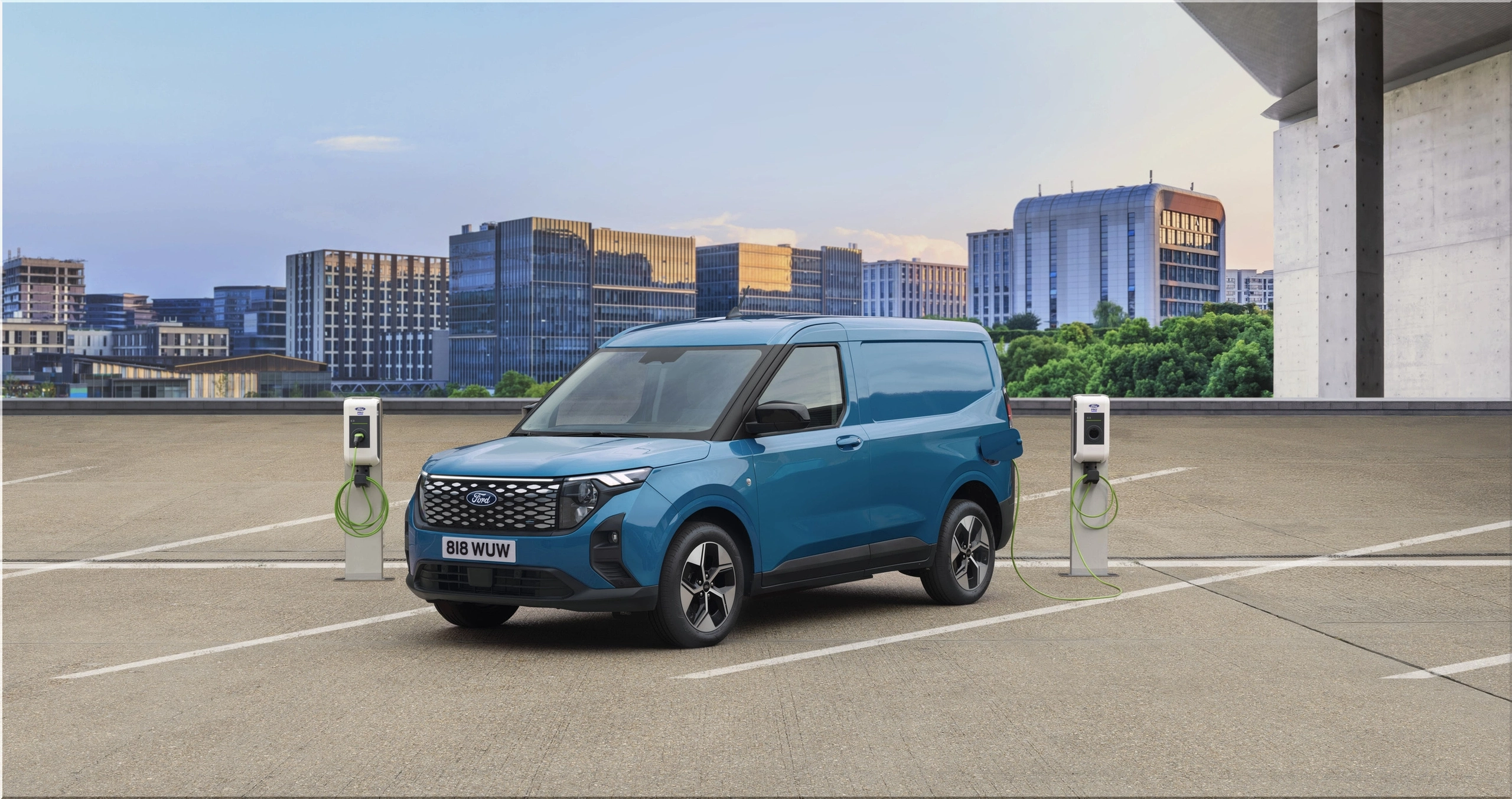
Furthermore, the 5G architecture connects seamlessly with the Ford Pro Electroverse. This platform grants drivers access to over one million charging points across Europe using a single account and payment method.
- Unified Billing: One monthly invoice covers all charging sessions across different networks.
- Live Status: The navigation system shows charger availability in real-time to prevent wasted trips.
- Plug and Charge: Simplifies the handshake between the vehicle and the charger for faster initiation.
Competitive Landscape: Compact Electric Van Comparison
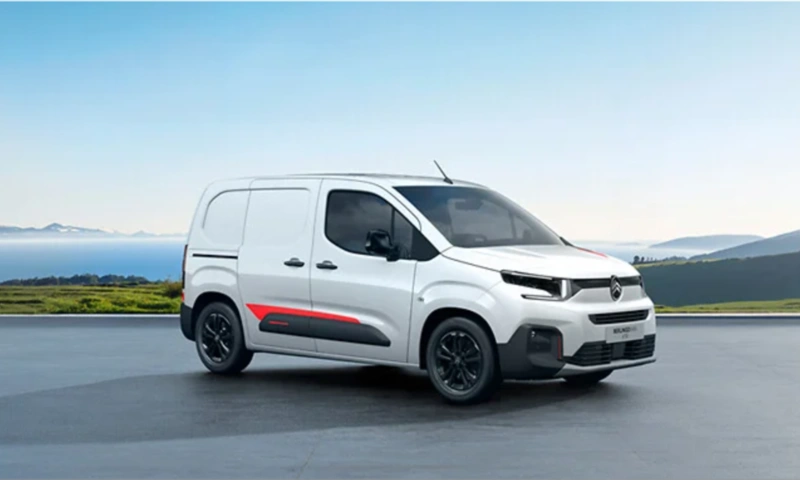
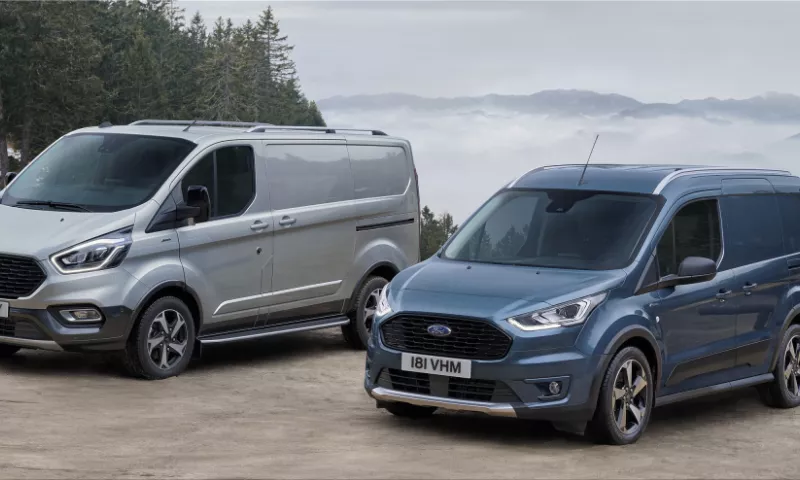
The compact electric van segment is highly contested, with manufacturers vying for dominance in the "last-mile" delivery sector. The table below compares the E-Transit Courier against its primary European rivals.
| Feature | Ford E-Transit Courier | Renault Kangoo E-Tech | Stellantis (E-Berlingo/Partner) |
|---|---|---|---|
| Battery Capacity (Usable) | 46 kWh | 45 kWh | 50 kWh |
| Max WLTP Range | 334 km | 300 km | 330 km |
| Max DC Charging Rate | 100 kW | 80 kW | 100 kW |
| Onboard Power Outlets | Yes (400W) | No | No |
| Connectivity | 5G Standard | 4G LTE | 4G LTE |
From an expert perspective, Ford wins on charging speed and connectivity. While the Stellantis models offer a slightly larger battery, the Ford's superior 5G integration and the inclusion of Pro Power Onboard provide higher utility for tradespeople who use their vehicle as a mobile office.
Image gallery

Driver Safety and Fatigue Detection Systems
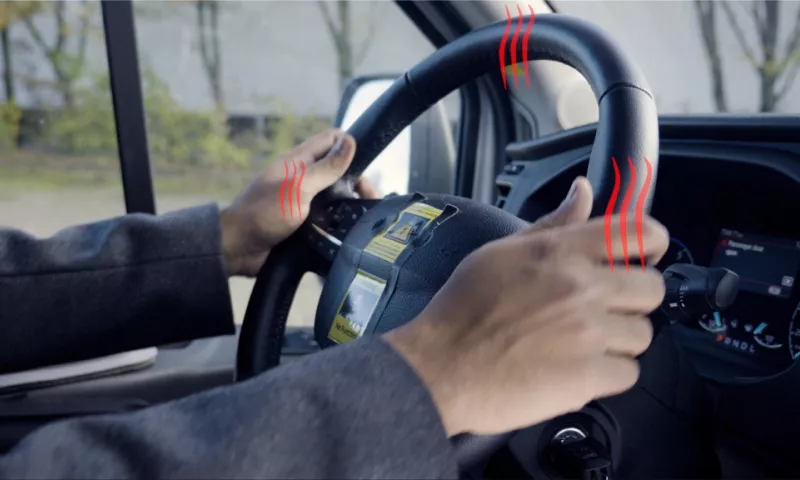
Safety technology in the Ford E-Transit Courier electric van has been upgraded through a sophisticated Driver Alert system. Utilizing a suite of sensors and software algorithms, the vehicle monitors steering inputs and lane positioning to identify patterns associated with fatigue or distraction. If the system detects a lapse in driver attention, it issues visual and audible warnings.
This system also monitors for sudden health-related incidents. If a driver becomes unresponsive, the vehicle can assist in maintaining lane integrity or bringing the van to a controlled stop, depending on the specific safety package selected. For fleet managers, these features reduce insurance liabilities and, more importantly, protect their most valuable asset: the personnel.
Strategic Manufacturing and Global Vision
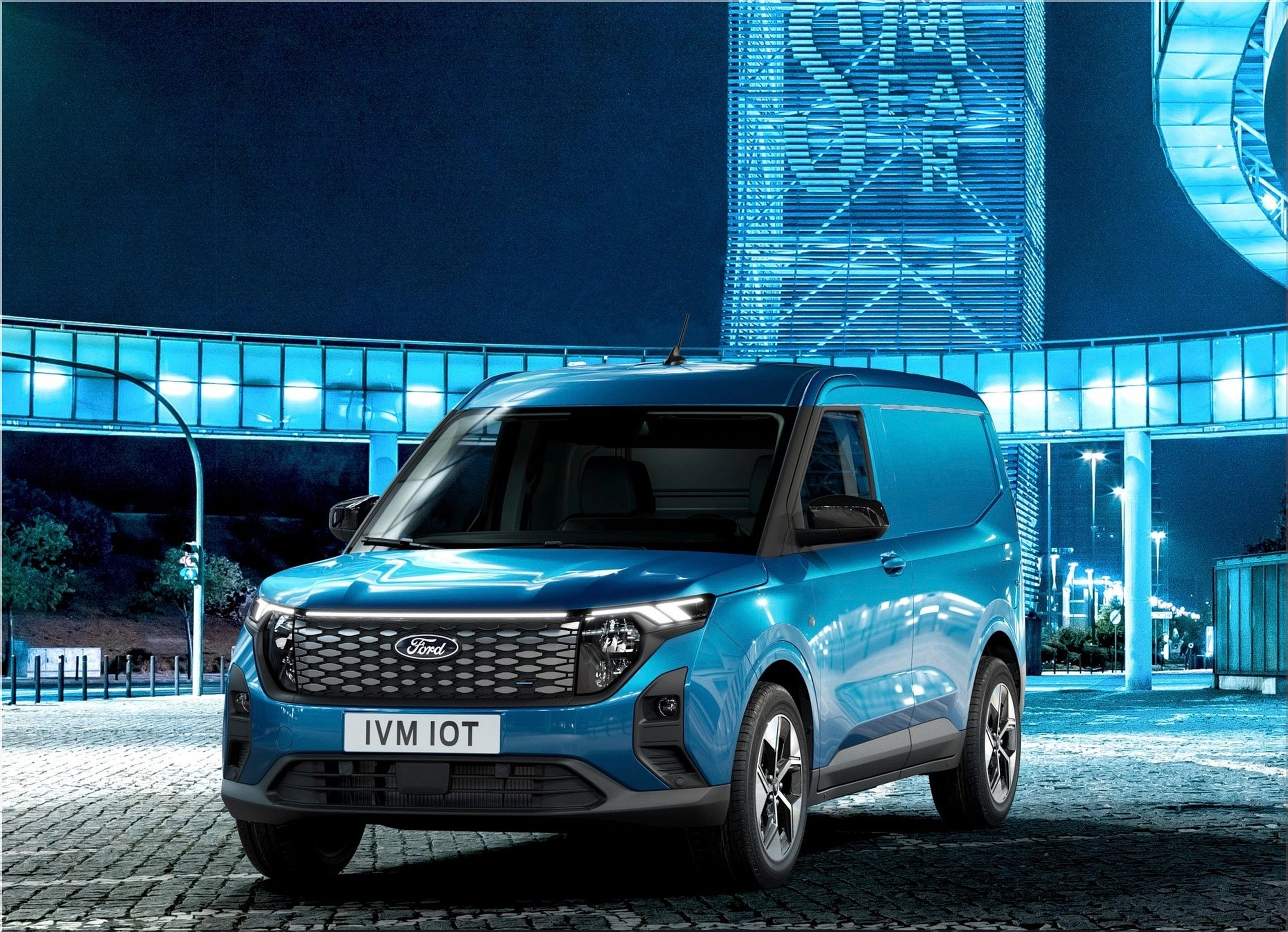
The production of the E-Transit Courier is a localized effort within Ford's European manufacturing network. The vehicle is assembled at the Ford Otosan facility in Craiova, Romania, following a major investment in the plant's electrification capabilities. This facility, along with the Kocaeli plant in Turkey, forms the backbone of Ford Pro's production strategy.
Ford's overarching Ford+ plan aims for a completely carbon-neutral footprint in Europe by 2035. This involves not just the tailpipe emissions of the vehicles, but the entire lifecycle of the product, from the sourcing of raw materials for the 46 kWh batteries to the renewable energy used to power the assembly lines in Cologne and Valencia.
Image
Technical Specifications and Dimensions
| Category | Specification | Measurement |
|---|---|---|
| Cargo Volume | Maximum Capacity | 2.9 cubic meters |
| Payload | Maximum Net Payload | ~1,543 lbs (700 kg) |
| Towing Capacity | Max Braked Trailer | ~1,650 lbs (750 kg) |
| Turning Circle | Curb-to-Curb | 10.7 meters |
| Wheelbase | Distance between axles | 2,692 mm |
Image gallery
What Now? Actionable Steps for Fleet Operators
The shift to the E-Transit Courier is more than a vehicle replacement; it is a digital transition. Fleet operators should take the following steps to maximize their ROI:
- Audit Charging Infrastructure: Evaluate if your current depot can support 11 kW AC charging to take advantage of the 3-hour charge time.
- Enroll in Electroverse: Register drivers early to ensure they have access to the one-million-point charging network before taking delivery.
- Review Telematics Data: Use the 5G modem's data stream to identify high-energy routes and provide coaching for drivers to maximize the 334 km range.
By focusing on density—both in the battery cells and the data packets—Ford Pro has created a tool that addresses the granular needs of modern logistics. The E-Transit Courier is a calculated response to the increasing pressure on urban delivery networks to be faster, cleaner, and more connected.
- Add new comment
- 267 views