Overview
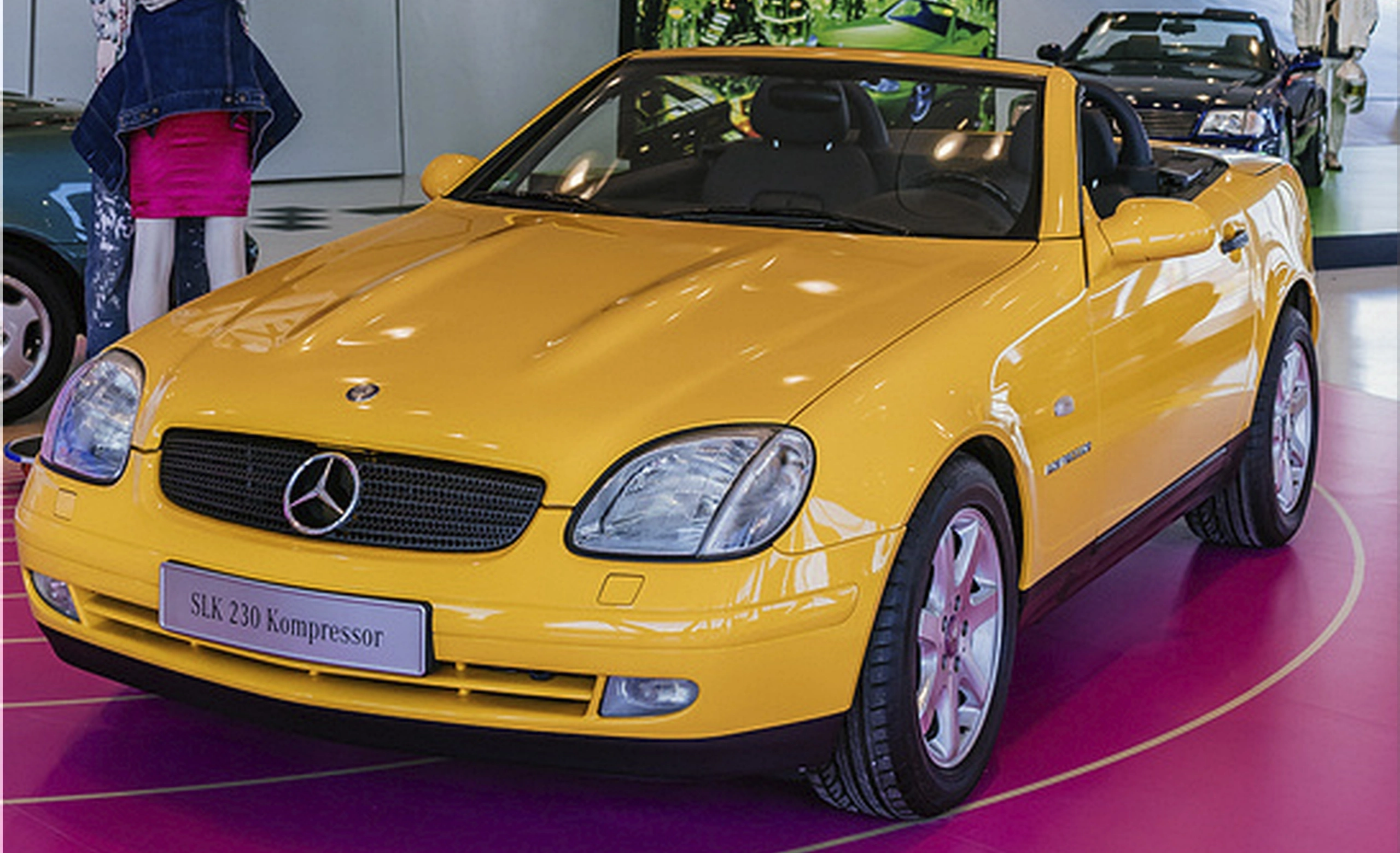
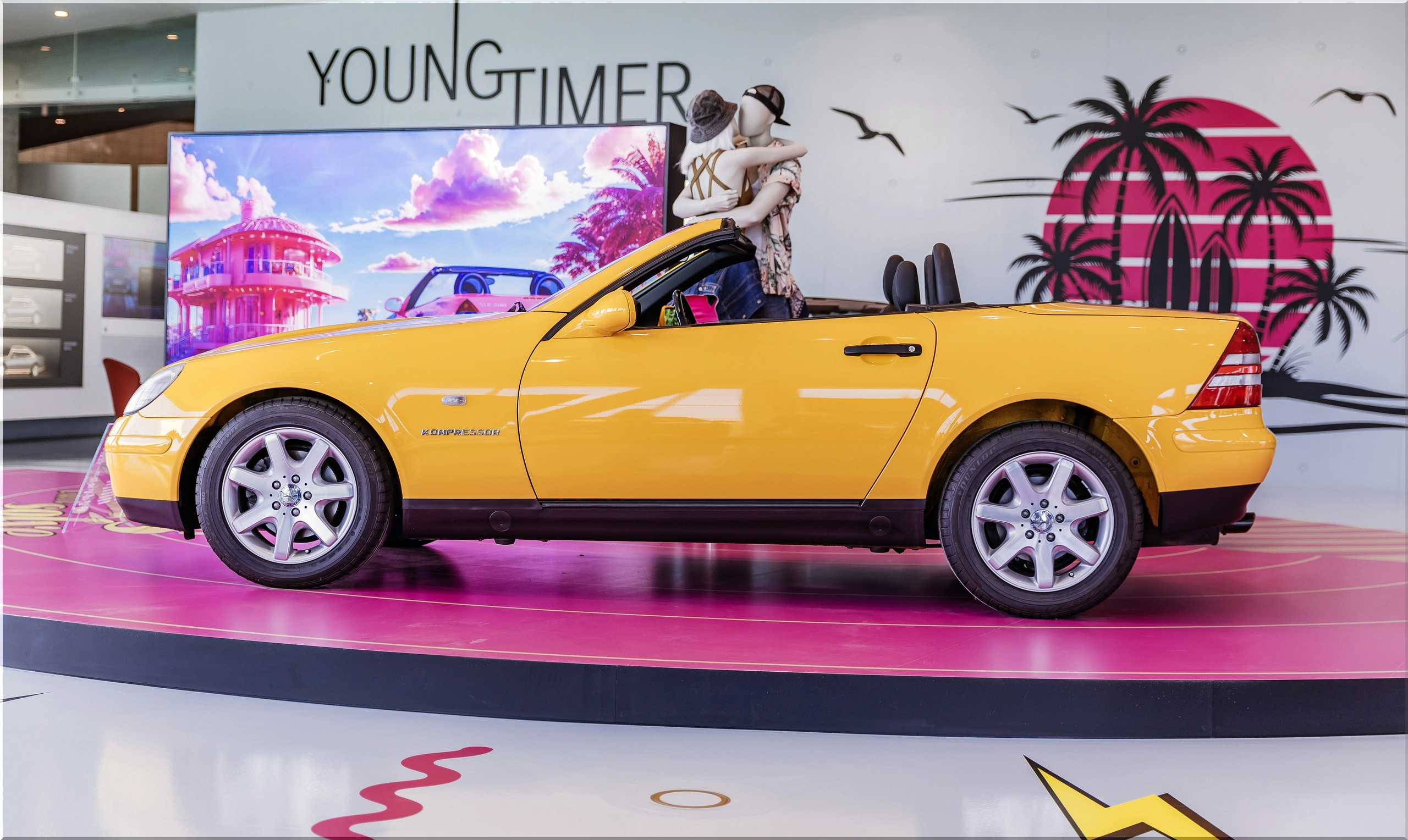
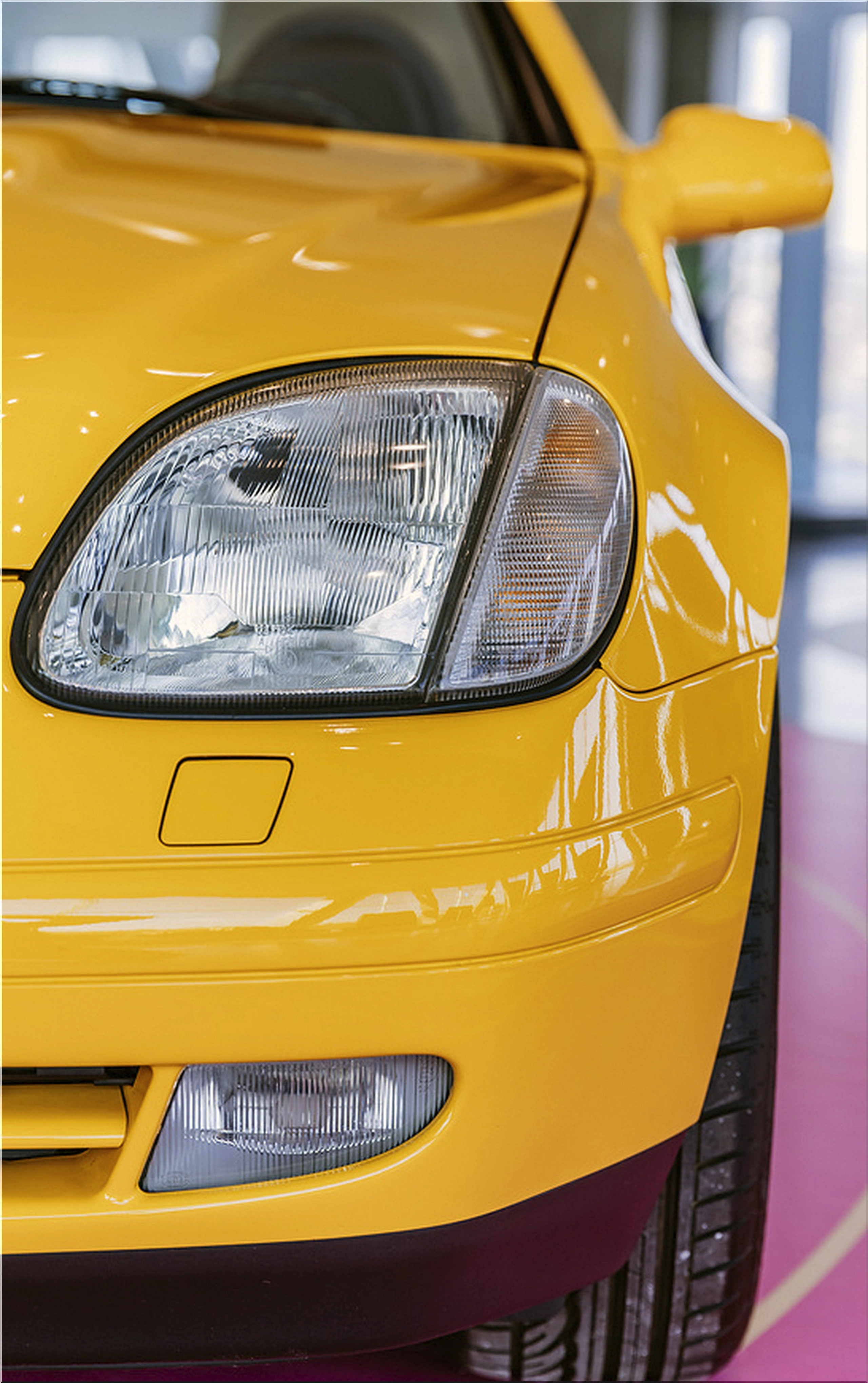
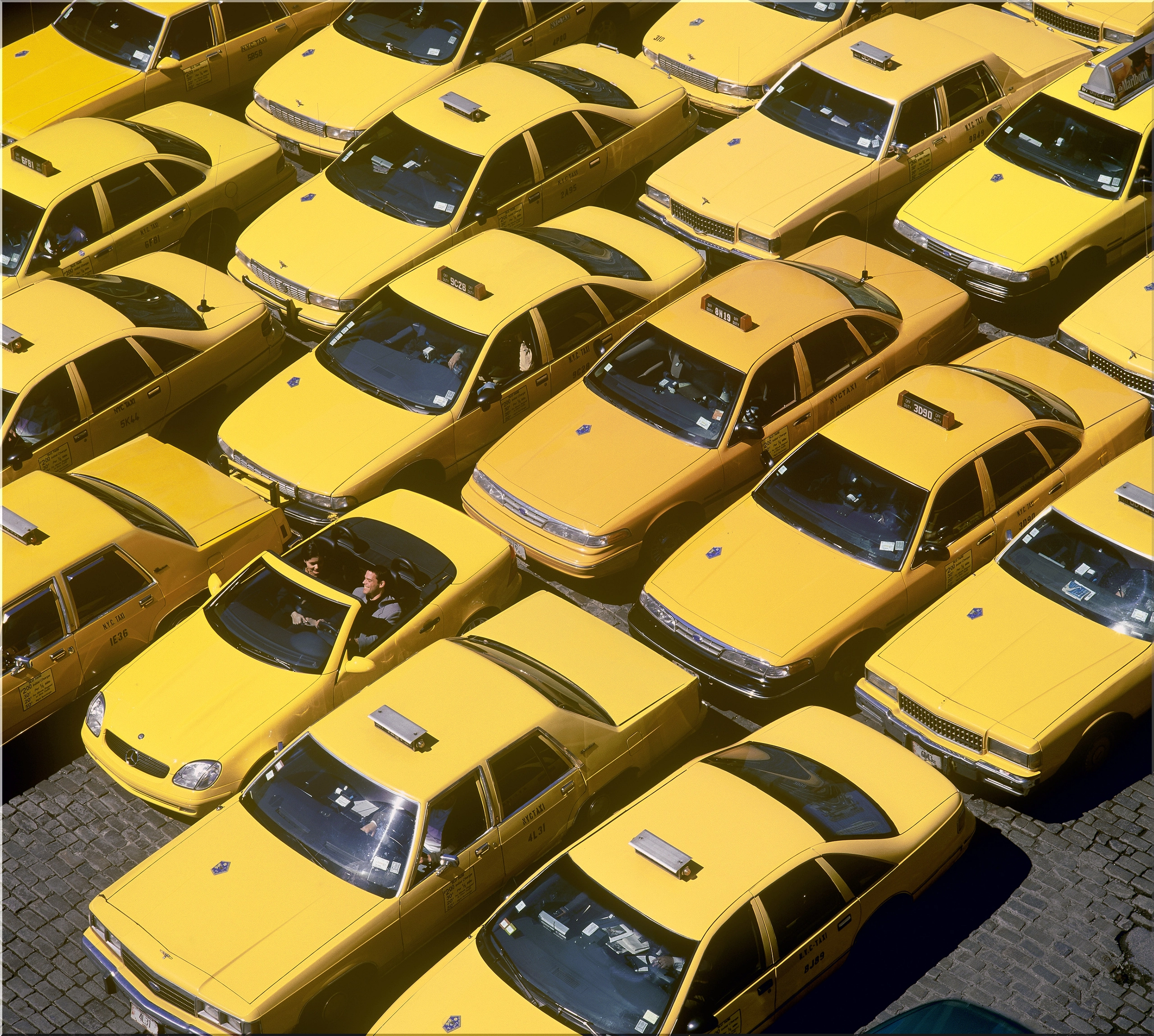
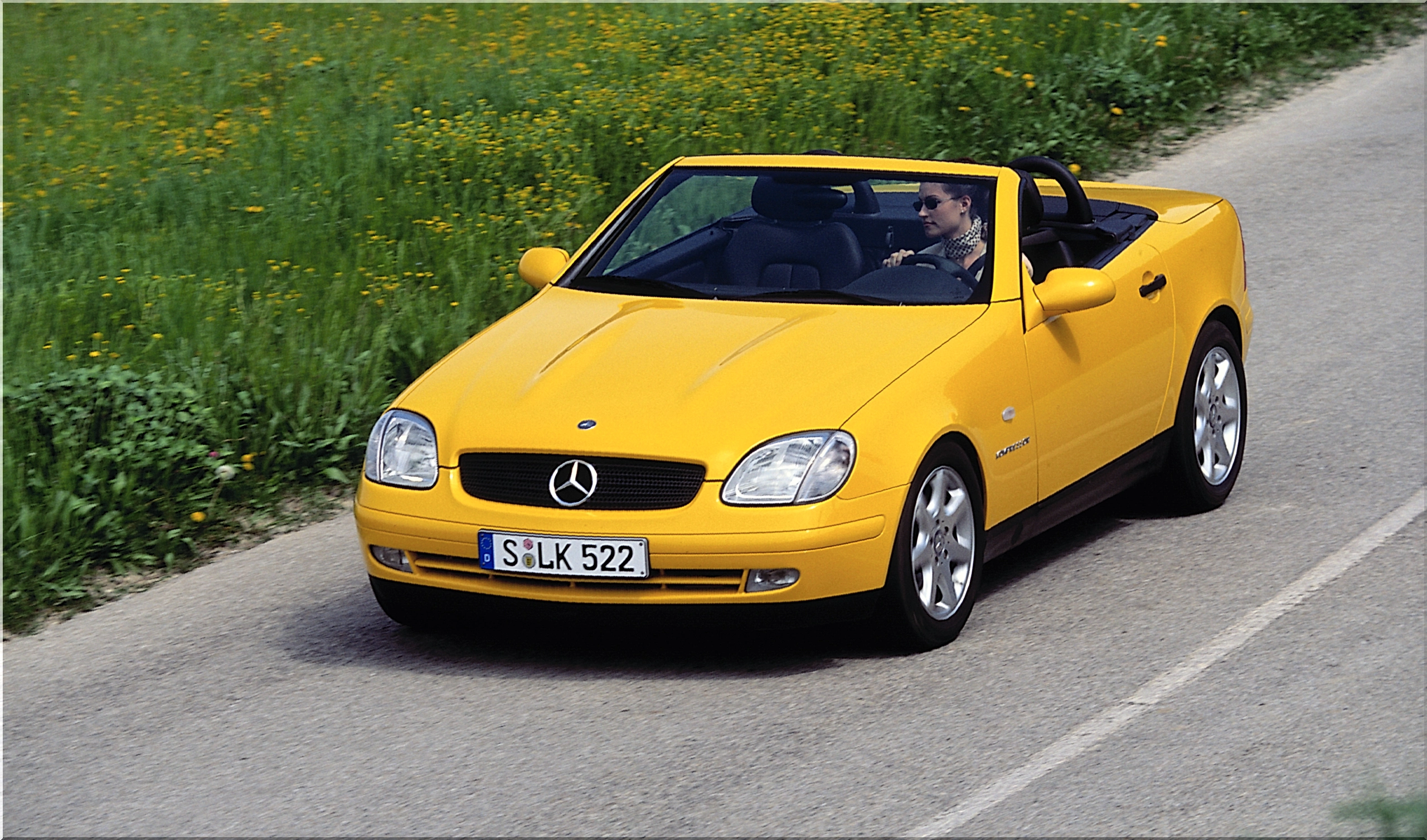
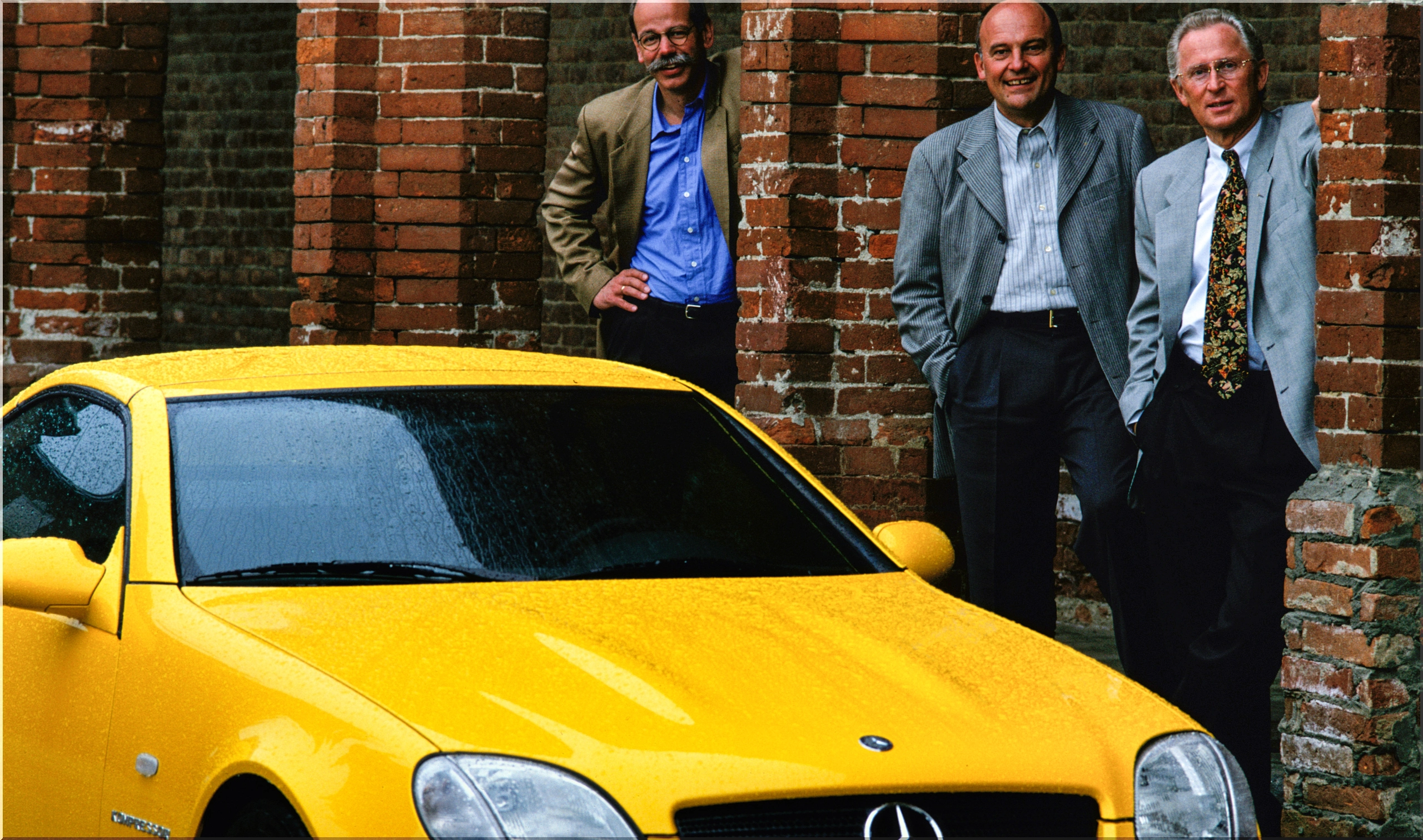
The Mercedes-Benz SLK (R170) launched in 1996 at the Turin Motor Show. It was a bold move by the brand to enter the compact roadster market with a product focused on engineering innovation, daily usability, and open-top driving.
SLK stands for Sportlich (Sporty), Leicht (Lightweight), and Kurz (Compact). Mercedes used this concept to deliver a roadster that combined comfort, structural safety, and performance.
Key Innovations: The Vario-Roof
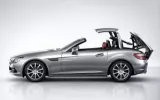
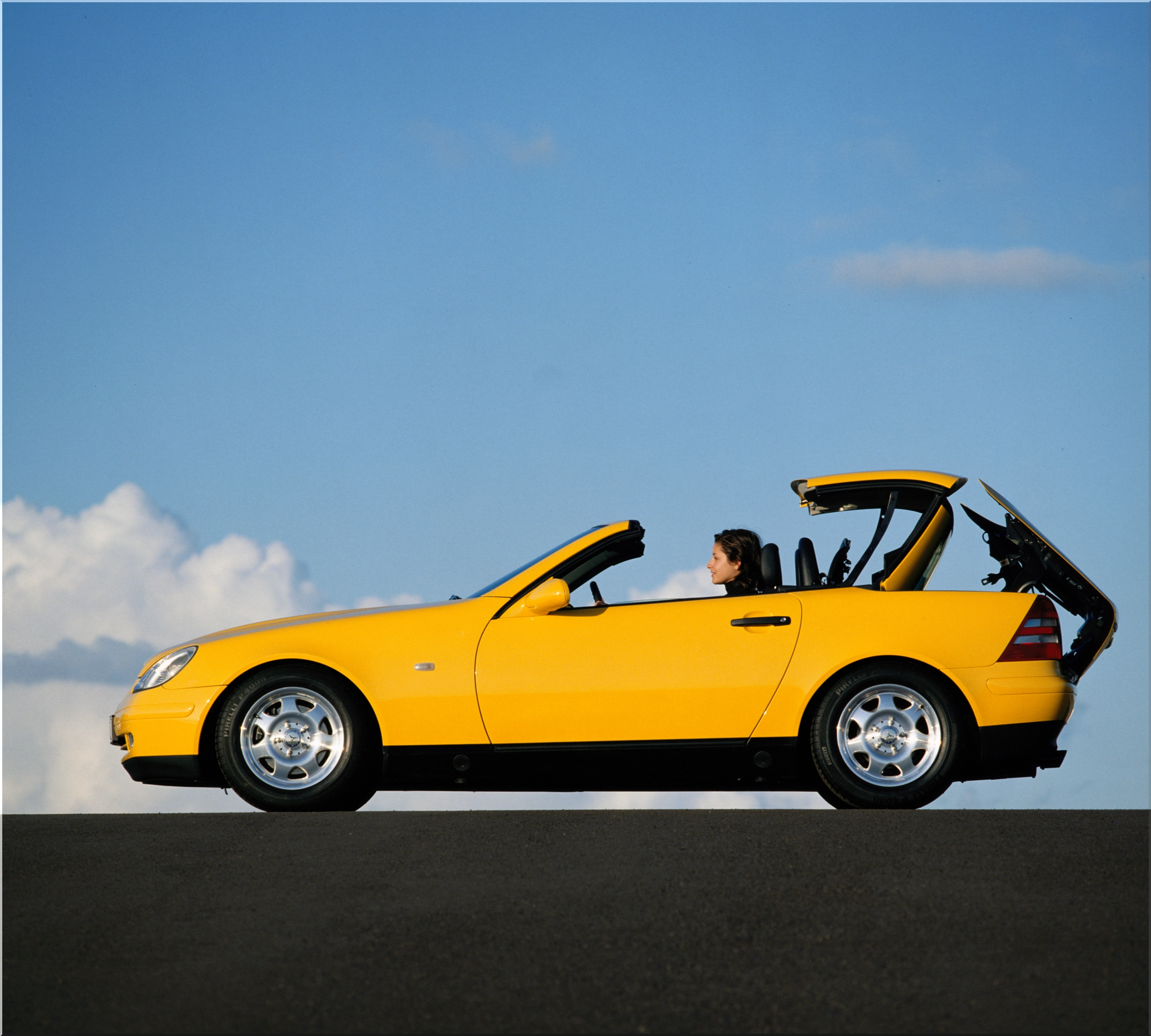
The Vario-Roof became the SLK’s signature feature. This electrohydraulic hardtop folded into the trunk in 25 seconds, turning a coupe into a convertible seamlessly.
Why it mattered:
- Security and noise insulation of a coupe.
- Freedom of open-air driving without canvas roof drawbacks.
- Created a new benchmark for retractable hardtops.
This roof concept was new in the mass market. Competitors took years to catch up.
Engine Options: Performance Without Complexity
Original Lineup (1996):
- Mercedes-Benz SLK 200:
- 2.0L inline-4
- 136 hp
- Basic but efficient.
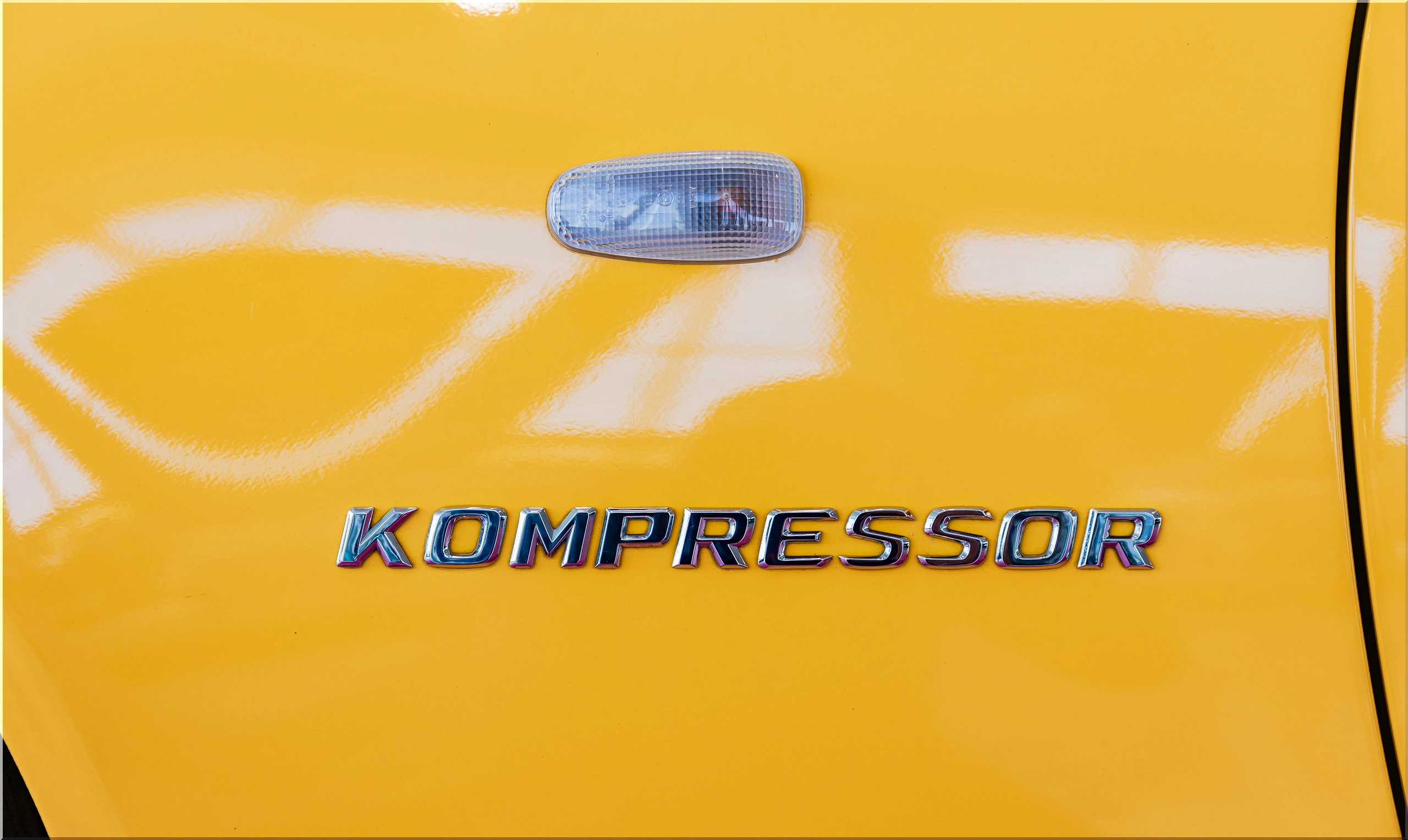
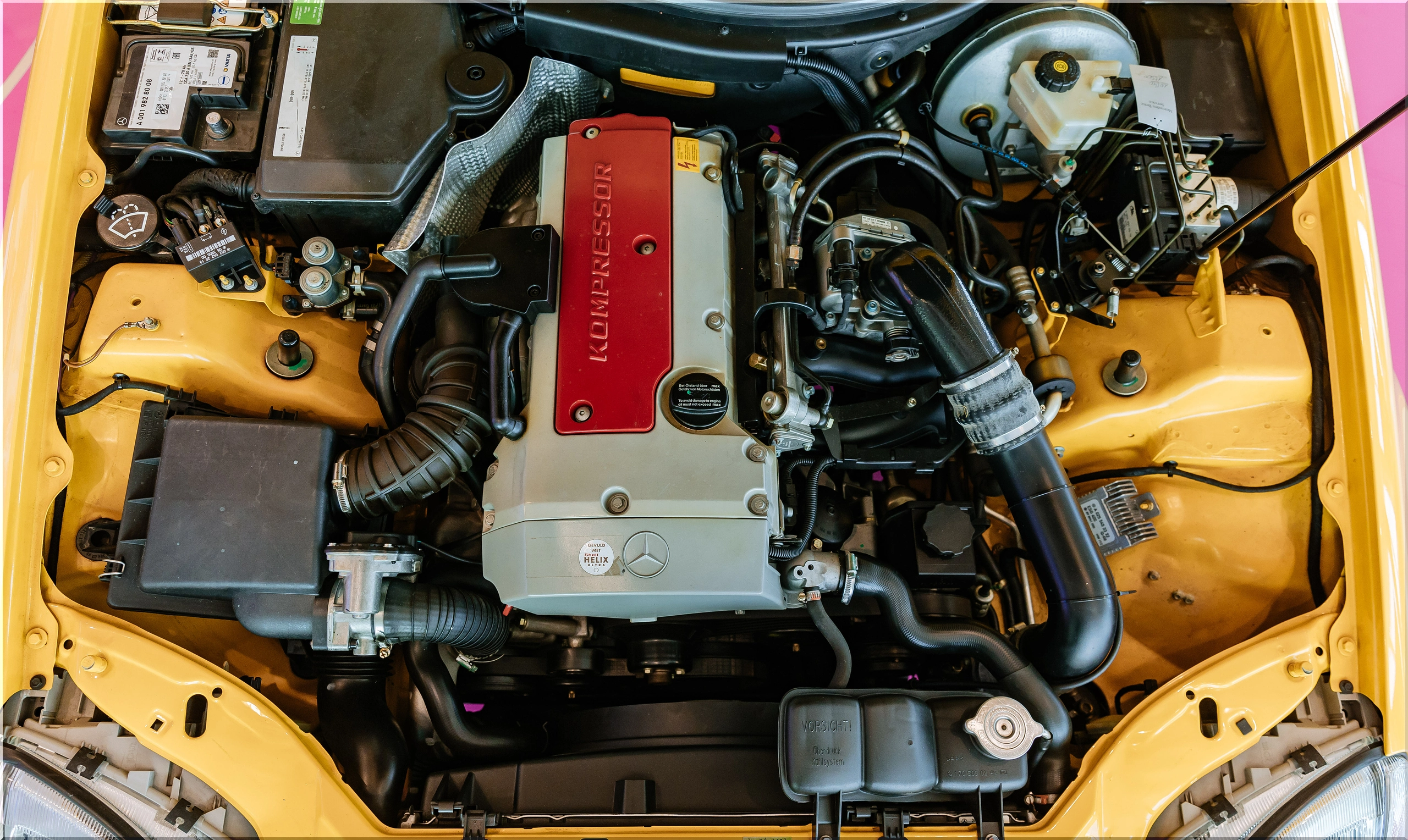
- Mercedes-Benz SLK 230 Kompressor:
- 2.3L supercharged inline-4
- 193 hp
- Offered torque-rich response with better highway performance.
Expanded Range (2000–2004):
- Mercedes-Benz SLK 320:
- 3.2L V6
- 218 hp
- Improved refinement and smooth power delivery.
- Mercedes-Benz SLK 32 AMG:
- 3.2L supercharged V6
- 354 hp
- 0–60 mph in 4.8 seconds
- Hand-assembled AMG engine, limited-slip differential.
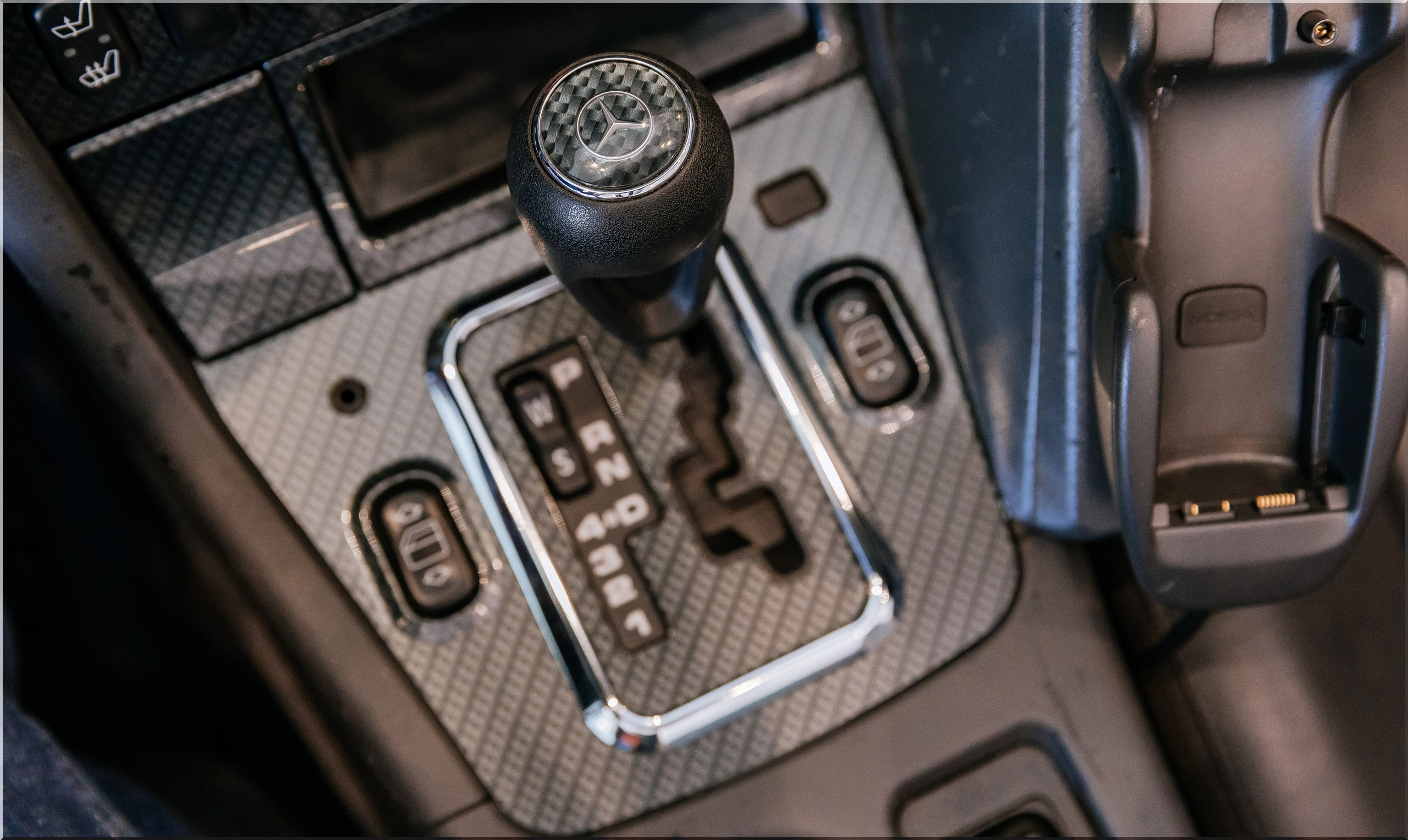
All engines used rear-wheel drive, and most came with 5-speed automatic or 6-speed manual options.
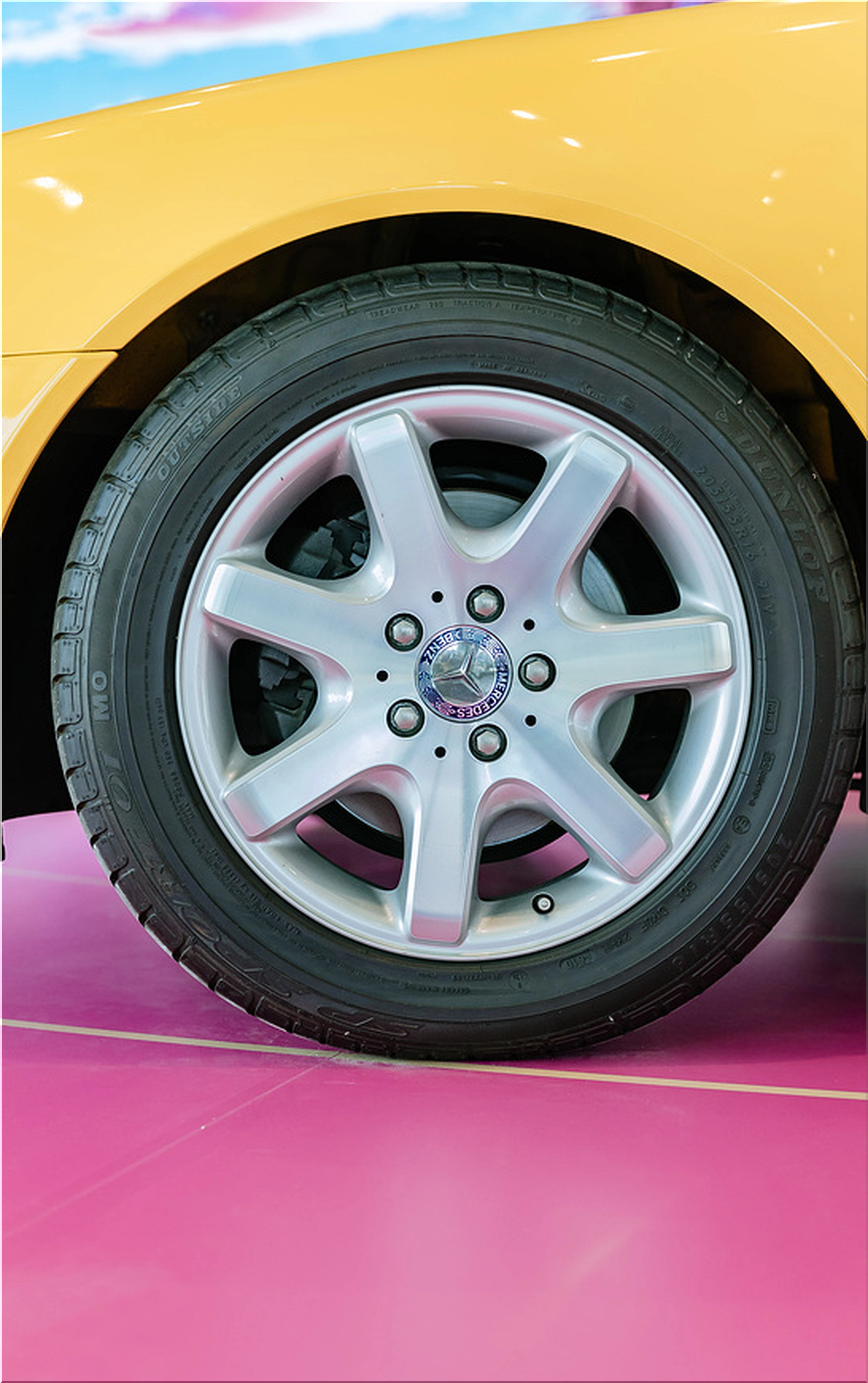
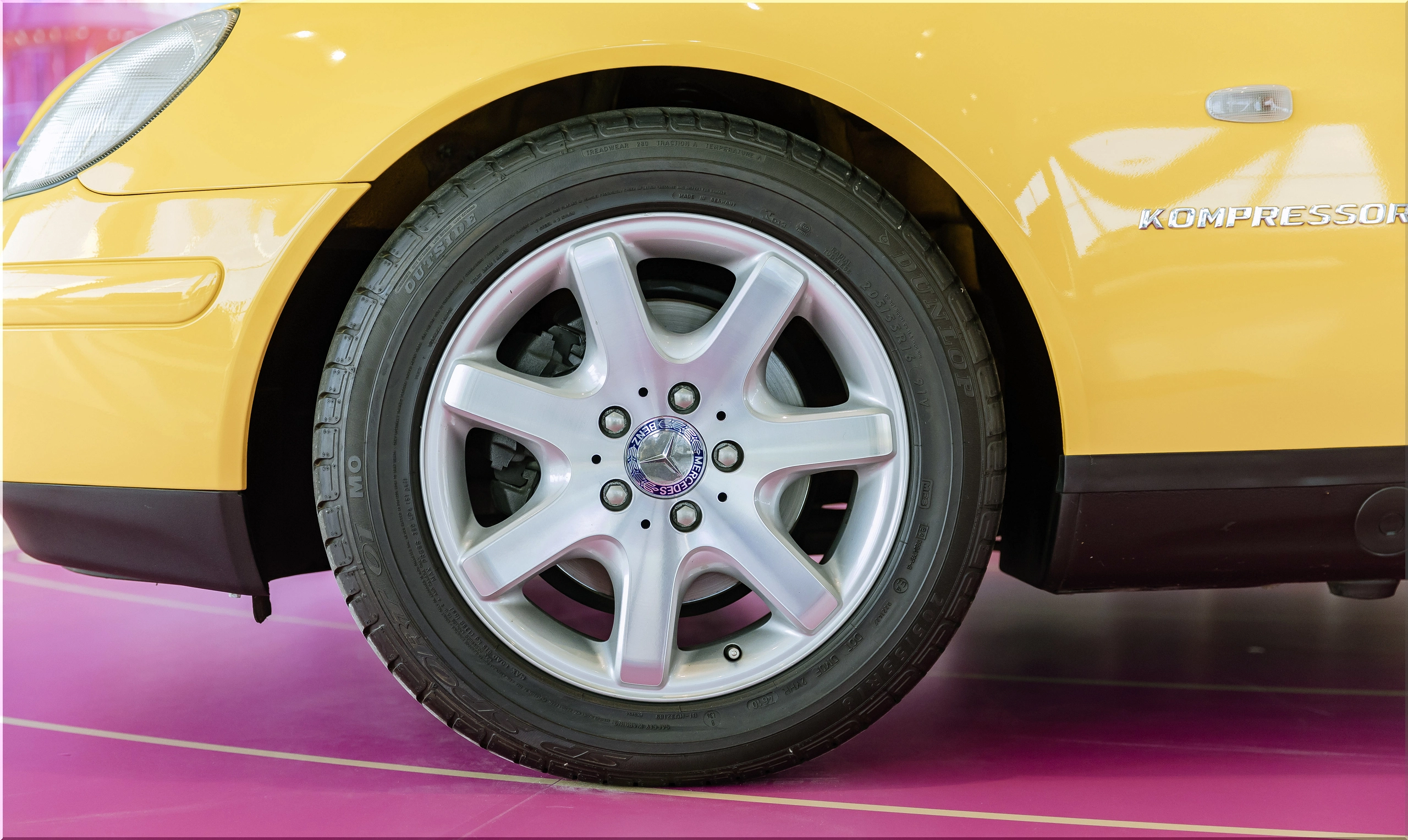
Image gallery
Safety Engineering: Compact Yet Rigid
Mercedes engineers added key safety features uncommon in compact convertibles of the 1990s:
- Ellipsoidal bulkhead behind the seats:
Improved torsional rigidity and frontal crash performance. - Dual roll bars:
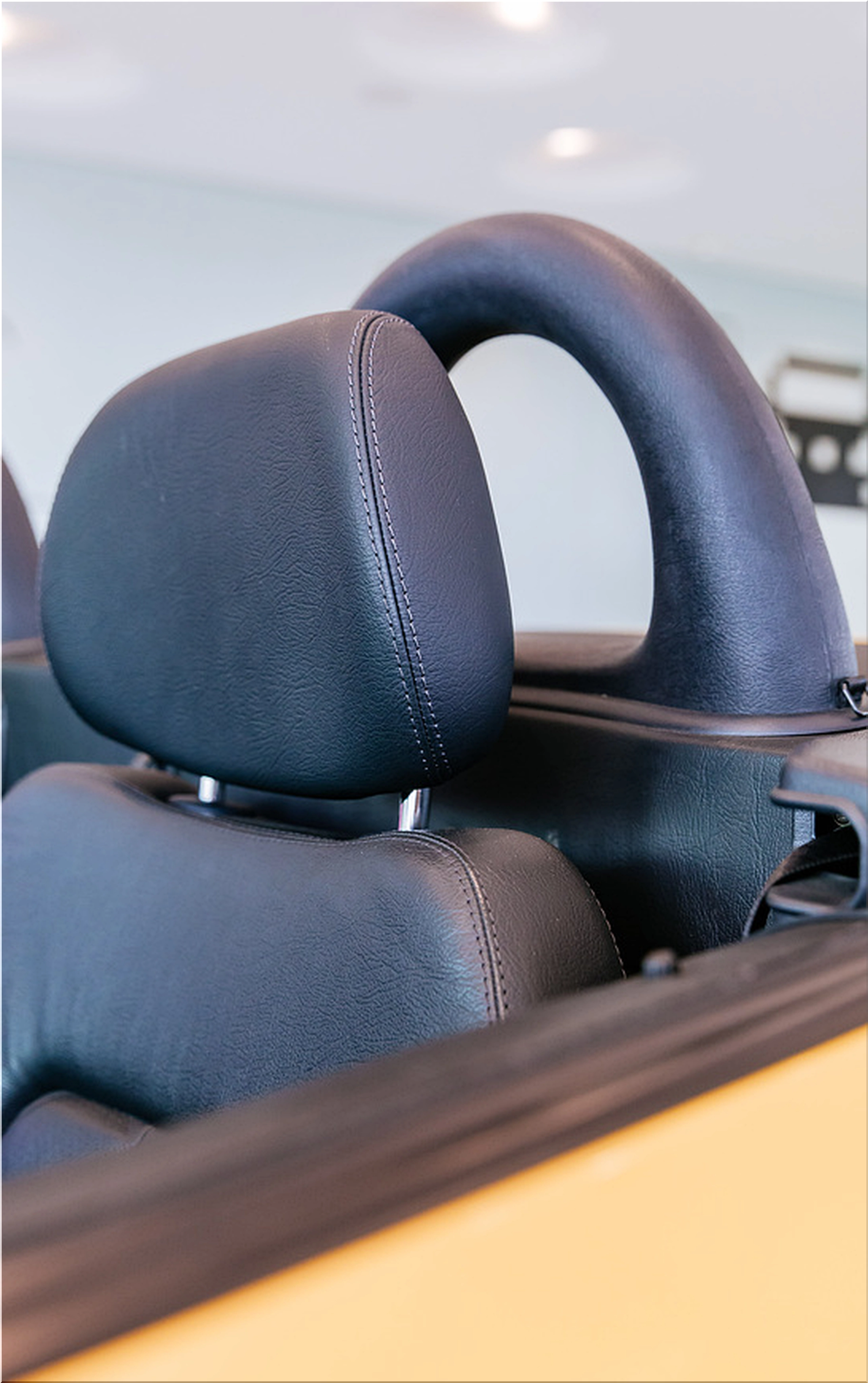
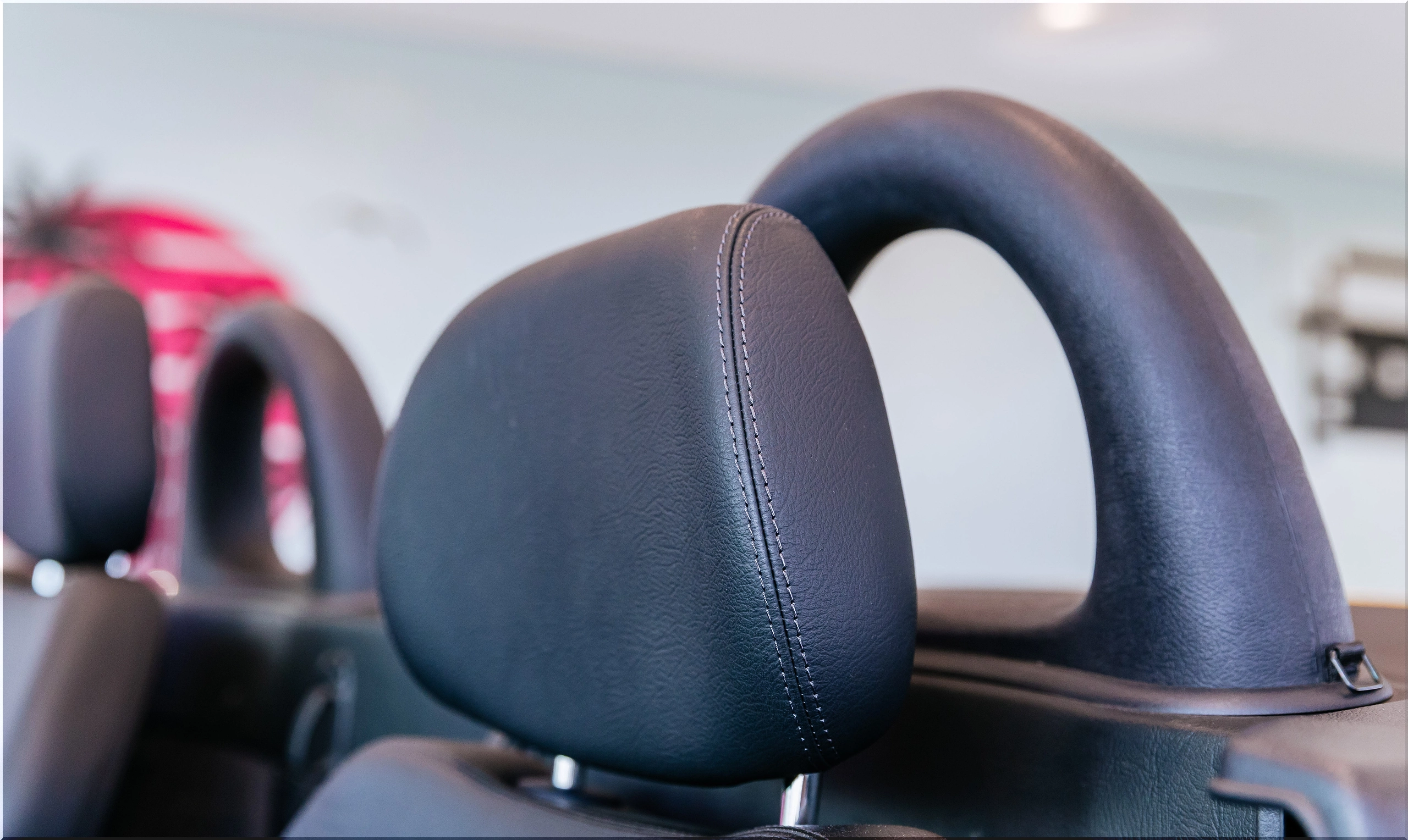
Offered rollover protection. Paired with reinforced A-pillars. - Airbags:
Front airbags were standard. Side airbags were optional early on and later became standard. - Crumple zones and side impact protection were integrated into the design, maintaining Mercedes-Benz safety standards.
These choices made the SLK one of the safest compact roadsters of its era.
Interior Design: Simplicity with Function
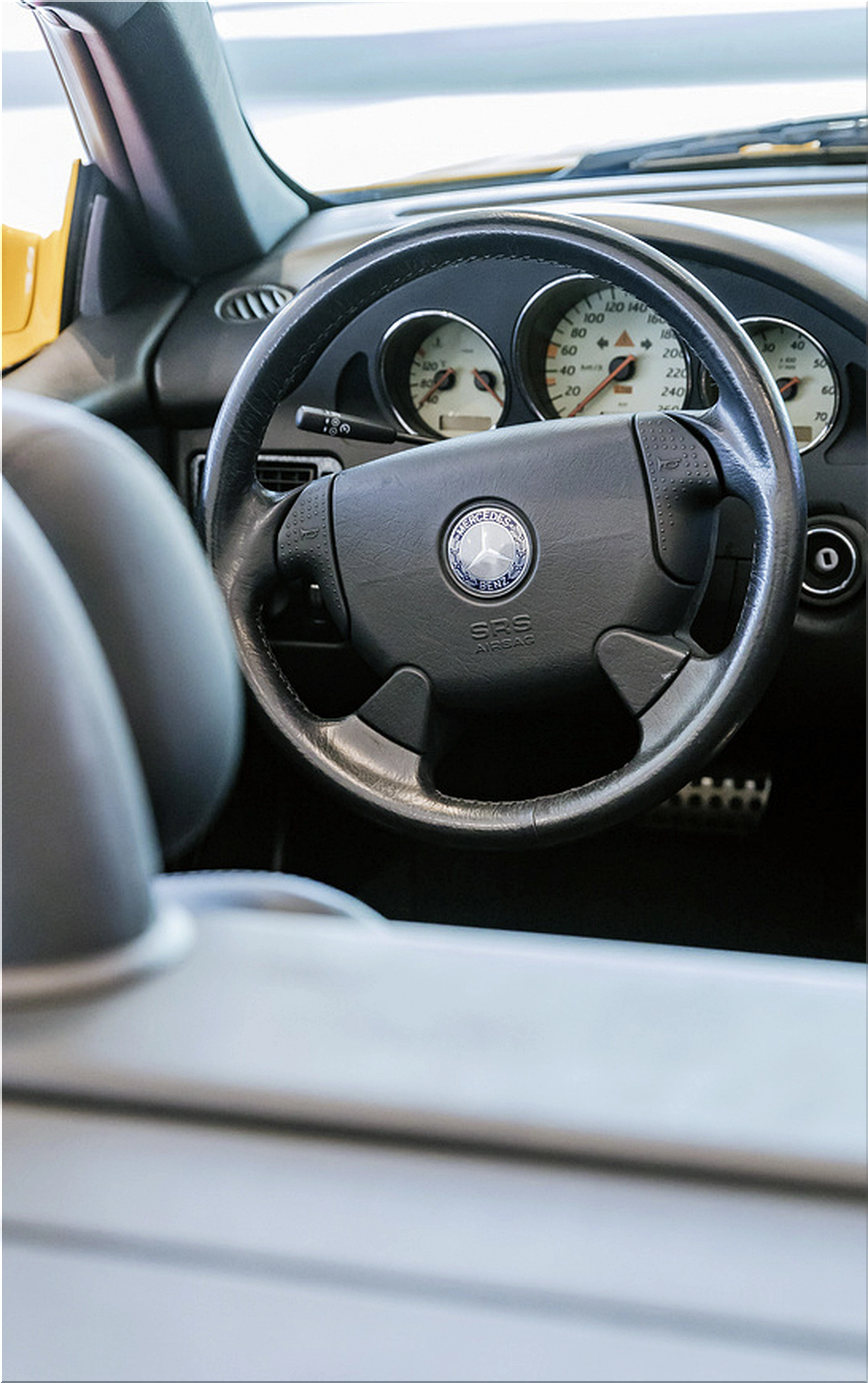
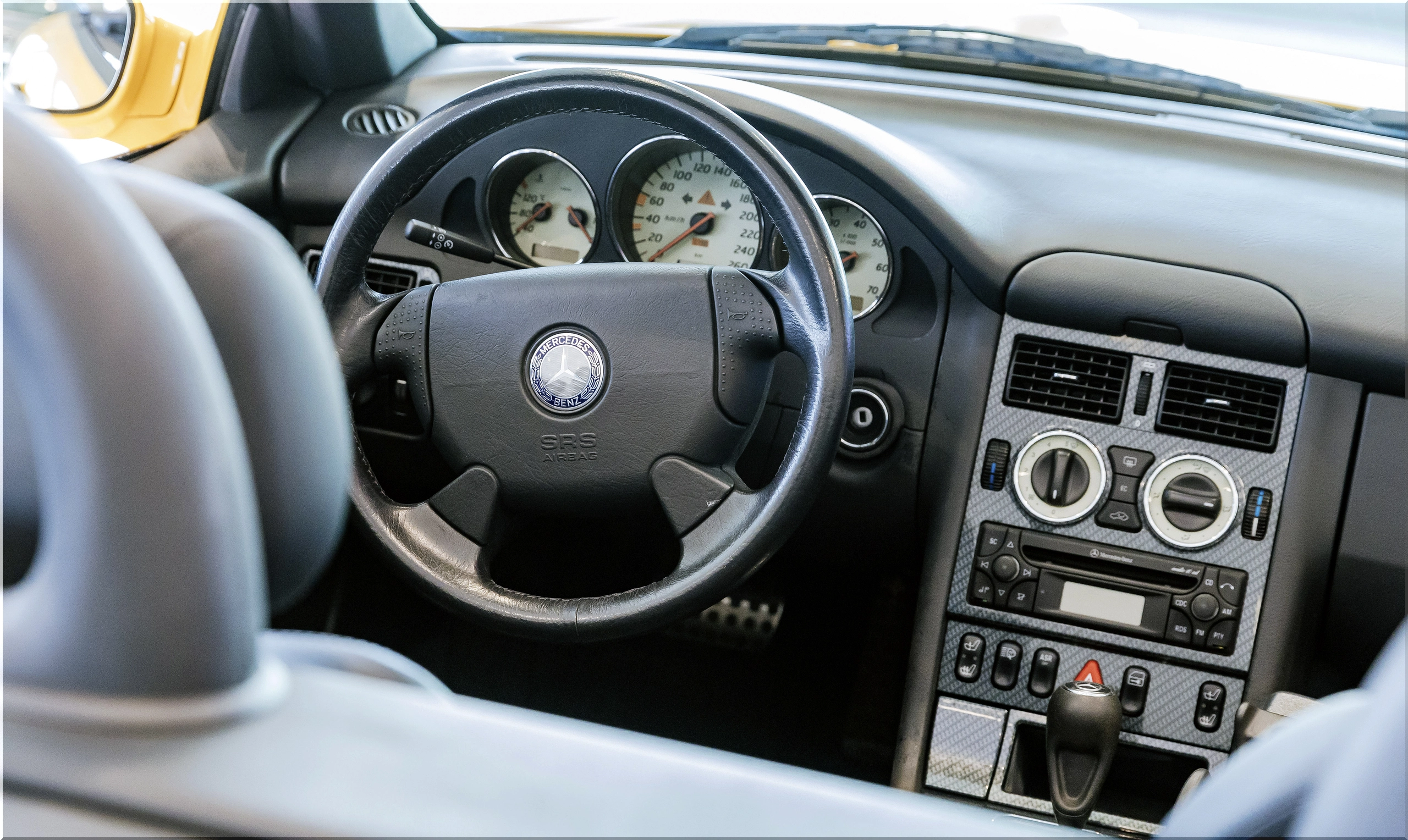
- Two-seat layout focused on the driver.
- Minimalist center console with rotary HVAC dials and radio stack.
- Available features:
- Automatic climate control
- Heated seats
- Leather upholstery
- Bose sound system (on select trims)
Cargo space was limited with the roof down, but usable for weekend trips.
Market Impact: Popular from the Start
Production Numbers:
| Model Year Range | Total Units Built |
|---|---|
| 1996–2004 (R170) | 311,222 units |
- Majority sold in North America and Europe.
- High proportion of female buyers, especially in urban markets.
Competitive Edge:
- Beat competitors like the BMW Z3 and Porsche Boxster to market with a hardtop convertible.
- Cheaper than a Porsche, more advanced than the Mazda Miata.
- Positioned as a premium daily driver with open-air appeal.
SLK’s Influence on Mercedes-Benz
The SLK was more than a niche experiment:
- Introduced hardtop technology that trickled into E-Class and SL-Class.
- Inspired other brands to develop their own retractable hardtops.
- Demonstrated Mercedes could build smaller, performance-focused cars that still met premium expectations.
The model evolved into the SLC-Class in later years before ending production in 2020.
Key Features Summary Table
| Feature | Details |
|---|---|
| Roof | Vario-Roof, retractable hardtop (25 sec) |
| Engines | 2.0L, 2.3L supercharged, 3.2L V6, AMG 3.2L |
| Horsepower Range | 136 hp – 354 hp |
| Transmission Options | 5-speed auto, 6-speed manual |
| Safety Features | Roll bars, airbags, reinforced A-pillars |
| Production Total | 311,222 units (1996–2004) |
Why the SLK Still Matters
- It brought premium features to a compact format.
- It popularized the hardtop convertible.
- It proved Mercedes could create high-volume niche models profitably.
- Enthusiasts continue to value the SLK for its engineering integrity and practicality.
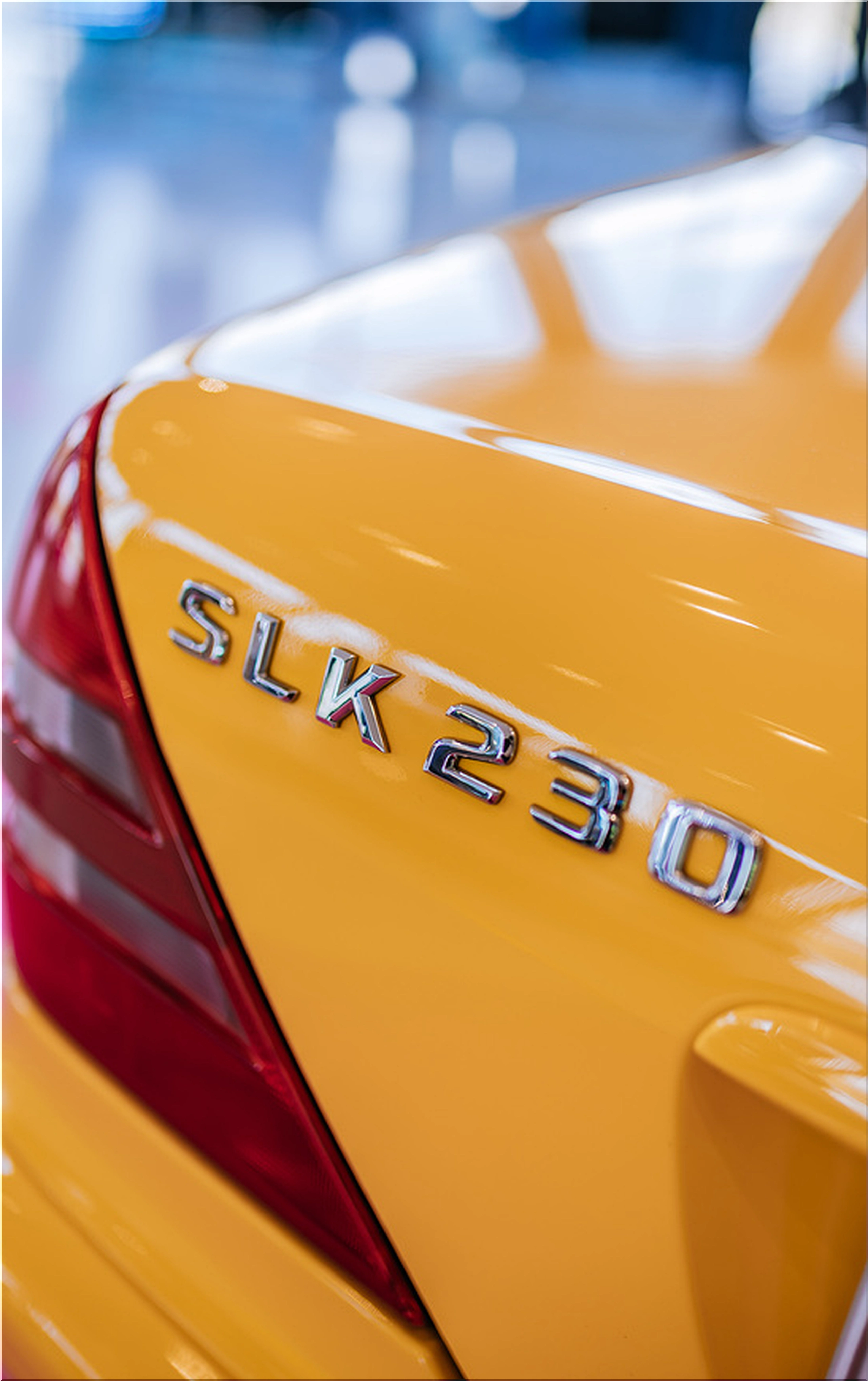
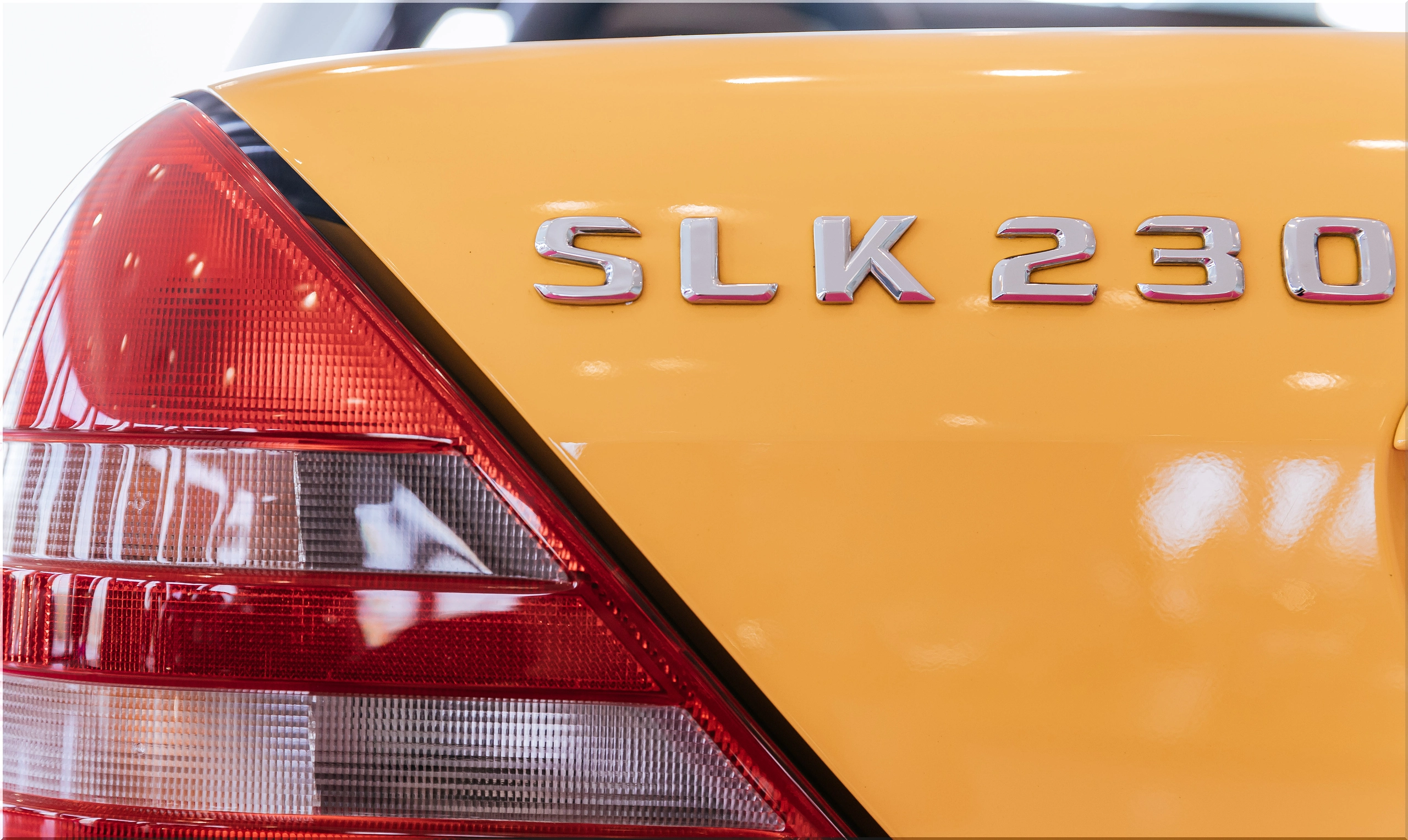
Image gallery
Final Thoughts
The 1996–2004 Mercedes-Benz SLK (R170) was a bold step in compact roadster development. Its folding hardtop, balanced performance, and safety-first engineering made it stand out. The SLK helped define what buyers expected from a small luxury convertible. Its legacy still influences Mercedes-Benz design decisions today.
- Add new comment
- 617 views