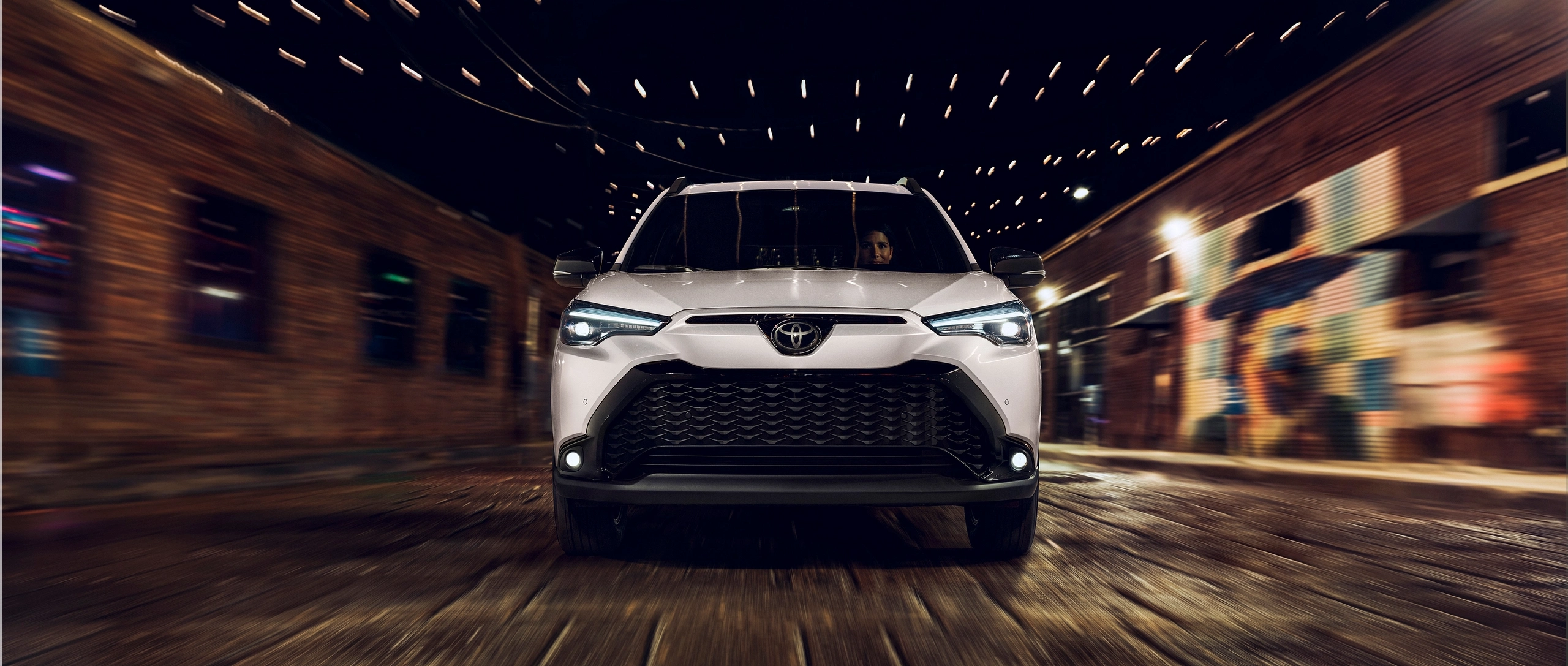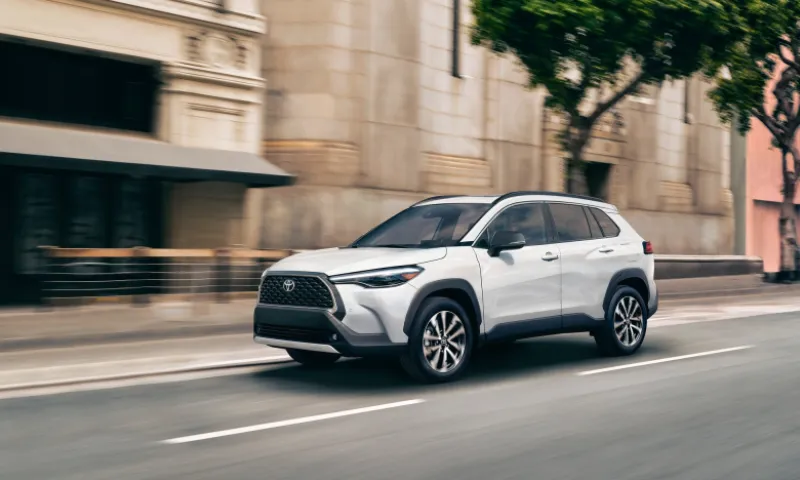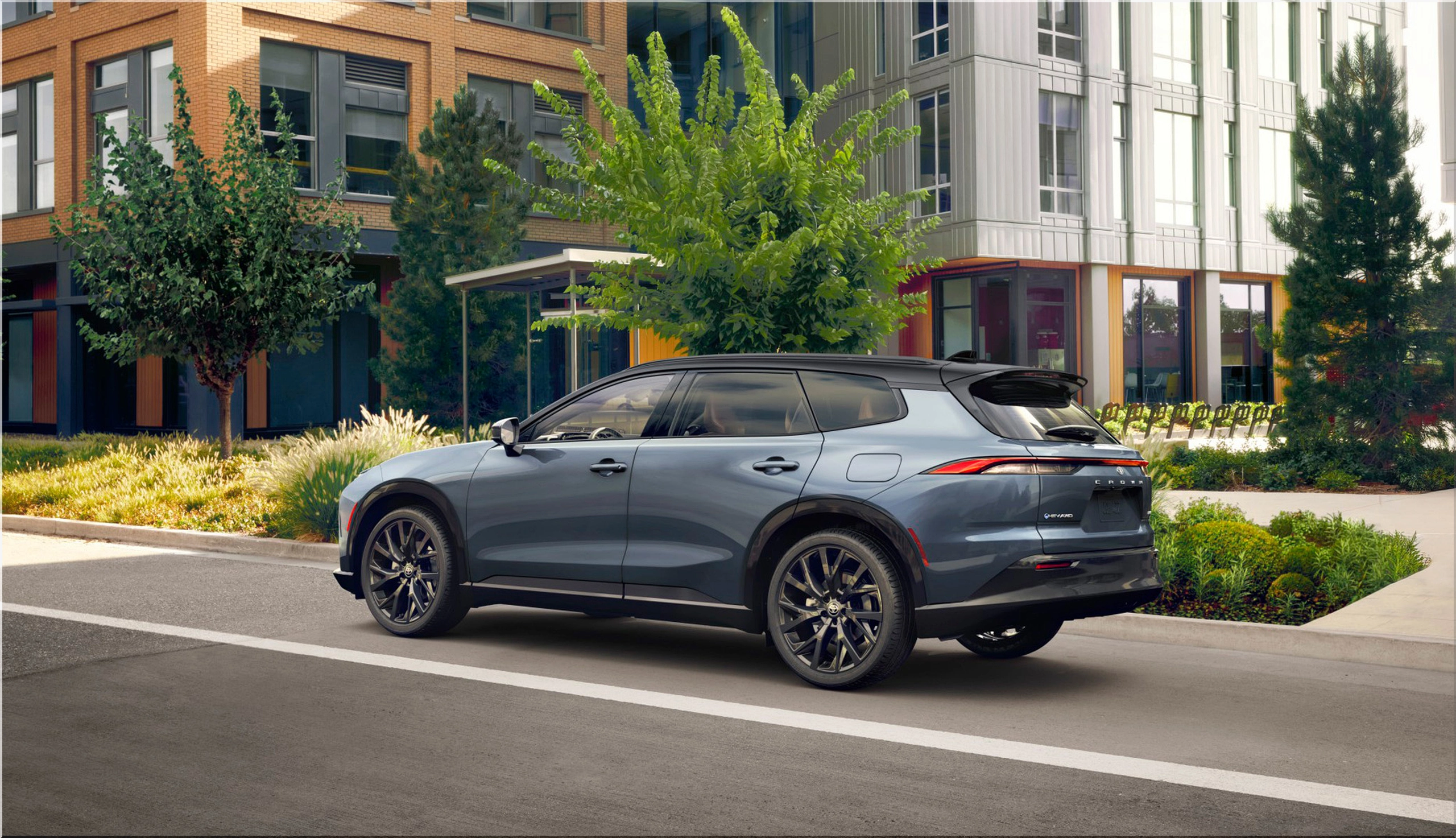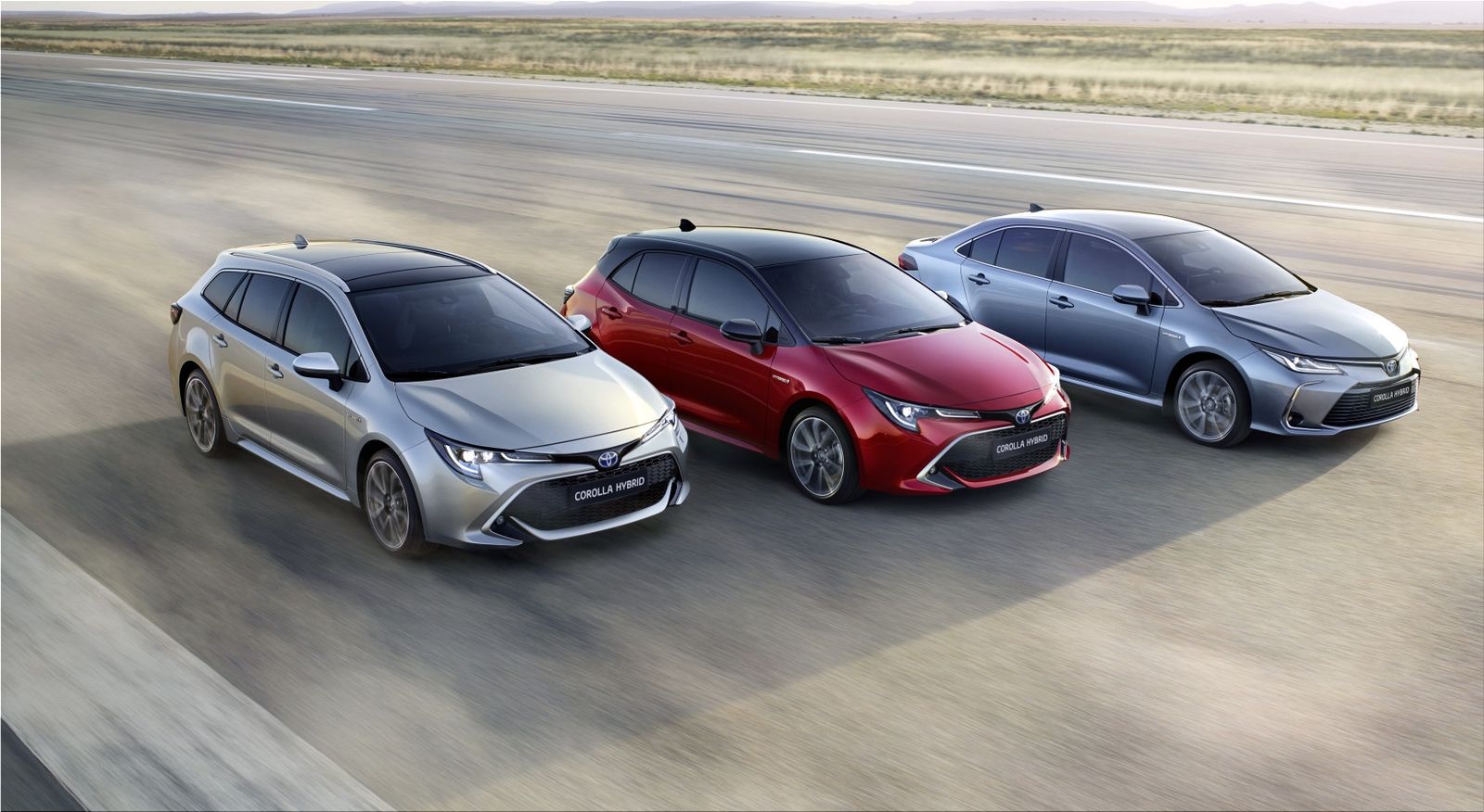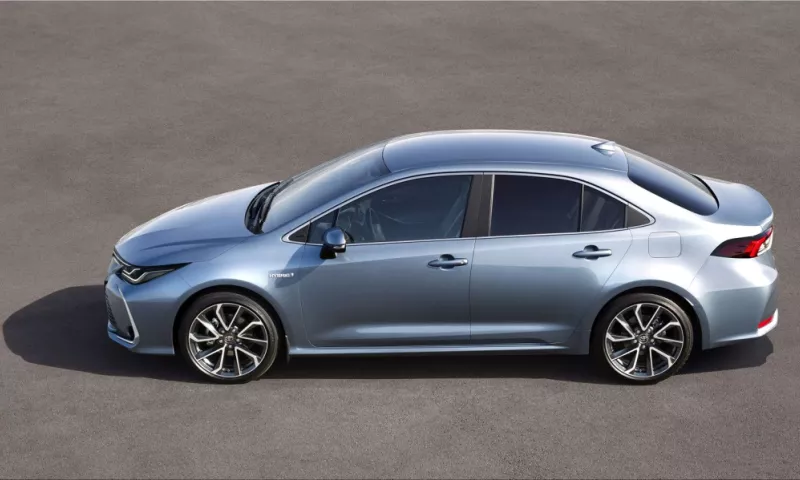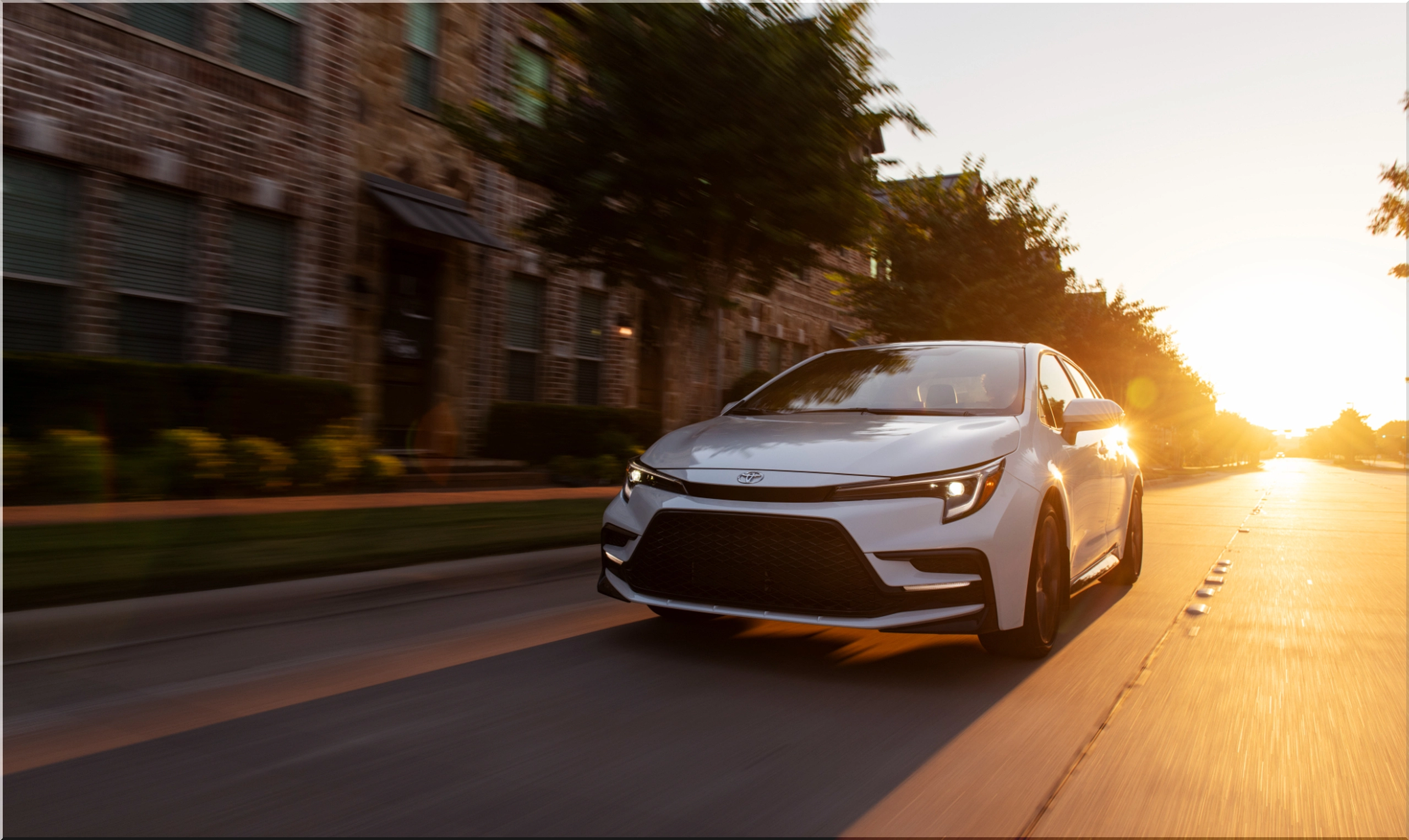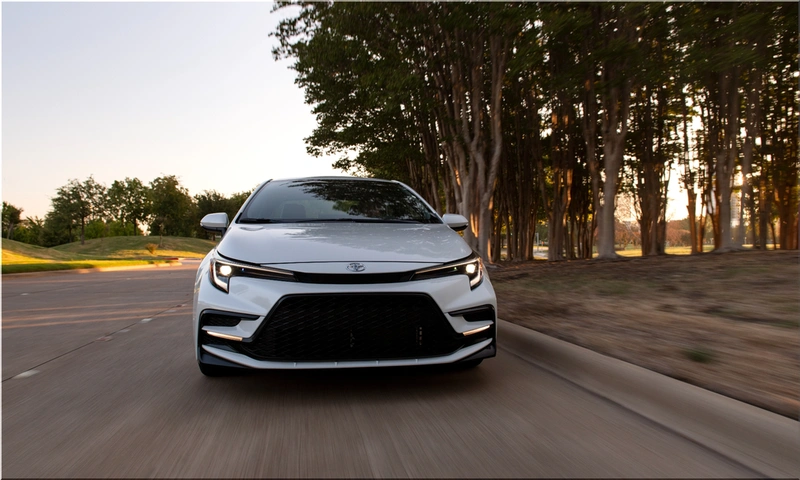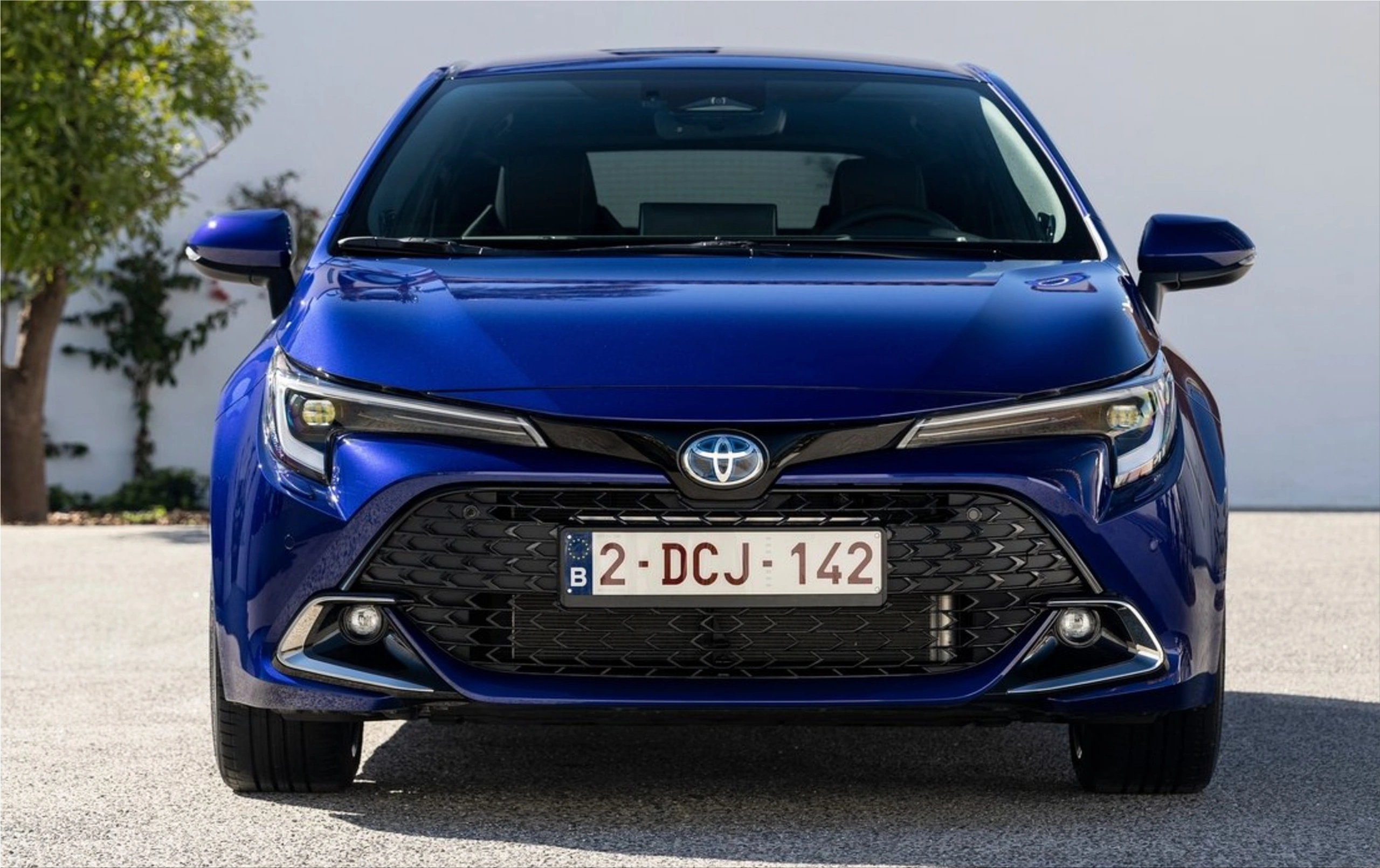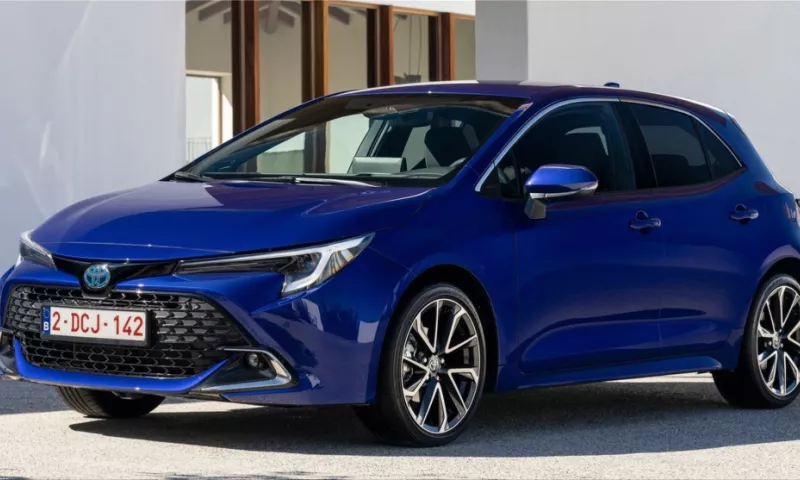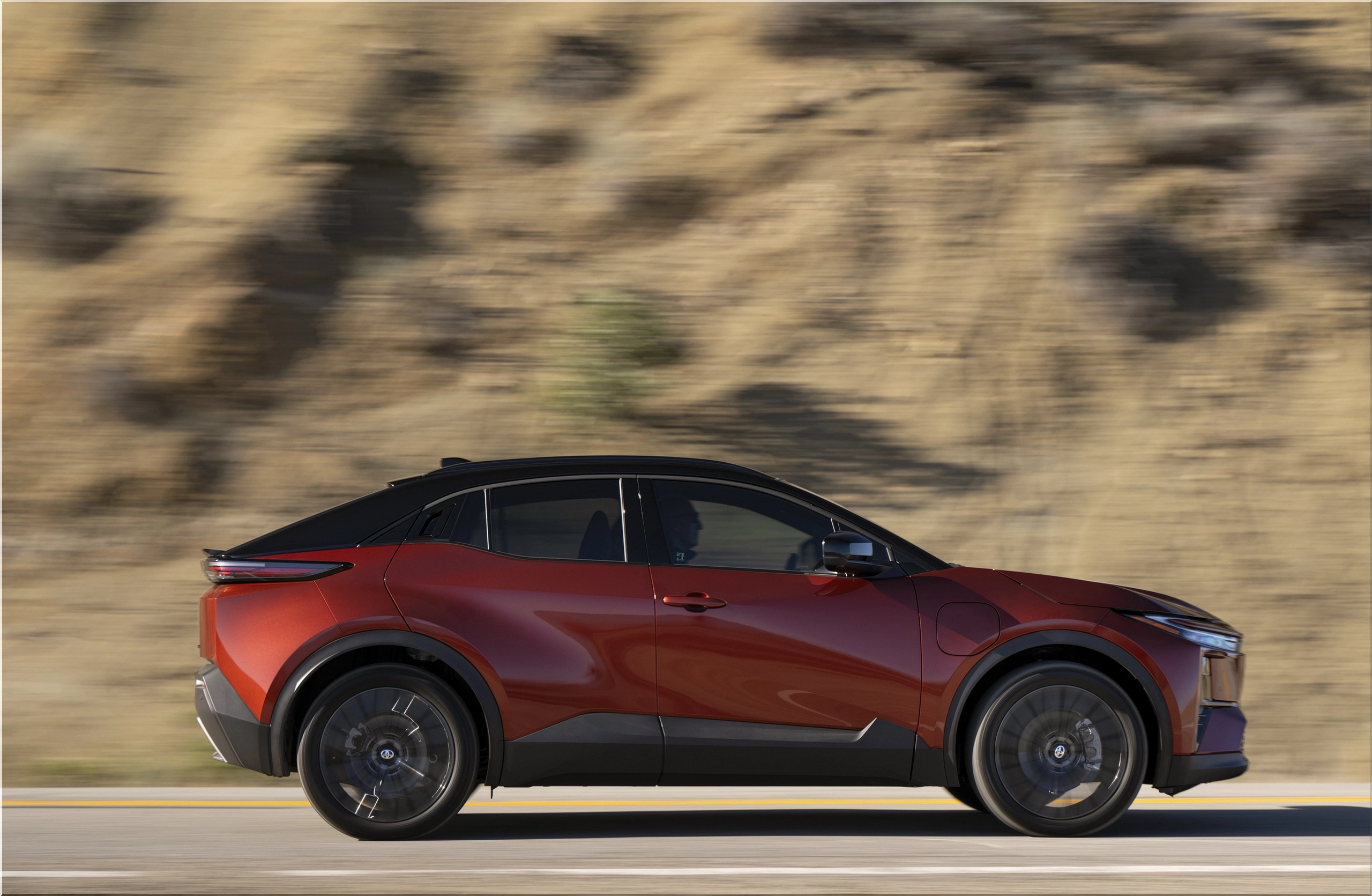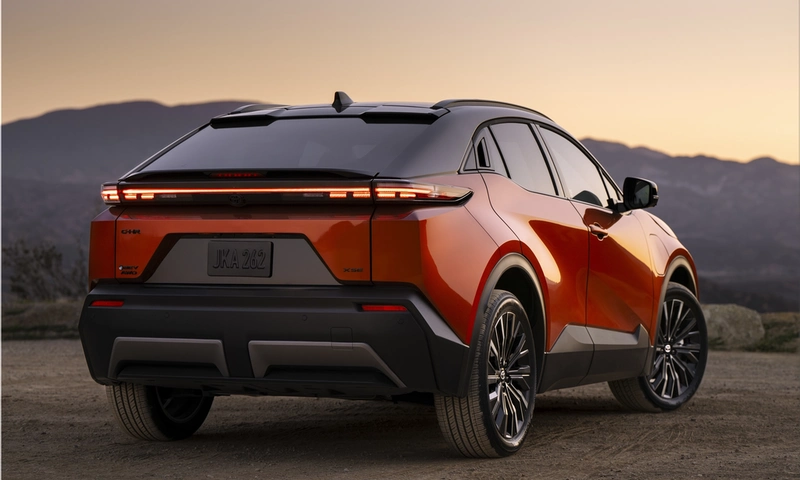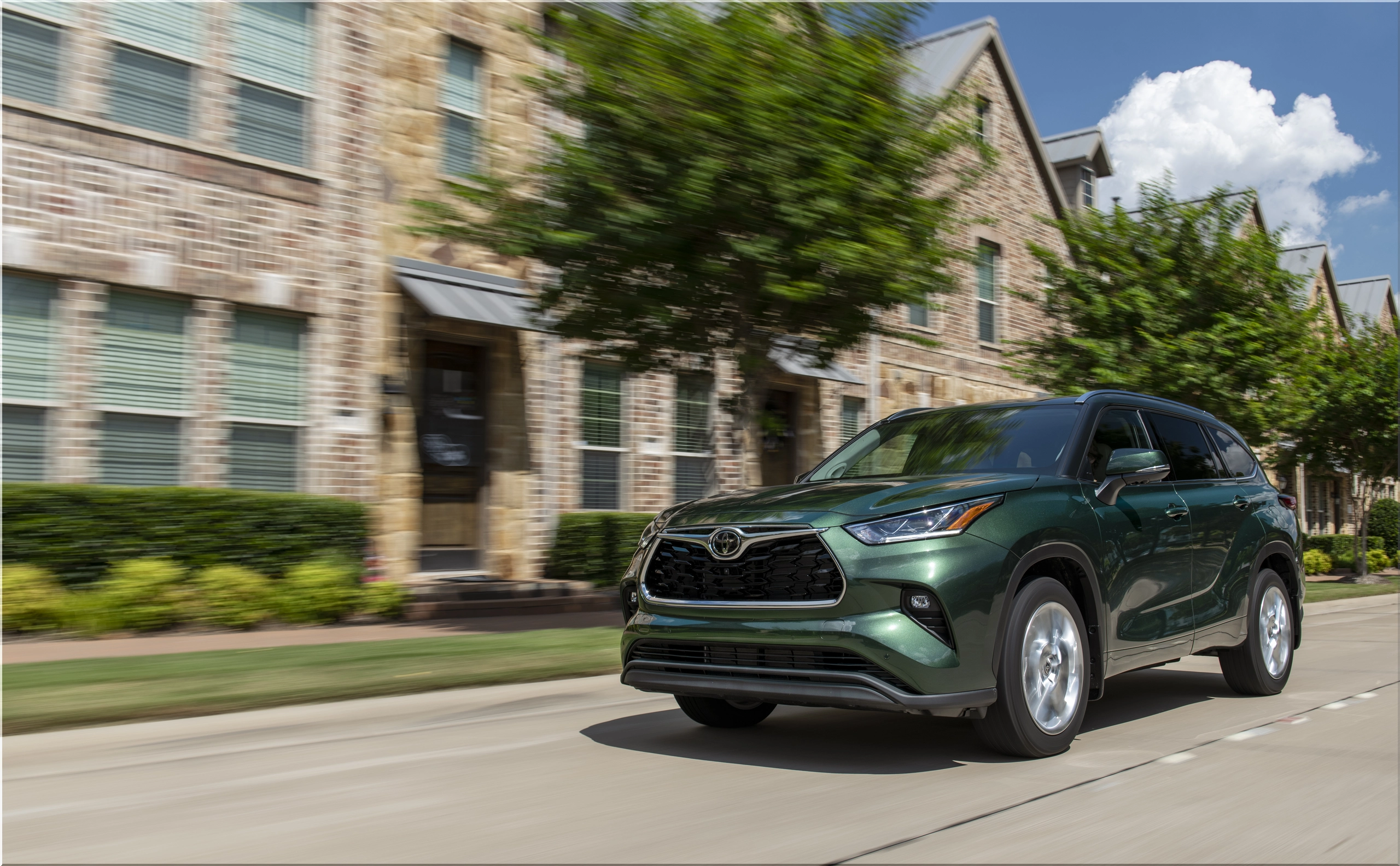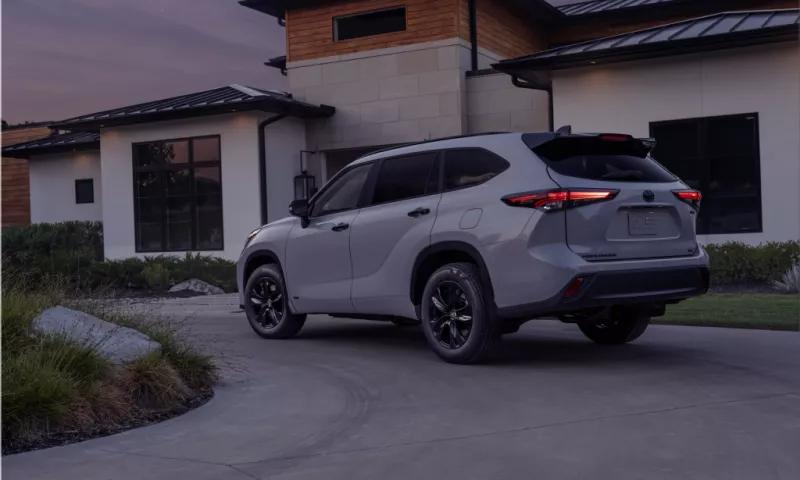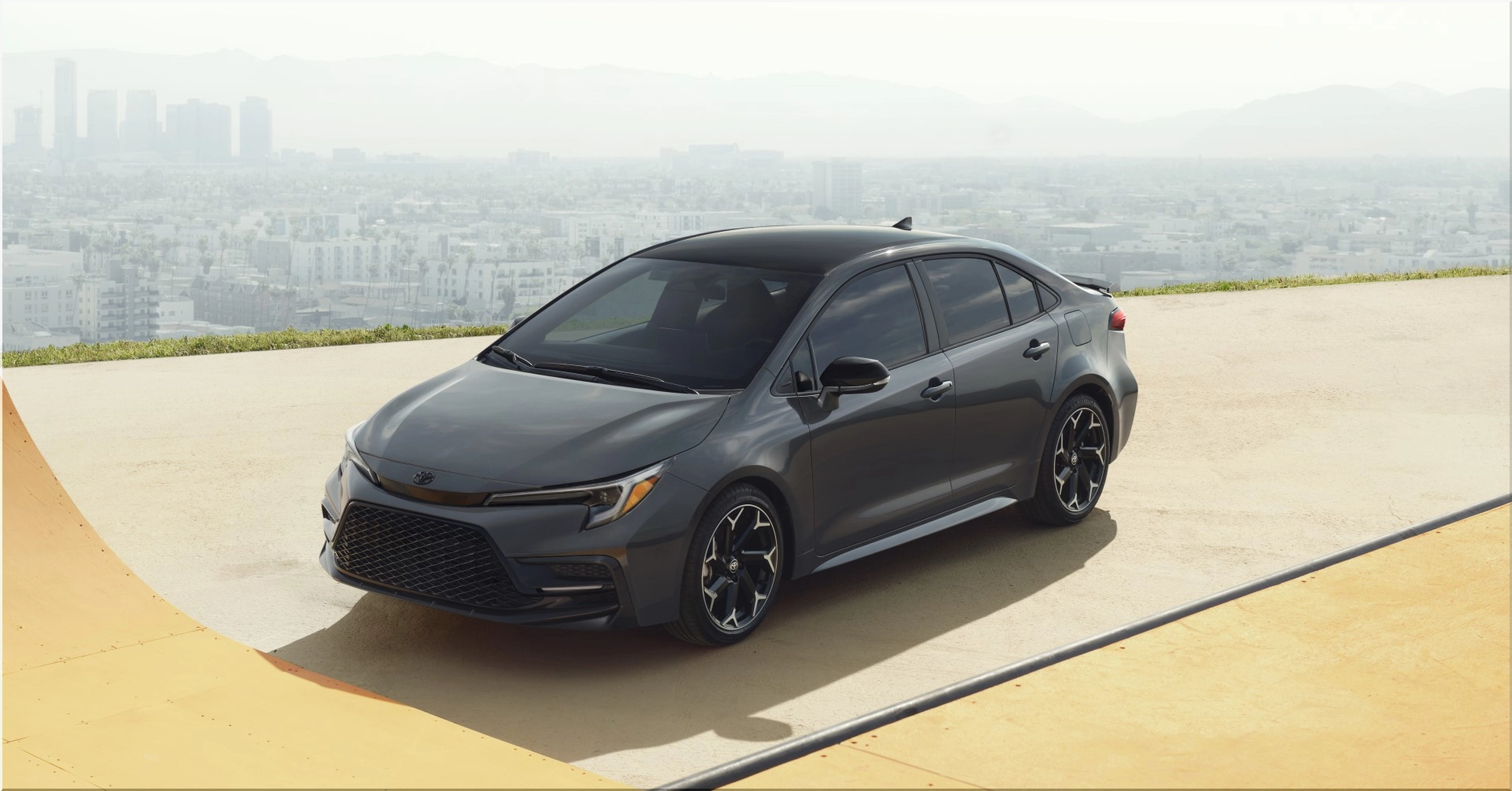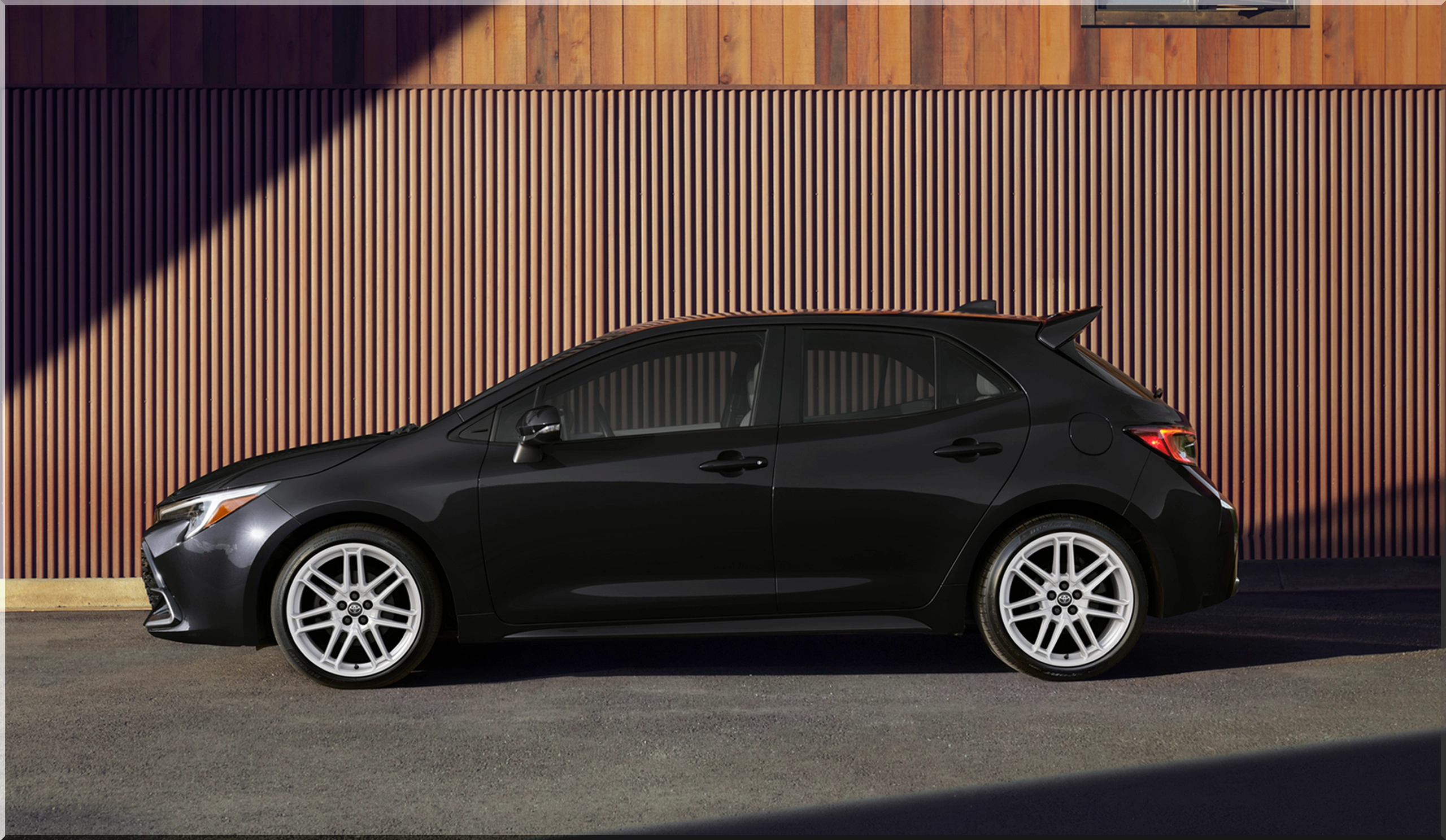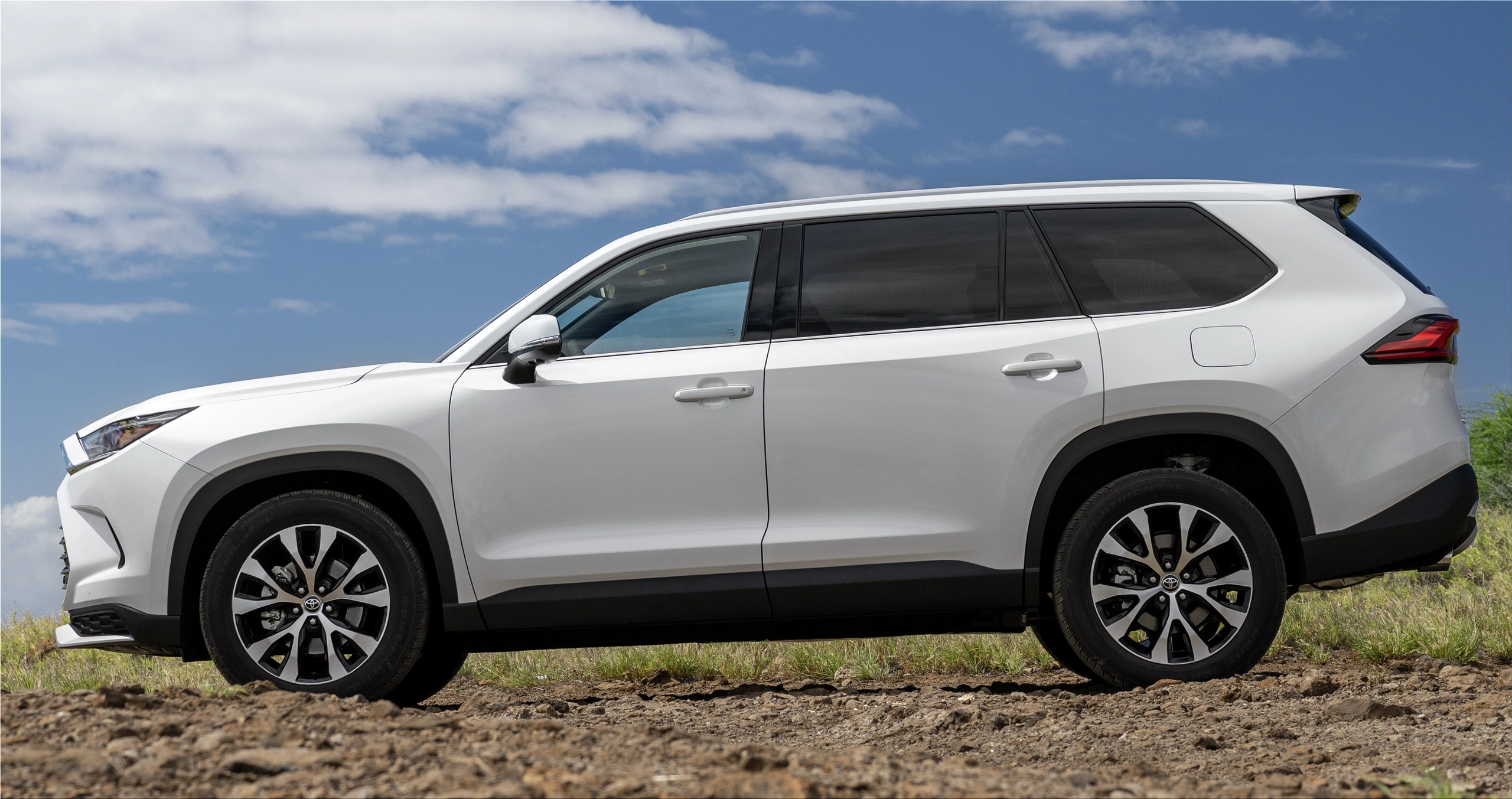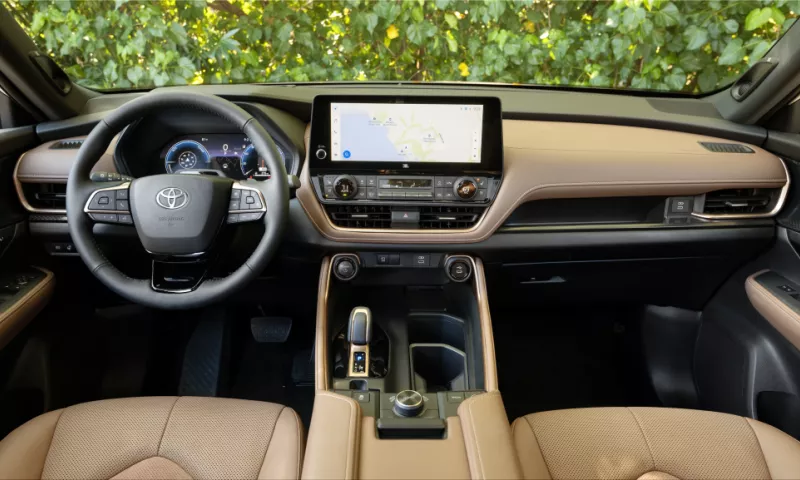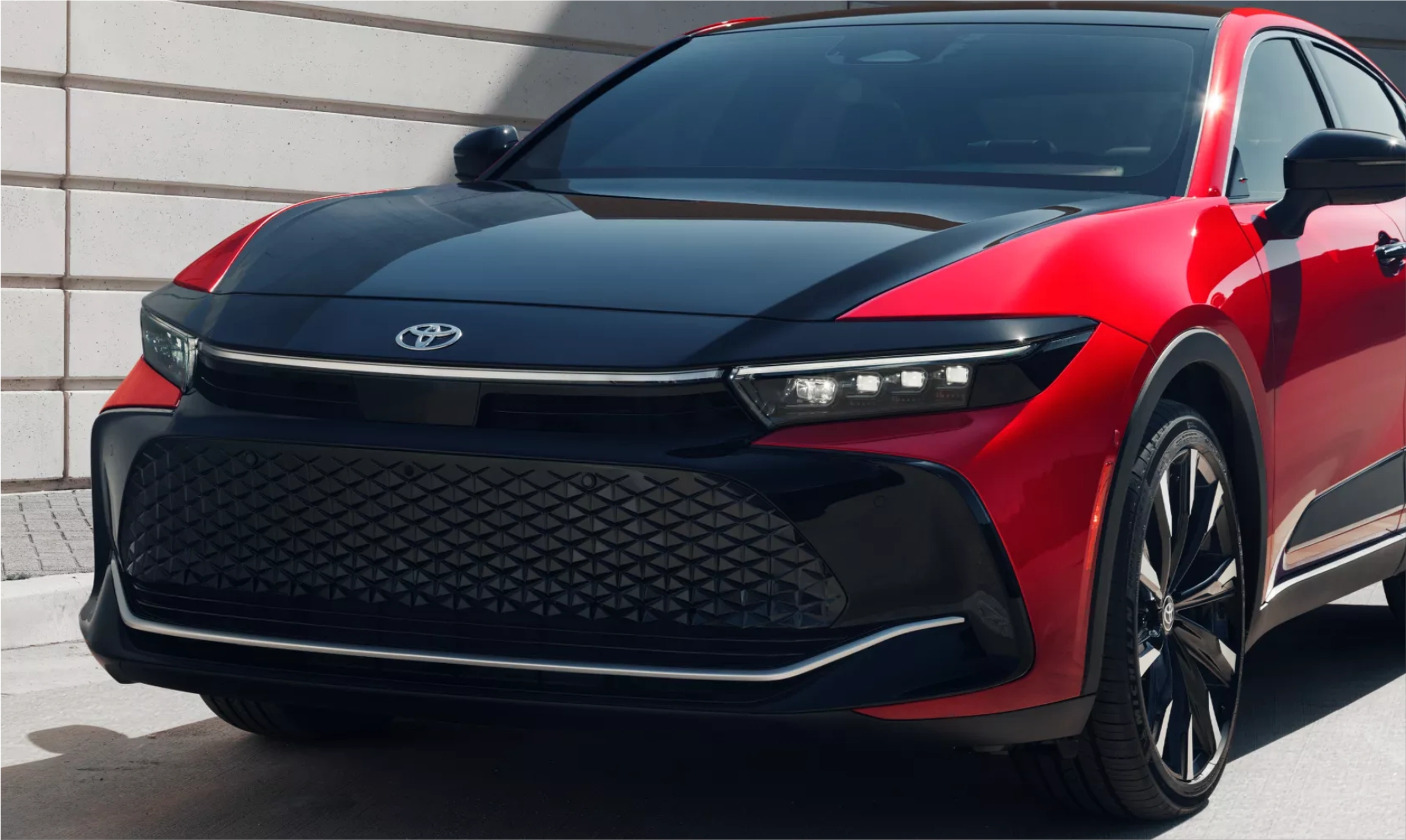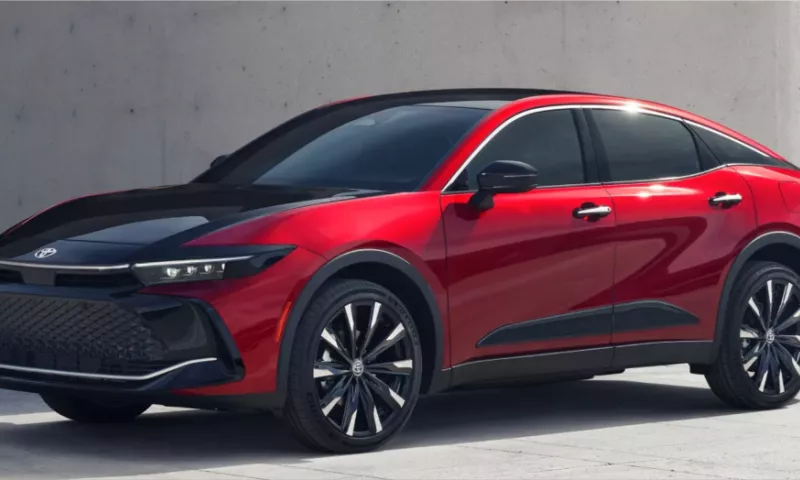
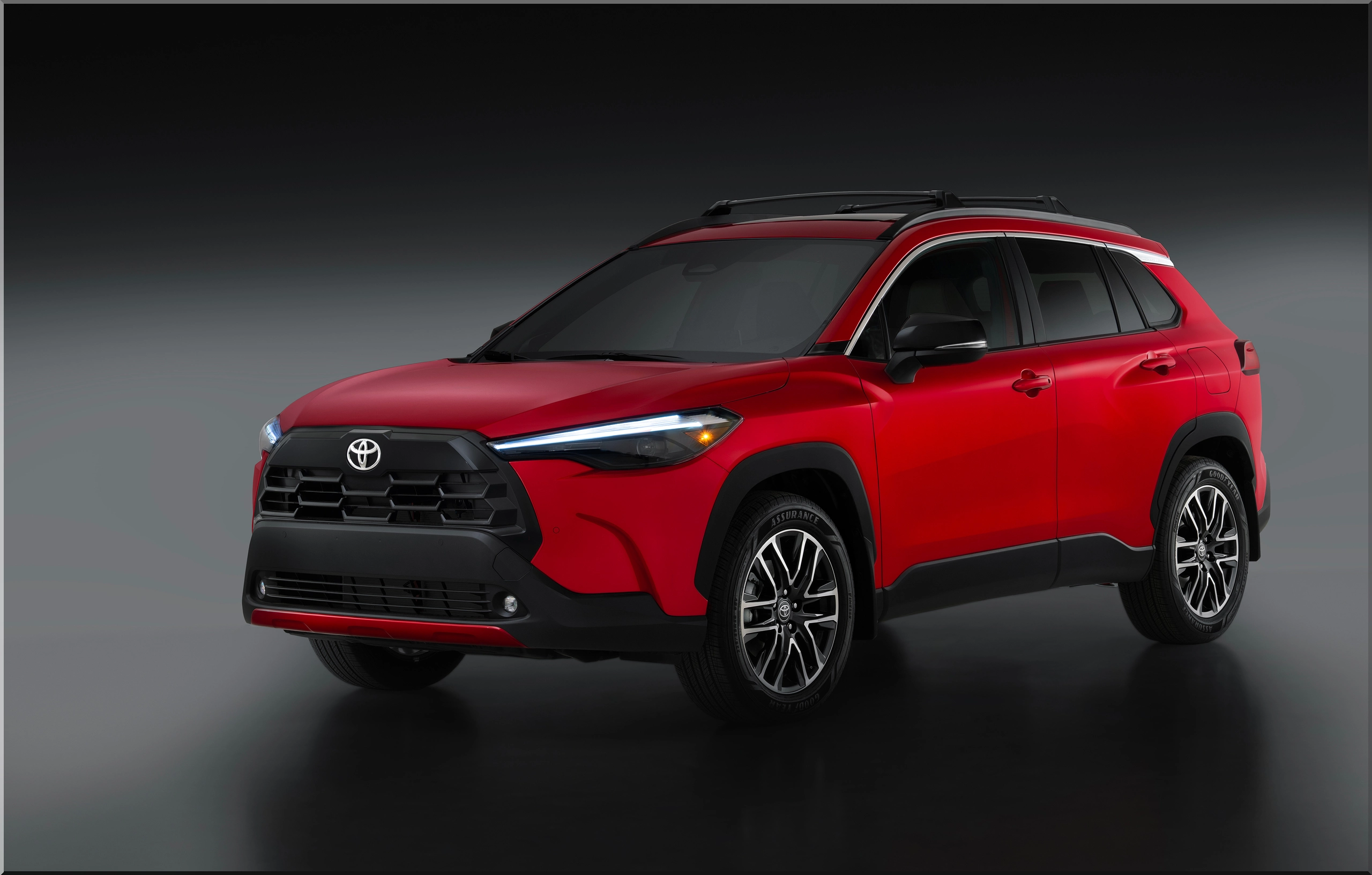
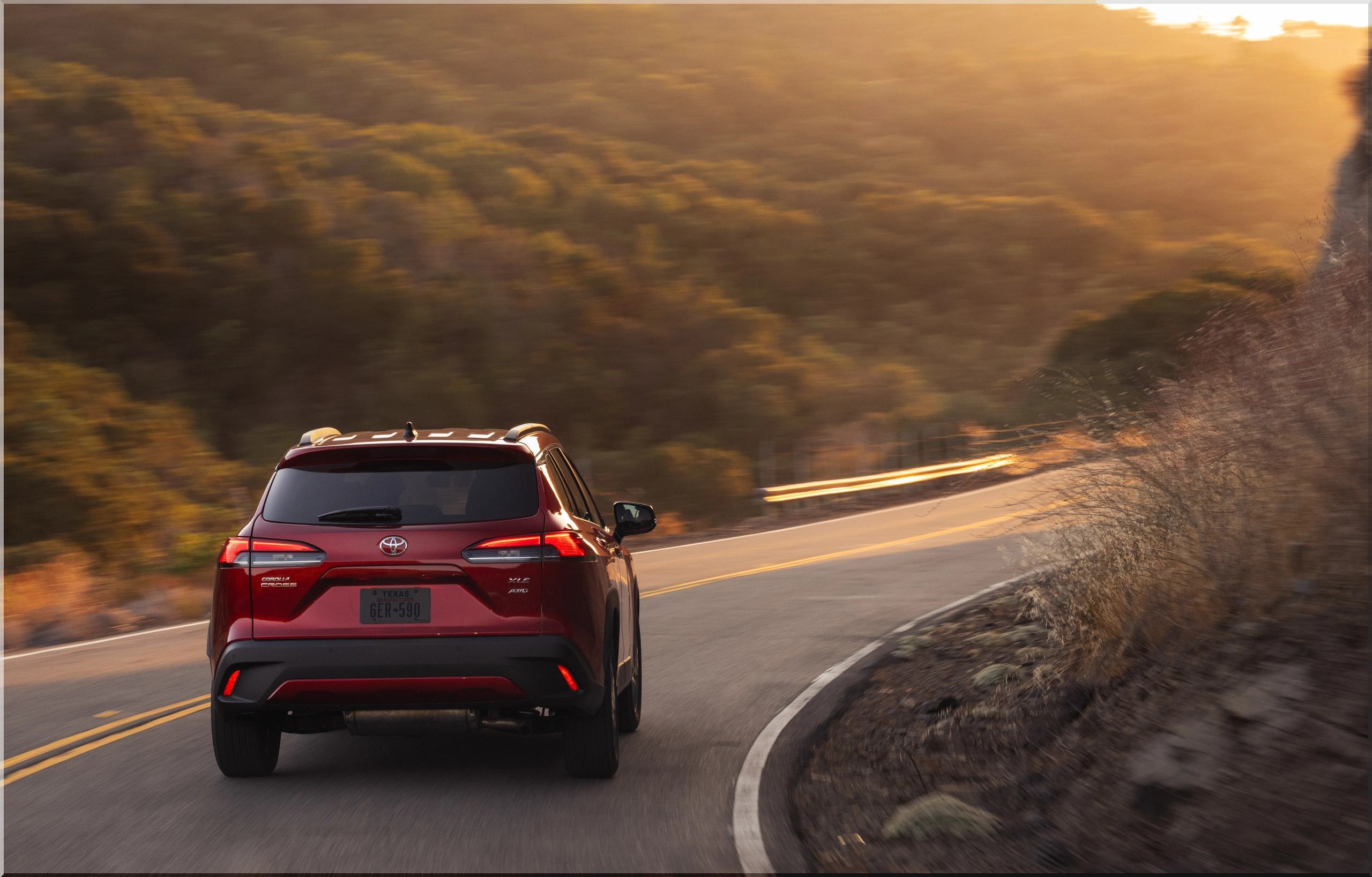
The 2027 Toyota Corolla Cross offers a straightforward choice: lower purchase cost with petrol power, or stronger acceleration and lower fuel consumption with a hybrid. Toyota retains its small SUV's mechanical package while cutting one hybrid trim. The resulting range contains five grades.
For buyers, the useful numbers start with 169 hp, 196 hp and 42 mpg. They explain the powertrain differences more clearly than grille designs or wheel finishes.
Image
What Changes for 2027, and How Much Does It Cost?
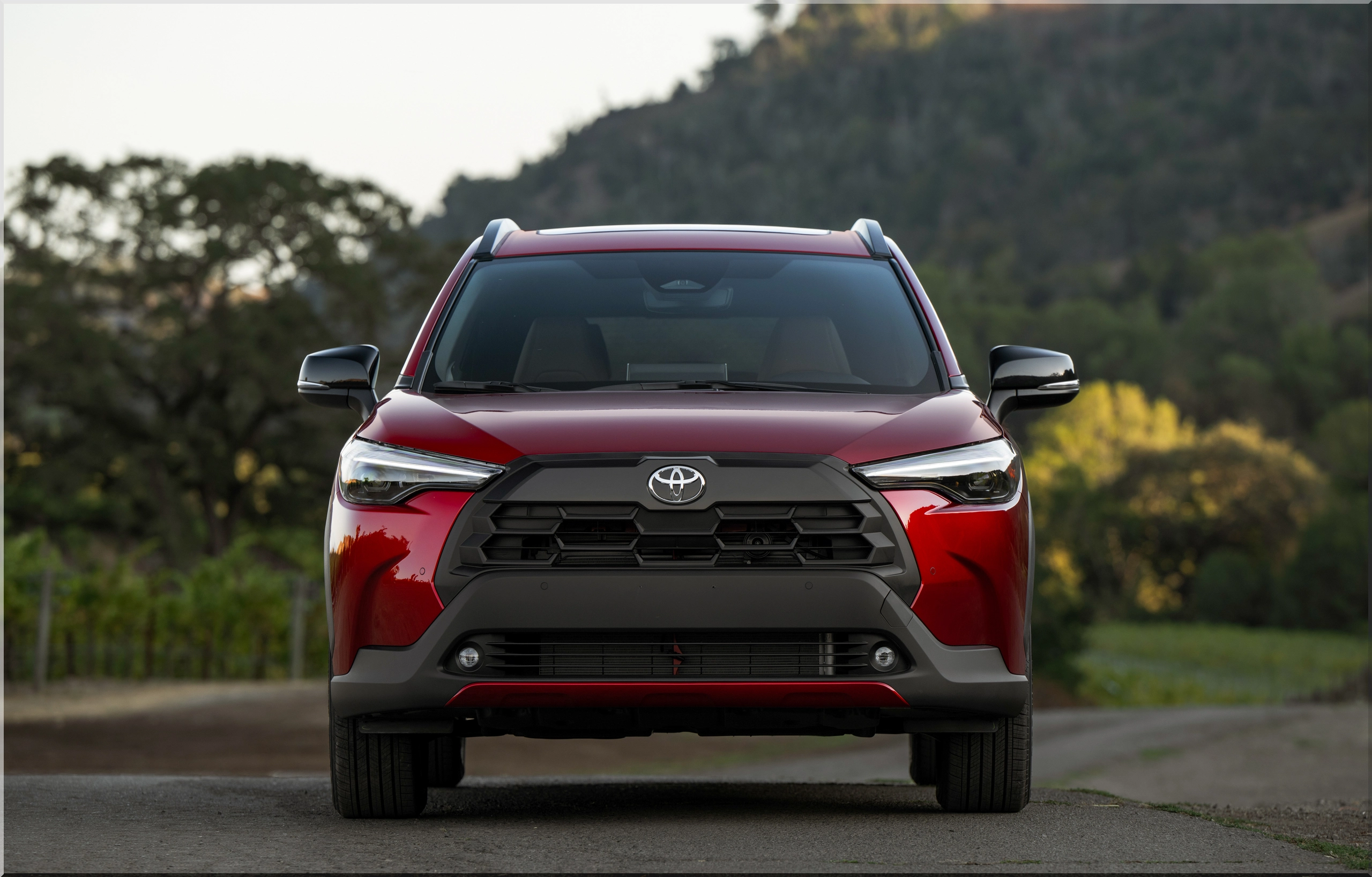
Toyota drops the Hybrid S, leaving SE and XSE hybrid grades alongside petrol L, LE and XLE models. The company expects US dealership arrivals in autumn 2026 and continues assembly in Huntsville, Alabama. Other features and specifications carry over from 2026.
The 2027 Toyota Corolla Cross price starts at approximately €22,748 for the petrol L FWD and €27,987 for the Hybrid SE. These figures convert US base MSRPs using the European Central Bank's 2 October 2026 reference rate, equivalent to approximately €0.8909 per US dollar. Toyota excludes delivery and handling from those base prices; taxes, registration and options add further cost.
The entry-price gap reaches approximately €5,238. However, the Hybrid SE also includes AWD and equipment that the petrol L lacks, so that difference does not represent the hybrid hardware premium alone. These converted amounts describe US pricing; Toyota's announcement establishes no European price or launch date.
Video title
2027 Toyota Corolla Cross
Petrol vs Hybrid: Power and Fuel Consumption
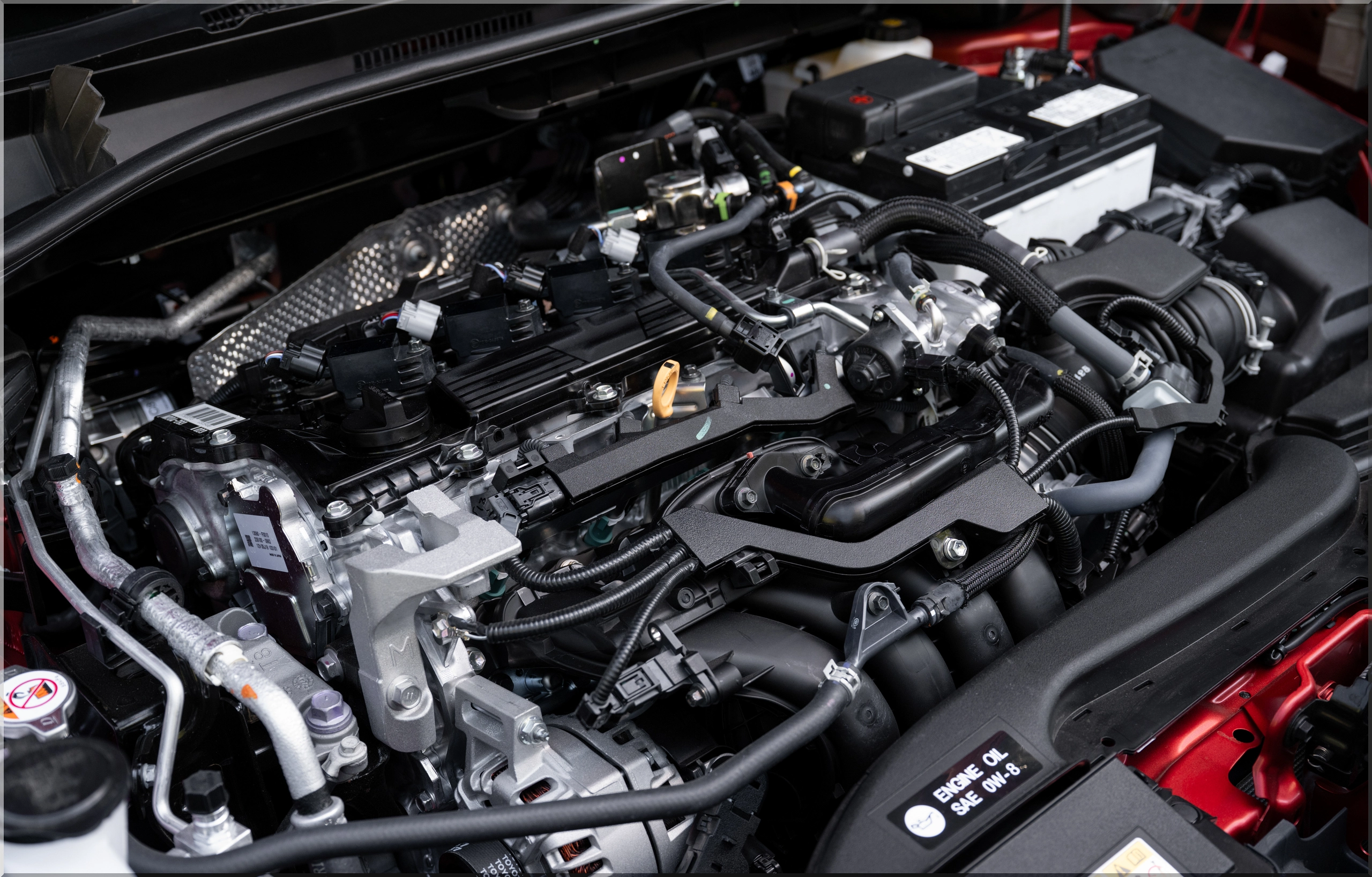
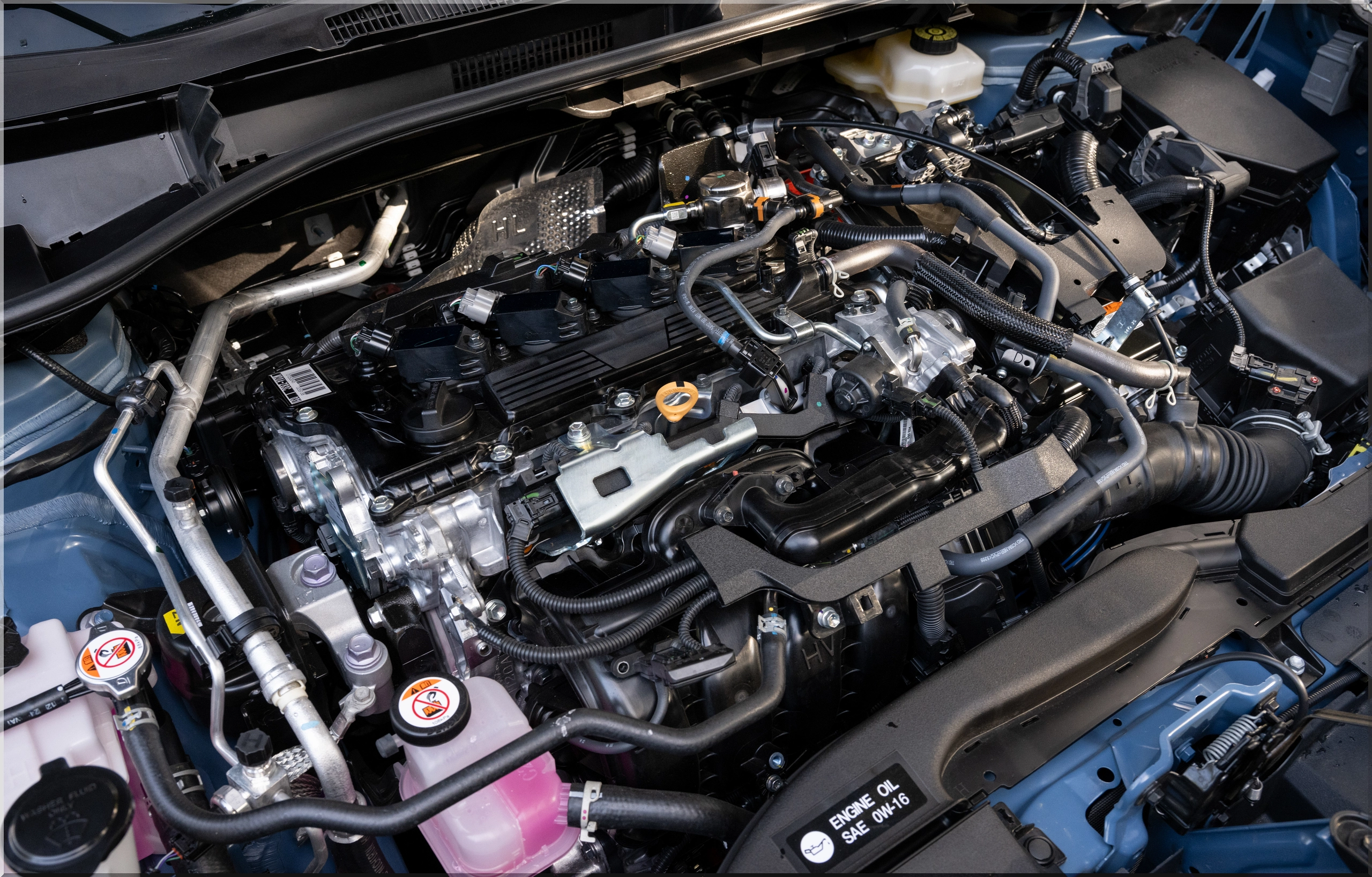
The petrol version's 2.0-litre four-cylinder produces 169 hp at 6,600 rpm and 151 lb-ft, approximately 205 Nm, at 4,400 rpm. Peak torque arrives relatively high in the rev range, so the transmission must raise engine speed during demanding acceleration.
| Specification | Petrol FWD | Petrol AWD | Hybrid AWD |
|---|---|---|---|
| Engine | 2.0-litre four-cylinder | 2.0-litre four-cylinder | 2.0-litre four-cylinder with electric assistance |
| Output | 169 hp | 169 hp | 196 hp total system output |
| Transmission | CVT with mechanical launch gear | CVT with mechanical launch gear | Electronic continuously variable transmission |
| Grades | L, LE, XLE | L, LE, XLE | SE, XSE |
| City/highway/combined economy | 30/32/31 mpg | 29/31/30 mpg | 46/39/42 mpg |
| Combined consumption, converted | 7.59 L/100 km | 7.84 L/100 km | 5.60 L/100 km |
Toyota lists these 2027 consumption figures as manufacturer estimates in its announcement's detailed text. All mpg figures use US gallons; the metric conversions retain the same test basis rather than predict European WLTP results.
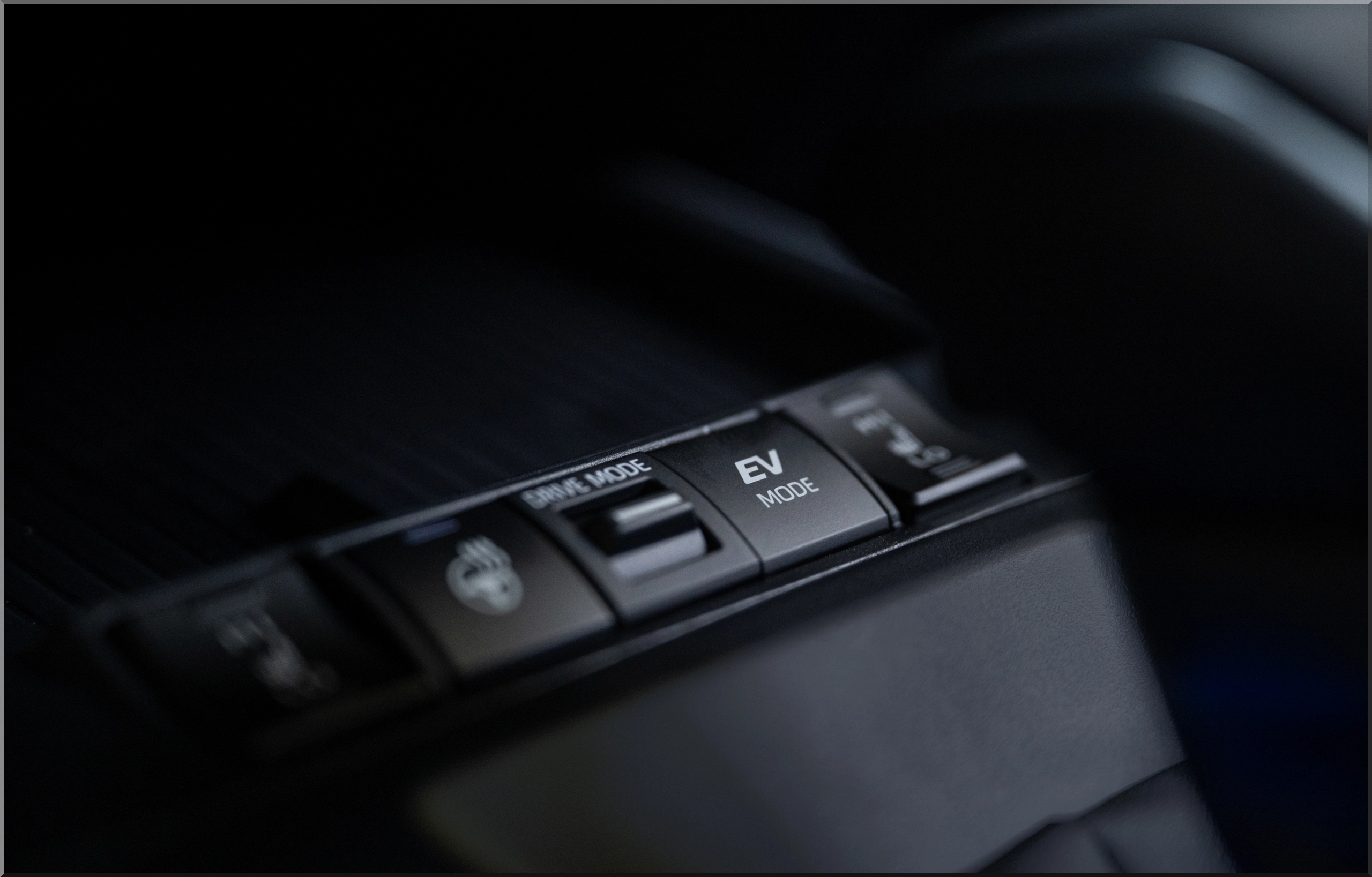
The petrol CVT uses a physical launch gear to handle low-speed driving before its belt-and-pulley mechanism takes over. Toyota's engineering rationale centres on reducing belt load and improving transmission efficiency at low speeds. The hybrid's electric assistance supplies additional propulsion, while regenerative braking recovers energy during deceleration.
Video title
2027 Toyota Corolla Cross
How the Two AWD Systems Work
The petrol all-wheel-drive system can direct up to 50% of power to the rear wheels and disengage rear drive when conditions allow. That strategy limits unnecessary driveline losses during steady travel. Its combined consumption still exceeds the FWD model's estimate by approximately 3%.
The Corolla Cross Hybrid instead drives its rear wheels through a dedicated electric motor. The controller can activate rear propulsion during launches or front-wheel slip and help reduce understeer through corners. This configuration suits slippery roads, but tyre grip still sets braking and cornering limits.
- Petrol FWD: Choose it for the lowest entry cost and mild-weather use.
- Petrol AWD: Consider it when traction takes priority over maximum economy.
- Hybrid AWD: Choose it for frequent town driving and lower fuel use without external charging.
Image
Dimensions, Passenger Space and Towing
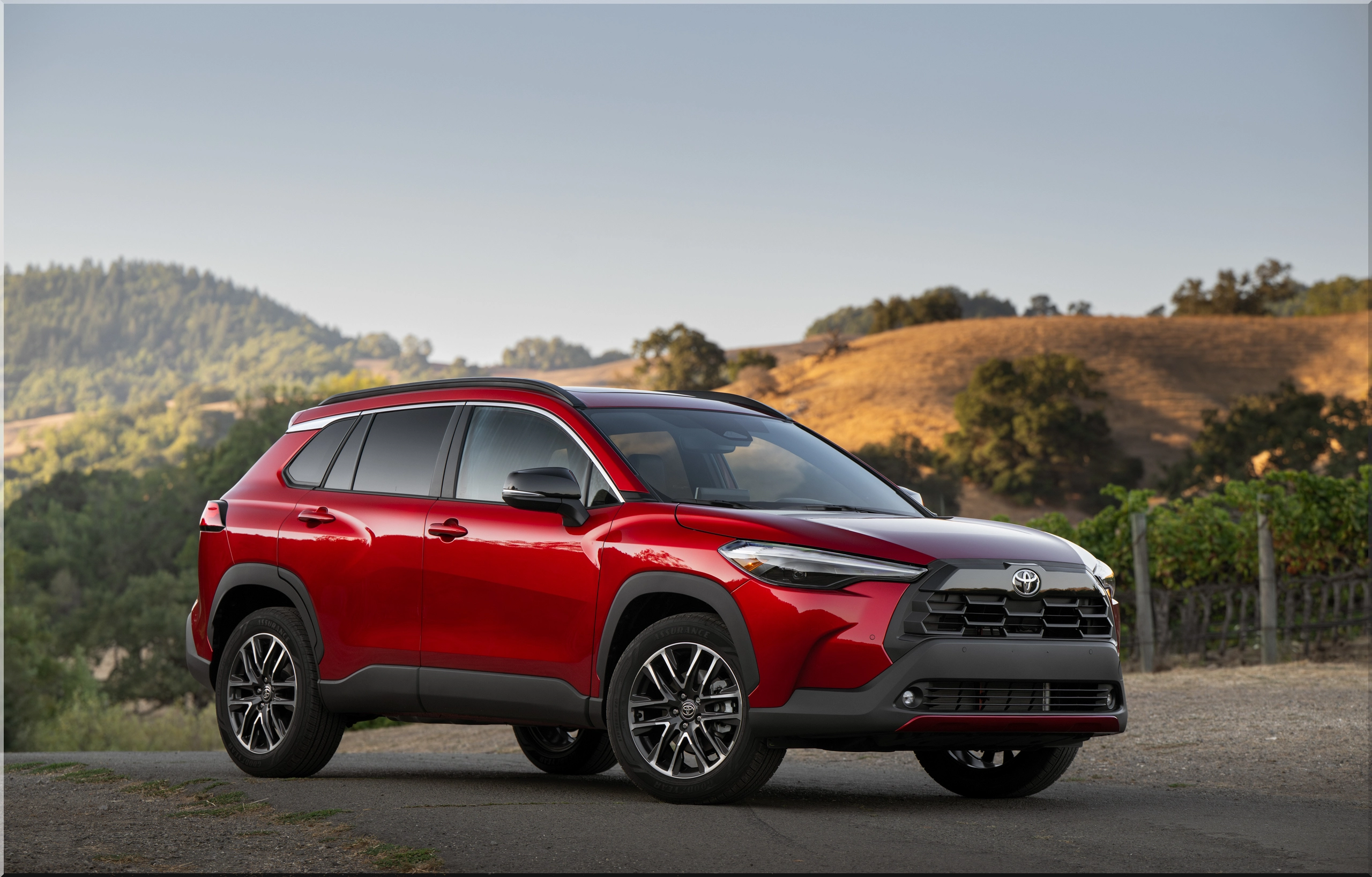
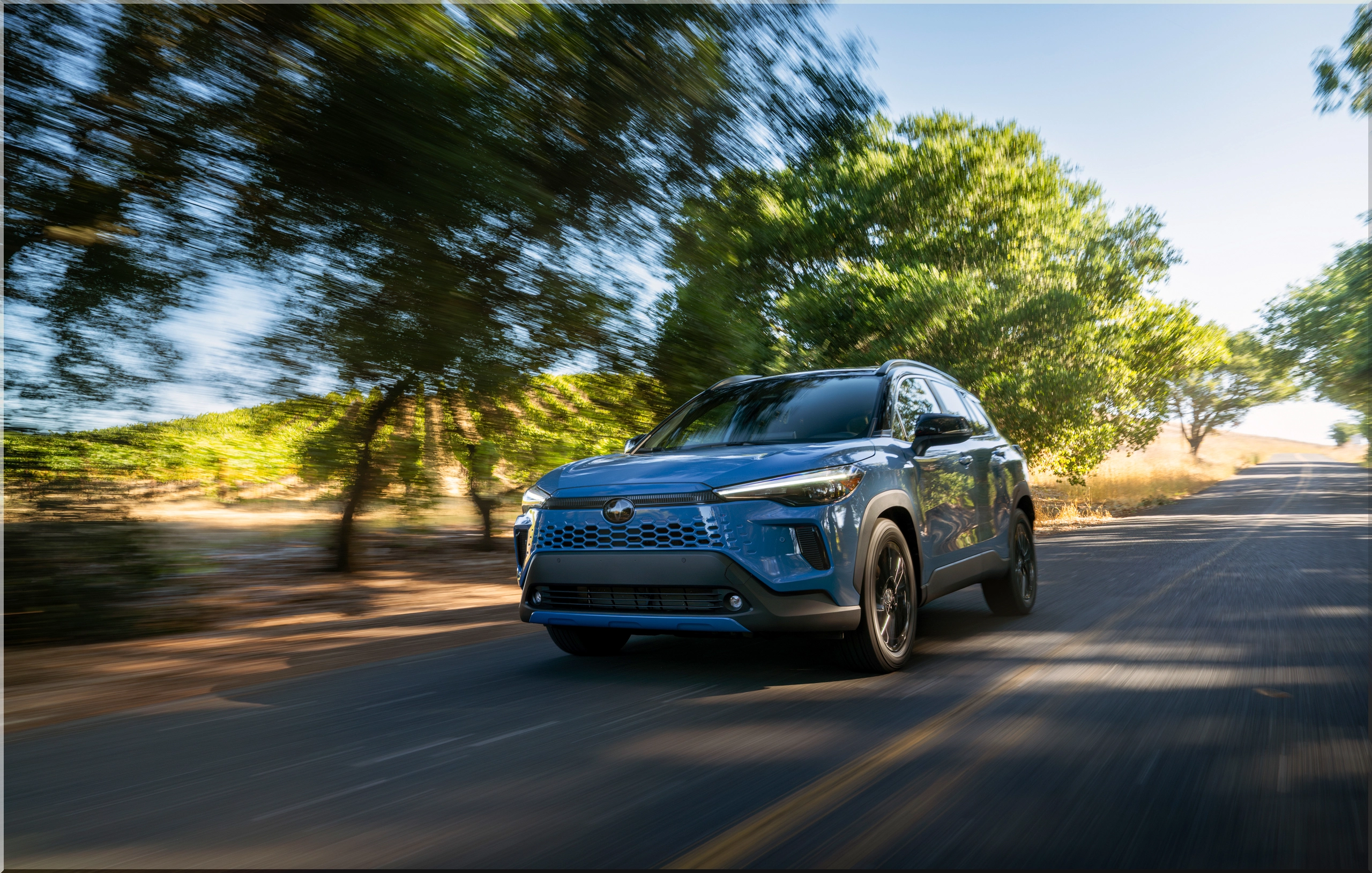
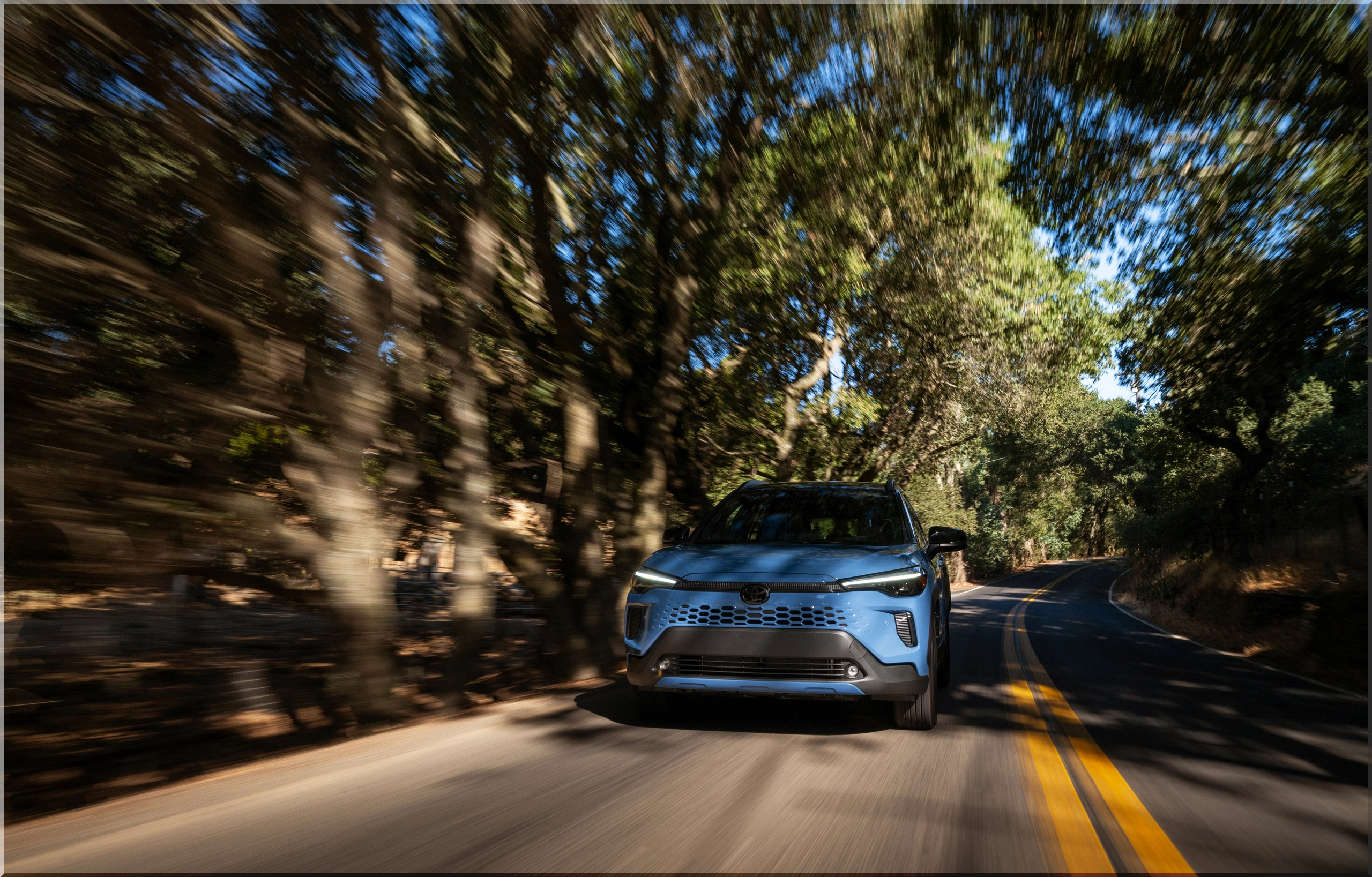
Toyota's carryover US dimensions give the petrol model a 176.1-inch length, approximately 4,473 mm, and 71.9-inch width, approximately 1,826 mm, excluding mirrors. Its 103.9-inch wheelbase, approximately 2,639 mm, keeps the footprint manageable. The petrol model also provides 8.1 inches, approximately 206 mm, of ground clearance.
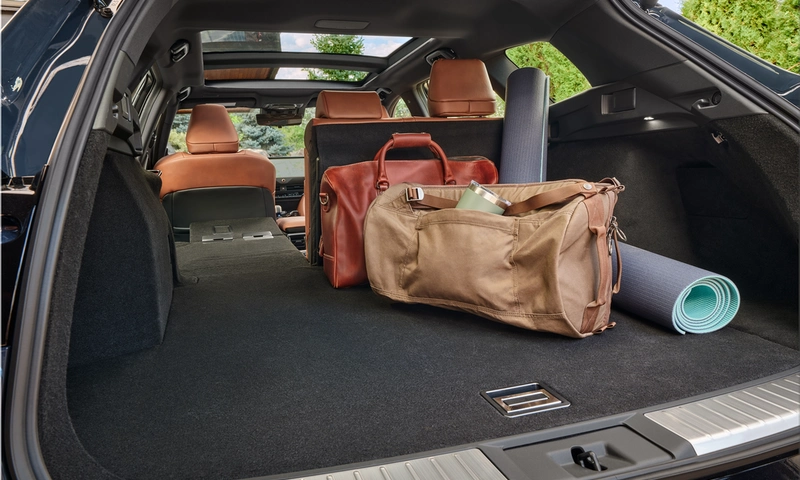
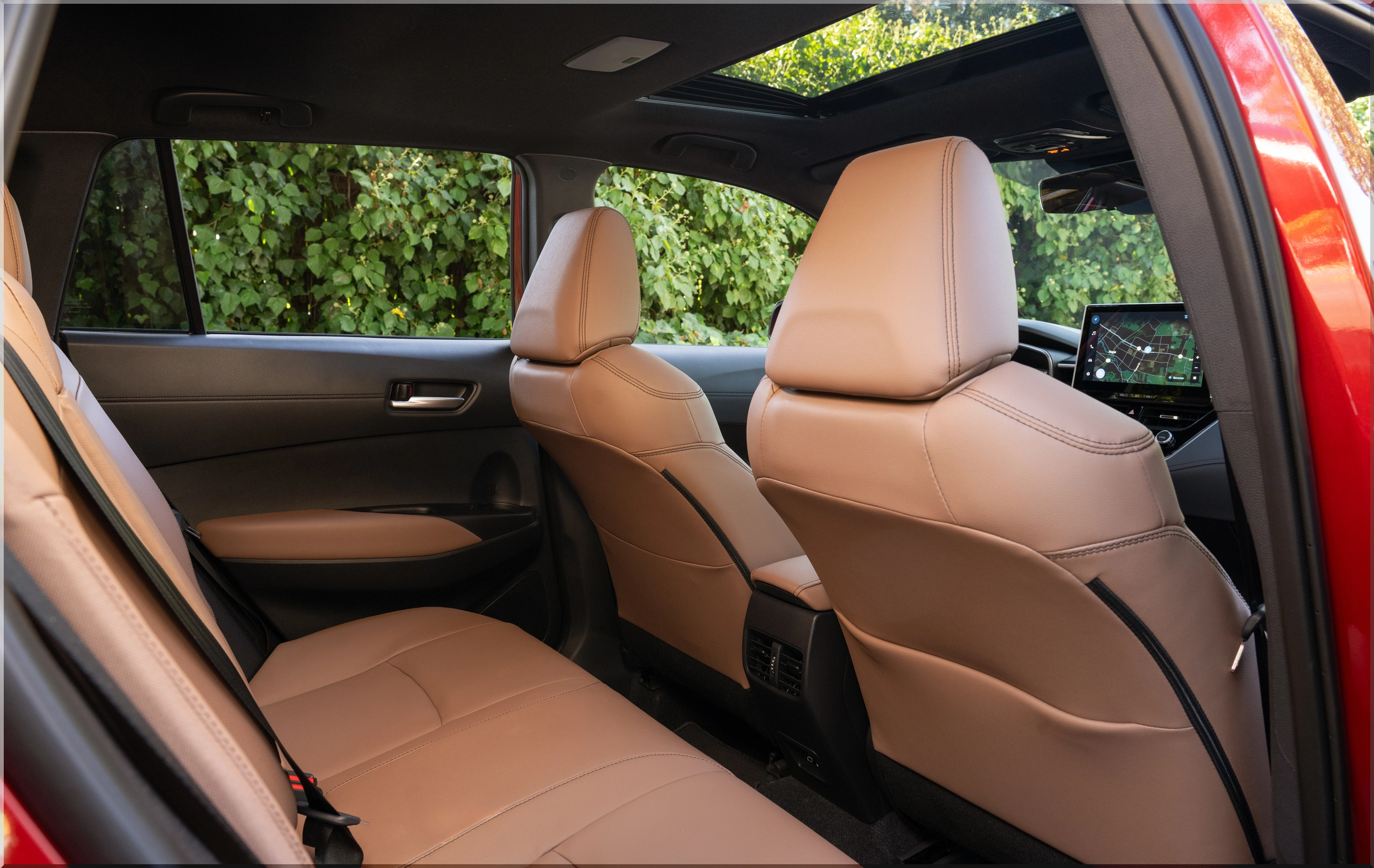
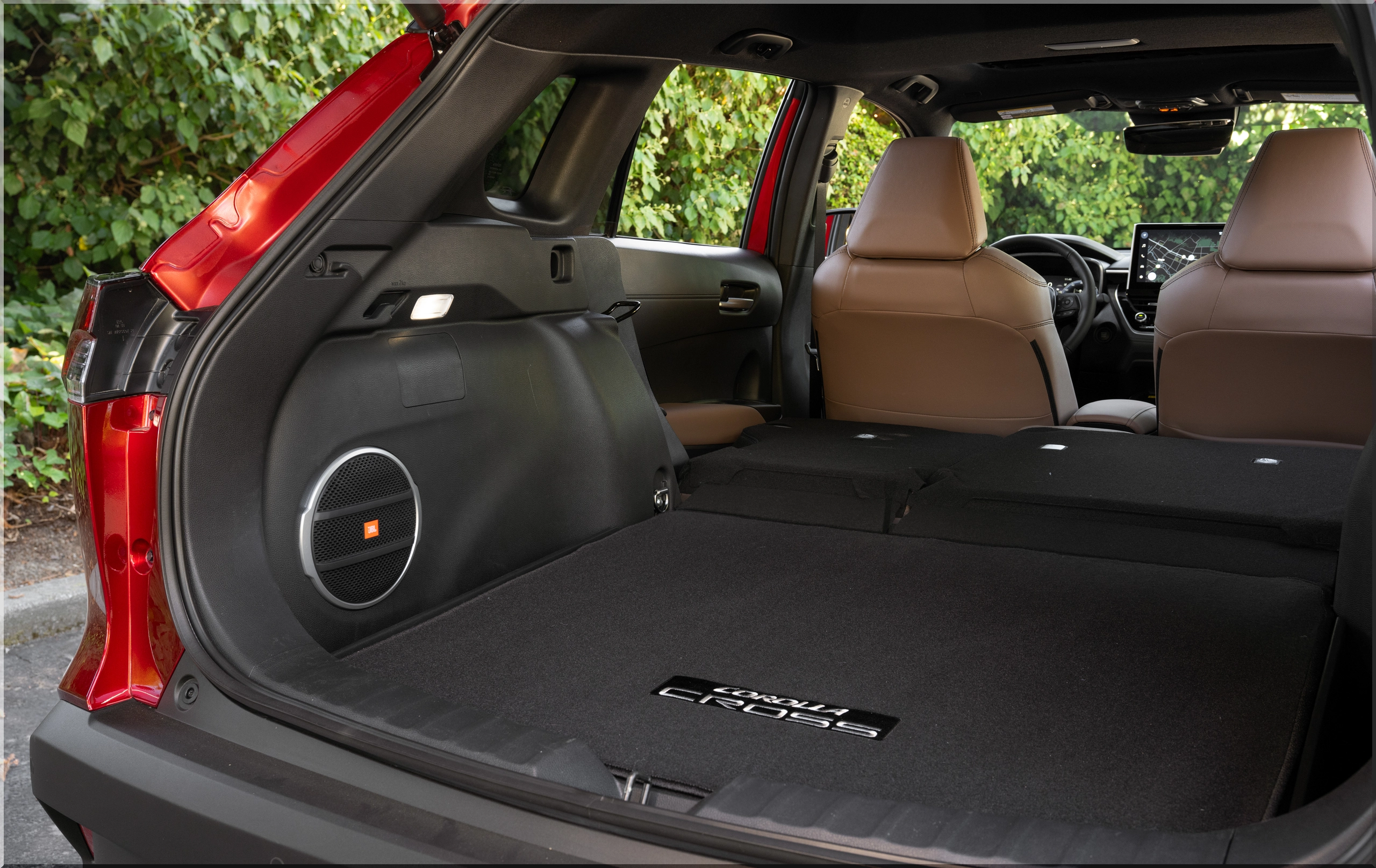
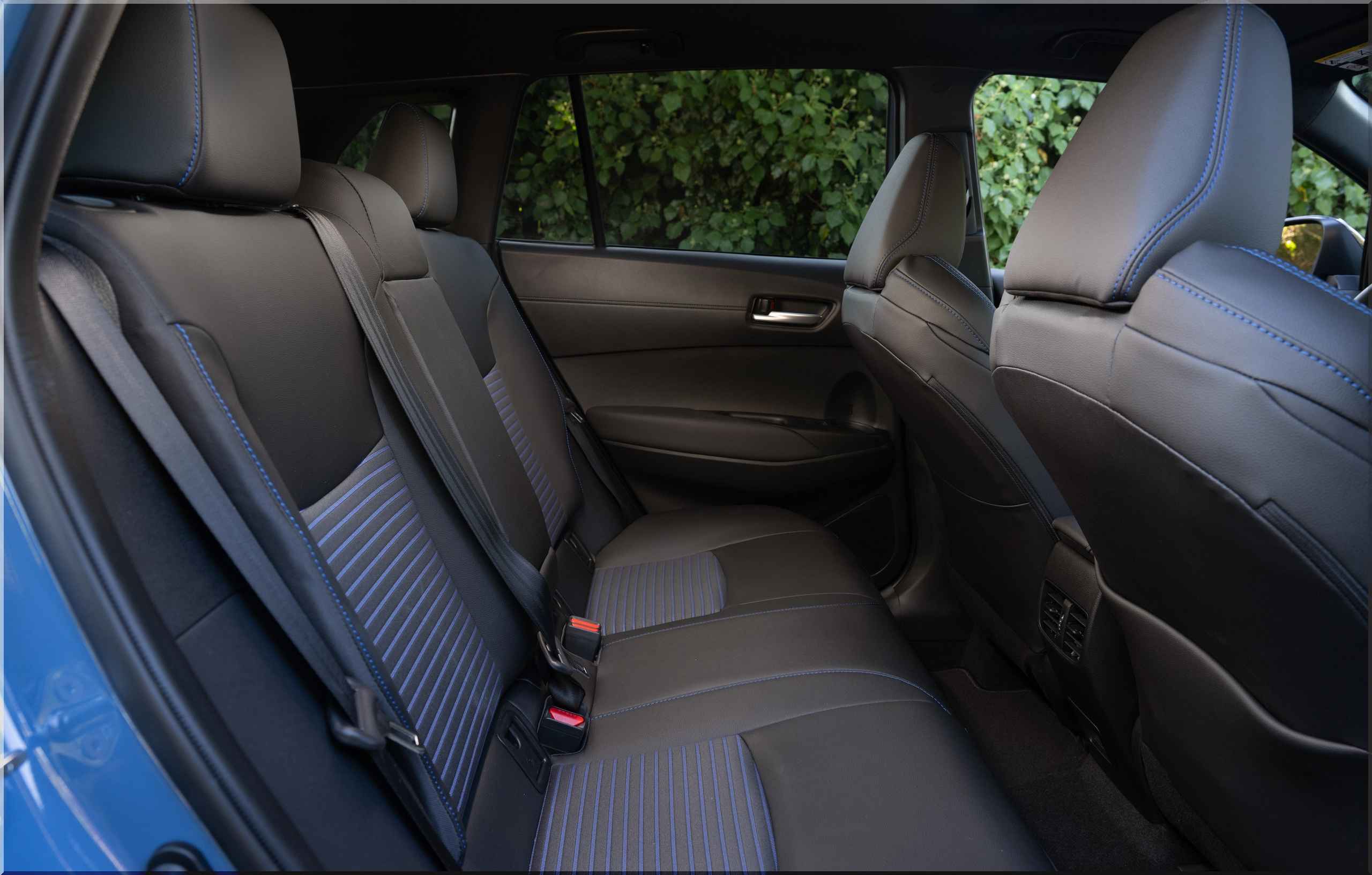
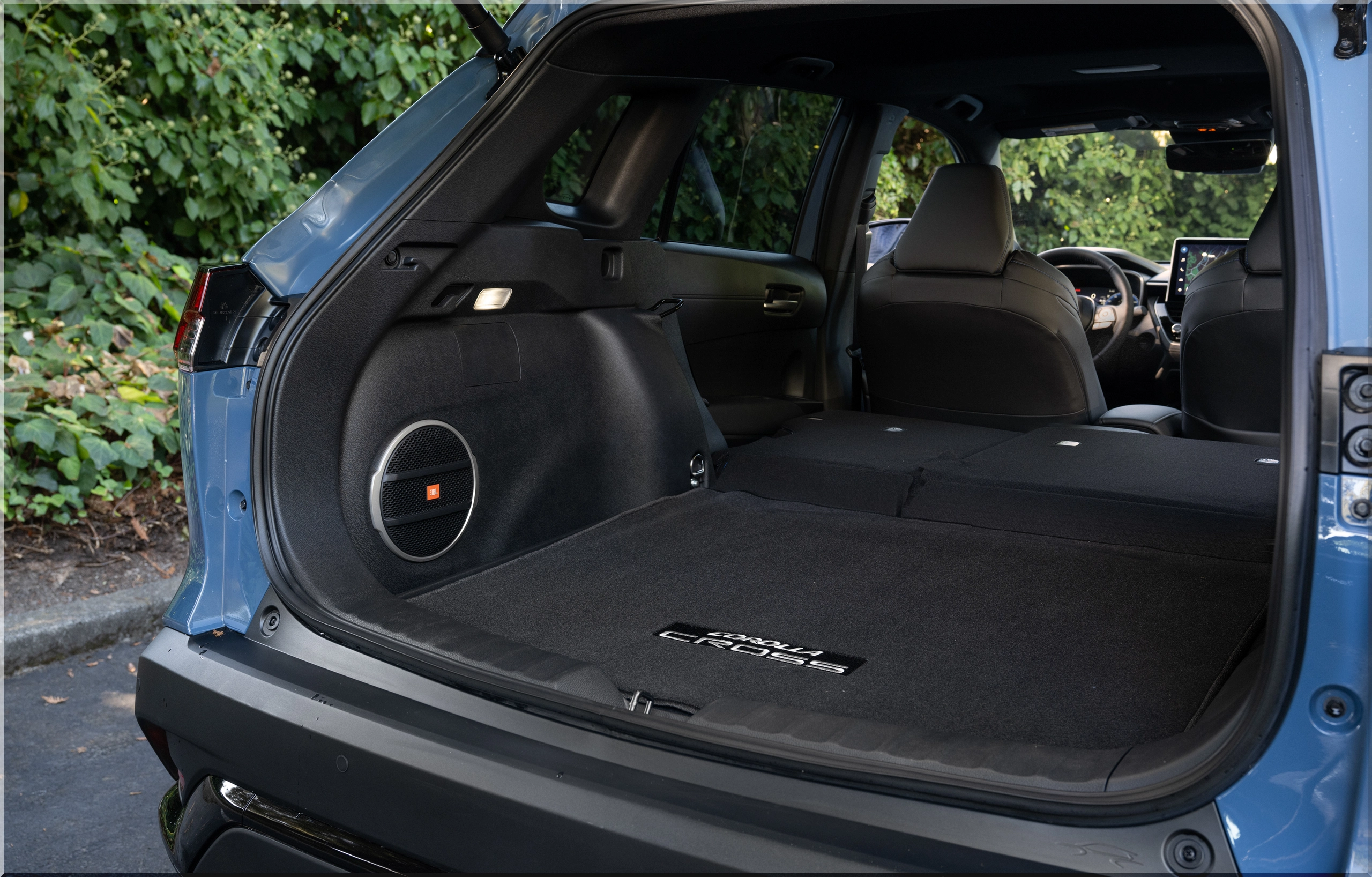
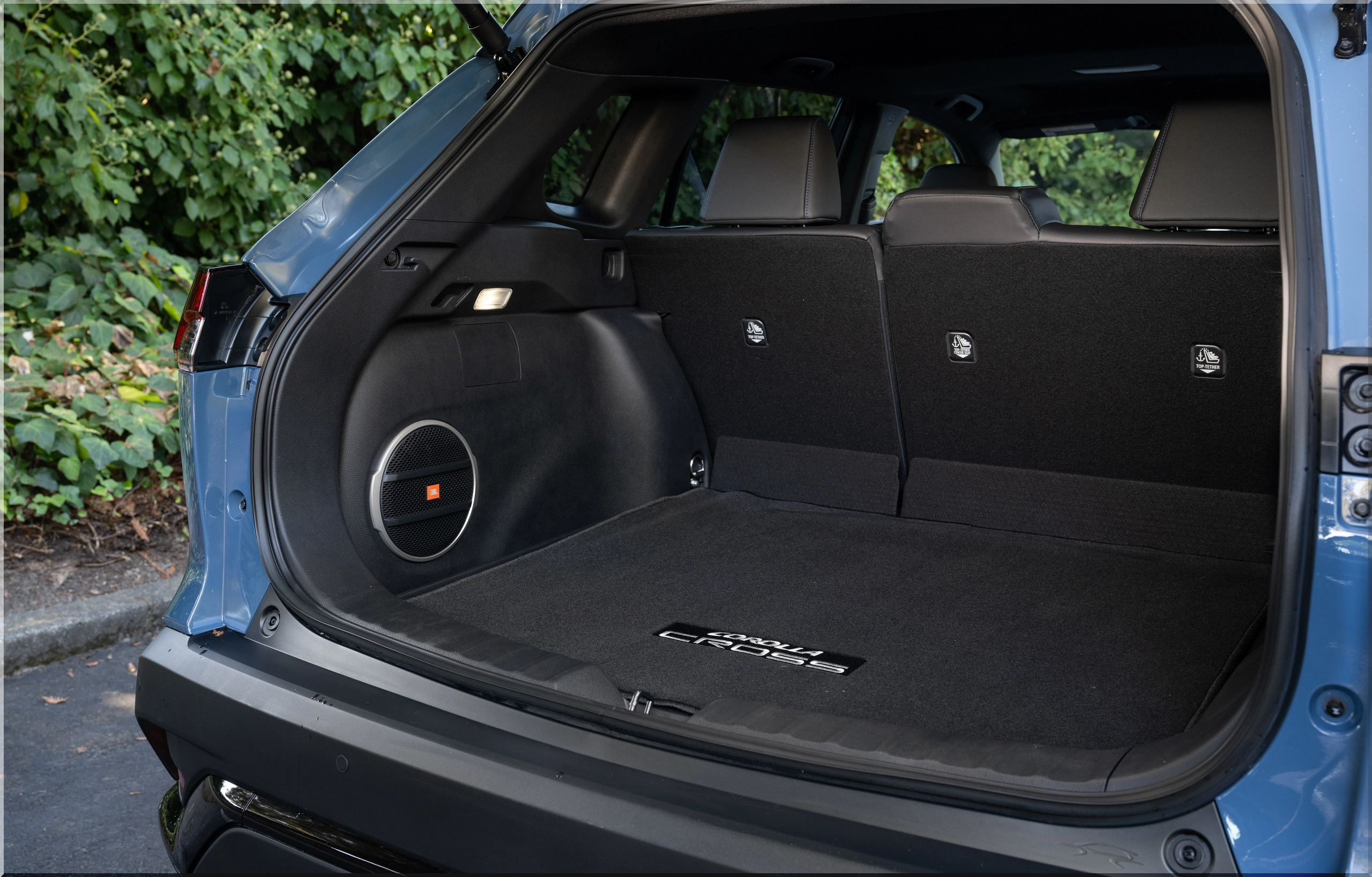
Rear-seat space deserves a closer inspection. Toyota lists 32.0 inches, approximately 813 mm, of rear legroom, compared with 42.9 inches, approximately 1,090 mm, in front. The petrol FWD model supplies 24.0 cubic feet, approximately 680 litres, behind the rear seats, while 60/40 folding seatbacks accommodate longer loads.
Toyota quotes 1,500 lb, approximately 680 kg, of towing capacity. That ceiling suits small trailers, not substantial caravan loads. Check the vehicle's handbook and door-label payload before adding passengers, luggage and trailer tongue weight.
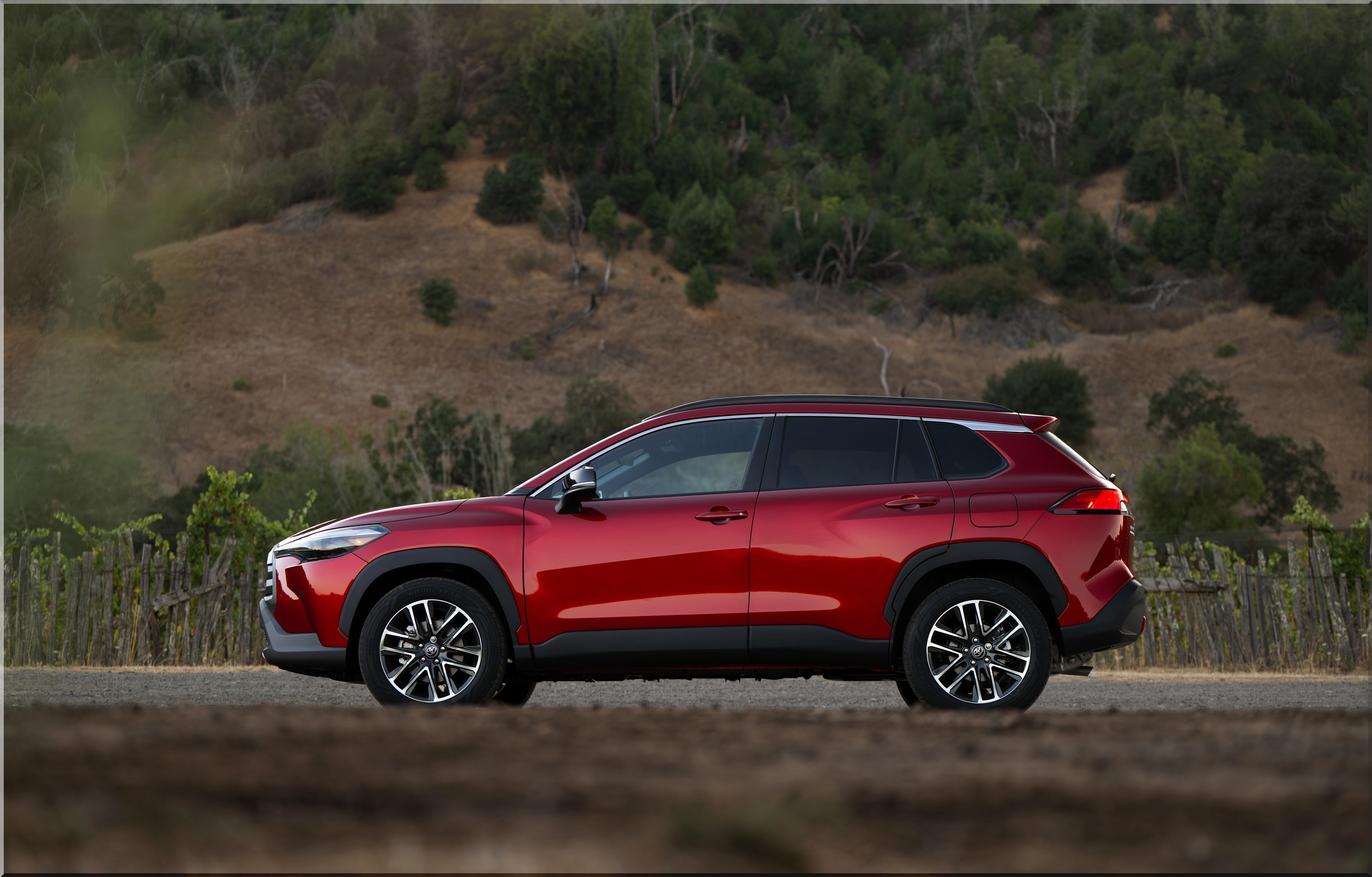
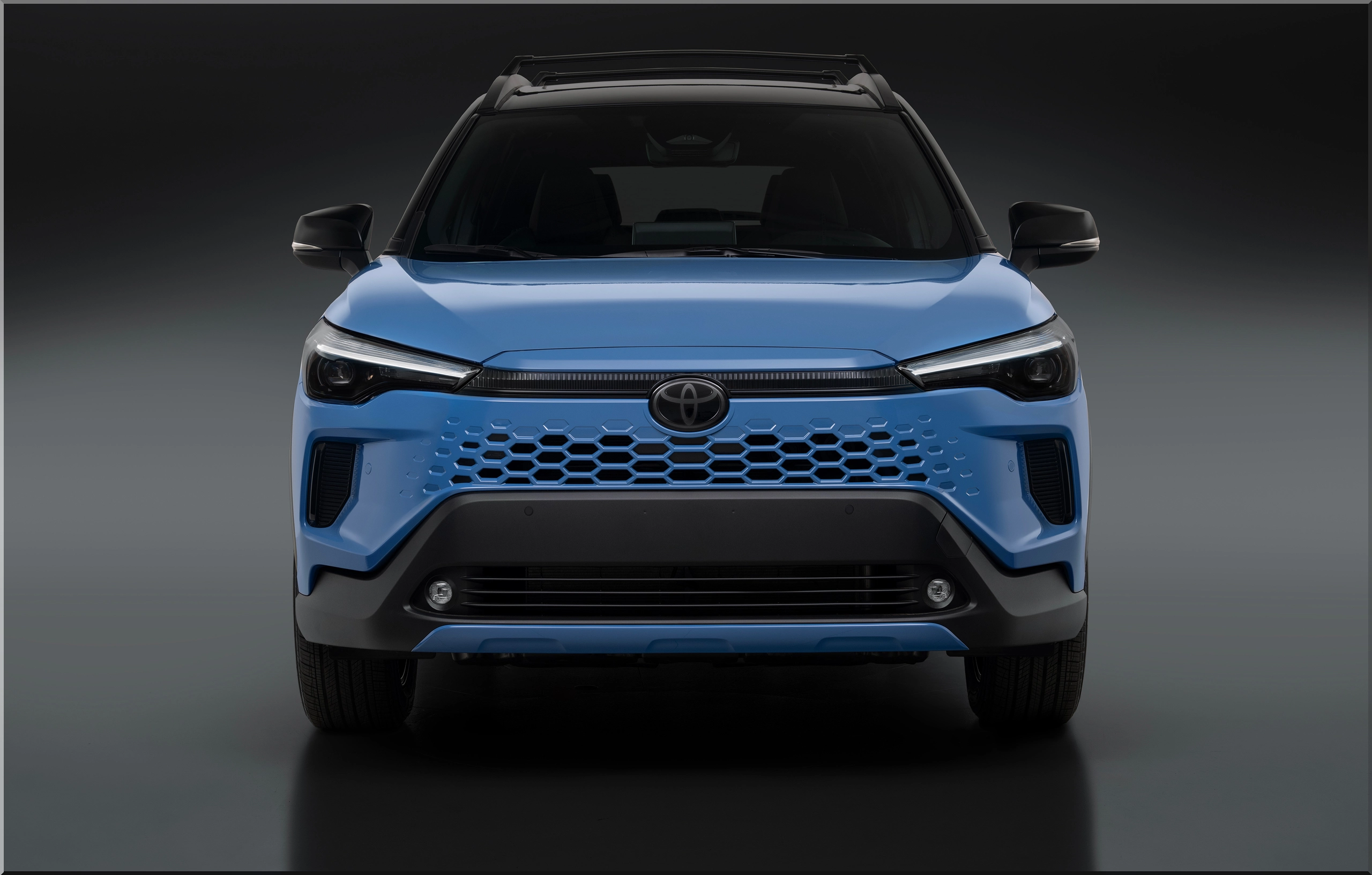
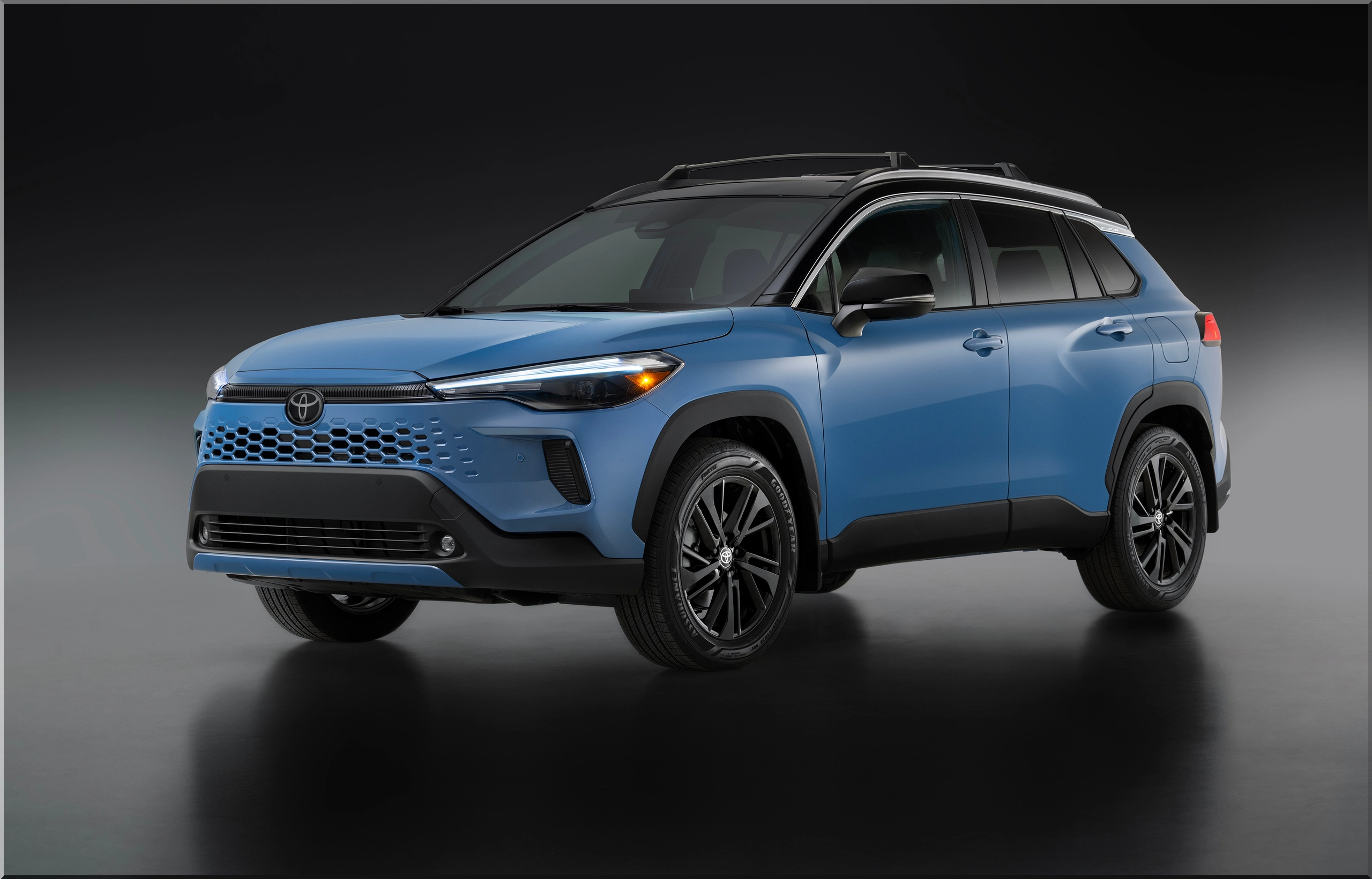
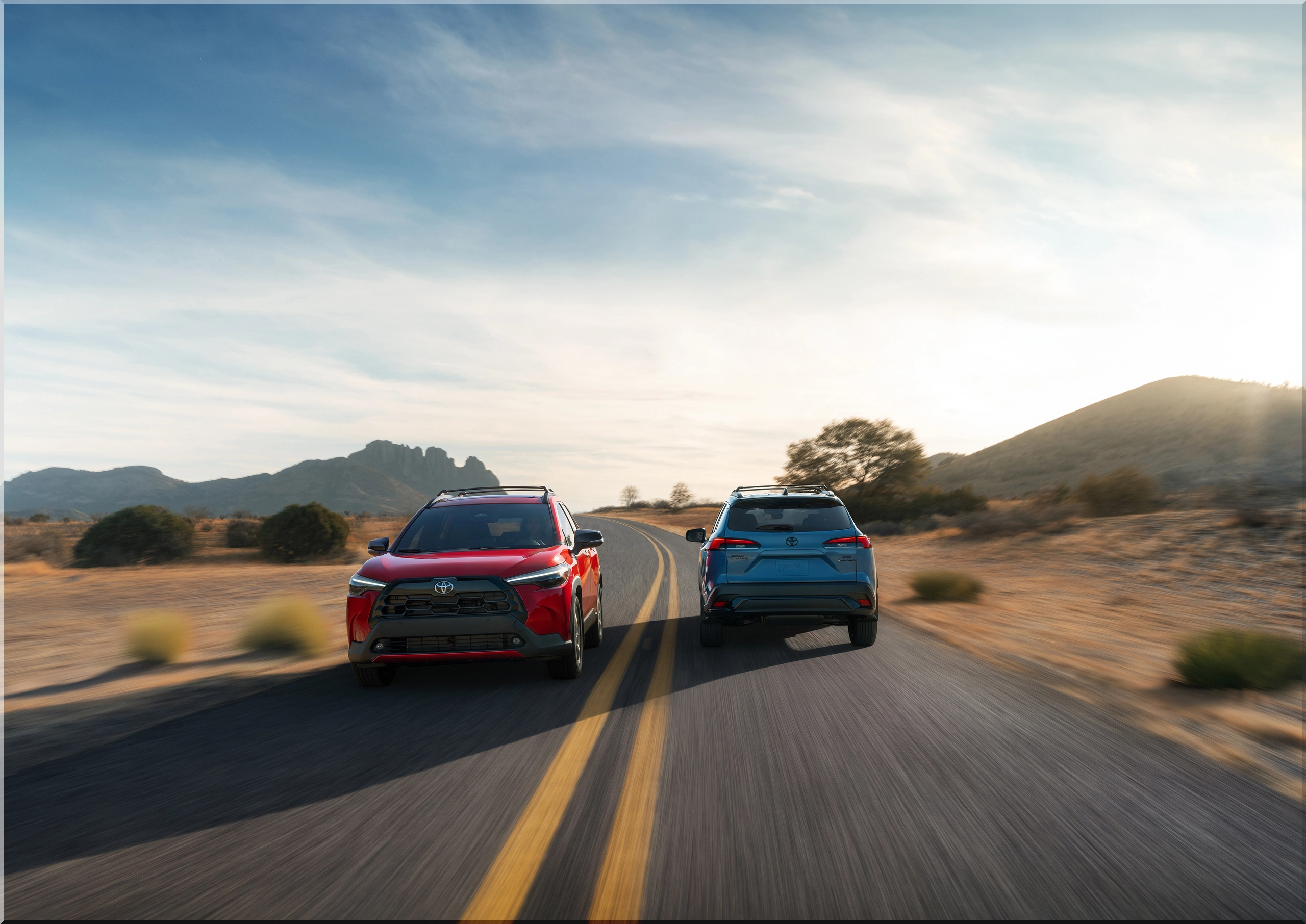
Image gallery
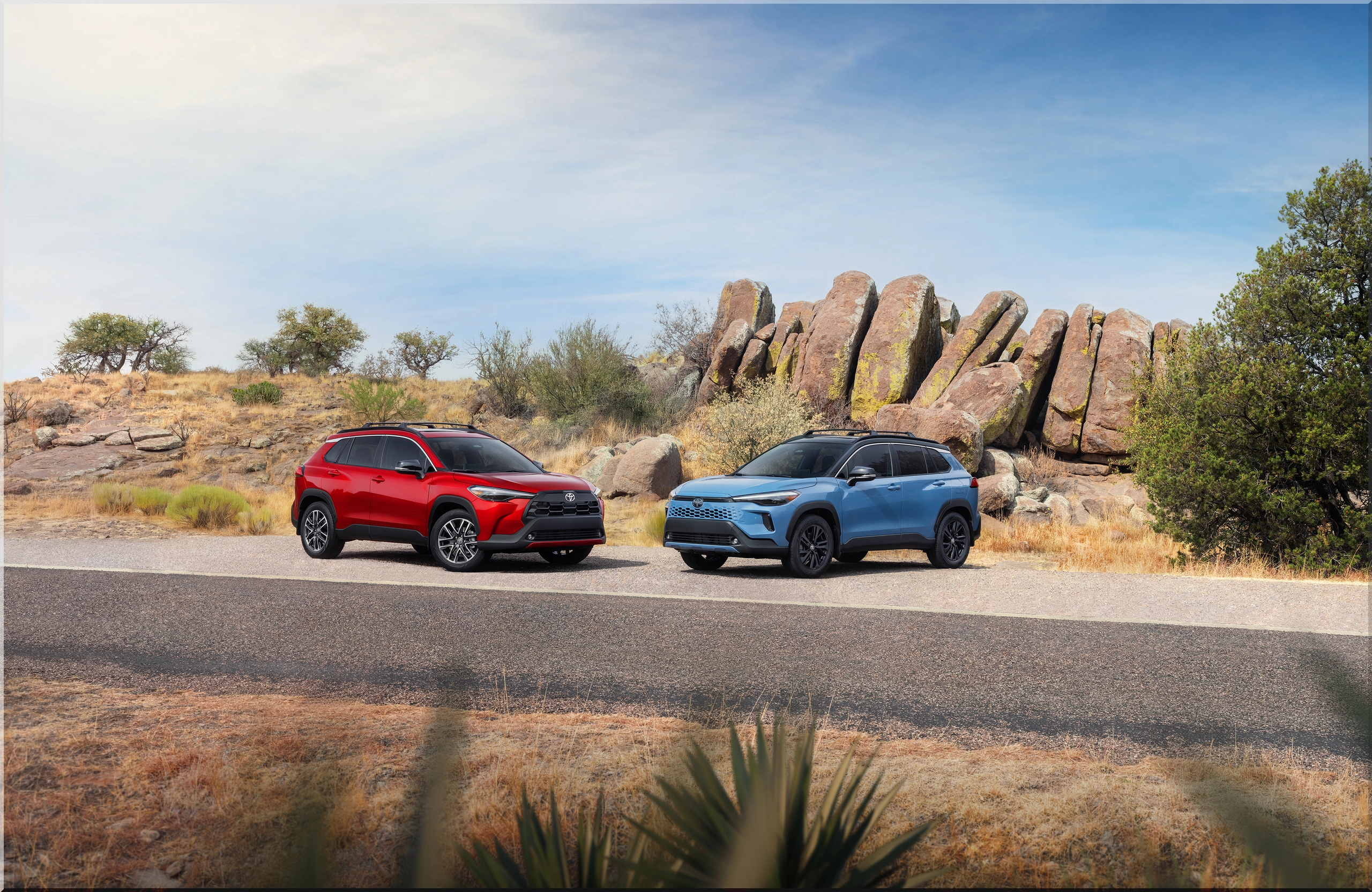
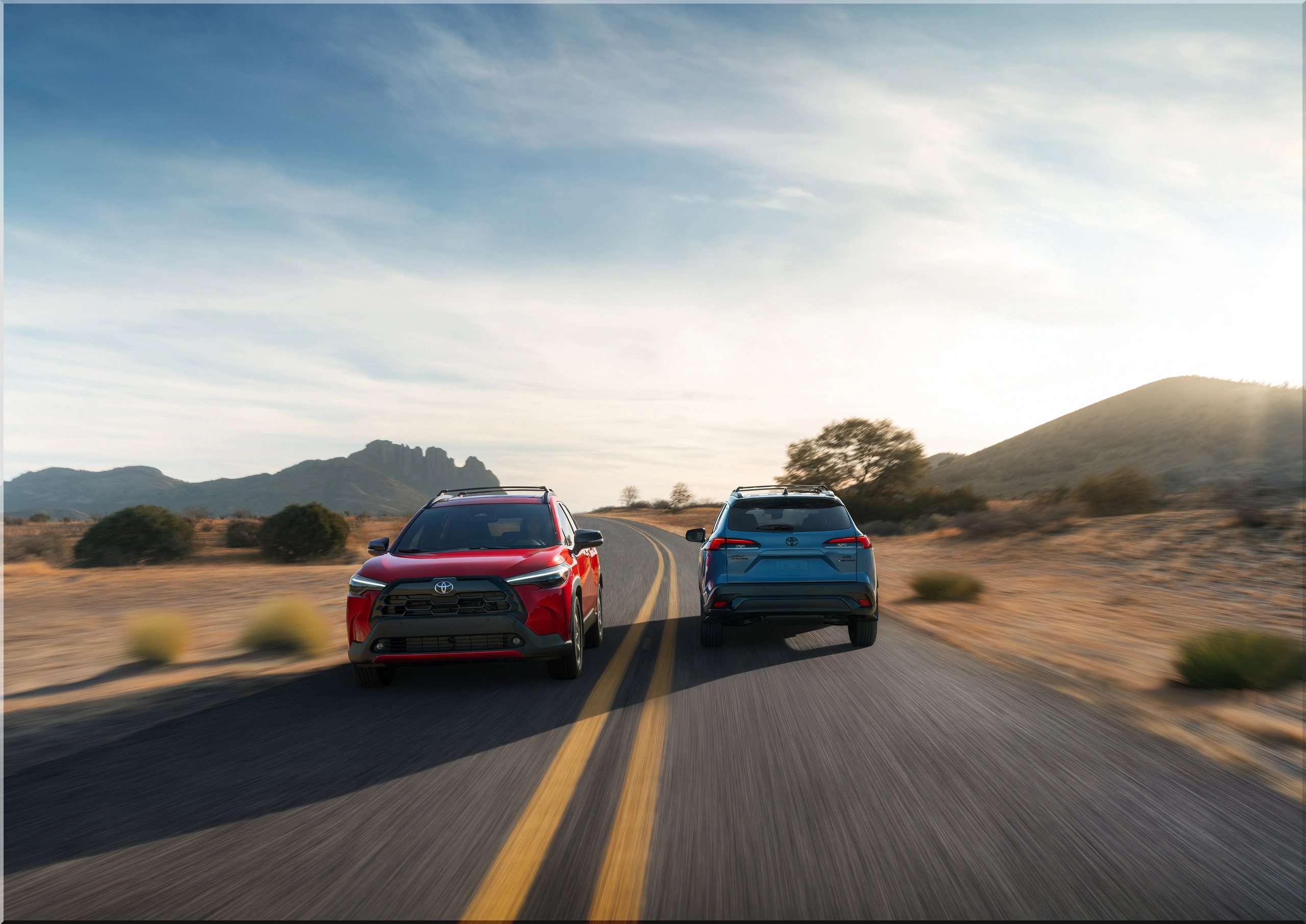
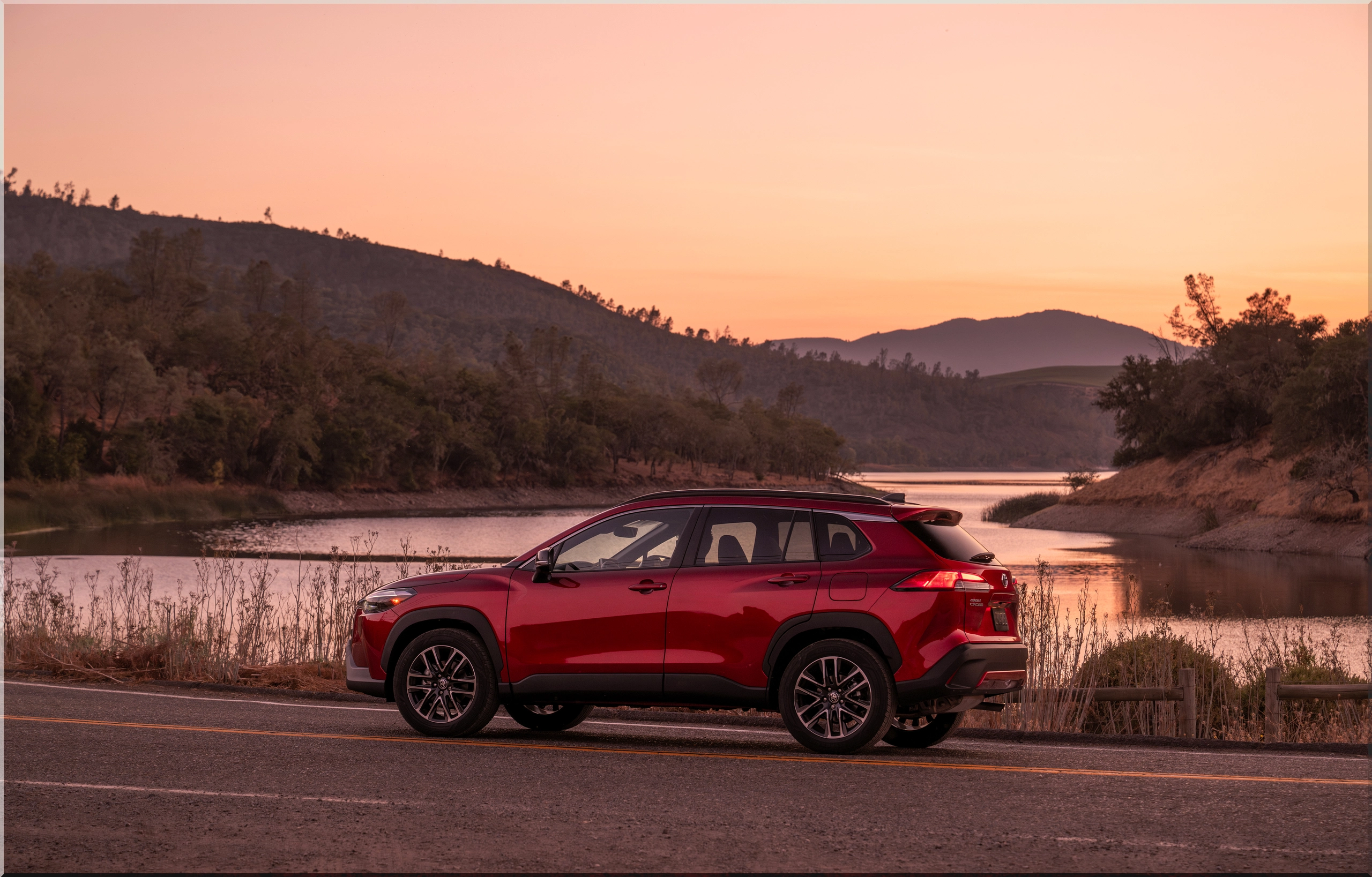
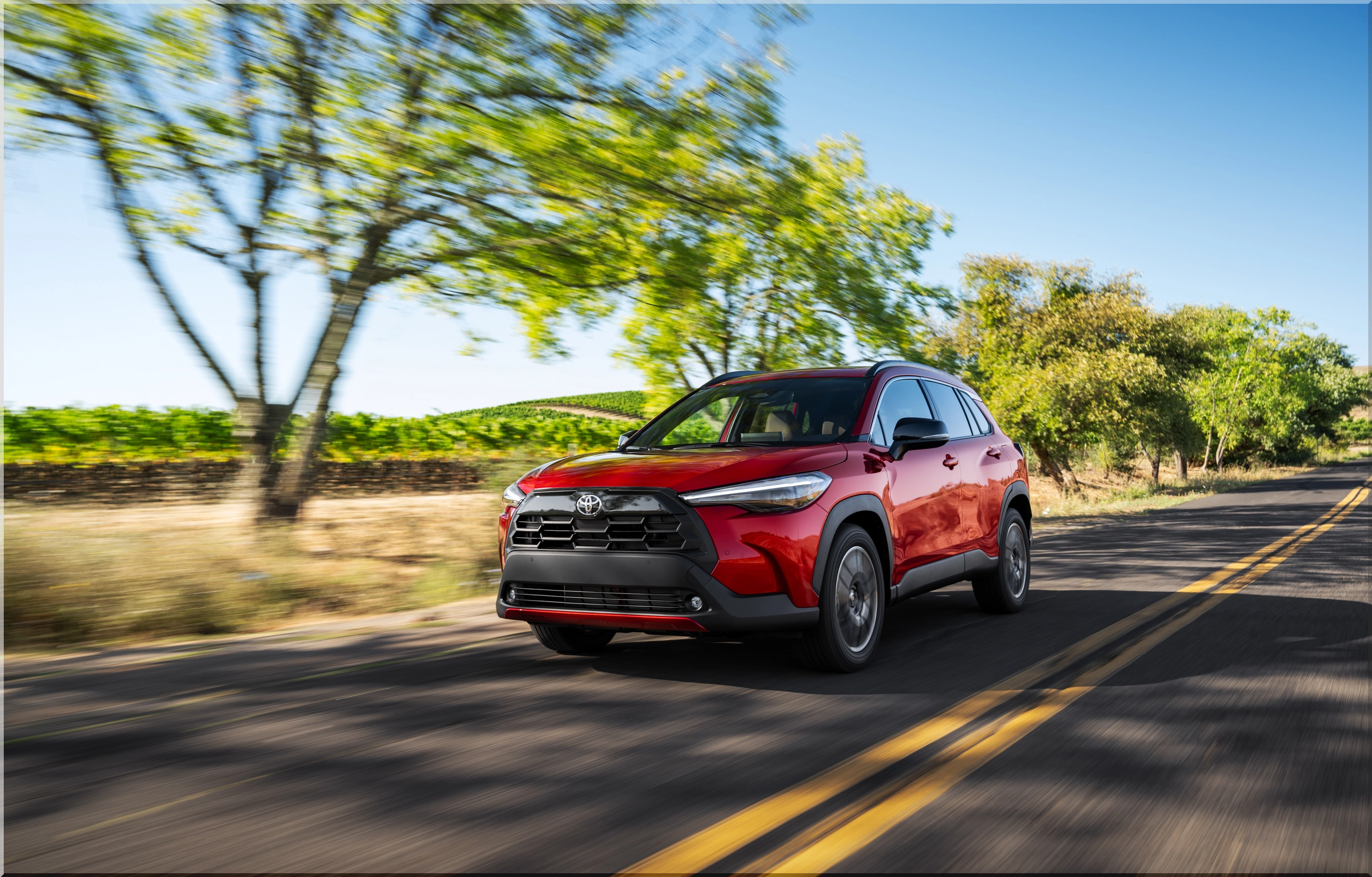
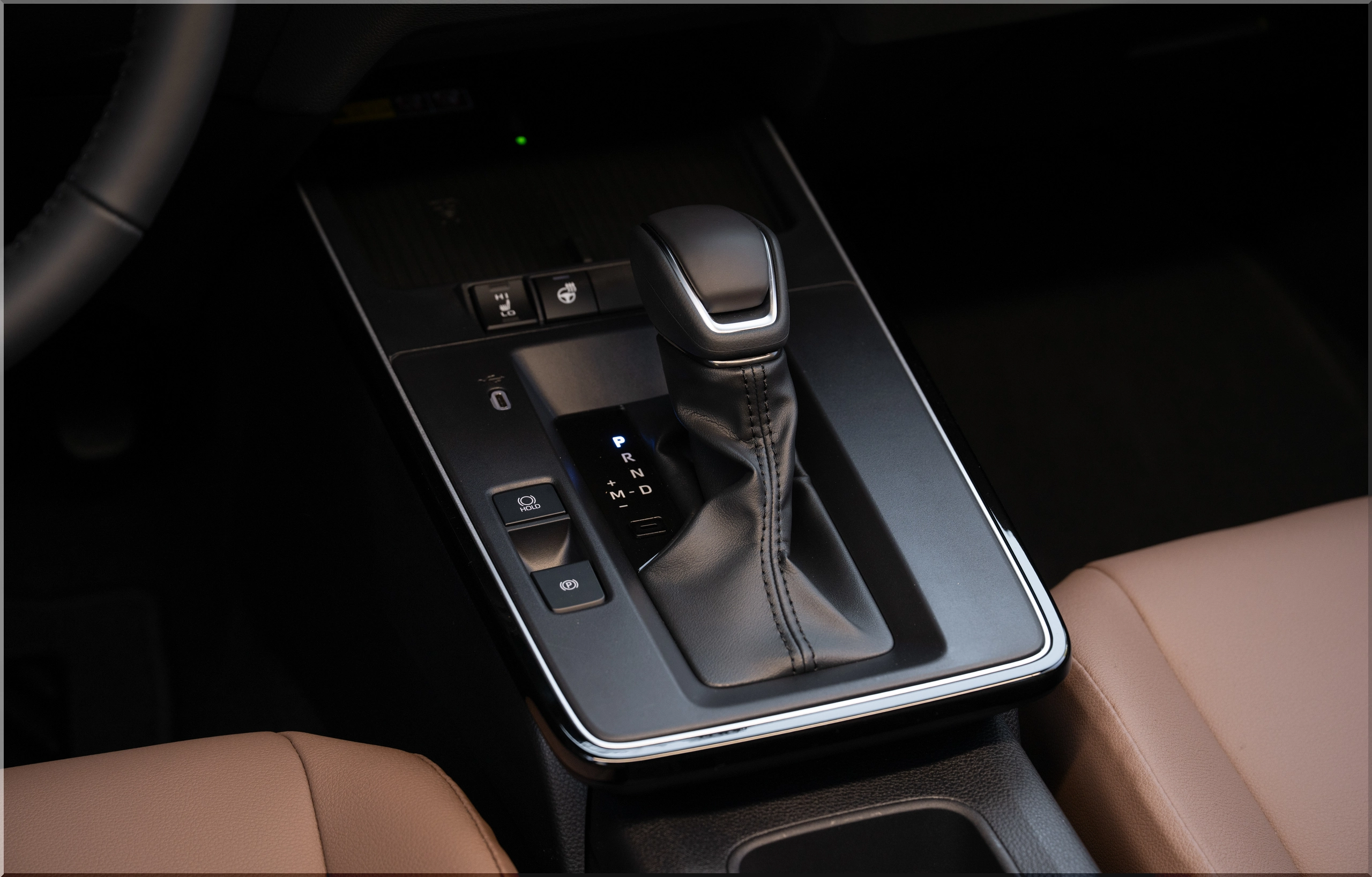
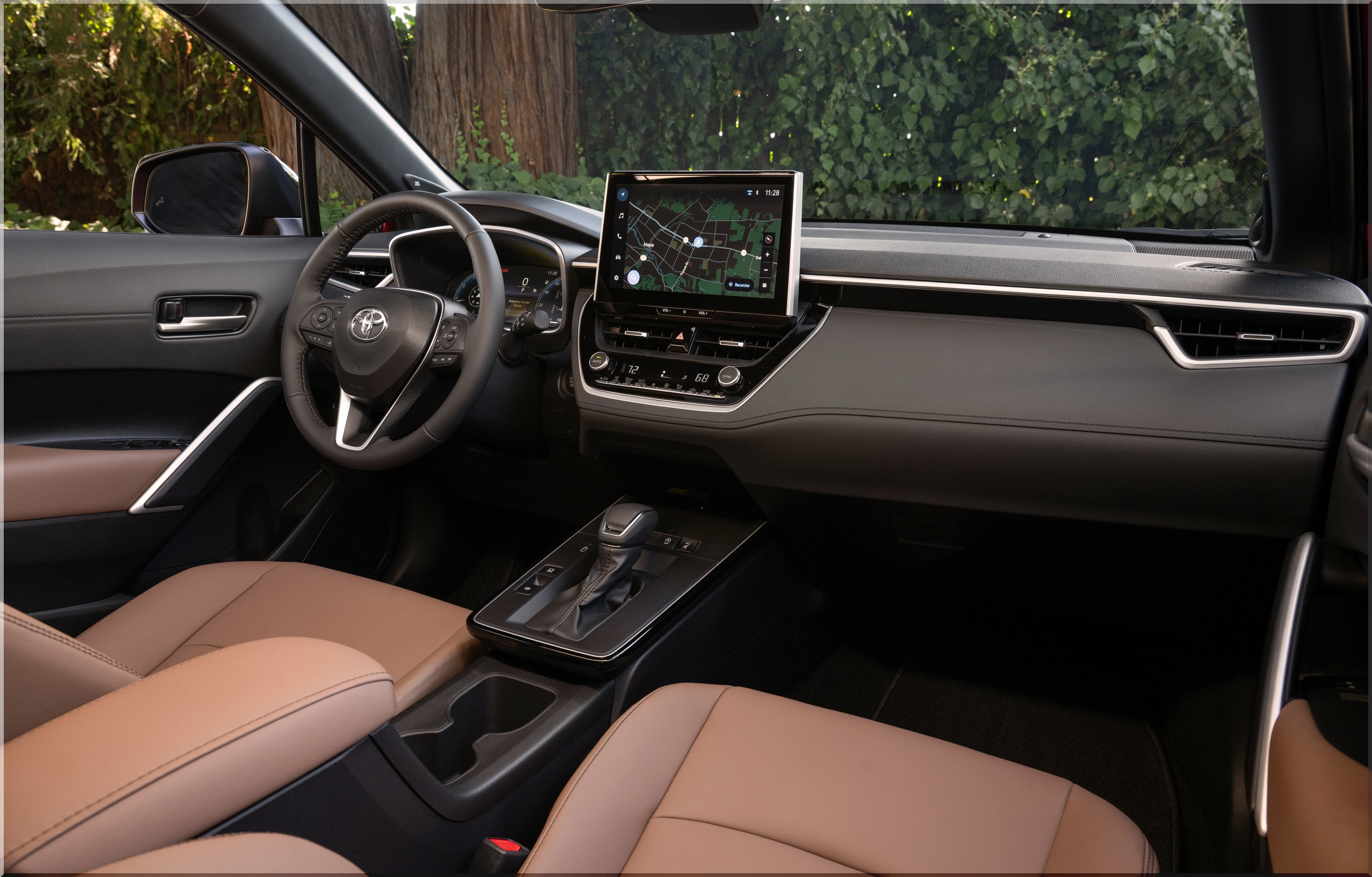
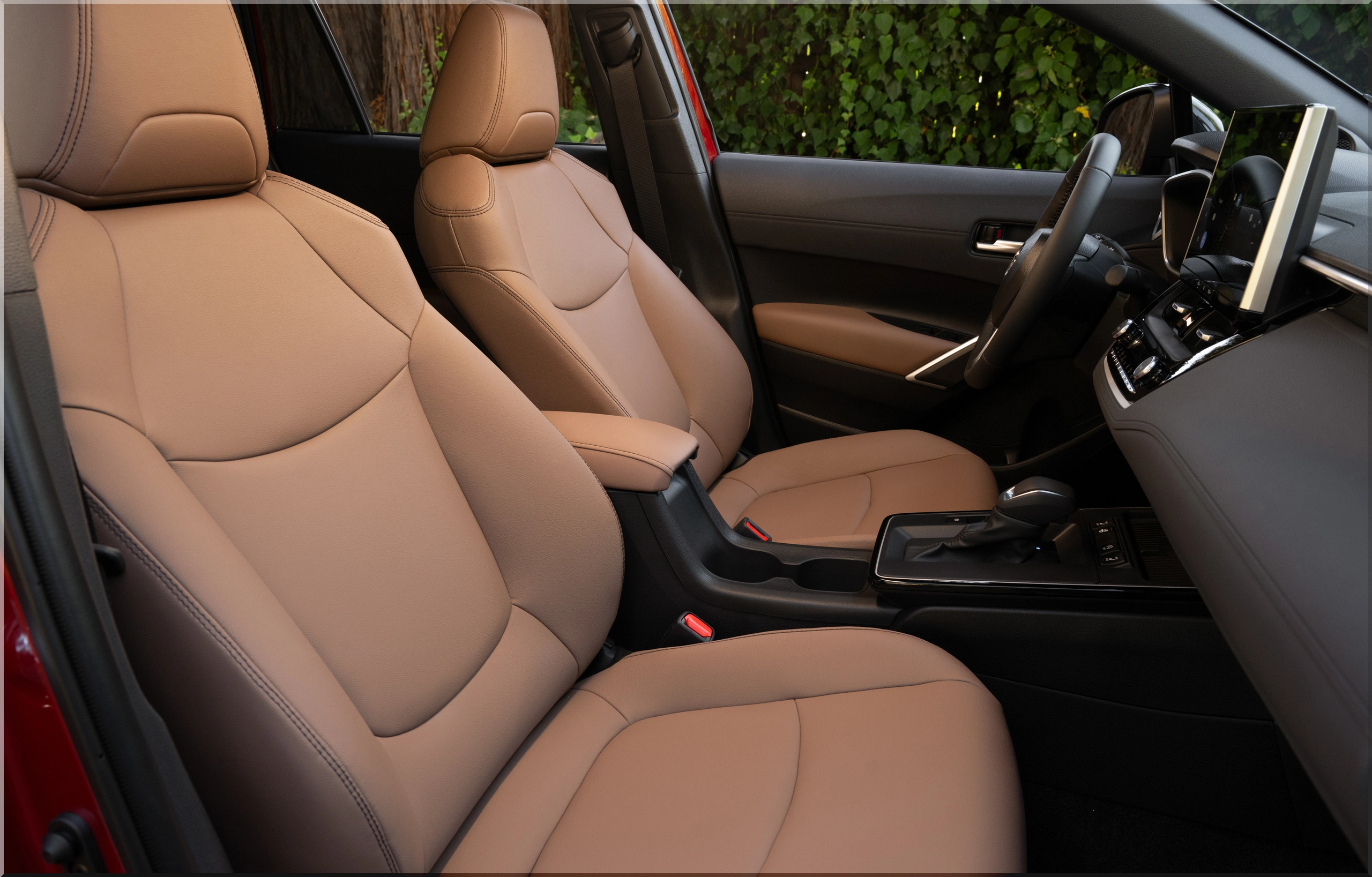
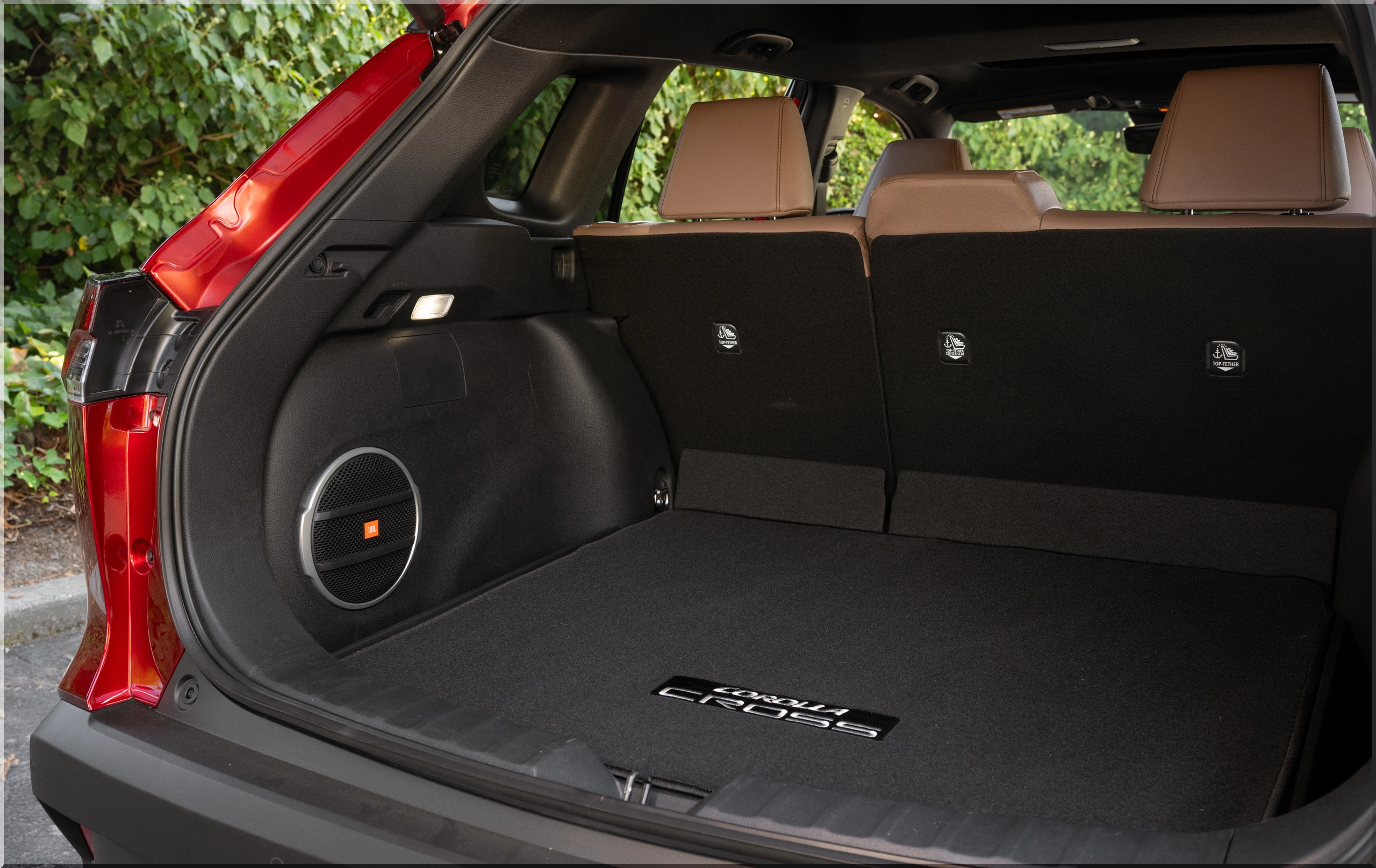
Which Equipment Adds Useful Value?
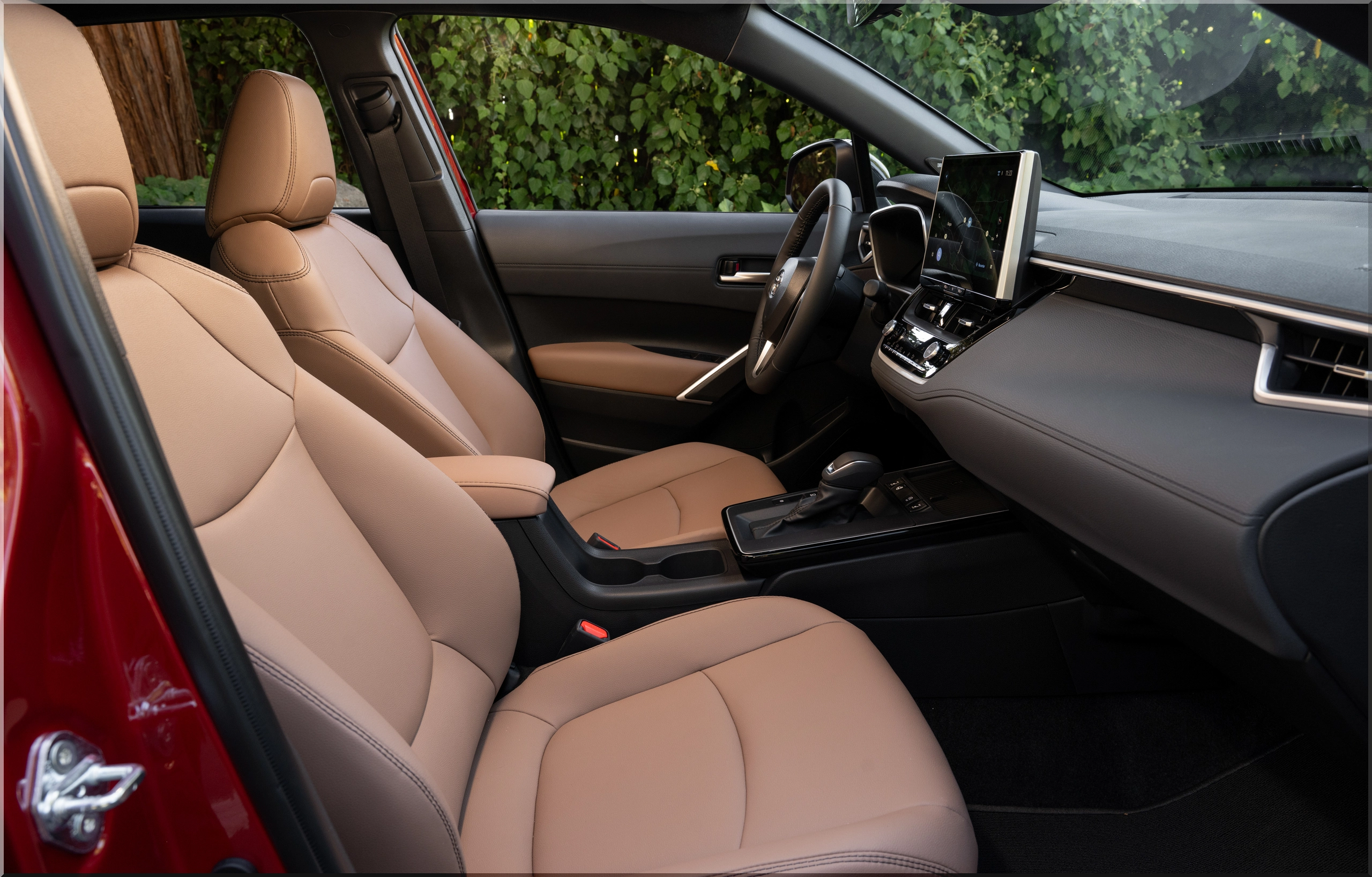
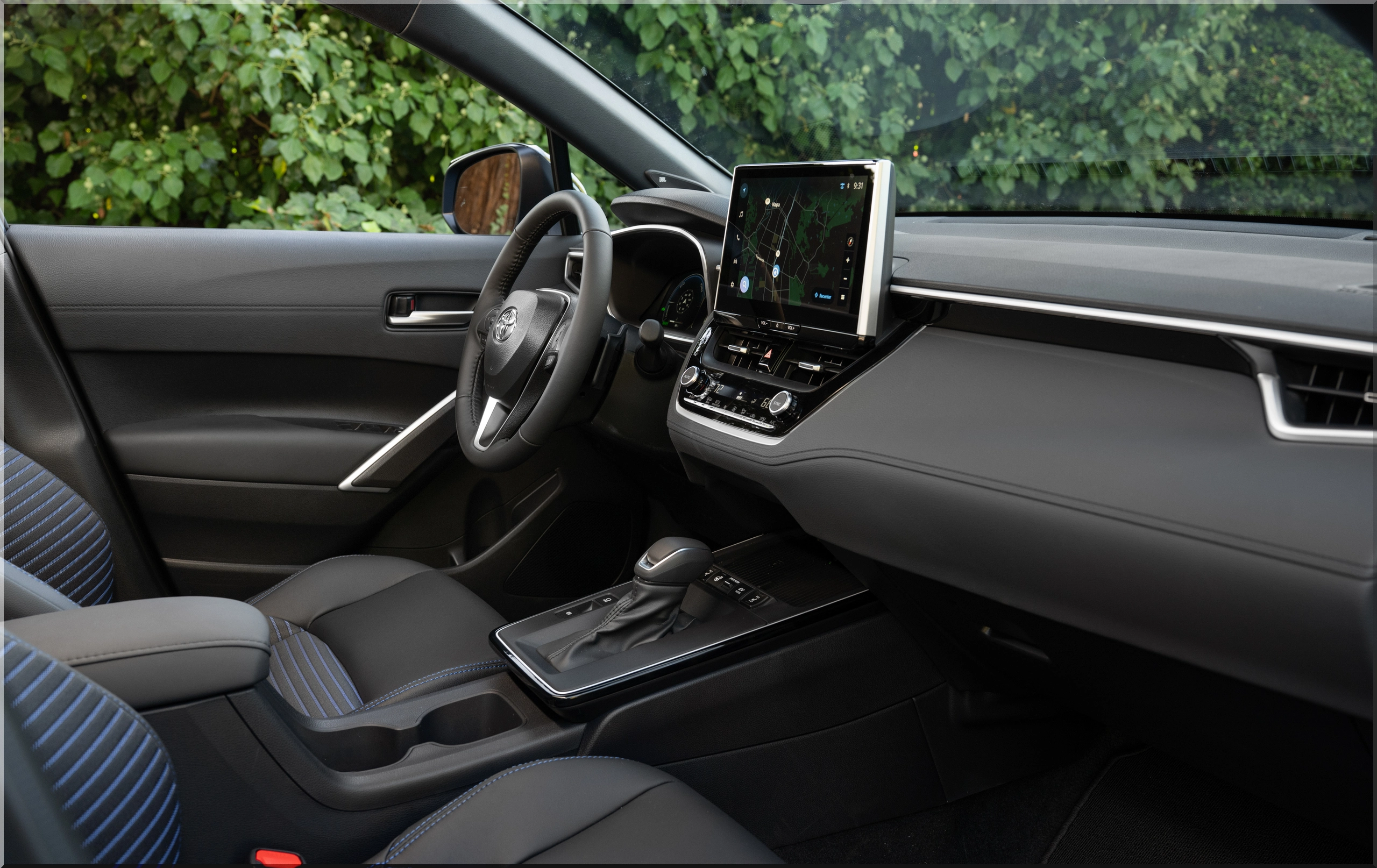
The petrol LE adds blind-spot monitoring, rear cross-traffic alerts, wireless charging, automatic climate control and smart-key access over the L. The Hybrid SE includes similar everyday conveniences alongside its electrified drivetrain.
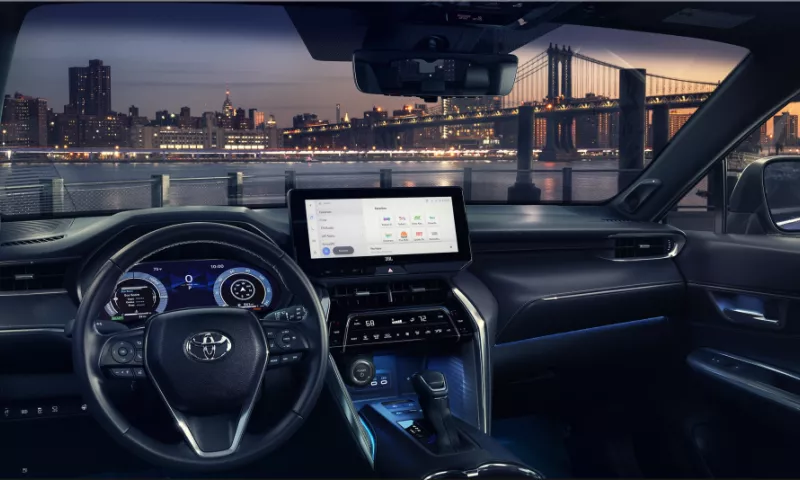
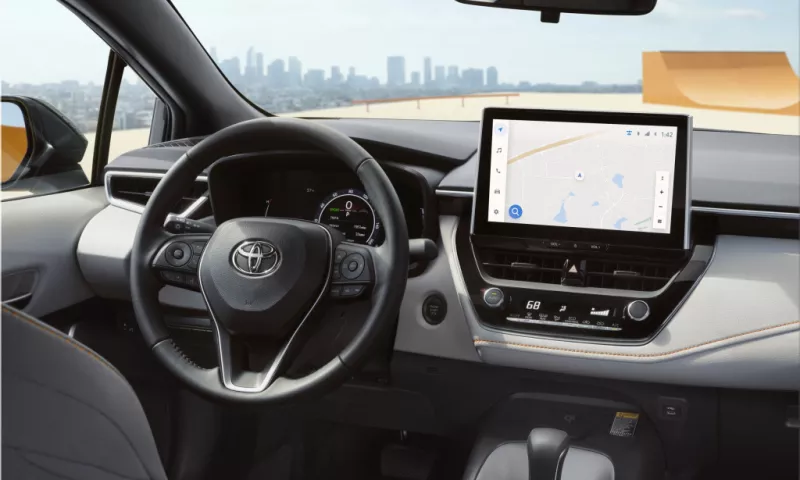
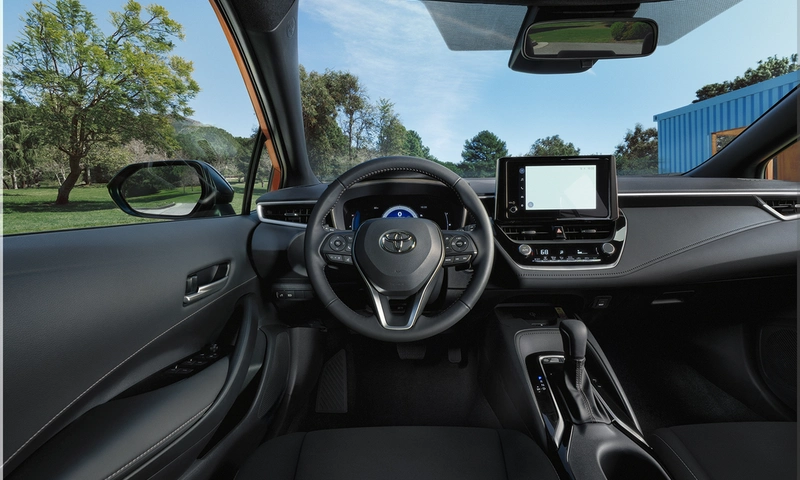
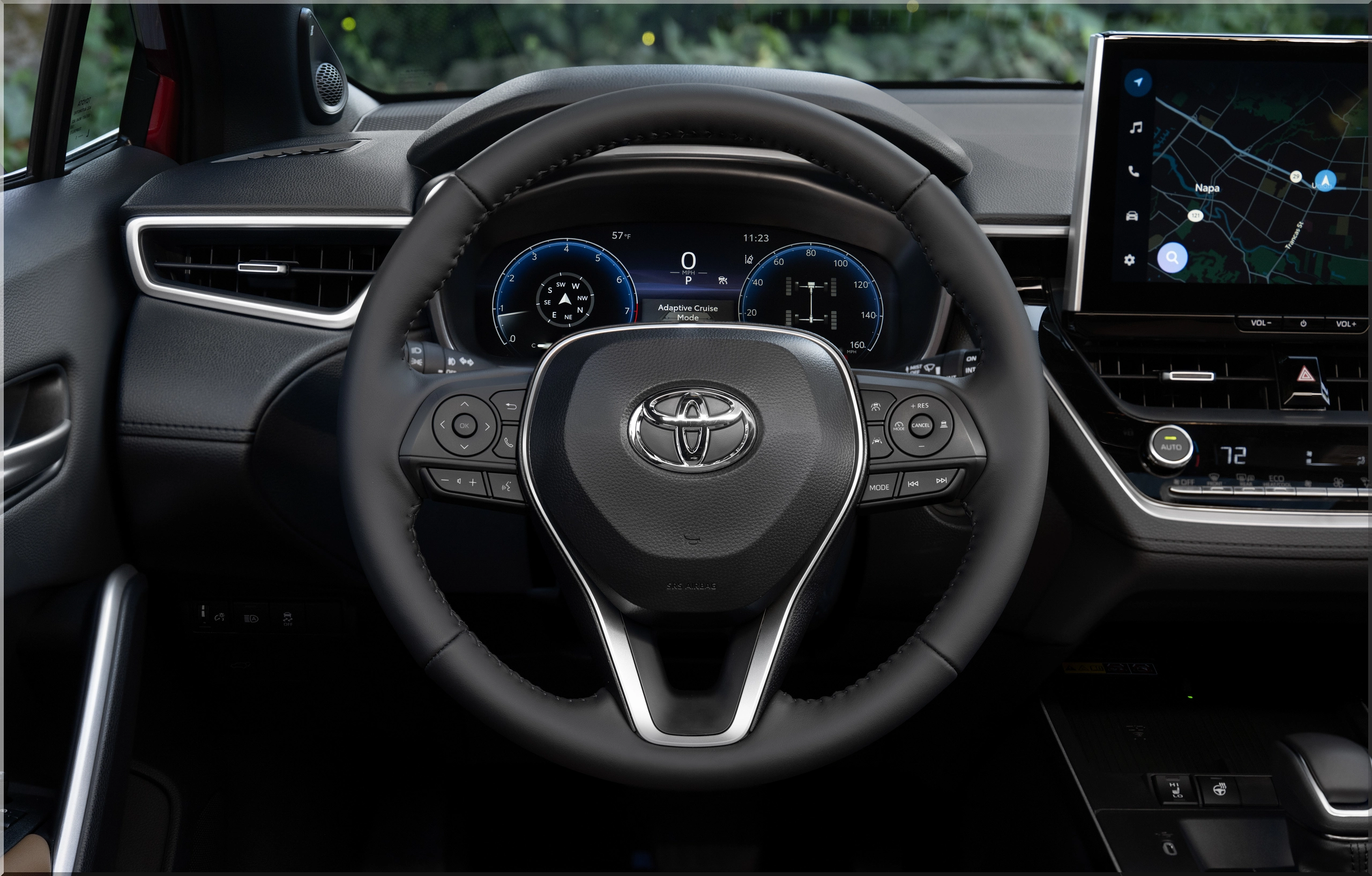
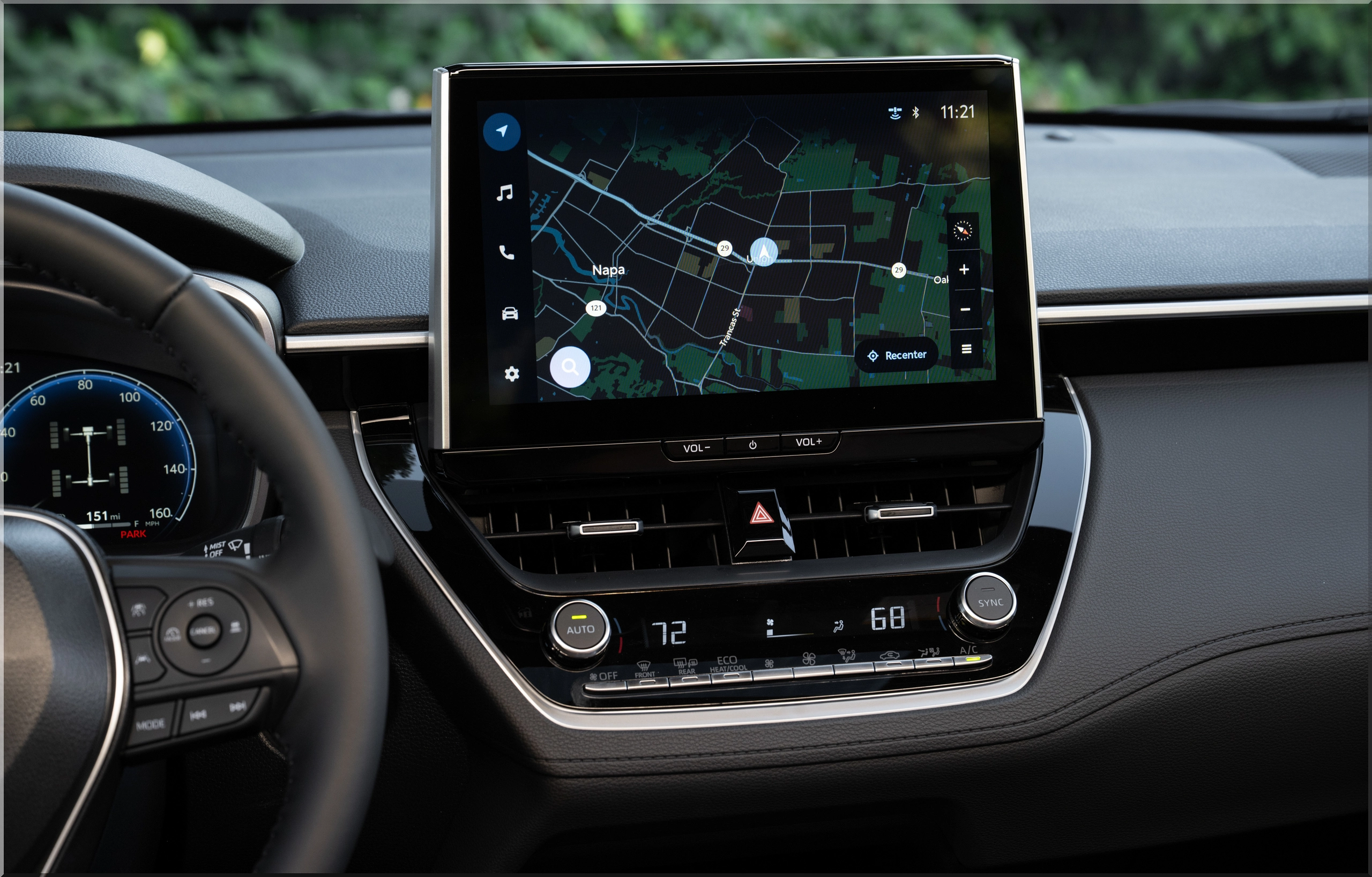
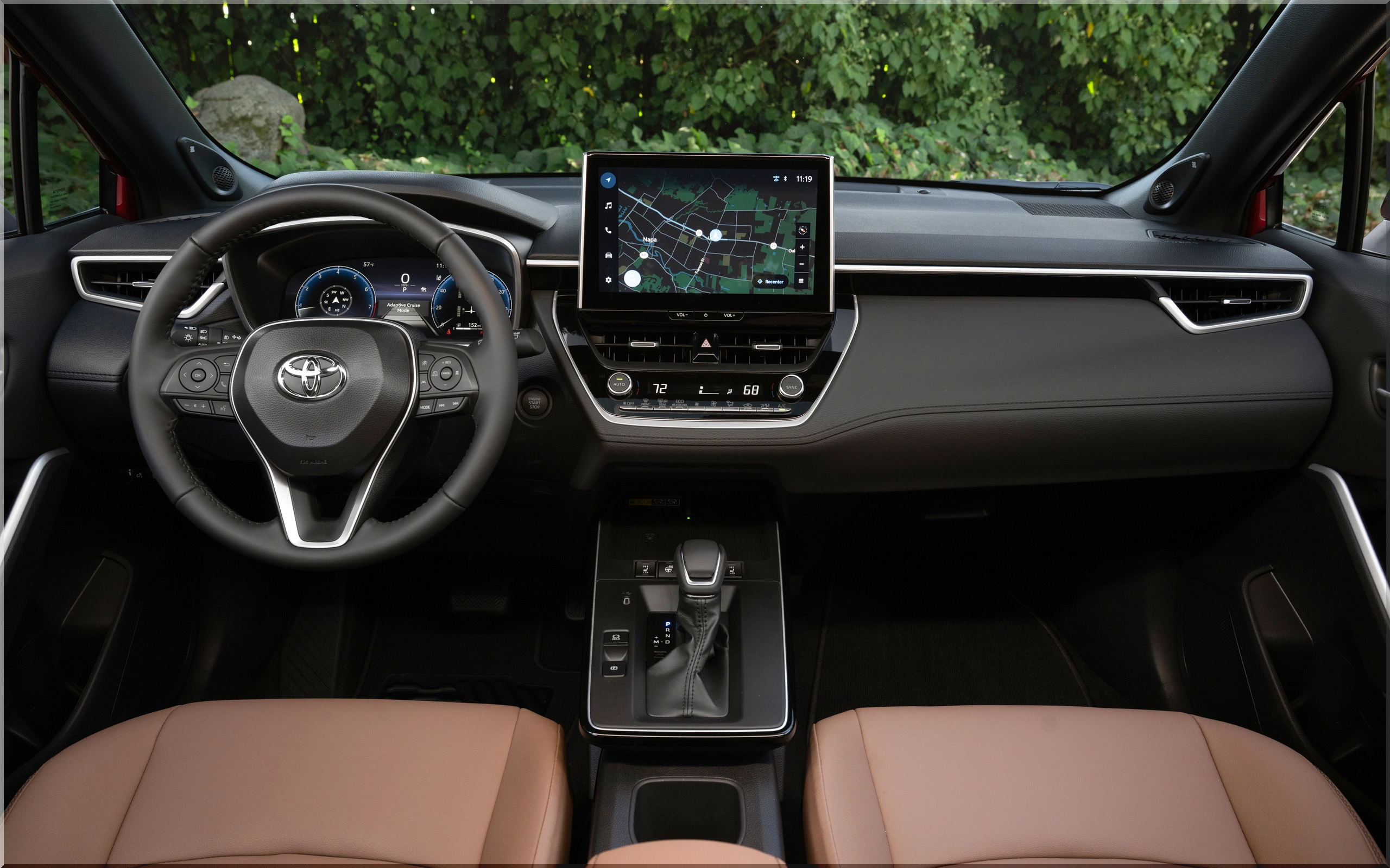
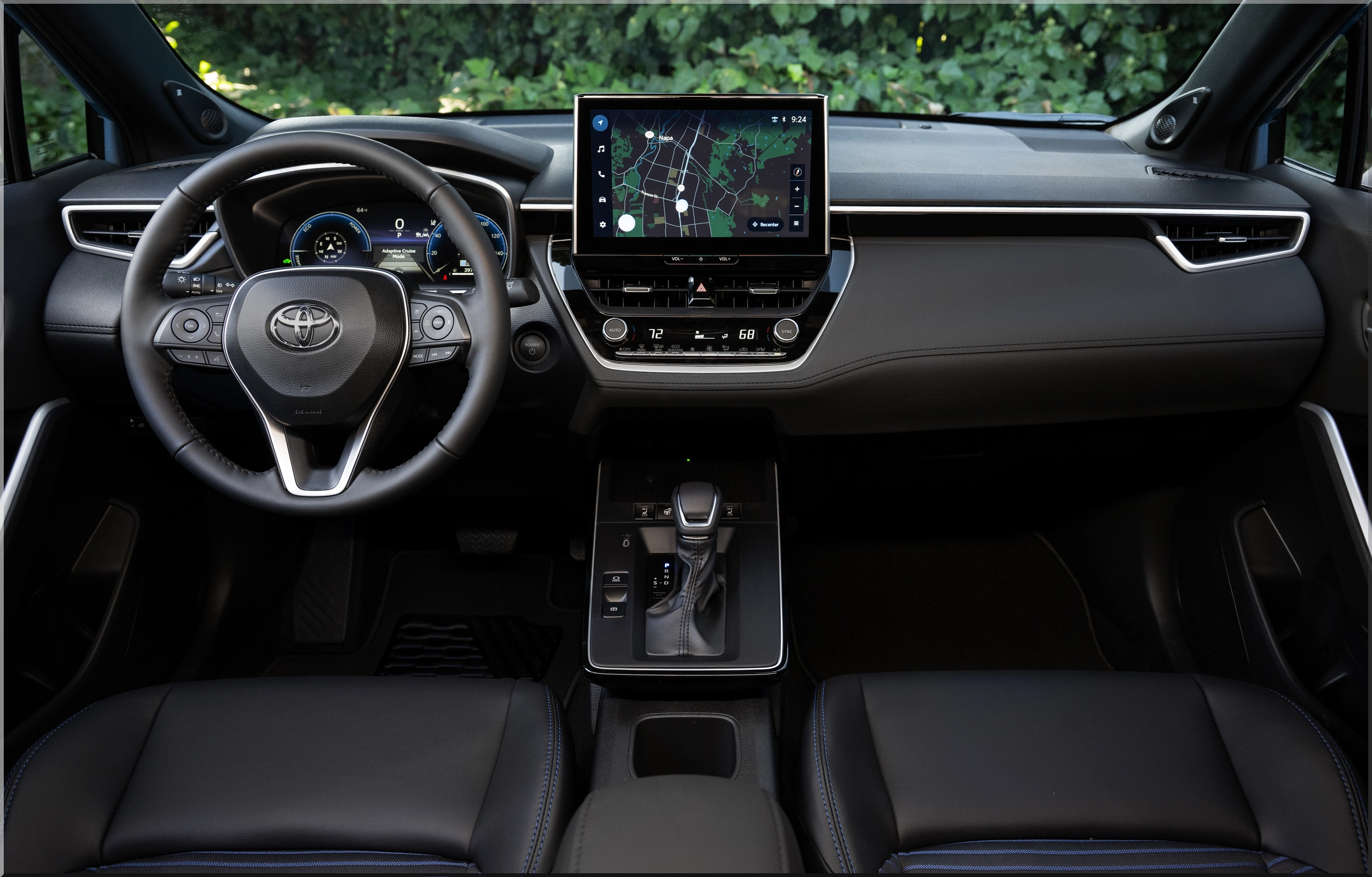
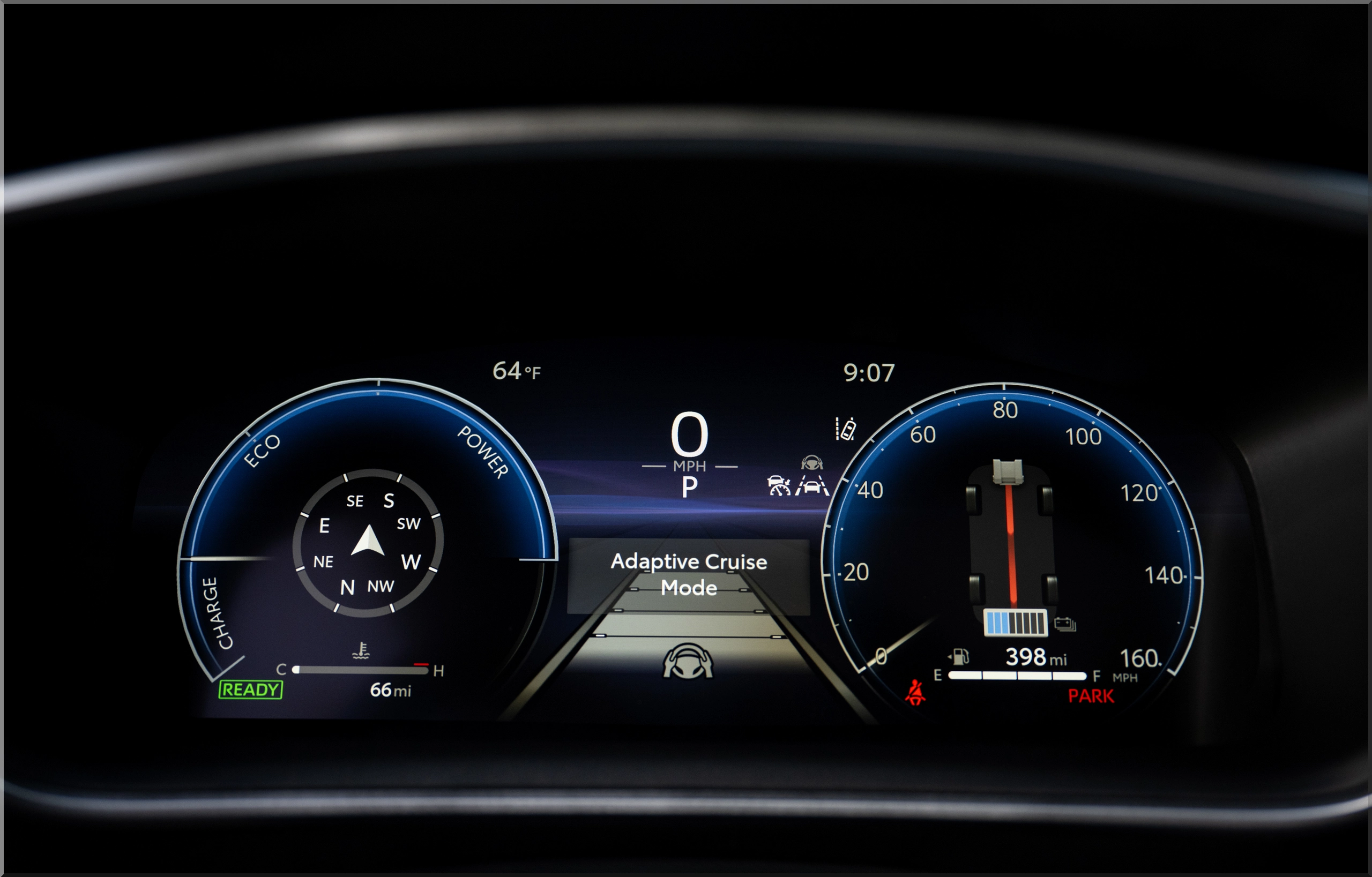
XLE and XSE grades provide a 10.5-inch touchscreen and 12.3-inch digital instrument display, while lower grades use an 8-inch touchscreen. Wireless Apple CarPlay and Android Auto reduce the need for Toyota's own navigation services. Available packages add a powered tailgate, moonroof or nine-speaker JBL audio.
Toyota Safety Sense 3.0 supplies pedestrian-detection pre-collision assistance, adaptive radar cruise control, lane support and automatic high beams across the range. Drivers must still supervise these assistance systems.
Corolla Cross vs Honda HR-V and Chevrolet Trax
The following US-market comparison uses published 2026 rival specifications and Toyota's announced 2027 estimates. It compares the Corolla Cross petrol FWD with mainstream alternatives; the hybrid's advantage appears separately below.
| Comparison point | 2027 Corolla Cross petrol FWD | 2026 Honda HR-V FWD | 2026 Chevrolet Trax |
|---|---|---|---|
| Engine | 2.0-litre four-cylinder | 2.0-litre four-cylinder | 1.2-litre turbo three-cylinder |
| Power | 169 hp | 158 hp | 137 hp |
| Torque | 151 lb-ft / 205 Nm | 138 lb-ft / 187 Nm | 162 lb-ft / 220 Nm |
| Combined economy | 31 mpg, manufacturer estimate | 28 mpg, EPA rating | 30 mpg, EPA rating |
| AWD availability | Optional on petrol models | Optional | No |
Looking at the data, Toyota supplies 11 hp more than Honda and 32 hp more than Chevrolet. Chevrolet counters with greater peak engine torque, while Honda provides 37.7 inches, approximately 958 mm, of rear legroom: 145 mm more than Toyota. The Corolla Cross Hybrid's 42-mpg estimate creates the strongest efficiency case, although actual fuel use varies with conditions.
Image gallery
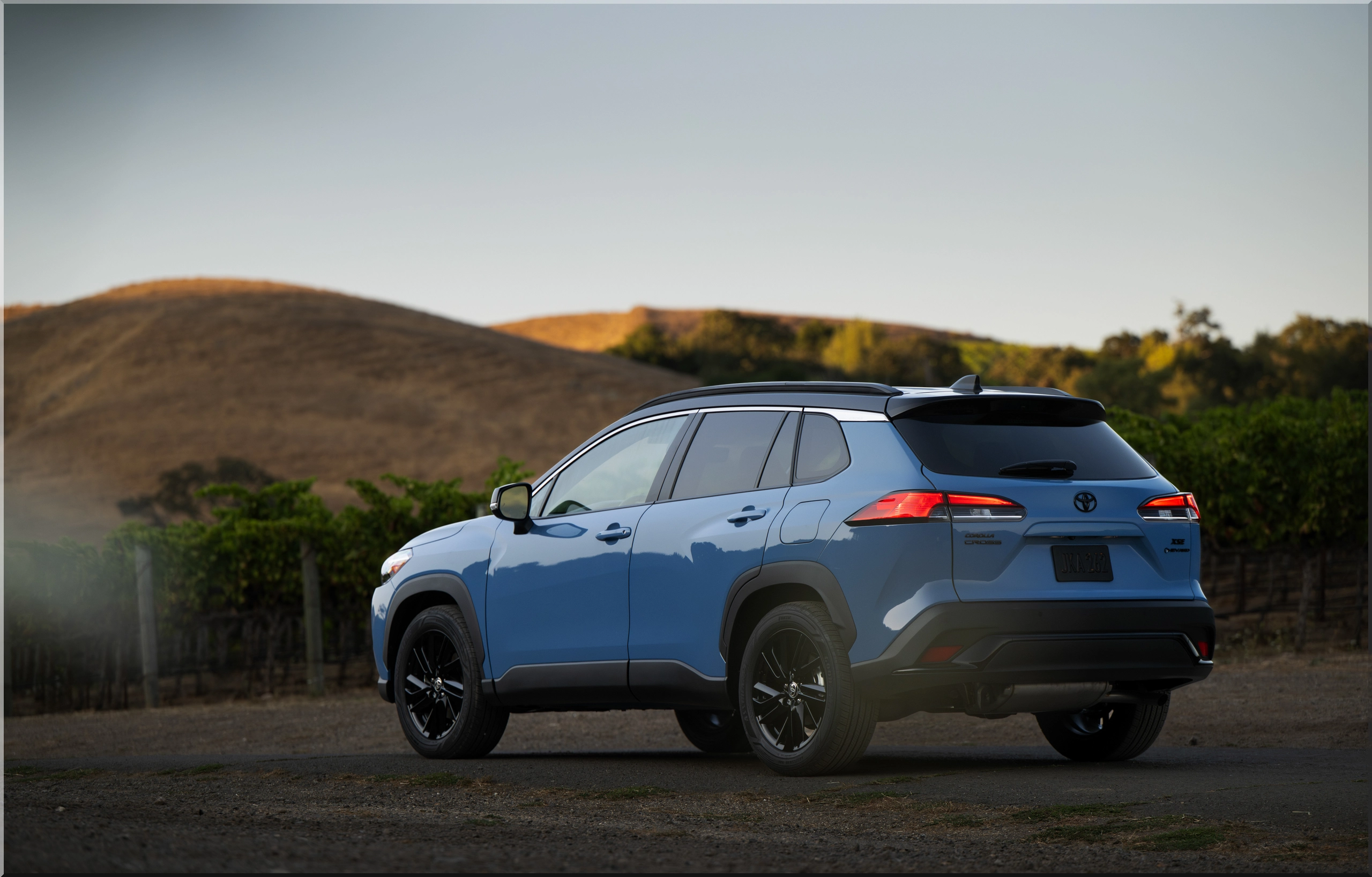
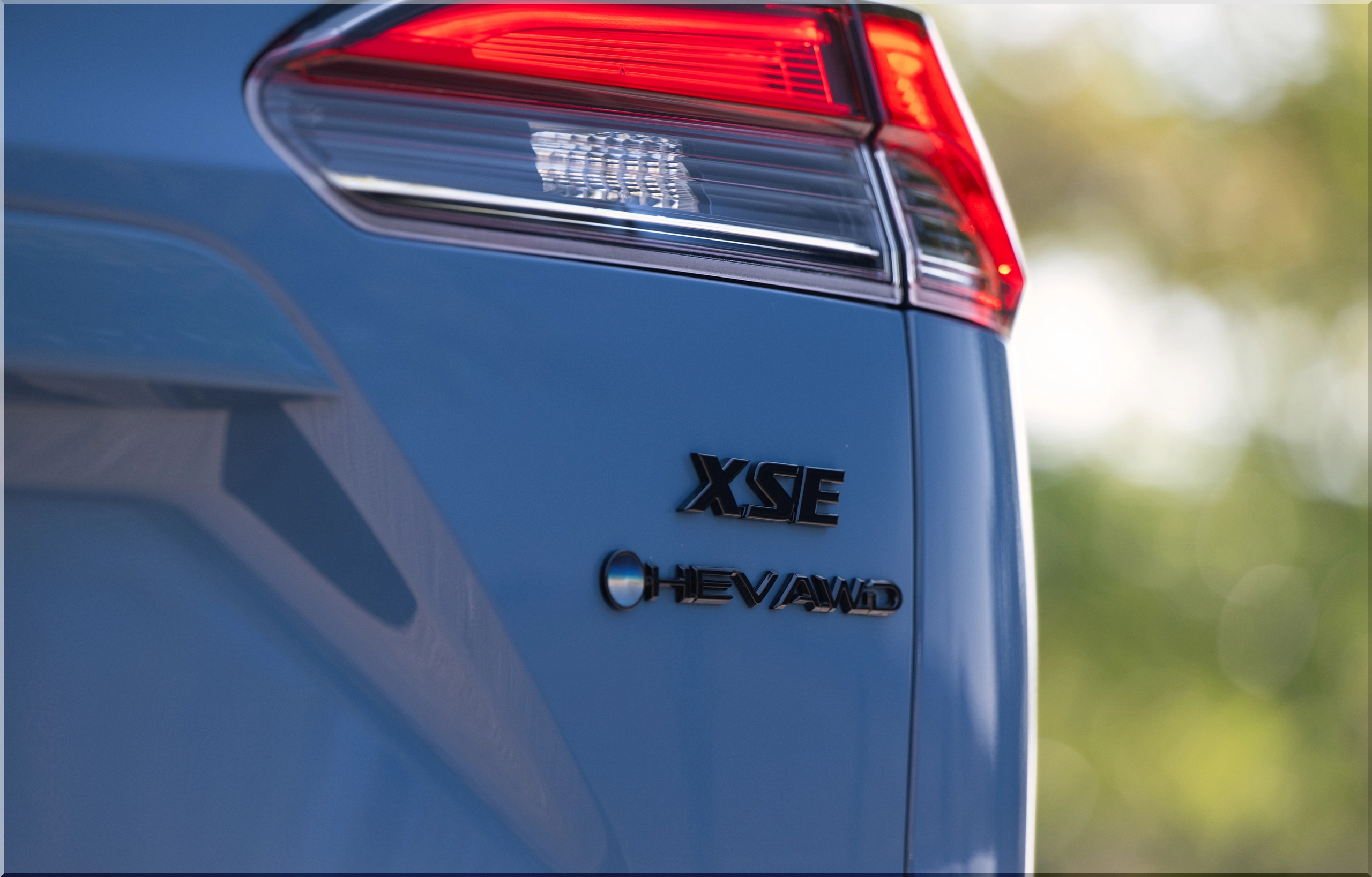
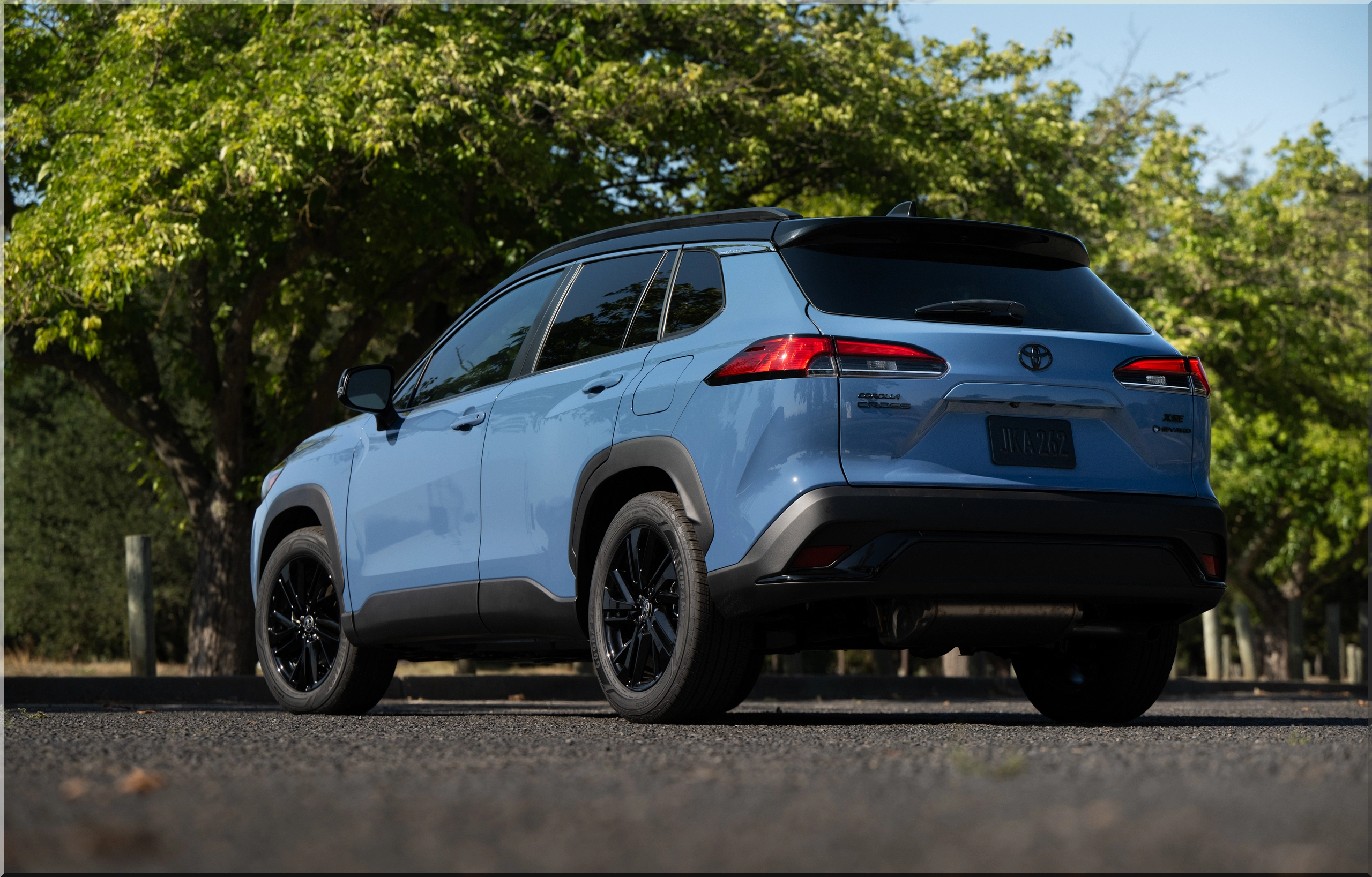
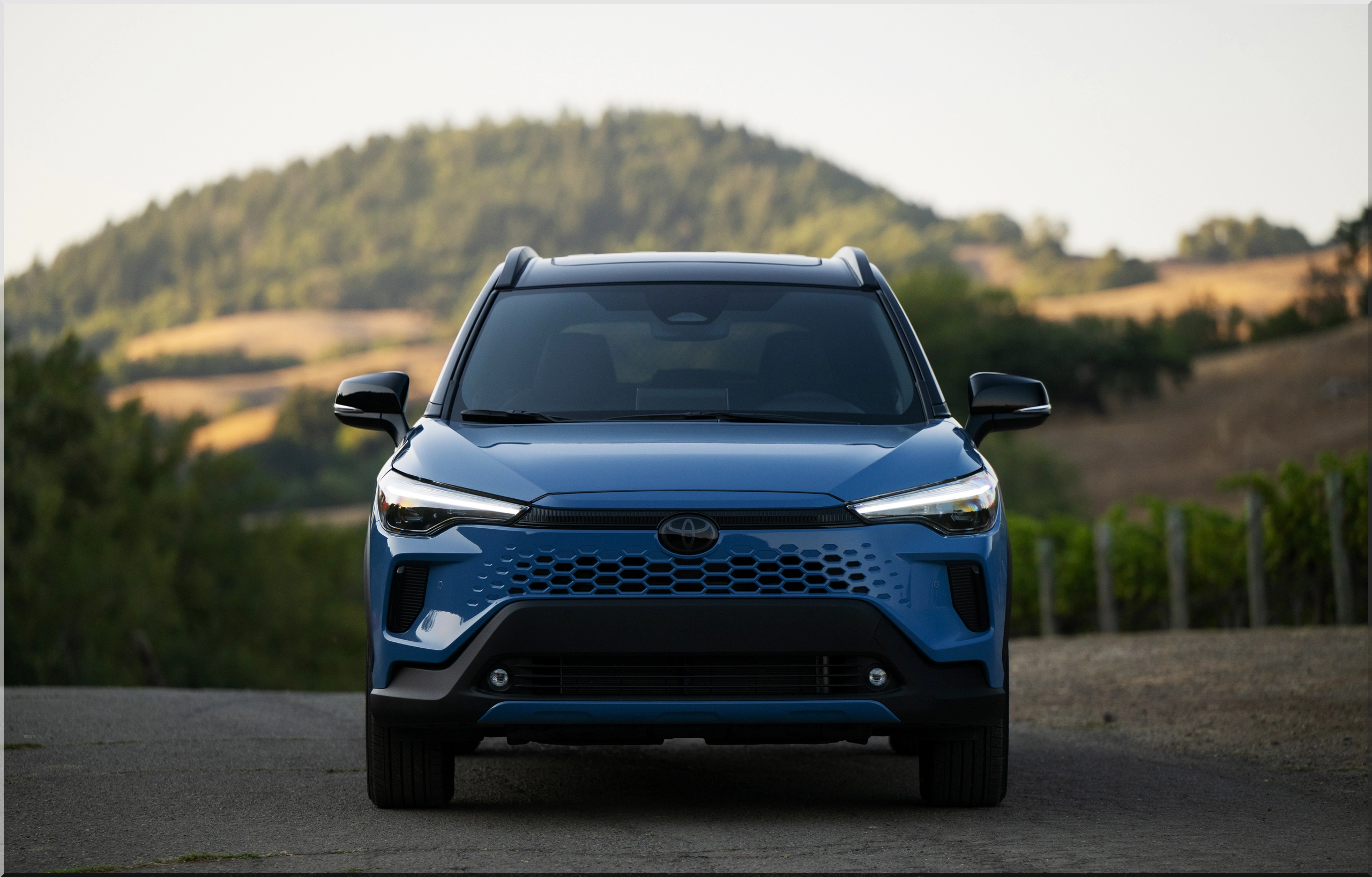
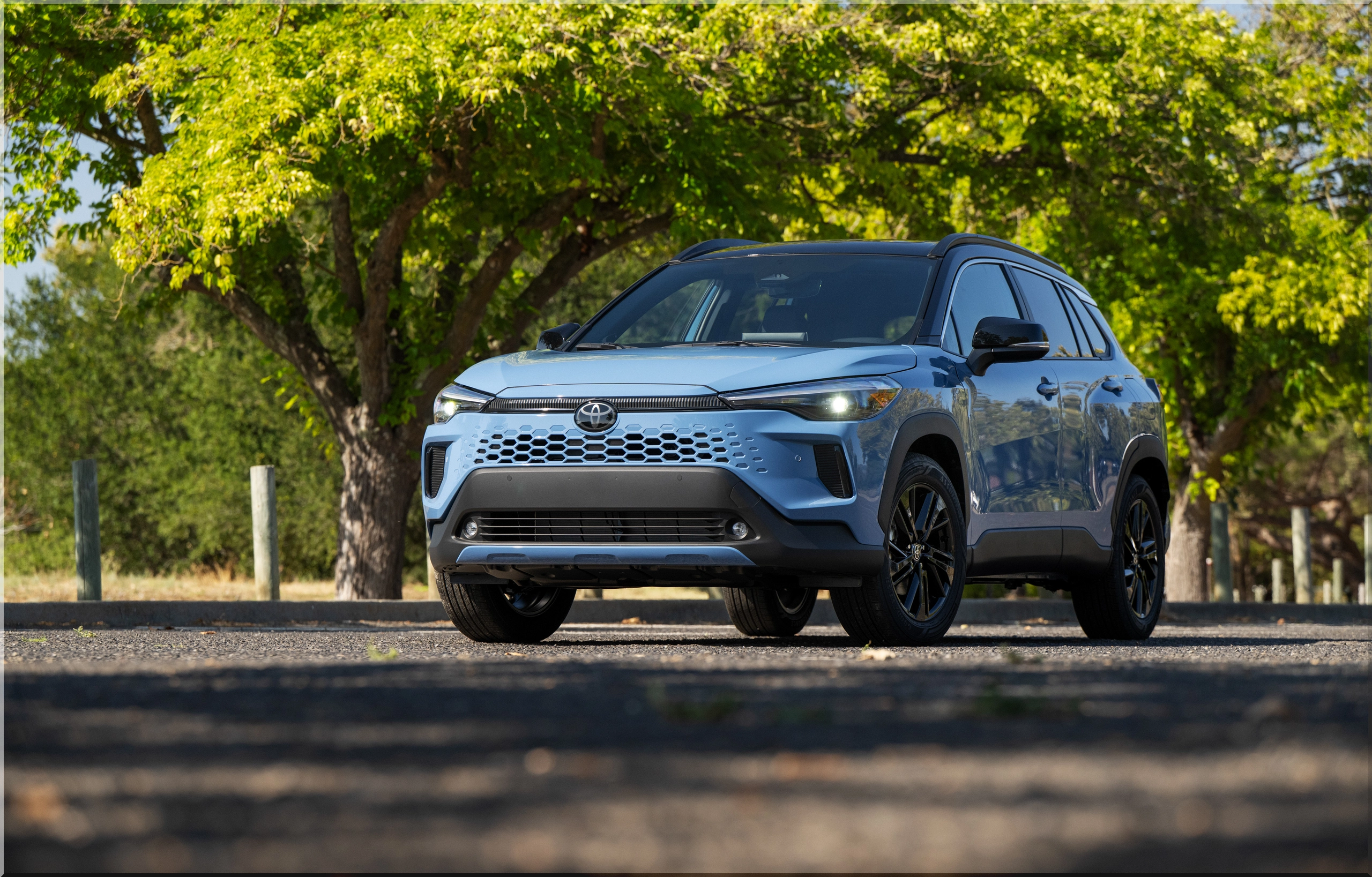
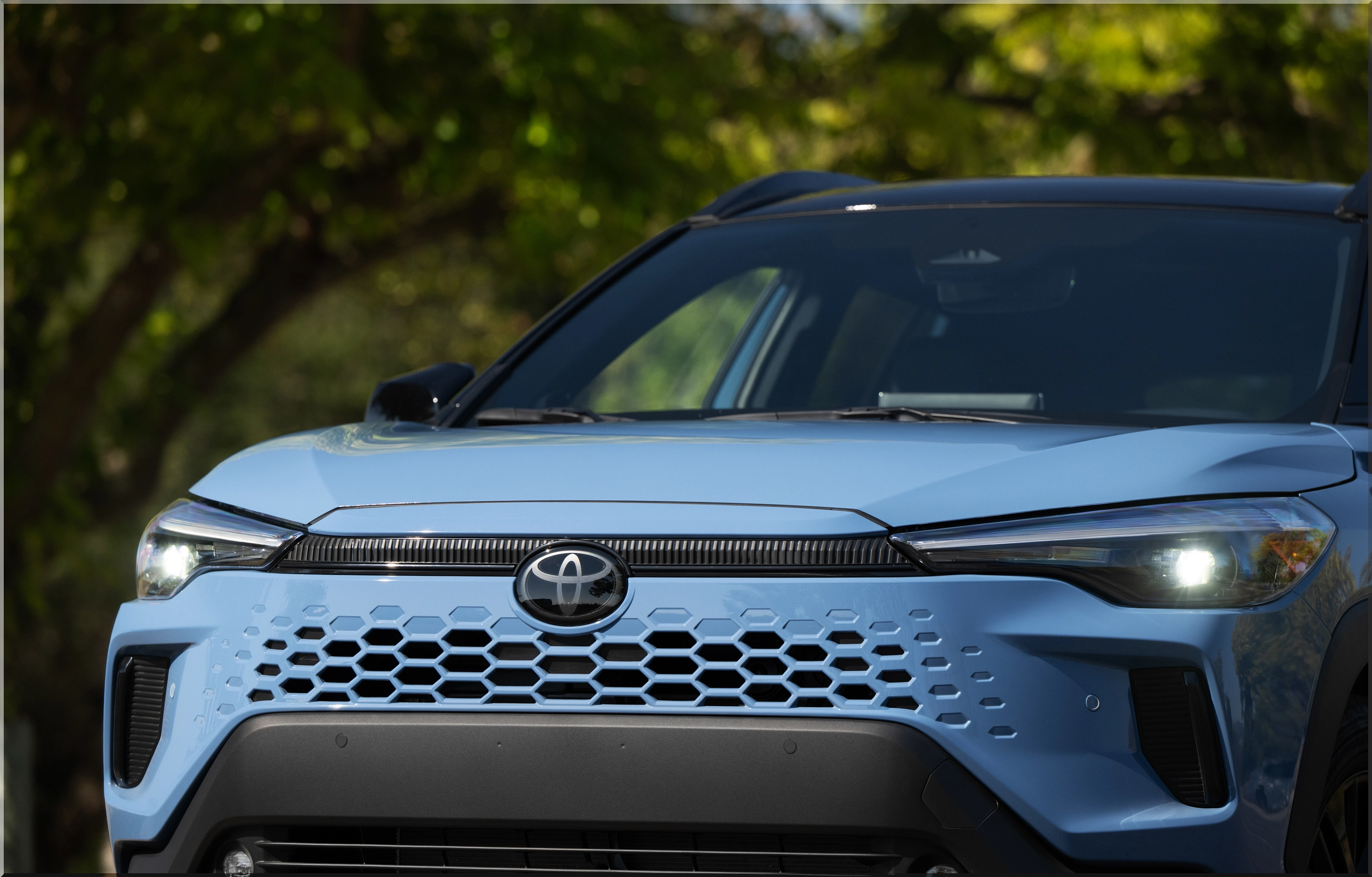
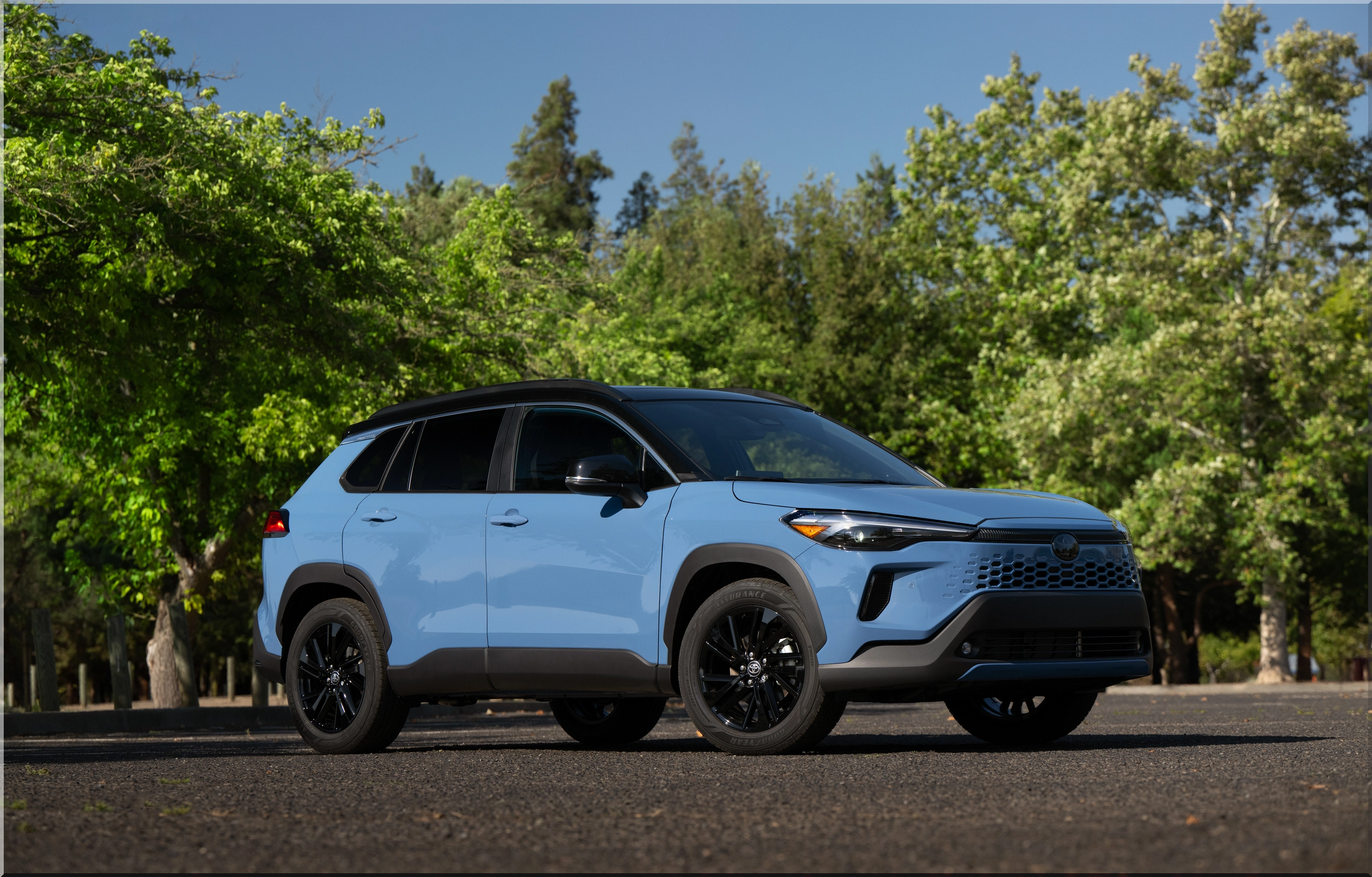
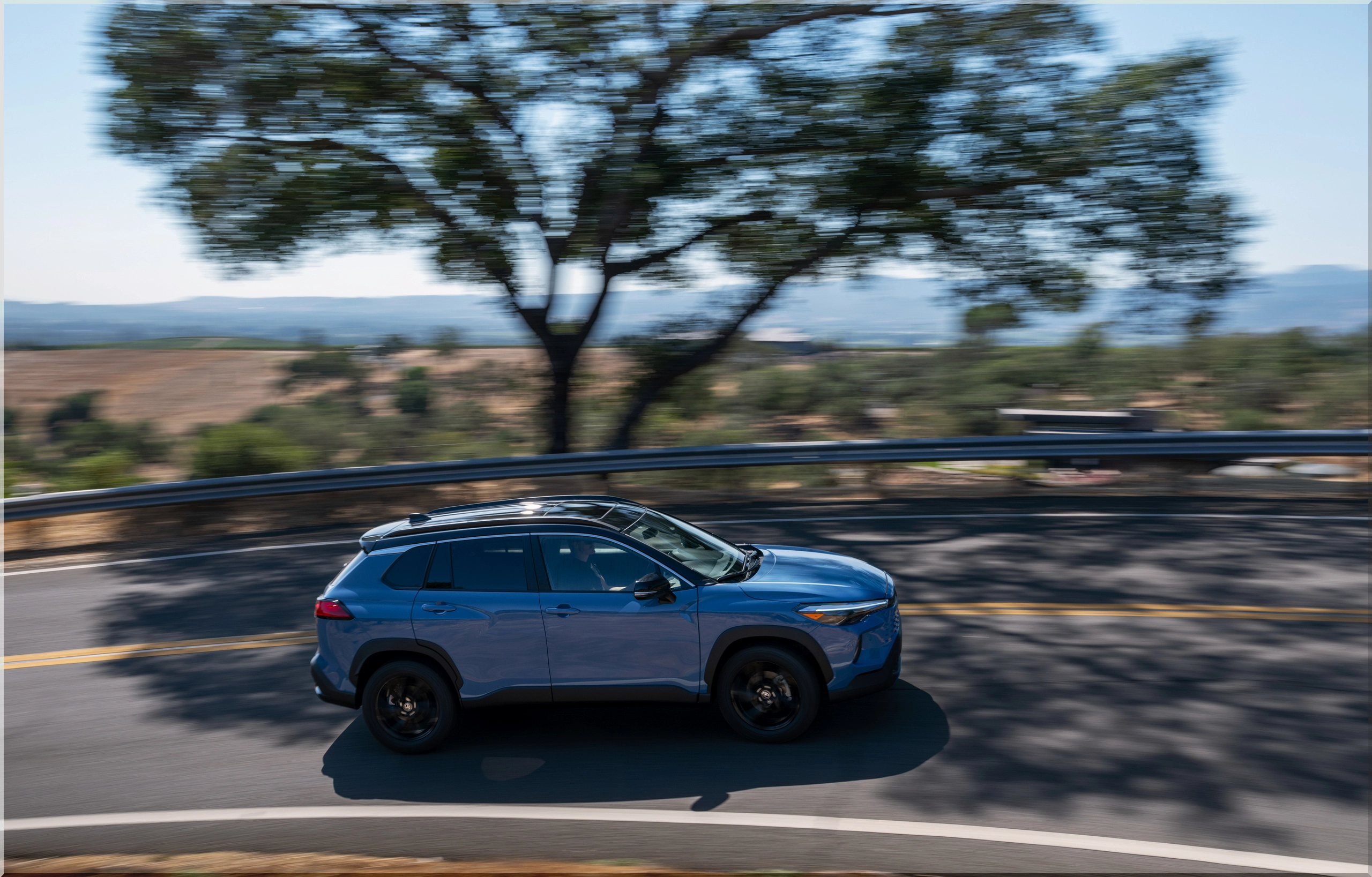
Is the Hybrid Worth the Extra Money?
For frequent urban driving, the Hybrid SE offers the strongest power-and-efficiency combination. Its combined estimate implies approximately 29% less fuel use than petrol AWD, alongside 27 additional horsepower. Low-mileage buyers may gain more from the petrol model's lower purchase cost.
Pro-Tips: Compare Ownership Costs Before Signing
- Match equipment first. Compare Hybrid SE with a similarly equipped petrol LE AWD rather than the entry L FWD.
- Price your mileage. At 15,000 km annually, the combined estimates imply roughly 336 litres less fuel use for hybrid versus petrol AWD. At an illustrative €1.70 per litre, that saves approximately €571 annually.
- Check family fit. Install your child seats and load your usual luggage during the dealership visit.
Divide the actual purchase-price premium by your estimated annual fuel saving to find a simple fuel-only payback period. Then consider finance charges, insurance and resale value separately.
- Add new comment
- 13 views