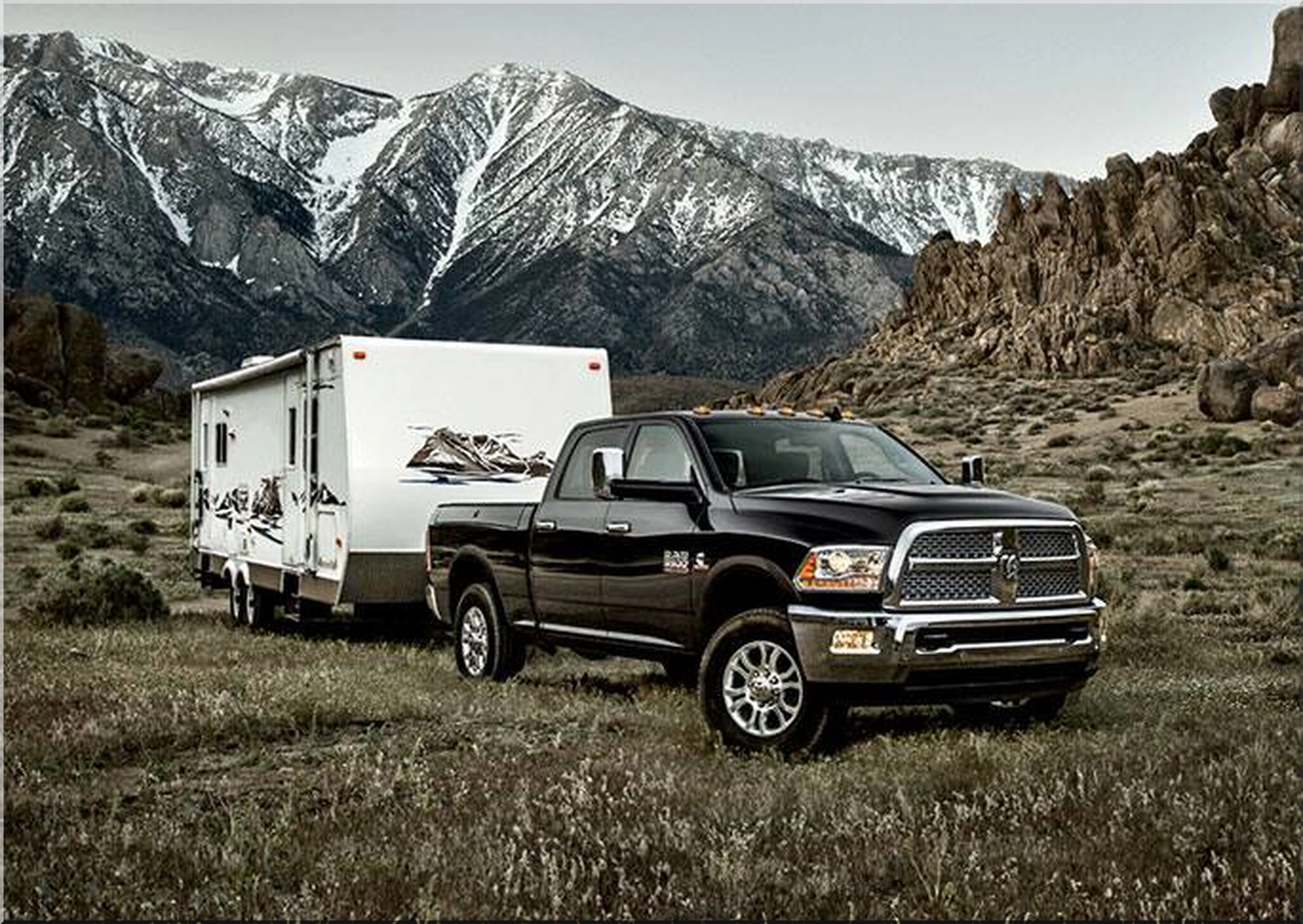
A 6.7L Cummins with 150,000 miles is not automatically worn out. In fact, many owners keep these engines working well beyond 200,000 miles. What matters more is what happened during those miles: towing, idle hours, fuel quality, oil changes, regeneration cycles and transmission maintenance.
The easiest way to manage a high-mileage Cummins is to stop thinking of maintenance as one long list. Instead, look at the truck in mileage stages.
Some parts have clear service intervals. Others, such as injectors and turbochargers, should be tested when the truck reaches an age where failures become more common—not replaced simply because the odometer crossed a number.
Here is a practical roadmap.
0–50,000 Miles: Establish a Good Baseline
The first 50,000 miles should mostly be routine maintenance, but this is also when good habits have the biggest long-term payoff.
At every oil change, Ram recommends inspecting the exhaust system, batteries, universal joints, brakes and cooling-system hoses in addition to replacing the engine oil and filter.
Pay particular attention to:
- Engine oil and filter
- Both fuel filters
- Air filter
- Coolant level
- Exhaust leaks
- Transmission behavior
- Differential and transfer-case leaks
- DPF regeneration frequency
Fuel filtration deserves more attention than many owners give it. Ram specifies filtration and water-separation requirements for the 6.7 Cummins and warns that inadequate filtration can negatively affect fuel-system life and reliability.
If you buy a used Cummins with incomplete service records, assume the maintenance baseline is unknown. Changing fluids and filters early is usually cheaper than trying to reconstruct the previous owner's maintenance history.
Around 60,000 Miles: Pay More Attention to the Transmission
Trucks that tow frequently should receive drivetrain attention earlier than lightly used highway trucks.
The Ram diesel maintenance schedule specifically calls for additional transmission, transfer-case and axle service under demanding applications such as frequent trailer towing, fleet use and other severe-duty conditions. Transmission-service requirements also differ between the 68RFE and Aisin AS69RC.
Around this stage, inspect:
- Transmission fluid condition
- Transmission filters where applicable
- Shift quality
- Torque-converter behavior
- Transmission temperature
- Transfer-case fluid
- Front and rear differential fluid
Do not wait for slipping before paying attention to the transmission.
A truck that has spent 60,000 miles pulling a fifth-wheel has lived a very different life from one that has accumulated the same mileage on unloaded interstate trips.
Around 67,500 Miles: The CCV Filter Becomes Important
This is one of the easier service items to overlook.
The 6.7 Cummins uses a closed crankcase ventilation system, and Ram's maintenance system includes scheduled replacement of the CCV filter. The truck may display a “Perform Service” message when emissions-related maintenance is due.
Among Ram owners, roughly 65,000–75,000 miles is commonly treated as the CCV-filter service window. One RamForum discussion includes an owner reporting the reminder at approximately 67,425 miles.
At this stage:
- Replace the CCV filter
- Inspect crankcase ventilation hoses
- Check intake piping for unusual oil contamination
- Note whether DPF regeneration has become more frequent
- Inspect the intake and emissions system for abnormal buildup
Ignoring a relatively inexpensive filter makes little sense on a truck intended to reach 200,000 miles or more.
75,000–100,000 Miles: Watch the EGR, DPF and Intake
A Cummins that spends its life towing at highway speed may look very different internally from one that idles for hours or makes repeated short trips.
Ram specifically notes that low-speed, short-duration driving may prevent the DPF from reaching the conditions needed to remove accumulated particulate matter.
By 75,000–100,000 miles, start watching:
- How often active regeneration occurs
- EGR and intake soot buildup
- MAP sensor contamination
- DPF-related warnings
- Exhaust pressure and temperature sensor behavior
- Turbo actuator response
- Exhaust-brake performance
A sudden change in regeneration frequency can be more useful than the mileage number itself. If a truck that previously regenerated every few hundred miles starts doing it much more frequently, find the cause instead of assuming that behavior is normal aging.
100,000–125,000 Miles: Inspect the Turbo, Don't Automatically Replace It
There is no credible rule that says a 6.7 Cummins needs a turbocharger at 100,000 miles.
Some original turbos survive well past 200,000 miles. Others develop actuator or vane problems much earlier.
That makes 100,000 miles a good inspection point, not an automatic replacement point.
Check for:
- Weak or inconsistent boost
- VGT actuator faults
- Weak exhaust brake
- Sticking vanes
- Unusual turbo whistle
- Oil leakage
- Charge-air leaks
- Exhaust manifold or turbo gasket leaks
The exhaust brake is particularly useful as an early clue. Changes in its strength or sound can help point toward VGT or exhaust-side problems before the truck becomes difficult to drive.
100,000–150,000 Miles: Cooling-System Parts Deserve More Attention
Once a truck reaches six figures, cooling-system condition matters more, particularly if it tows.
Inspect:
- Water pump
- Thermostat operation
- Coolant hoses
- Belt
- Belt tensioner
- Fan clutch
- Radiator
- Coolant leaks
Ram specifies long-life coolant and, on applicable schedules, a 10-year/150,000-mile coolant service interval, whichever occurs first.
That does not mean every water pump or thermostat should automatically be replaced at 100,000 miles. It means those parts have reached an age where closer inspection is sensible.
125,000–150,000 Miles: Intake and EGR Buildup Becomes Harder to Ignore
By this mileage range, accumulated soot and oil contamination can become a significant maintenance issue on trucks that retain their original emissions equipment.
Long-time Cummins owners commonly discuss EGR and intake cleaning around this stage. One RamForum owner with nearly 600,000 miles described roughly 150,000 miles as a point where EGR cleaning deserved attention, although actual buildup varies considerably with truck usage and model year.
Inspect:
- EGR valve and related passages
- Intake horn
- Intake manifold
- MAP sensor
- Grid-heater area
- Soot and oil deposits
For a street-driven truck, diagnose and maintain the factory emissions system according to applicable regulations.
For a dedicated off-road or competition project where emissions-removal equipment is legally permitted, some owners instead evaluate a complete diesel delete kit when several exhaust and EGR-related components are being planned at the same time.
The important point is to make that decision as a complete vehicle strategy rather than replacing unrelated parts one at a time without checking compatibility.
150,000–200,000 Miles: Start Paying Serious Attention to the Injectors
This is one of the biggest questions high-mileage Cummins owners ask:
Do the injectors need to be replaced at 150,000 miles?
Not necessarily.
Real owner experiences vary enormously. Common-rail Cummins owners report injector failures around 160,000–170,000 miles, while others have run original injectors to 200,000, 270,000 or even farther. In one owner discussion, 200,000 miles was described as a reasonable point to start thinking seriously about injector condition and professional flow testing rather than blindly replacing them at a fixed mileage.
Between roughly 150,000 and 200,000 miles, watch for:
- Hard cold starts
- Rough idle
- White or excessive exhaust smoke
- Power loss
- Abnormal fuel consumption
- Excessive injector return
- Difficulty building rail pressure
- Fuel dilution in the engine oil
- Cylinder contribution problems
If symptoms appear, test before replacing parts.
A professional injector flow or return test provides considerably more information than mileage alone.
Fuel quality also matters. An injector that has spent 180,000 miles behind properly maintained filters may be in better condition than one with significantly fewer miles that has experienced water or contamination.
150,000–200,000 Miles: Inspect the Entire Fuel System
Do not treat the injectors as an isolated component.
At this mileage, evaluate:
- Injector return rates
- Commanded versus actual rail pressure
- Lift-pump performance
- High-pressure fuel pump condition
- Fuel-filter maintenance history
- Evidence of water contamination
Owners frequently focus on the price of six injectors while ignoring the reason those injectors became damaged in the first place.
If contaminated fuel or inadequate supply caused the problem, installing new injectors without correcting the underlying issue simply starts the clock again.
150,000–200,000 Miles: Transmission Condition Can Matter More Than Engine Mileage
A healthy Cummins engine does not automatically mean the truck is ready for another 100,000 trouble-free miles.
At this point, especially on trucks that have been tuned or used for towing, check for:
- Shift flare
- Delayed engagement
- Torque-converter shudder
- Slipping under load
- High transmission temperature
- Burnt fluid
- Excessive clutch material in the pan
- Unknown or skipped fluid-service history
This inspection becomes even more important before adding power.
A high-mileage truck with a questionable transmission is usually better served by repairing the drivetrain first rather than adding horsepower.
175,000–200,000 Miles: Look for Boost and Exhaust Leaks
At higher mileage, not every power-loss complaint means the engine or turbo is worn out.
Rubber, seals, clamps and exhaust joints age too.
Inspect:
- Intercooler boots
- Charge pipes
- Intercooler
- Exhaust manifold
- Turbo connections
- V-band clamps
- Intake seals
A relatively small boost or exhaust leak can produce slower spool, higher exhaust temperatures, reduced power and unusual turbo noise.
Finding a $50 connection problem is much better than replacing a turbo that was never faulty.
200,000 Miles+: Stop Replacing Parts Based Only on Mileage
Once a Cummins crosses 200,000 miles, a generic replacement schedule becomes less useful.
Two 200,000-mile trucks may have almost nothing in common mechanically.
One may have spent its life cruising unloaded on the highway. Another may have accumulated thousands of idle hours and pulled 15,000-pound trailers through mountain grades.
At this stage, condition-based inspection should cover the entire truck:
| Mileage | Main Areas to Check | Typical Action |
| 0–50K | Oil, fuel filters, fluids, regen pattern | Routine maintenance |
| ~60K+ | Transmission and drivetrain on severe-use trucks | Service based on usage |
| ~67.5K | CCV system | Replace CCV filter |
| 75K–100K | EGR, DPF, intake, turbo behavior | Inspect and diagnose |
| 100K–125K | Turbo and cooling system | Inspect closely |
| 125K–150K | Intake/EGR buildup, MAP sensor | Clean/service as needed |
| 150K–200K | Injectors and fuel system | Test condition and return rates |
| 150K–200K | Transmission | Diagnose wear before adding power |
| 175K–200K | Boost and exhaust connections | Inspect for leaks |
| 200K+ | Engine and complete drivetrain | Condition-based maintenance |
High-mileage project trucks also require closer attention to year-specific fitment. A 2008 and a 2022 truck may both carry a 6.7L Cummins, but their sensors, emissions hardware, exhaust layout and tuning requirements are not interchangeable.
For dedicated off-road or competition applications where such modifications are permitted, choosing a year-appropriate cummins delete kit is therefore more useful than treating every 6.7 Cummins as the same platform.
Final Thoughts
A high-mileage 6.7 Cummins does not need every expensive component replaced simply because the odometer reaches 150,000 or 200,000 miles.
Replace the parts that have defined service intervals. Inspect aging systems before they produce symptoms. Test expensive components such as injectors before buying replacements.
Most importantly, pay attention to how the truck accumulated its miles.
The odometer tells you how far the truck has traveled. Its maintenance history tells you how much life may still be left.
Image gallery
- Add new comment
- 18 views