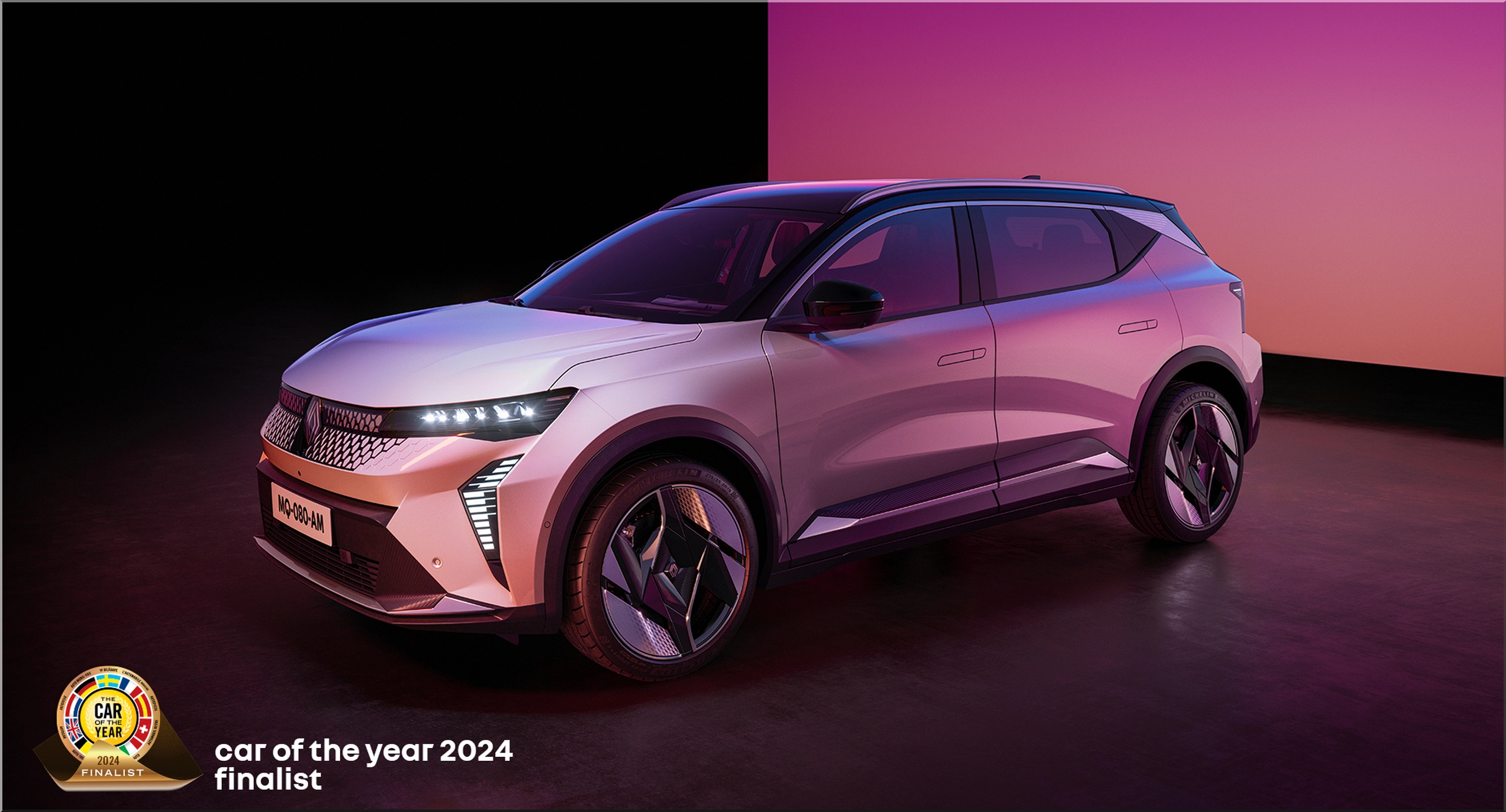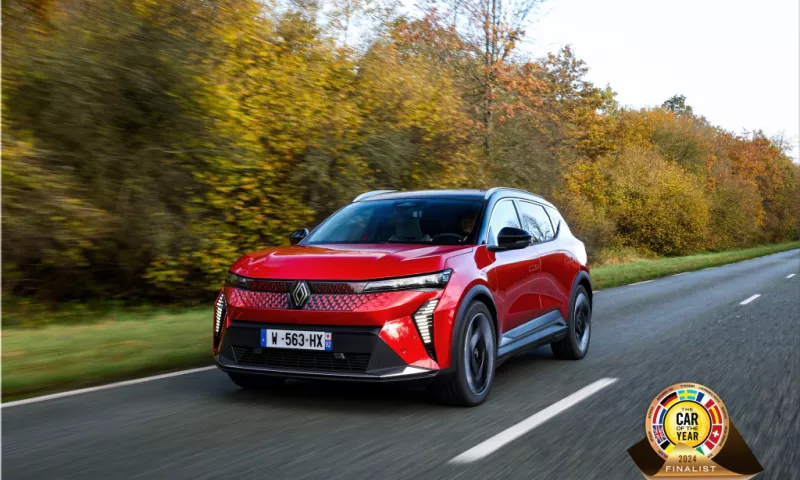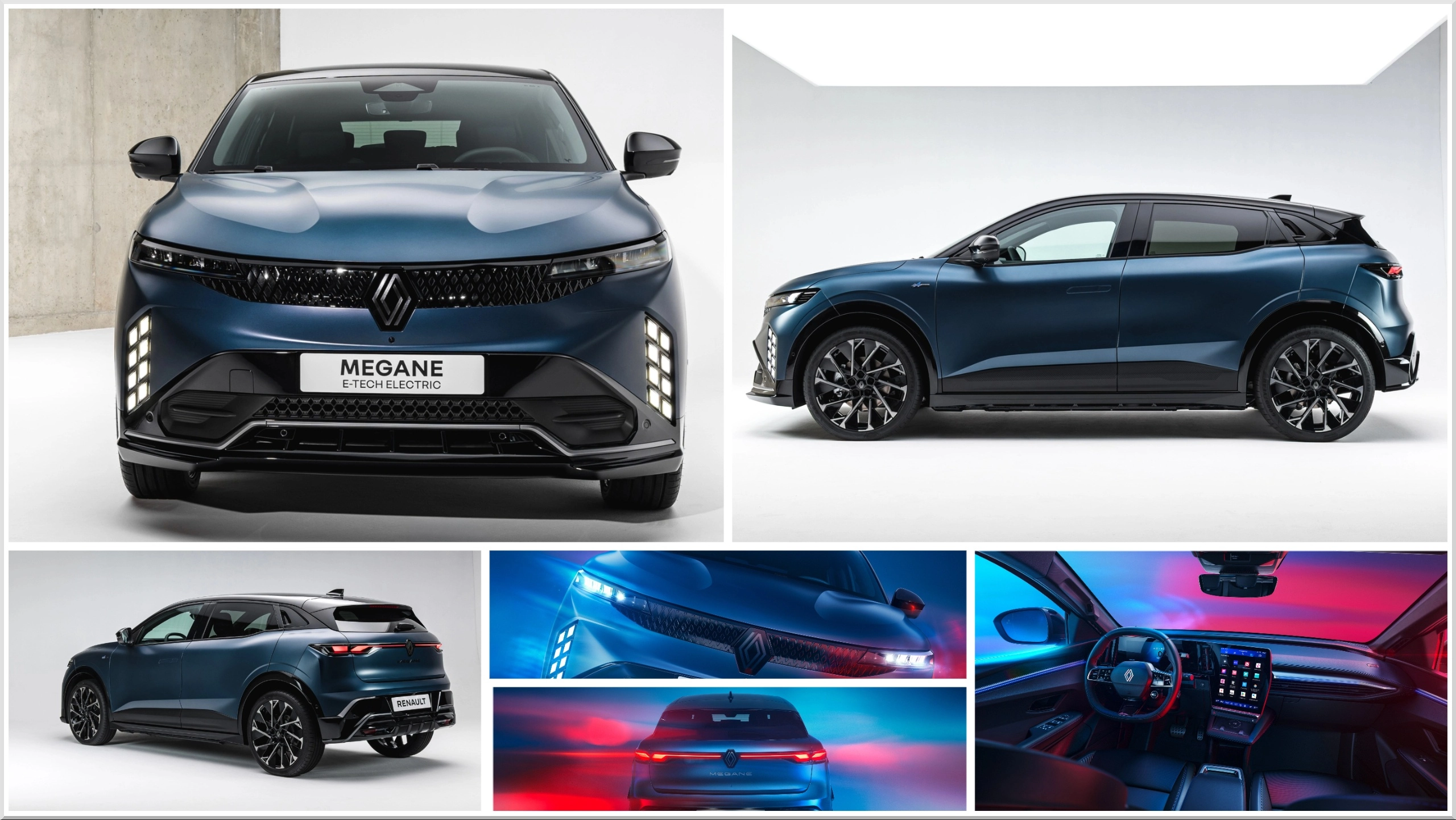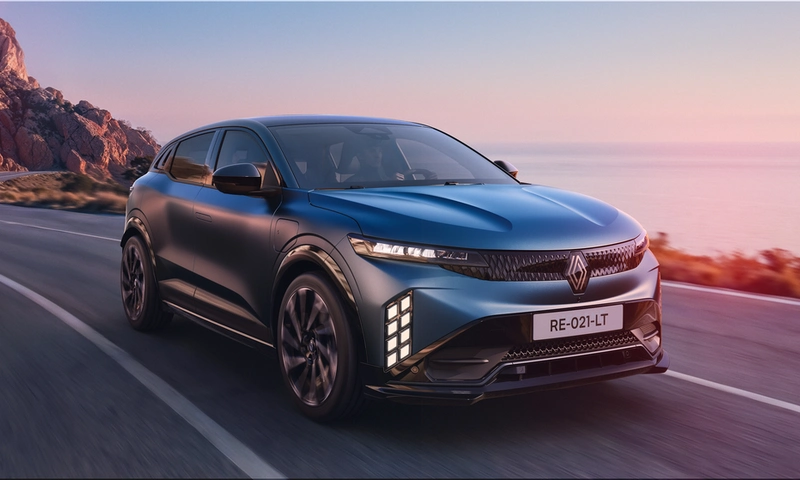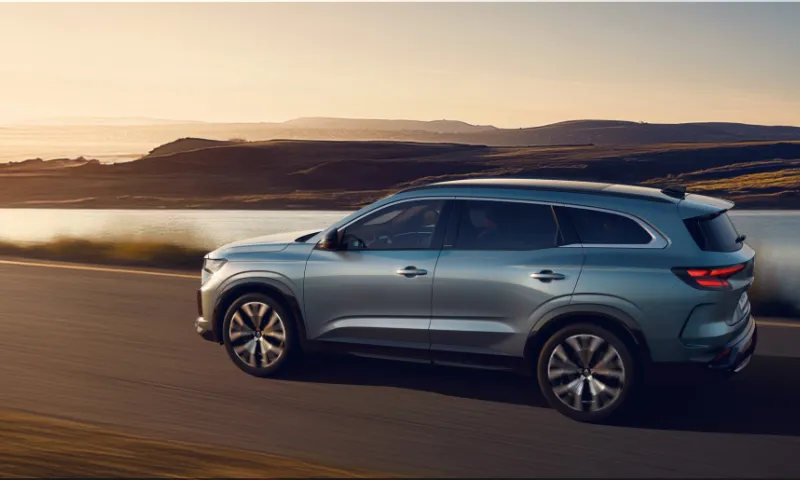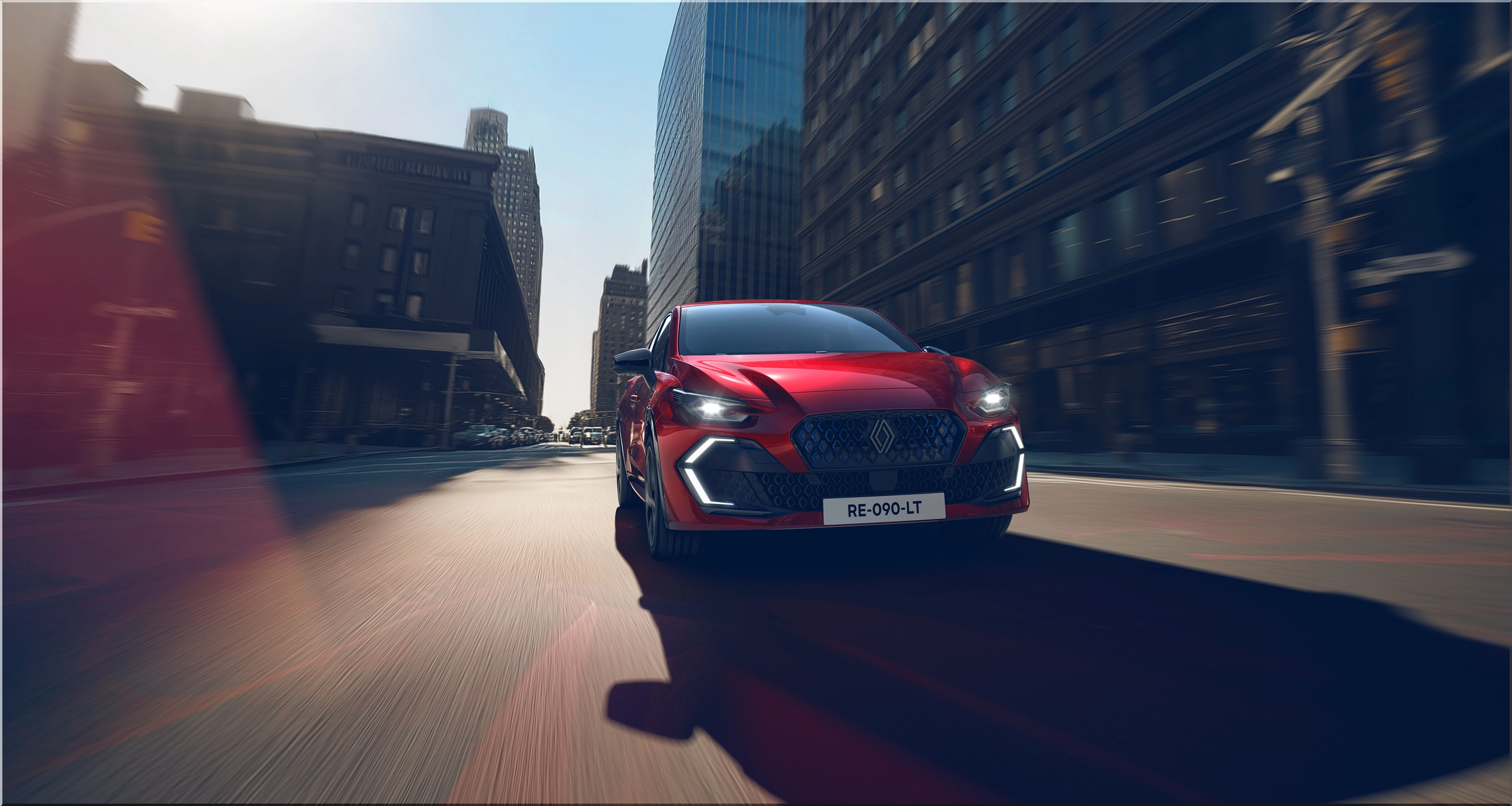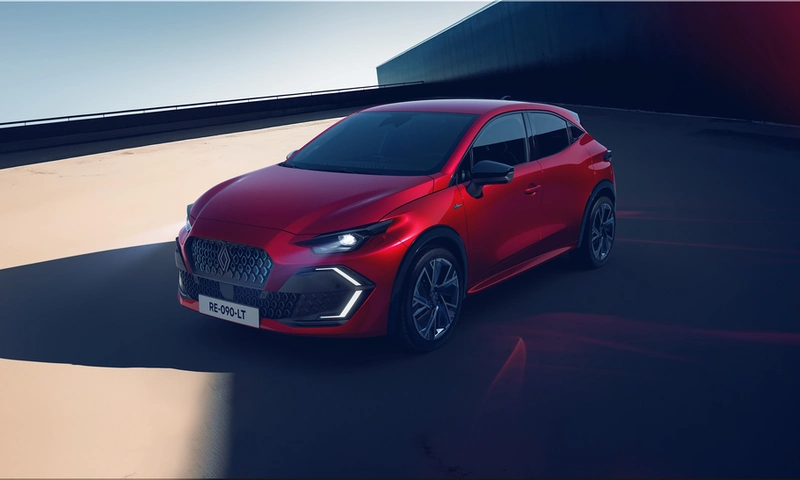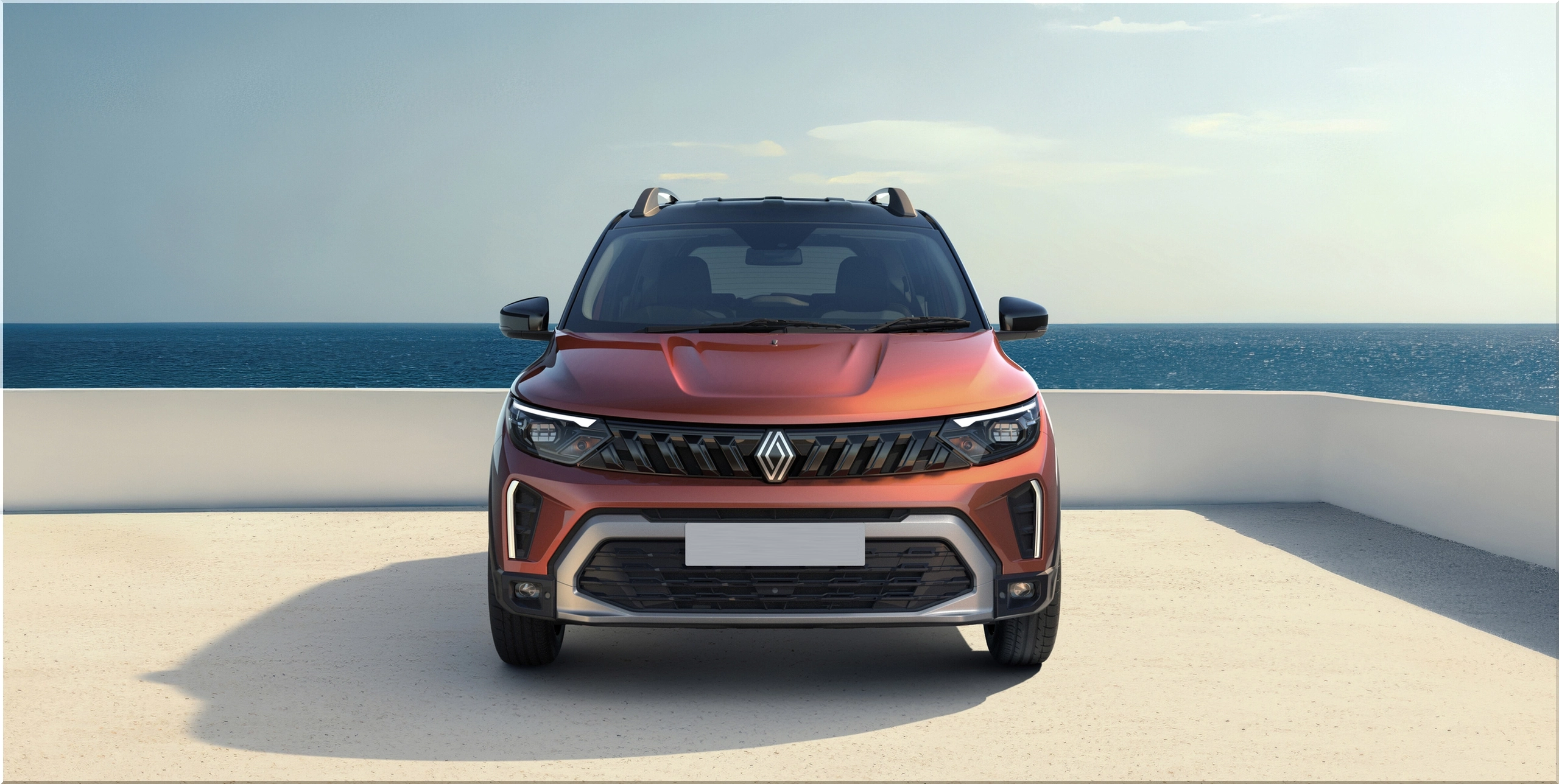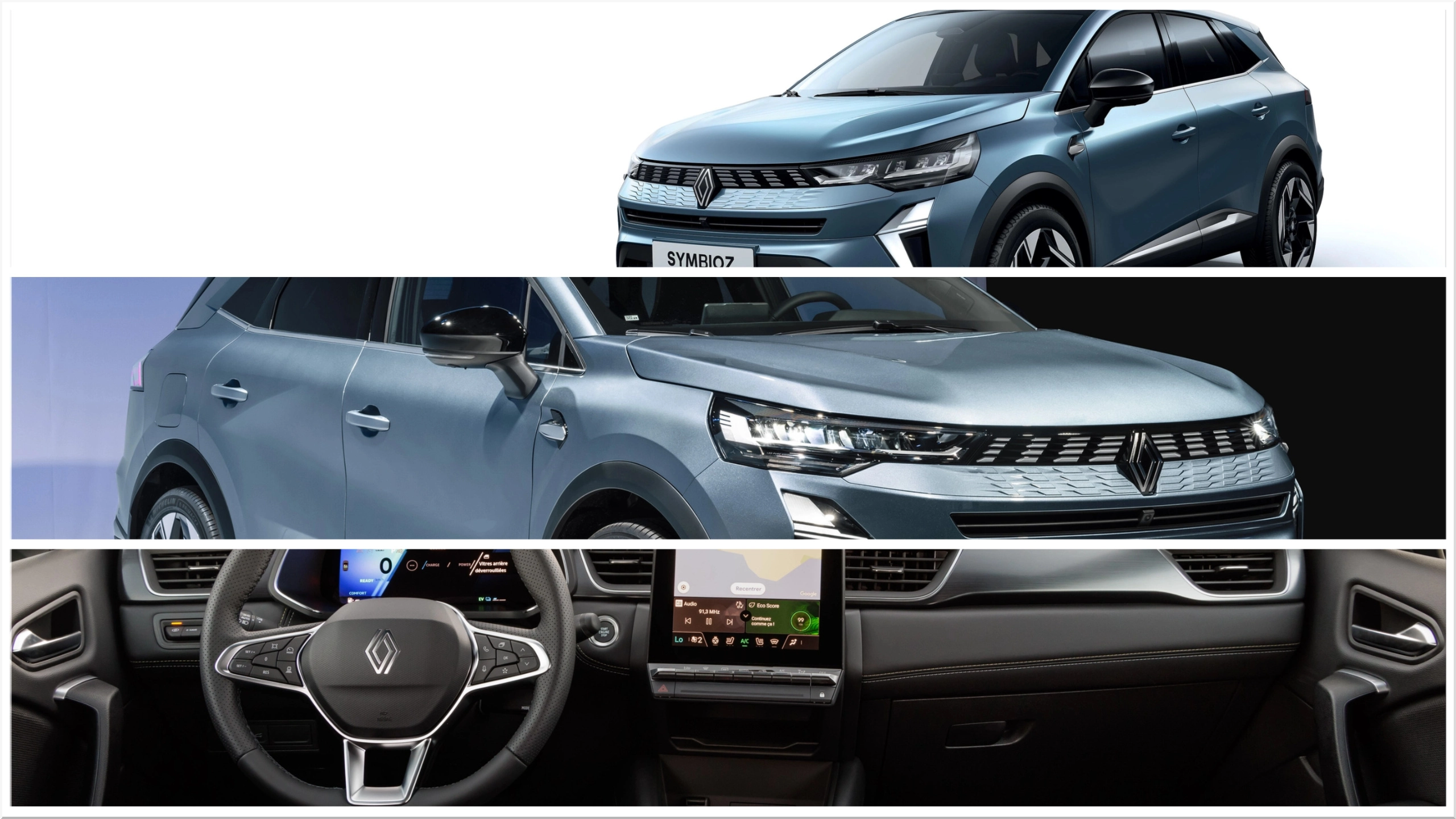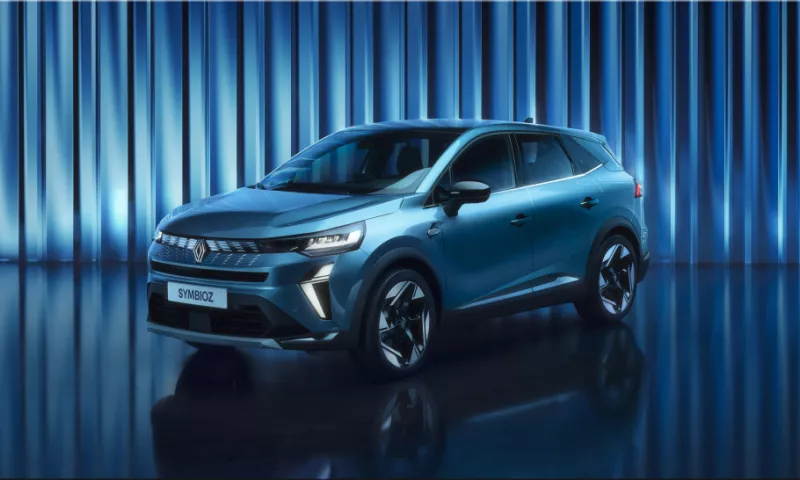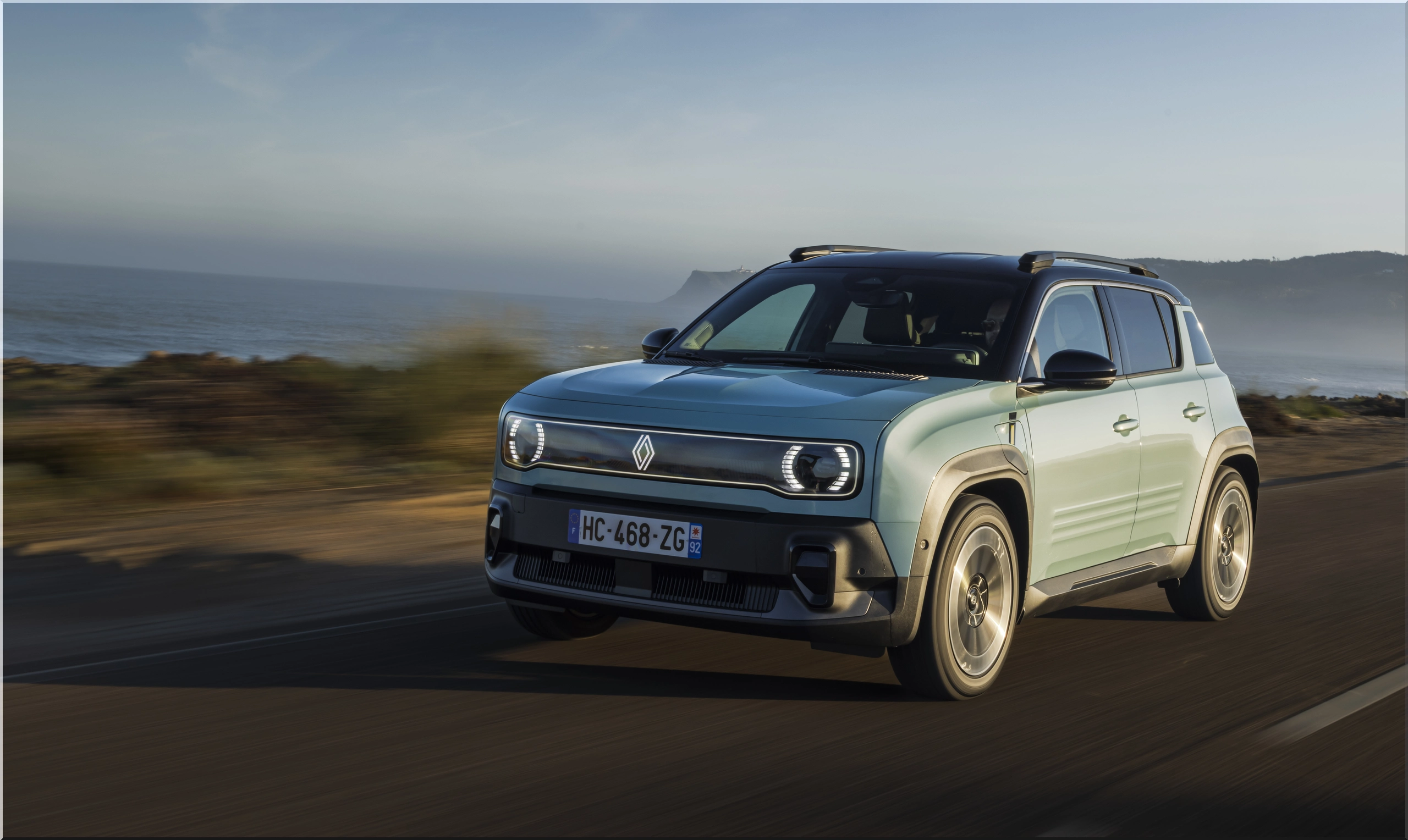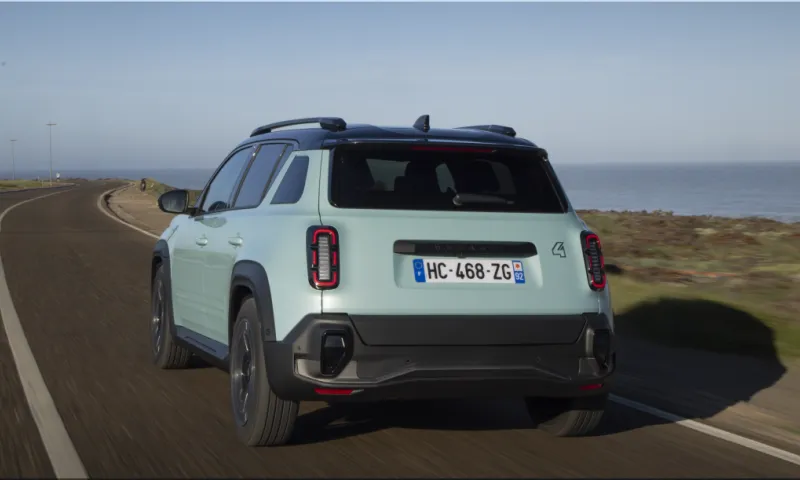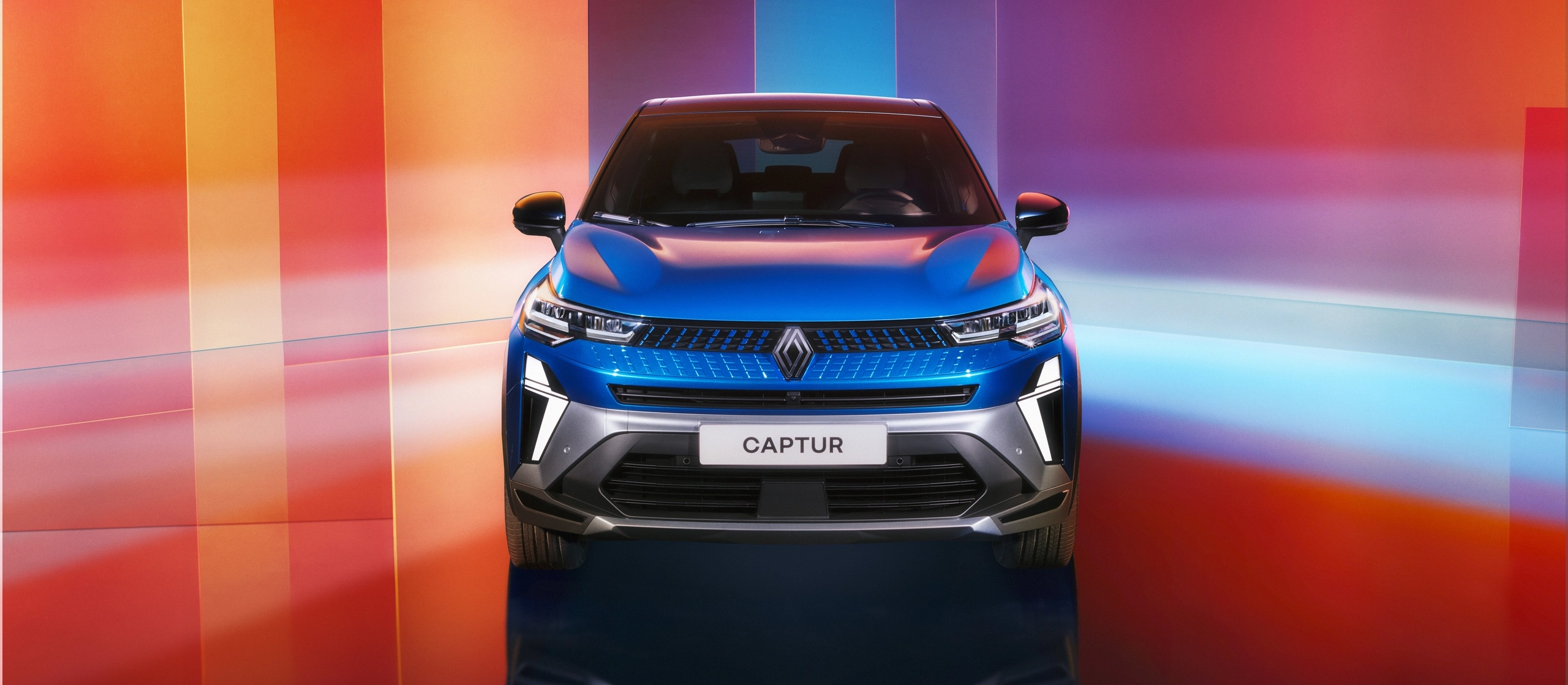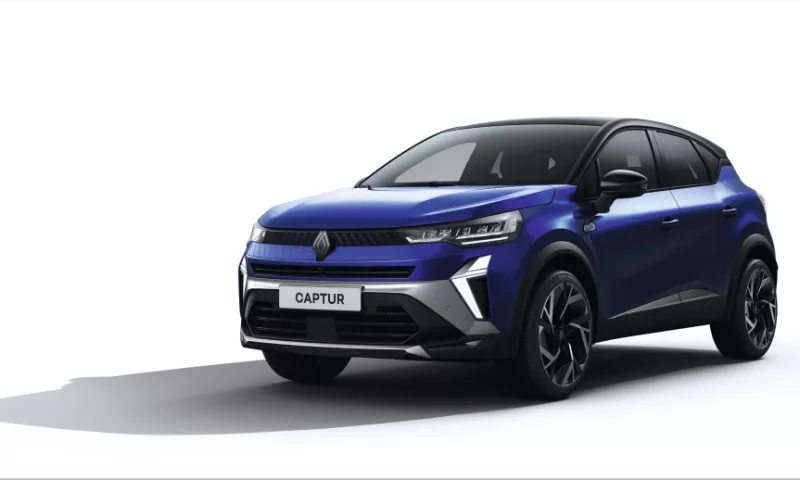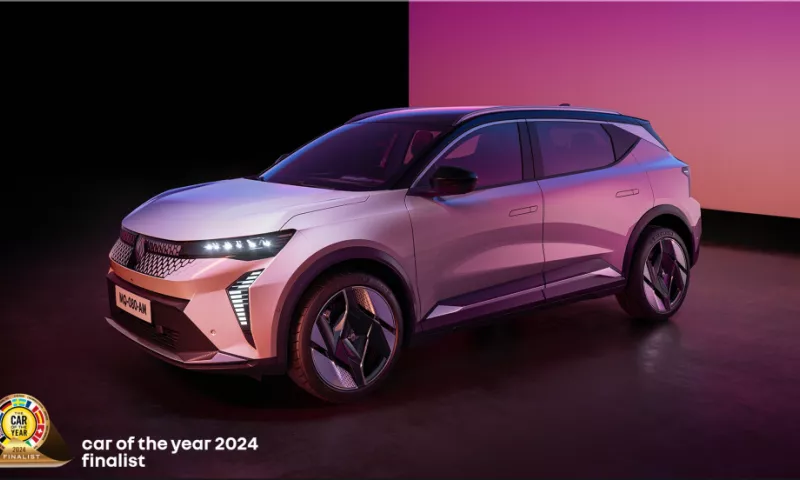
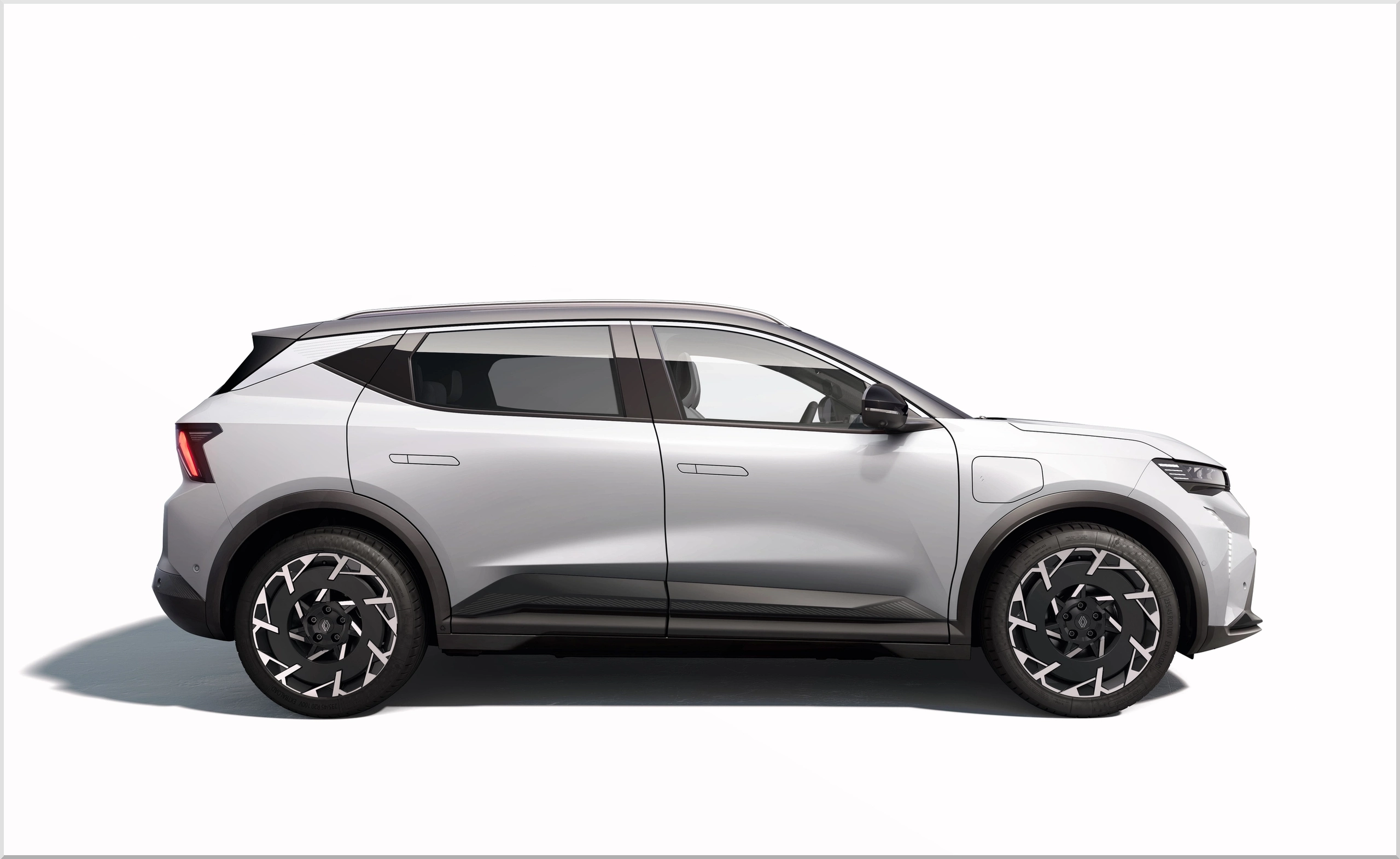
The 2027 Renault Scenic E-Tech electric receives a substantial technical update without waiting for a conventional mid-cycle facelift. Renault has installed higher-capacity batteries, shortened rapid-charging sessions, upgraded the software suite and expanded its driver-assistance technology.
Image
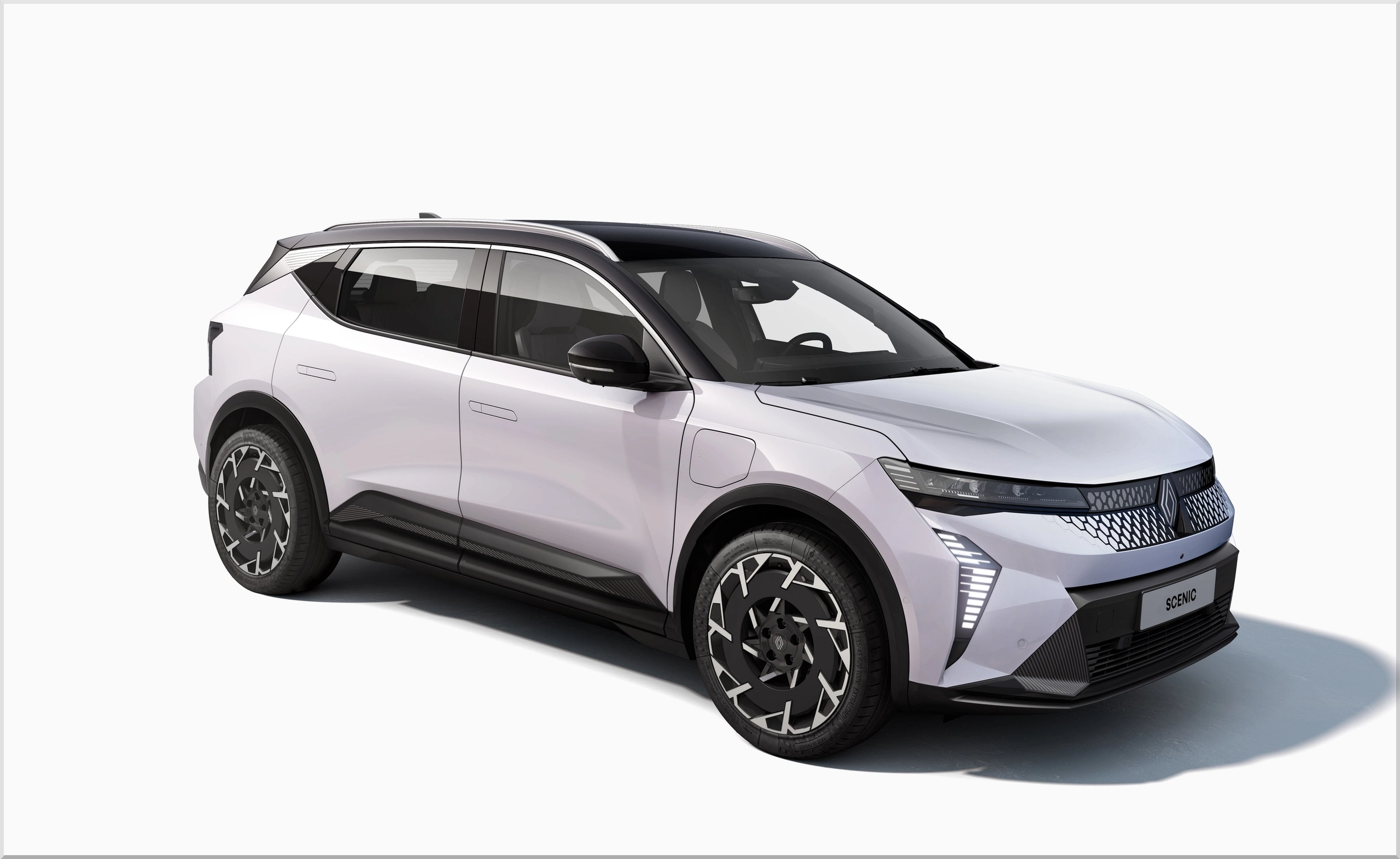
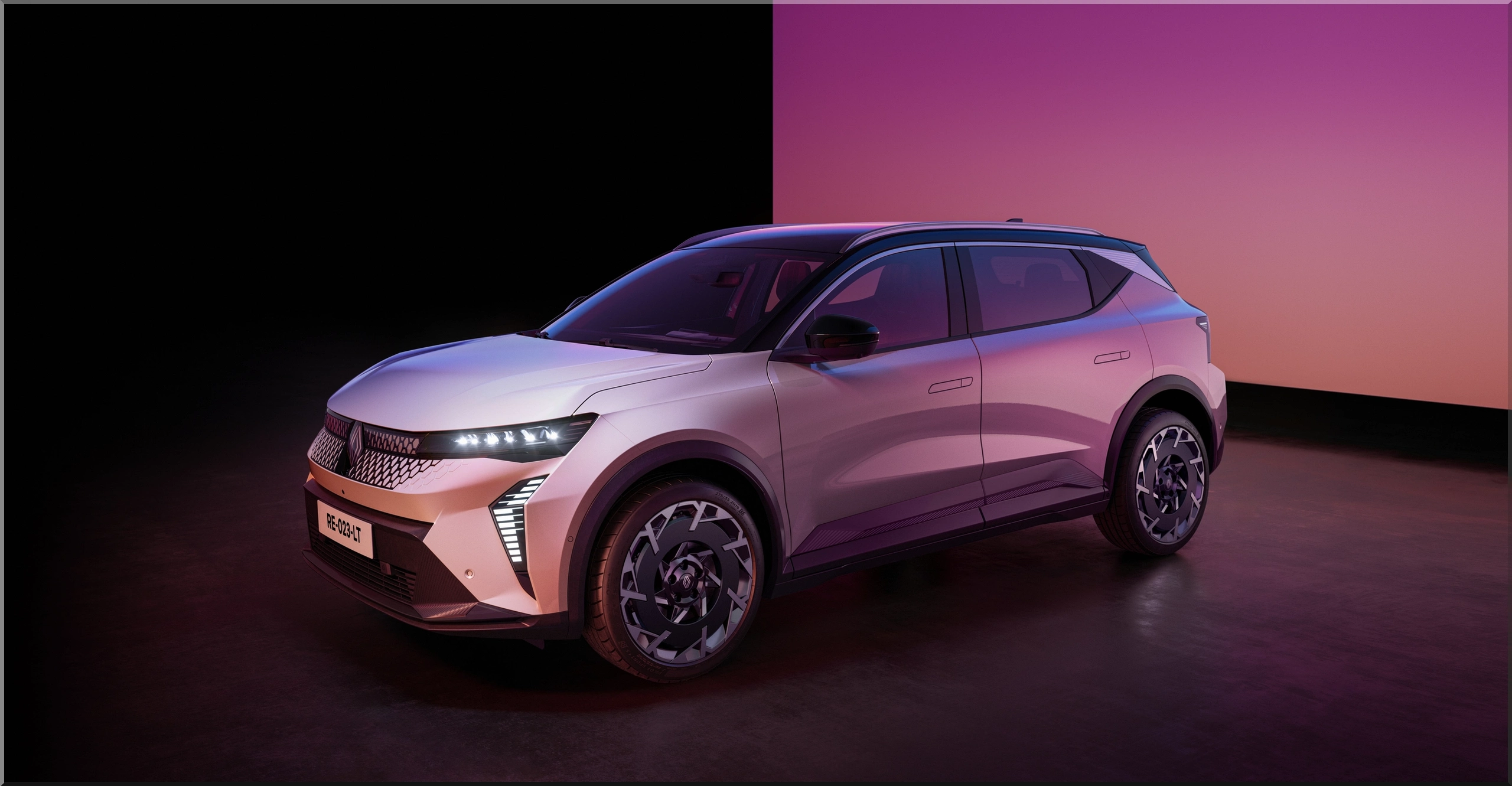
The changes target the areas that influence daily ownership most. Buyers gain up to 642 km of WLTP range, a 15-80% charging time as short as 24 minutes and a lower entry price in France. Renault also gives every version of the Renault Scenic electric the same 220-hp electric motor.
Two New Batteries Reshape the Scenic Range
Renault replaces the previous 60-kWh nickel manganese cobalt battery with a 67-kWh lithium iron phosphate battery. The company integrates the new cells through a cell-to-pack construction, which removes conventional modules and places the cells directly within the battery casing.
This architecture reduces component complexity and creates room for more active material. In addition, LFP chemistry typically offers strong thermal stability and a long cycle life, two useful traits for family buyers who plan to keep their vehicles for several years.
The long-range configuration retains NMC chemistry but increases usable capacity from 87 to 89 kWh. The additional 2 kWh sounds modest, yet Renault raises WLTP range from 625 to 642 km through the larger capacity and associated efficiency work.
Image
| Scenic E-Tech version | Previous specification | Updated specification | Improvement |
|---|---|---|---|
| Comfort Range battery | 60 kWh NMC | 67 kWh LFP | 7 kWh |
| Comfort Range output | 170 hp | 220 hp | 50 hp |
| Comfort Range WLTP | 430 km | 467 km | 37 km |
| Long Range battery | 87 kWh NMC | 89 kWh NMC | 2 kWh |
| Long Range WLTP | 625 km | 642 km | 17 km |
Looking at the data, the 67-kWh Scenic E-Tech receives the larger proportional gain. Its 467-km rating represents an 8.6% increase over the former 430-km figure, while the 89-kWh model gains 2.7%.
Faster Charging Without an 800-Volt Platform
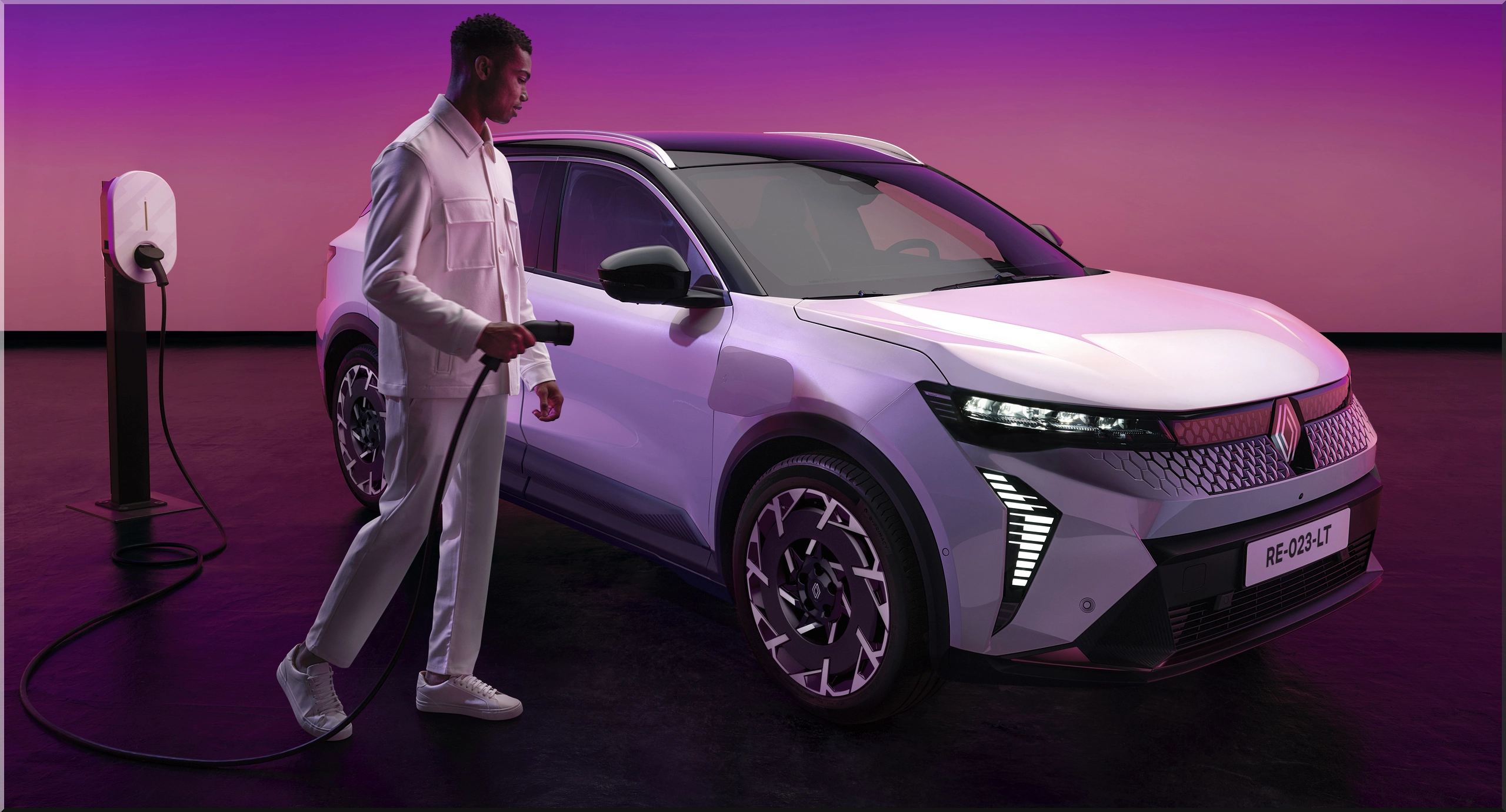
The Comfort Range model now accepts up to 165 kW of DC charging, compared with 130 kW previously. Under suitable battery and charger conditions, it completes a 15-80% session in 24 minutes, eight minutes quicker than the outgoing version.
The 89-kWh model retains a 150-kW peak, but Renault has revised the charging curve. Consequently, the car maintains useful power for a greater portion of the session instead of touching its maximum briefly and reducing output sharply.
| Battery | Maximum DC rate | 15-80% time | Energy added | Approx. session average |
|---|---|---|---|---|
| 67 kWh LFP | 165 kW | 24 minutes | 43.6 kWh | 109 kW |
| 89 kWh NMC | 150 kW | 28 minutes | 57.9 kWh | 124 kW |
The approximate averages derive from adding 65% of each battery's stated capacity during the published session. Charging losses and temperature can change real results, but the figures show why peak power alone offers an incomplete comparison.
Specifically, the 89-kWh model cuts its 15-80% time from roughly 37 to 28 minutes while keeping the same 150-kW ceiling. Better thermal control and revised power management create that nine-minute reduction.
Image
Pro-Tip: Which Scenic Battery Suits Motorway Drivers?
Choose the 89-kWh version if your routine includes frequent long motorway trips. Its 642-km WLTP range provides a larger cold-weather and high-speed reserve, while the improved charging curve makes lengthy routes easier to manage.
Choose the 67-kWh model for mixed commuting and occasional family travel. It costs less, charges from 15-80% four minutes sooner and still provides a claimed 467 km between charges.
One 220-HP Motor Now Covers Both Versions
Renault replaces the base model's previous 170-hp motor with the 220-hp unit already associated with the long-range Scenic. This front-mounted electrically excited synchronous motor produces approximately 300 Nm of torque and drives the front wheels through a single-speed reduction gear.
The stronger motor gives the entry model a 29% power increase. From an expert perspective, standardising the motor also simplifies production and removes the former performance penalty attached to choosing the smaller battery.
The Scenic retains family-friendly proportions:
- Length: 4,470 mm, or 176.0 inches
- Width without mirrors: 1,864 mm, or 73.4 inches
- Height: approximately 1,571 mm, or 61.9 inches
- Wheelbase: 2,785 mm, or 109.6 inches
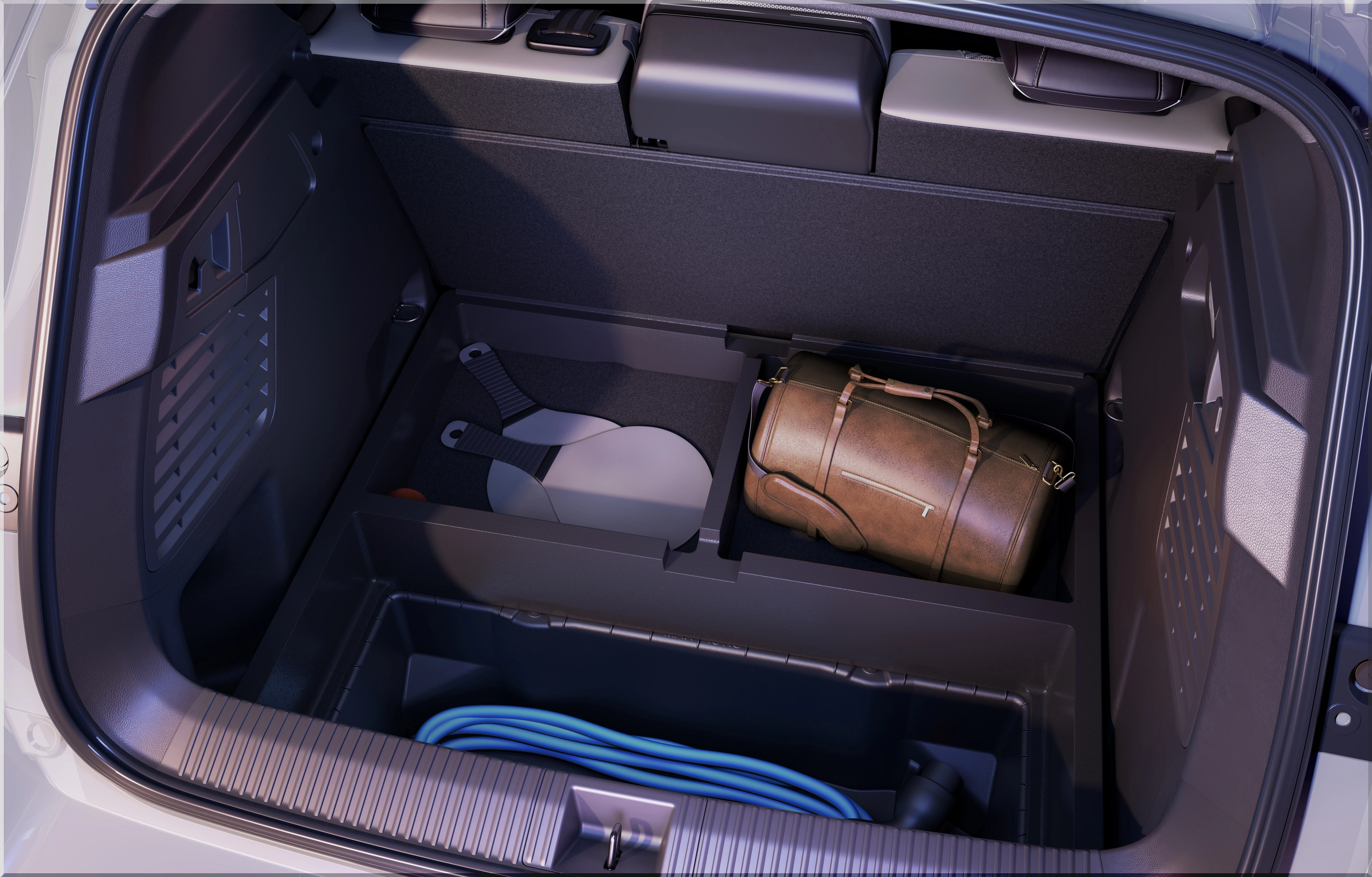
- Boot capacity: approximately 545 litres
- Maximum luggage volume: approximately 1,670 litres
- Long Range kerb weight: approximately 1,890 kg
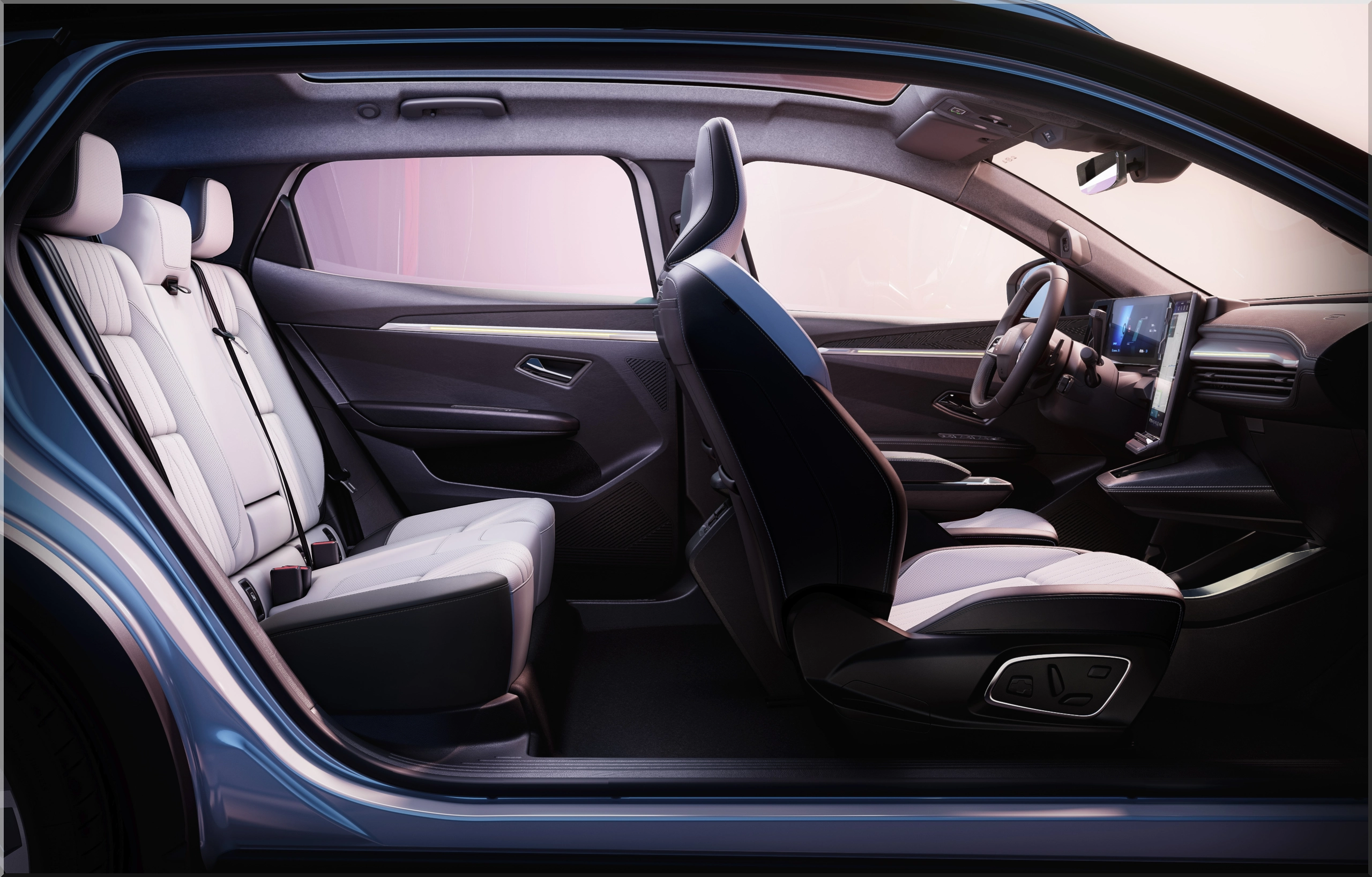
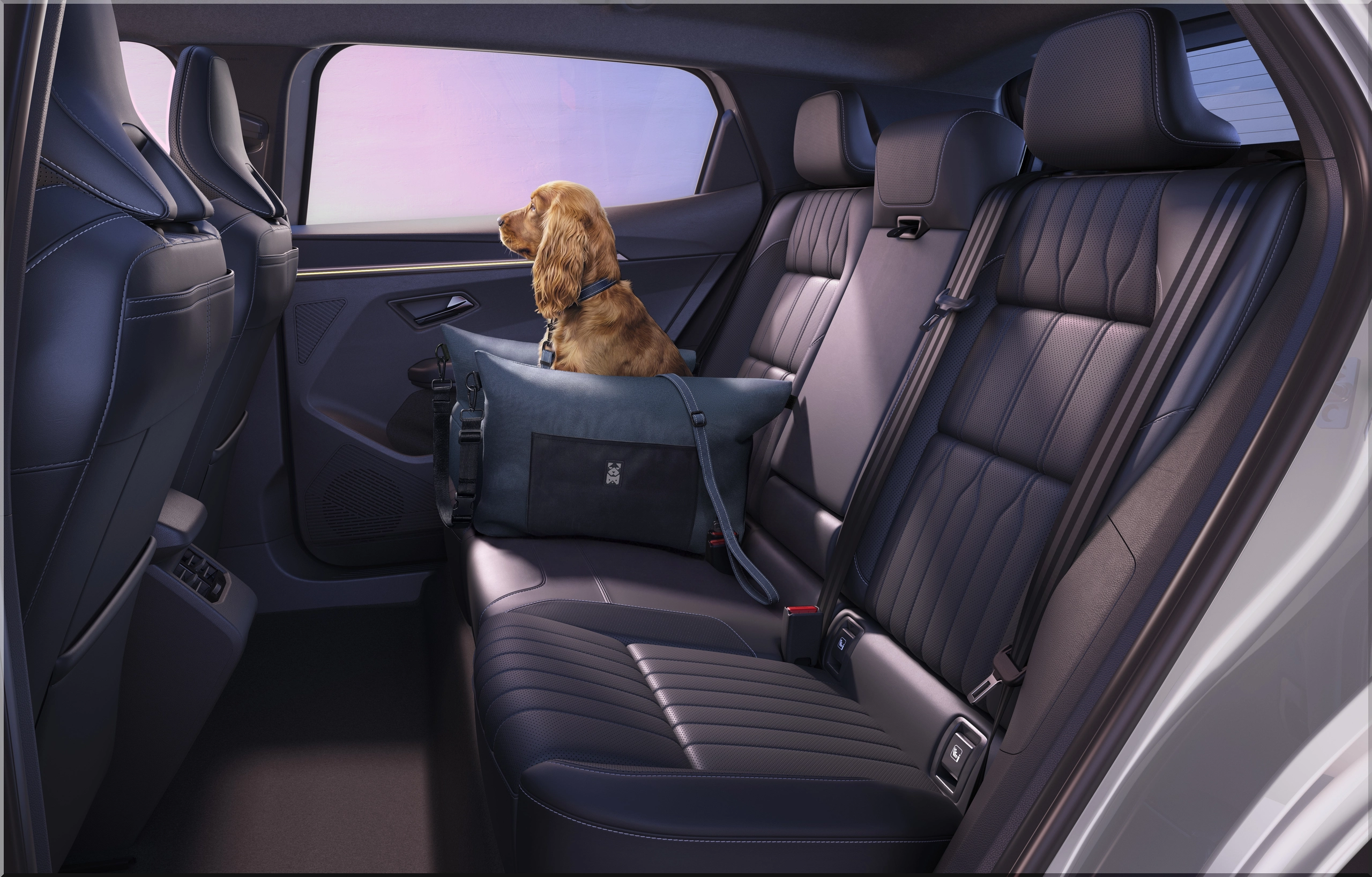
The 2,785-mm wheelbase occupies more than 62% of the car's total length. That packaging ratio helps Renault create useful rear legroom without giving the 2027 Renault Scenic electric the footprint of a seven-seat SUV.
Gemini, Qi2 Charging and Smarter Route Planning
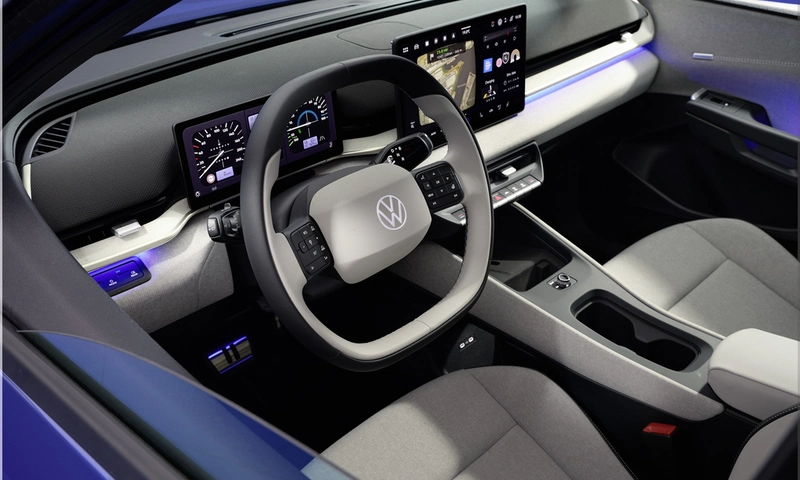
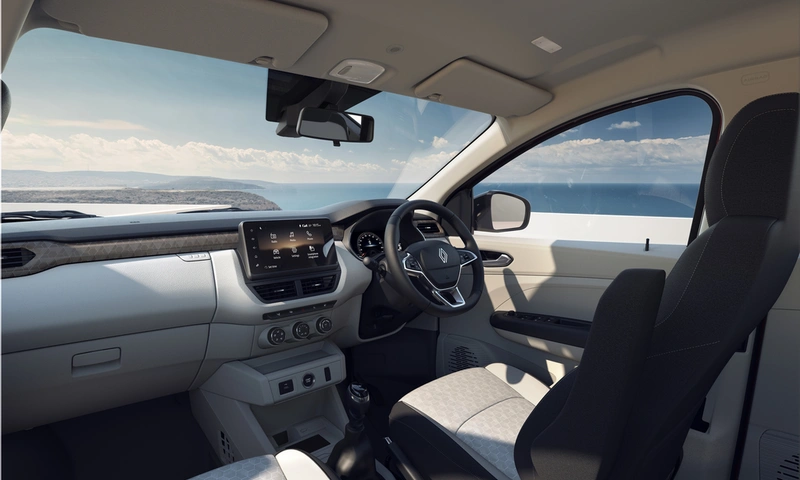
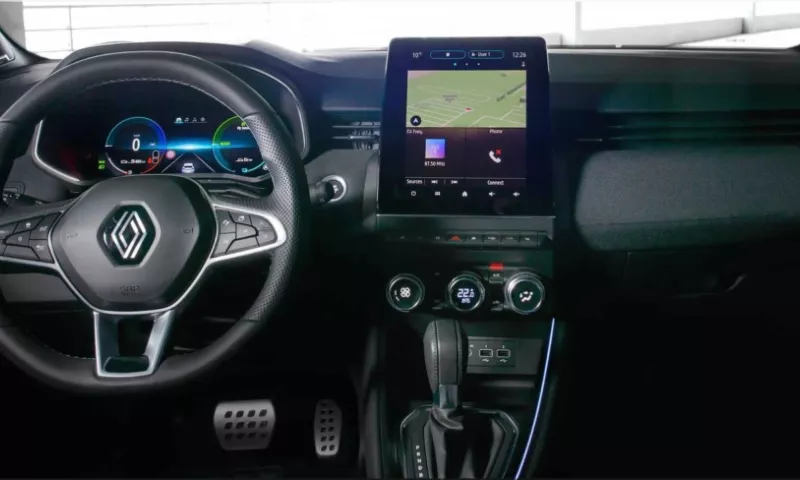
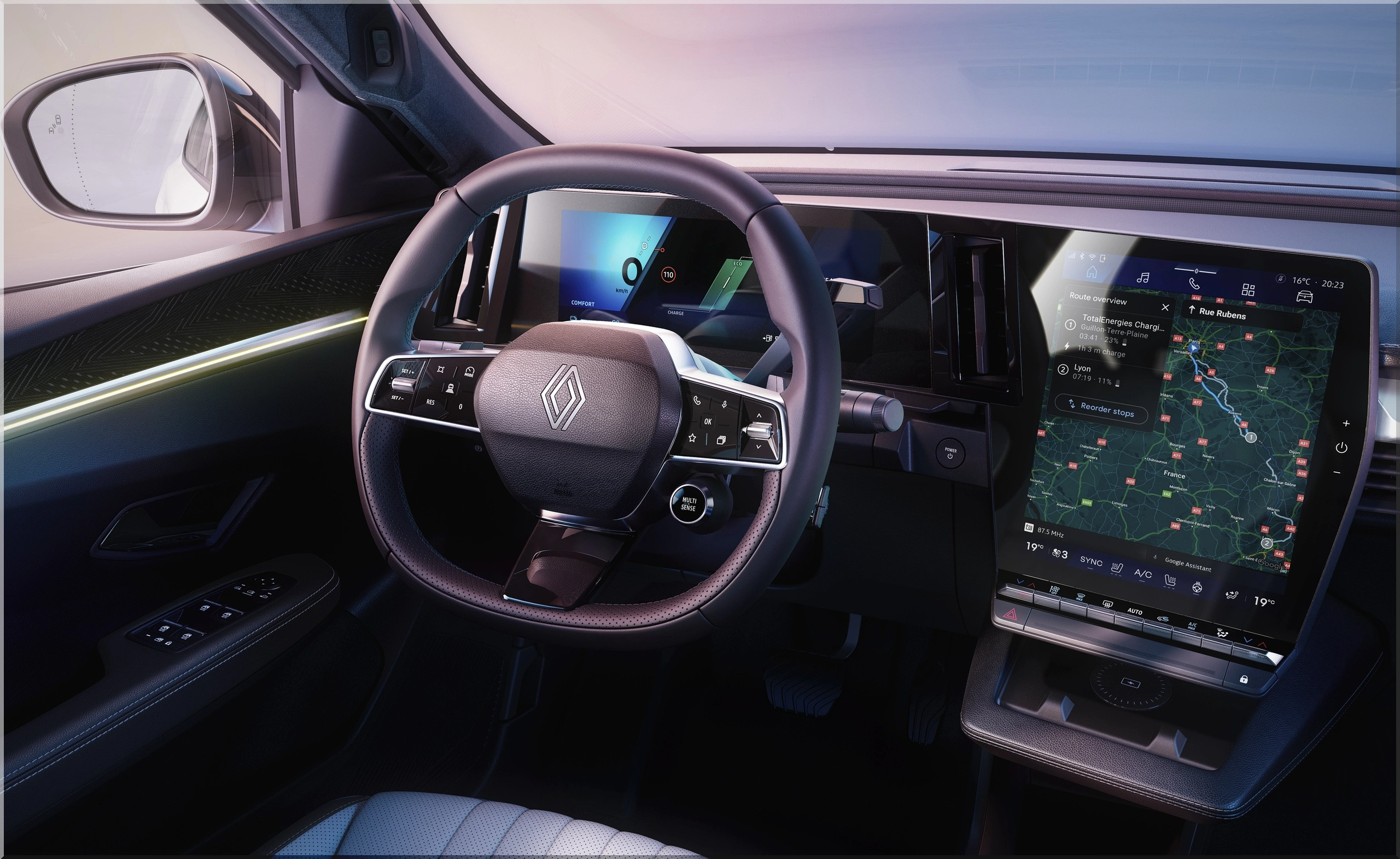
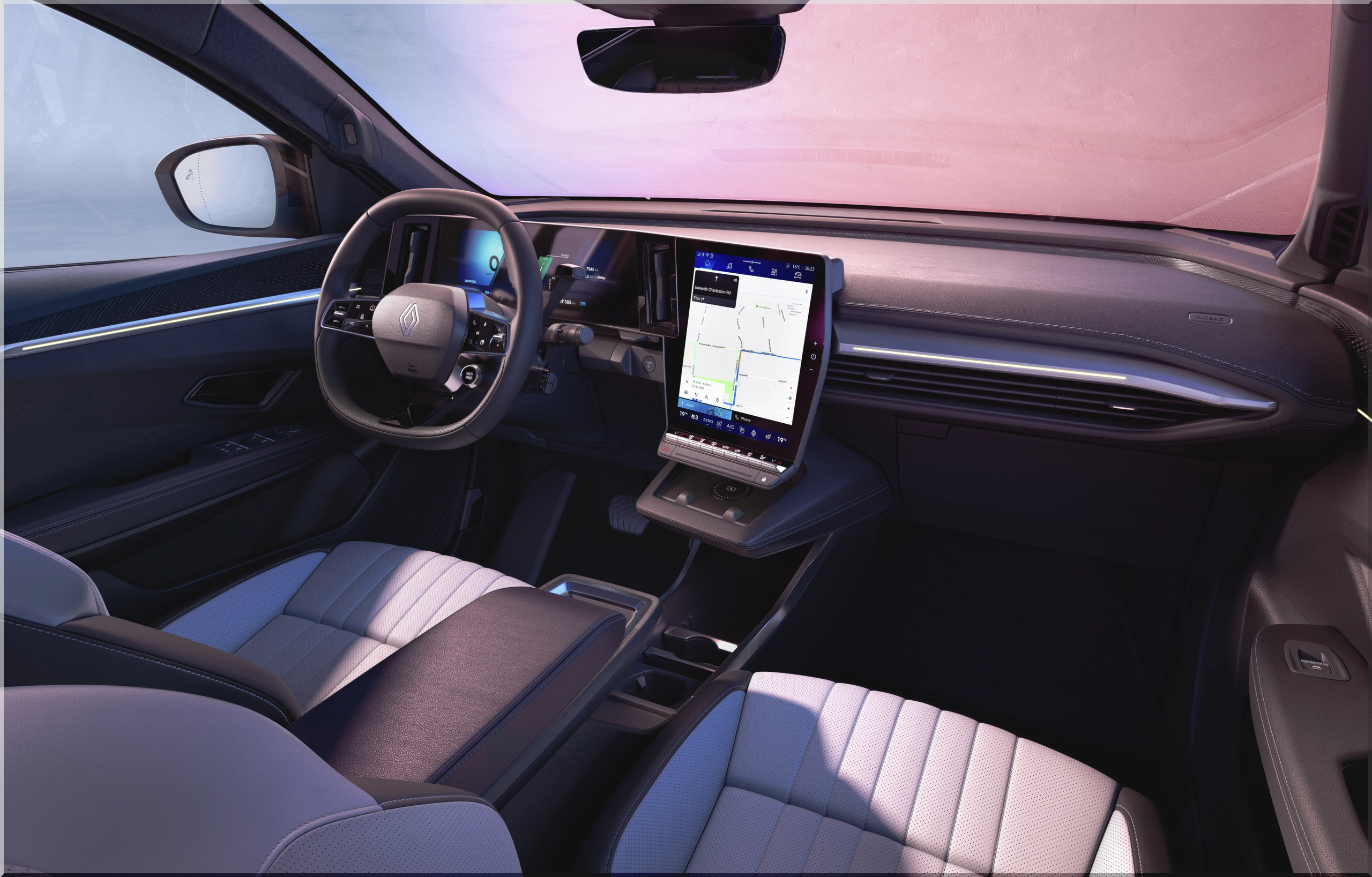
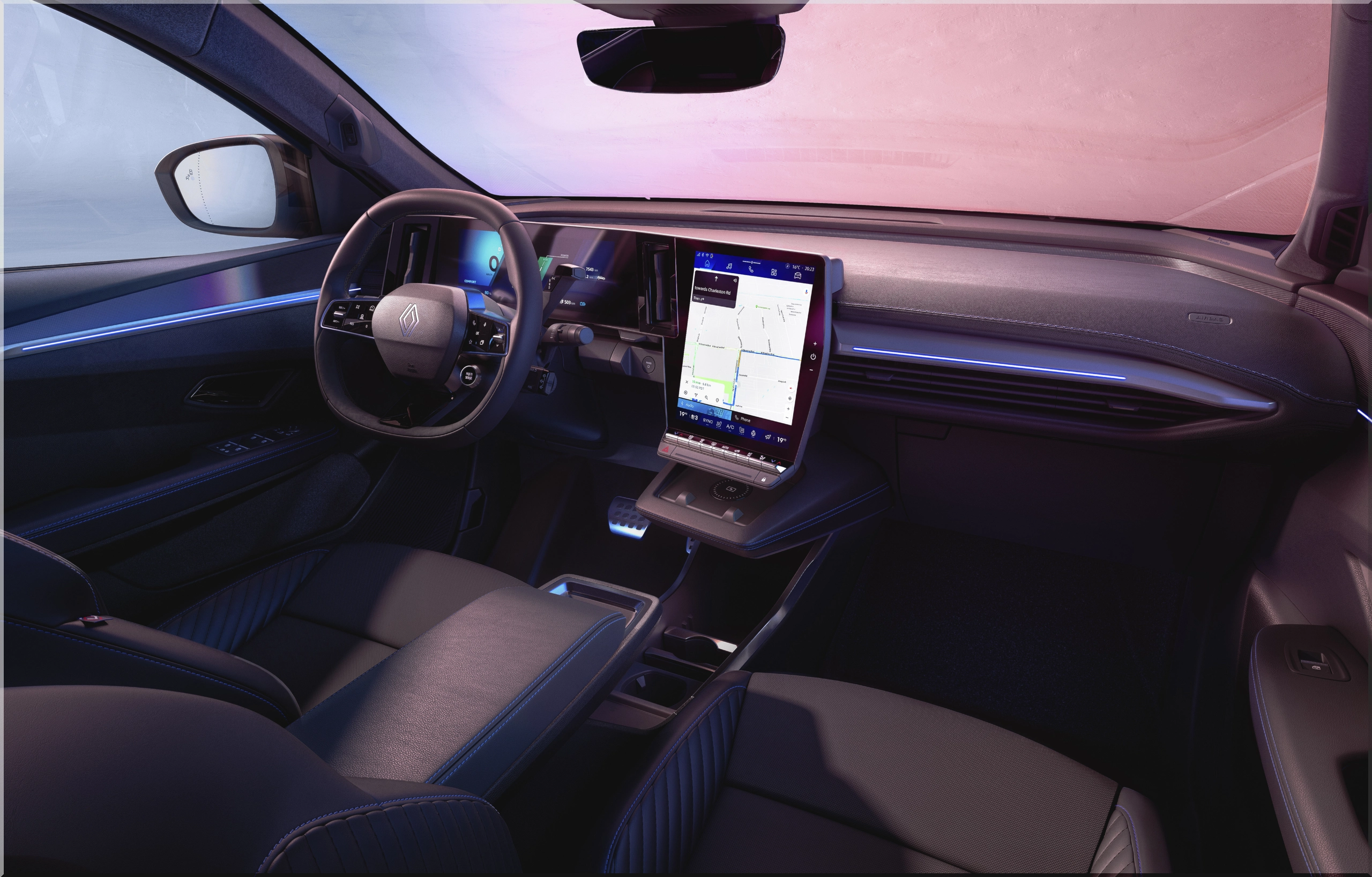
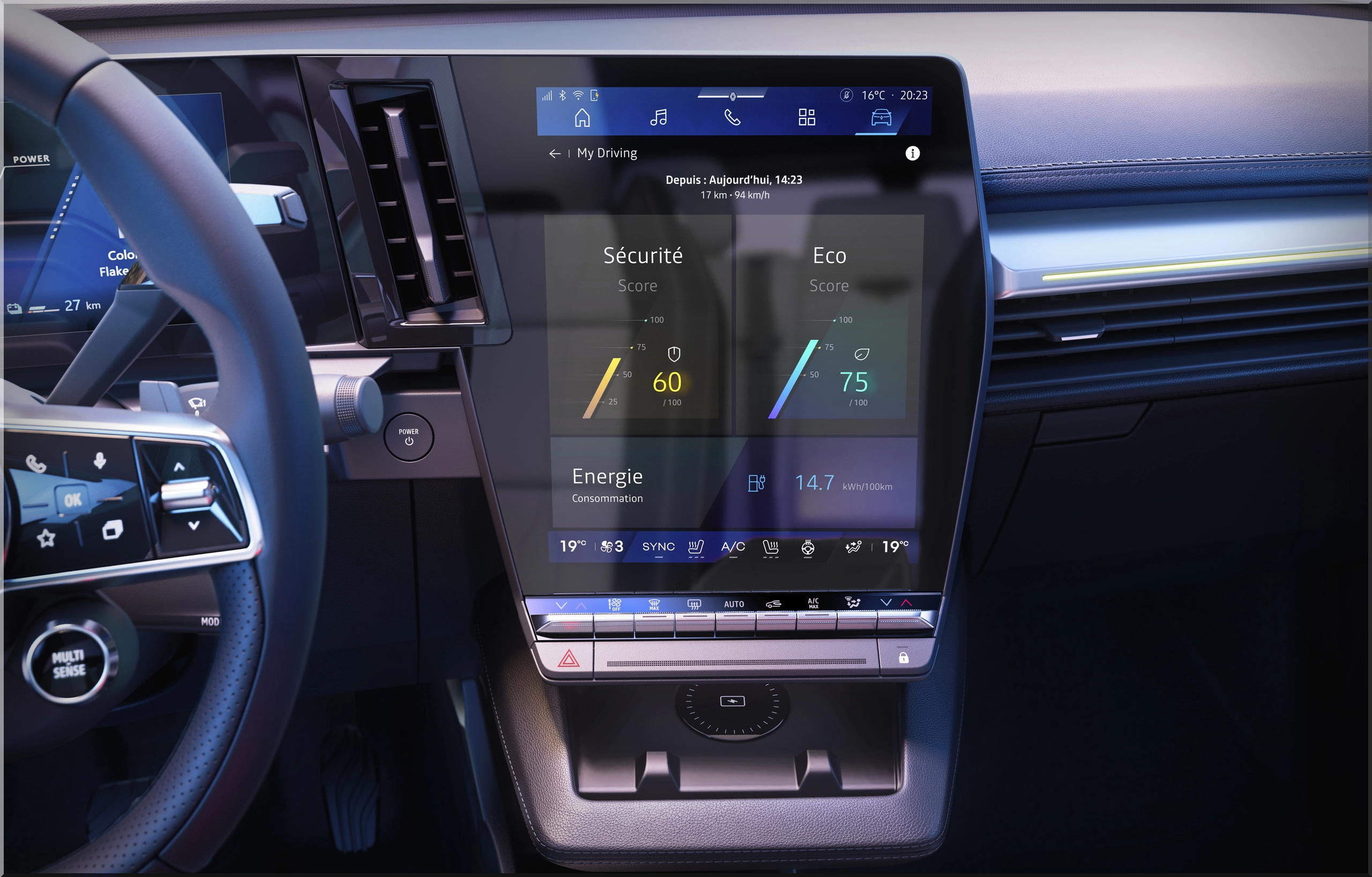
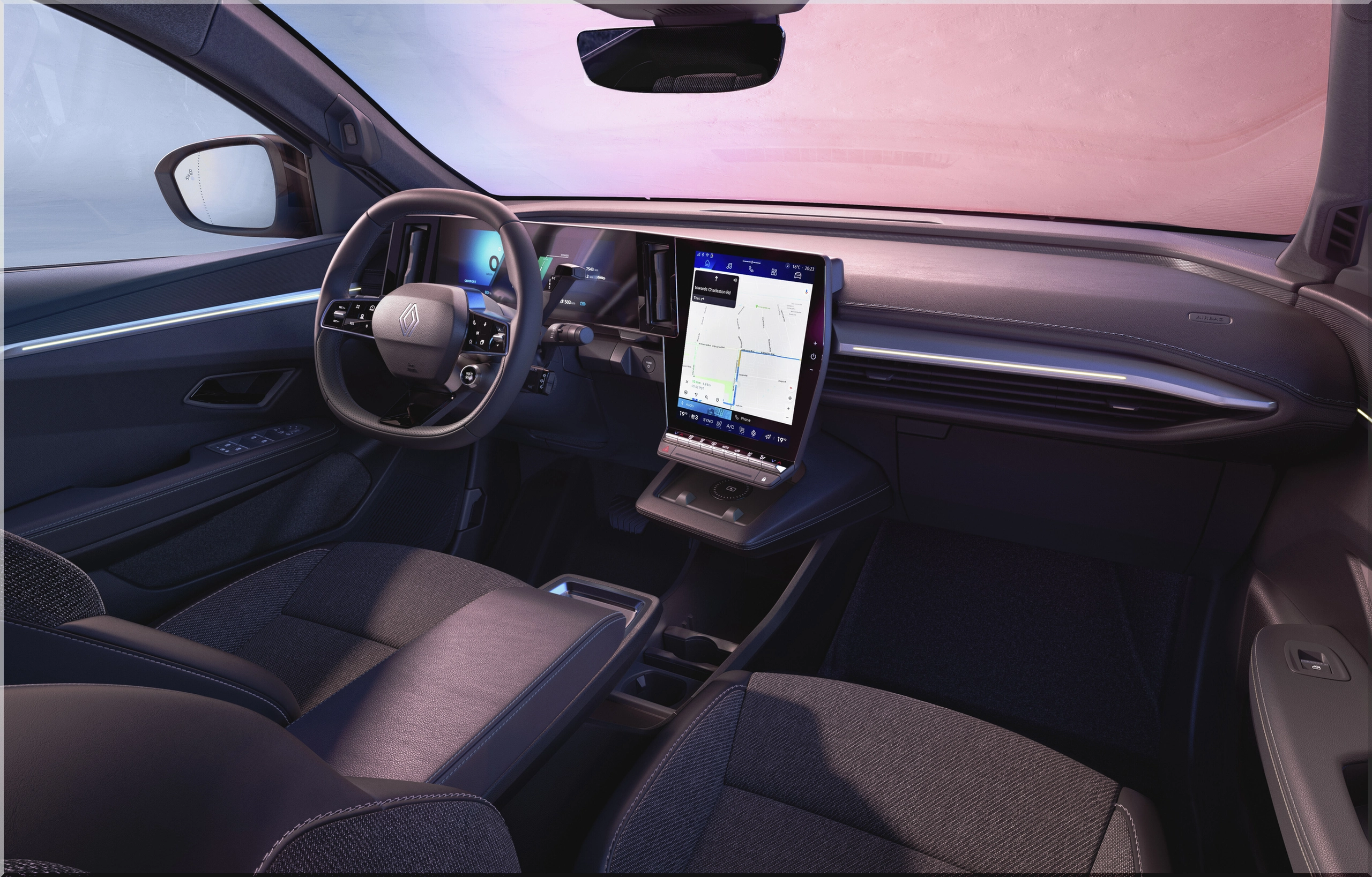
The openR link cockpit retains its 12.3-inch digital instrument panel and portrait-oriented 12-inch central touchscreen. Google built-in supplies Google Maps, Google Play and connected voice functions, while drivers can now select Gemini as an alternative to Google Assistant.
Renault also includes 2 GB of mobile data each month for three years. In addition, Google Maps lets drivers set charging preferences for network, charging power and payment method, helping the route planner select stops that fit the owner's account and vehicle requirements.
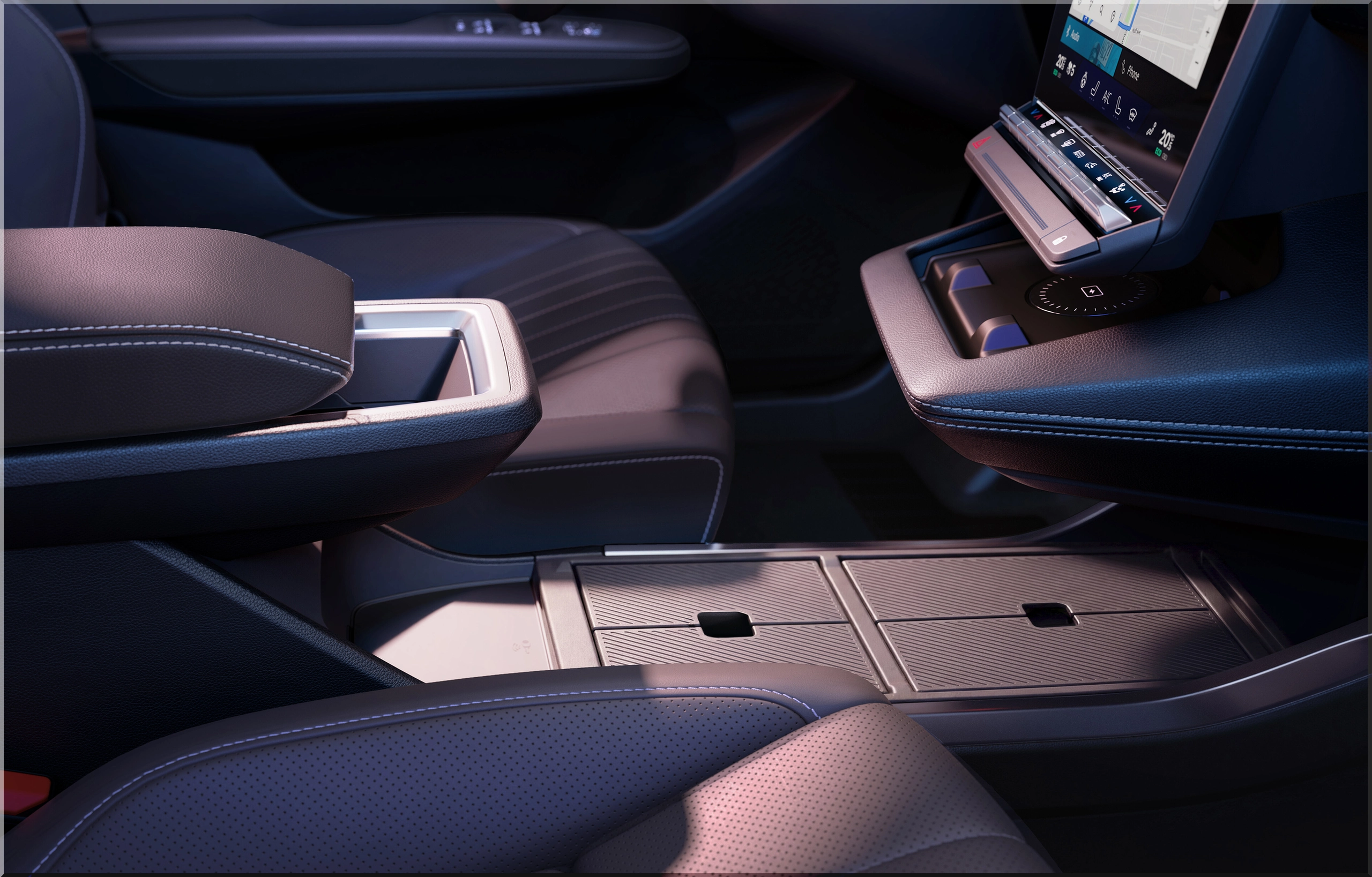
The wireless smartphone charger adopts the Qi2 standard with magnetic positioning and active ventilation. Accurate coil placement reduces wasted energy, while cooling limits the heat that can slow phone charging during navigation or media use.
Image gallery
Safety Technology Watches More Than the Lane
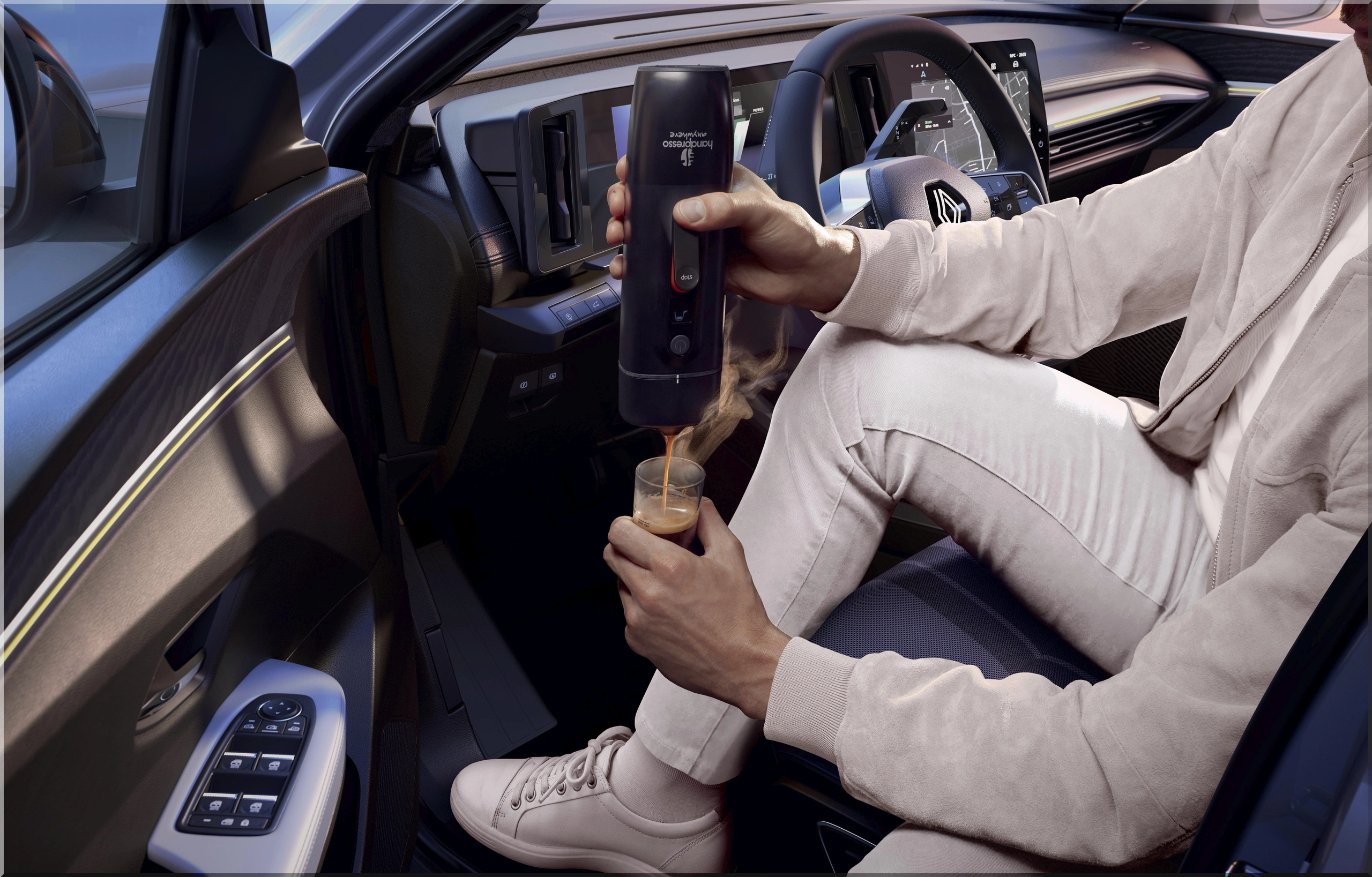
Every updated Scenic gains a camera-based driver-monitoring system. Facial recognition loads saved seat, multimedia and navigation settings when an authorised driver enters the vehicle.
The upgraded Active Driver Assist package also introduces a safe-stop function. If the driver stops responding, the system can slow and stop the car instead of continuing indefinitely under adaptive cruise control.
Other changes include:
- Multi Target analysis for several vehicles and trajectories
- A Smart drive mode that switches among Eco, Comfort and Sport
- Revised adaptive cruise control responses
- Safety Score data incorporating driver-camera information
- A Safety Monitor widget within the instrument display
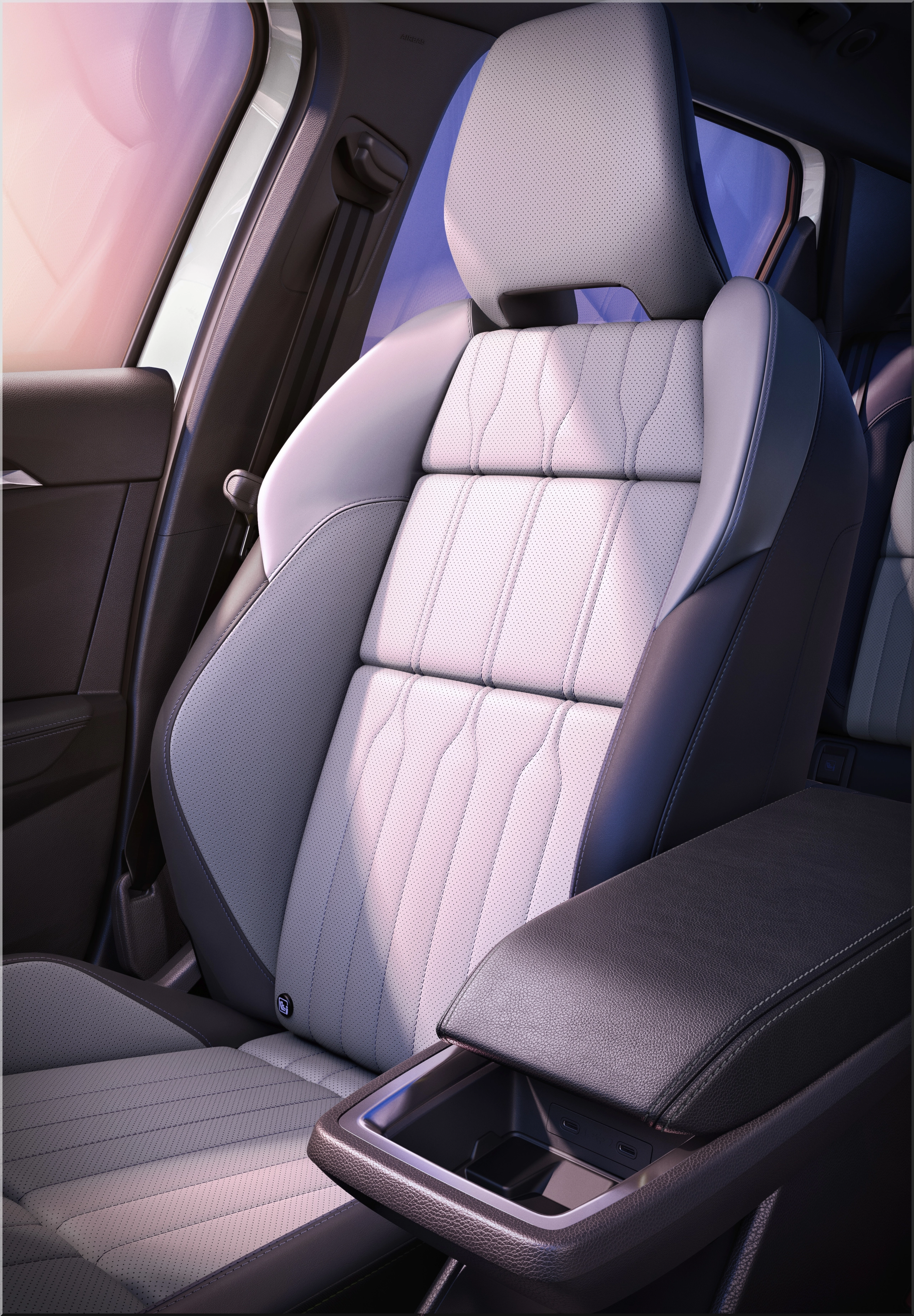
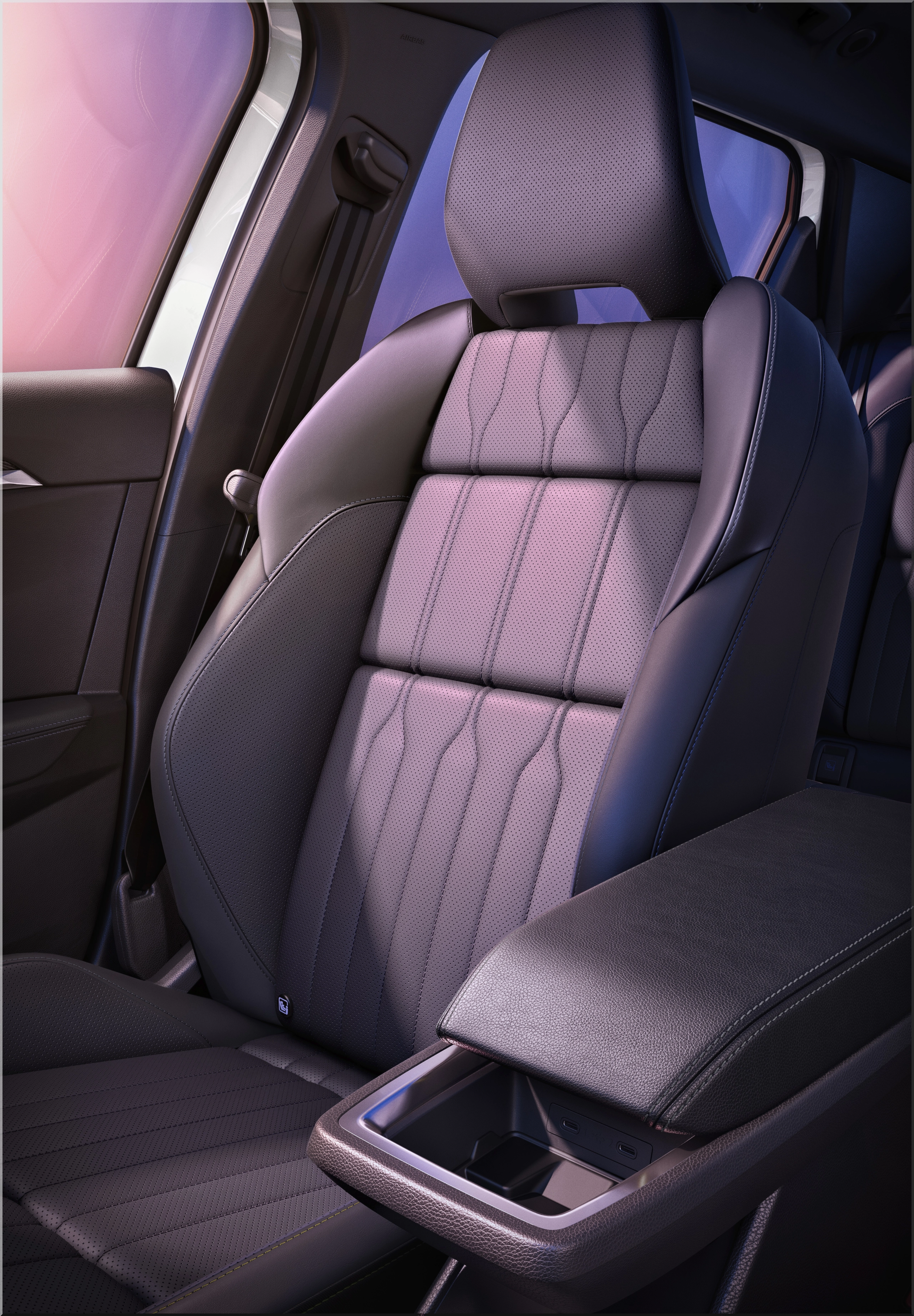
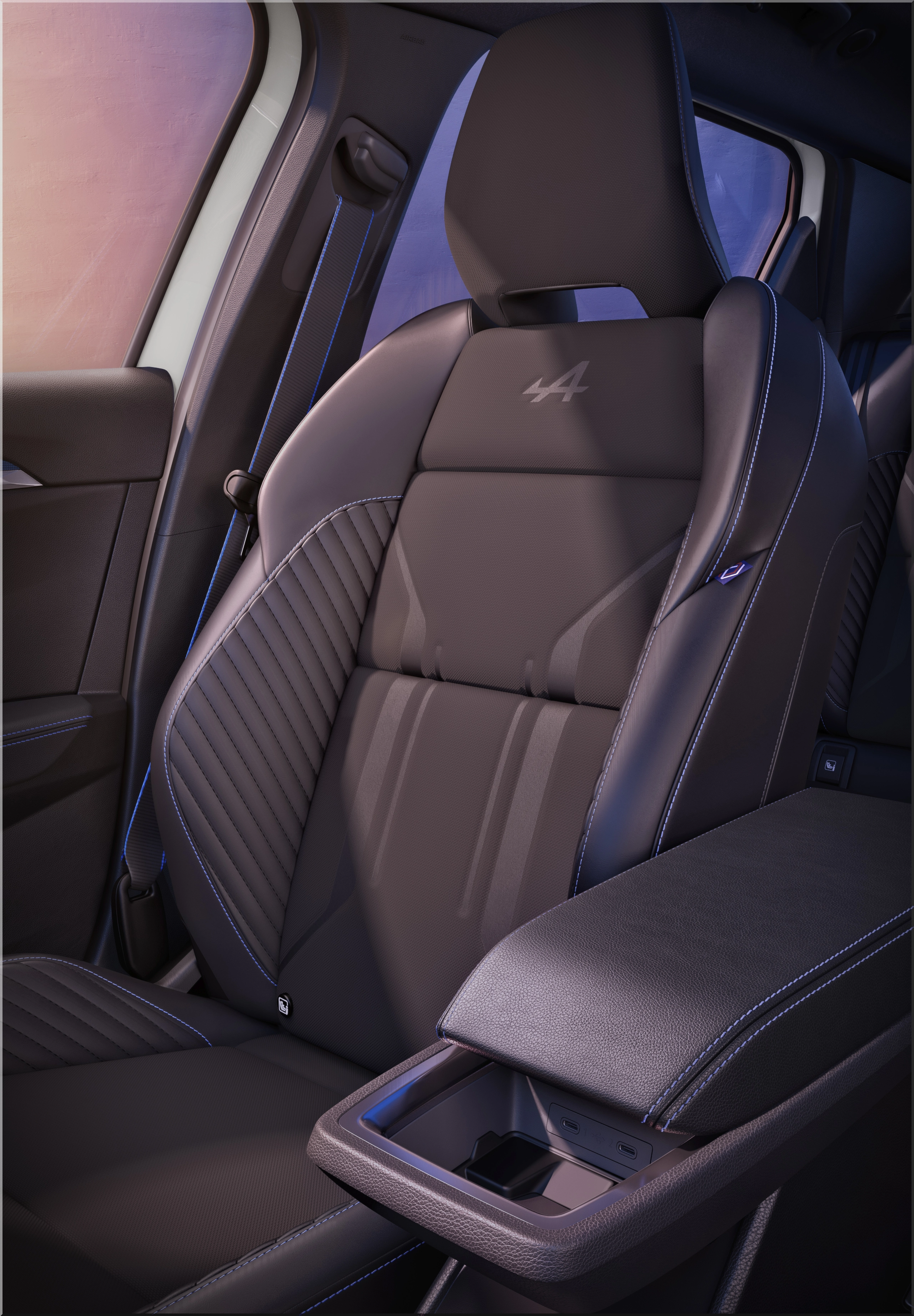
- Improved Techno seats with additional lateral support
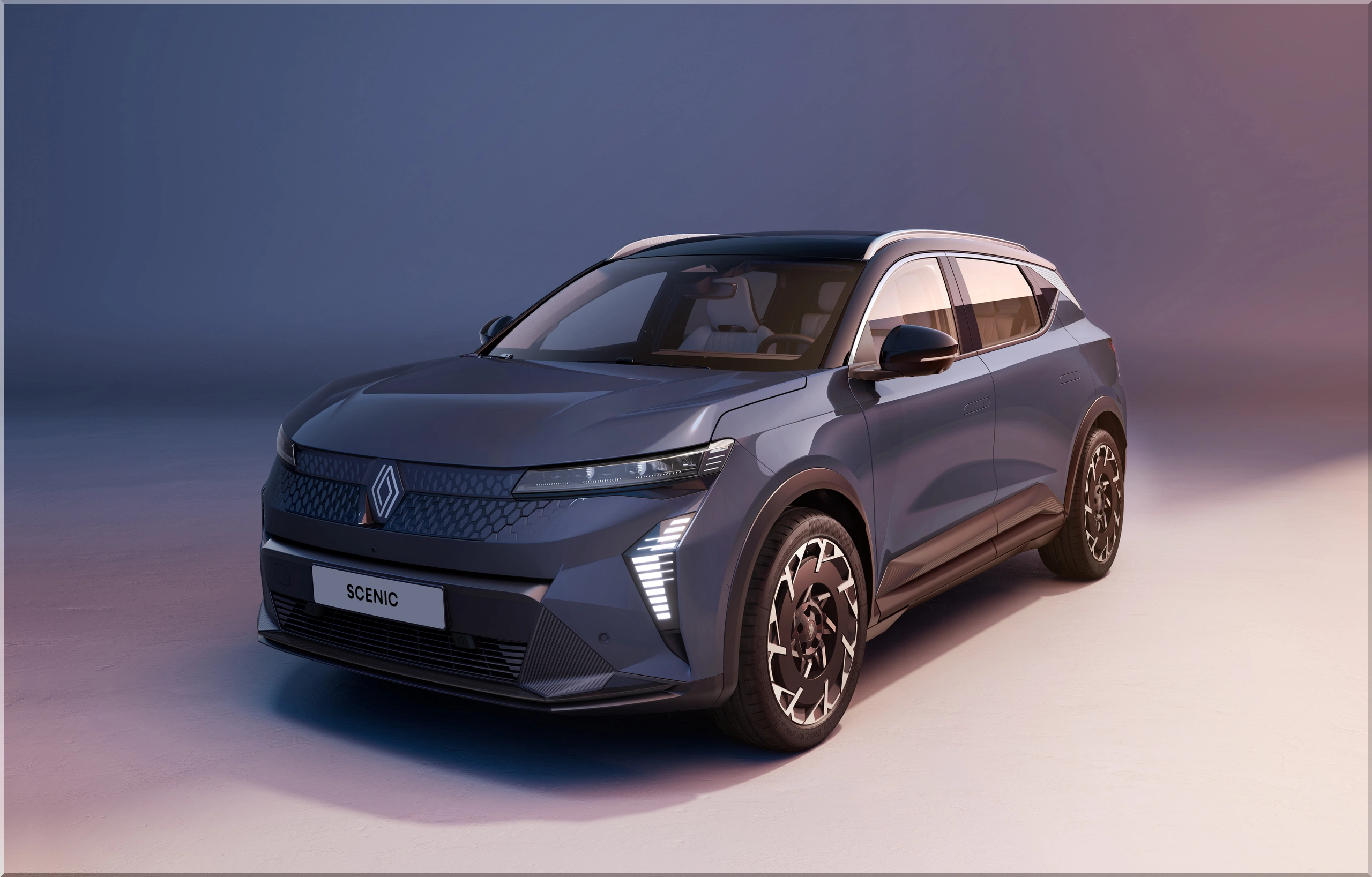
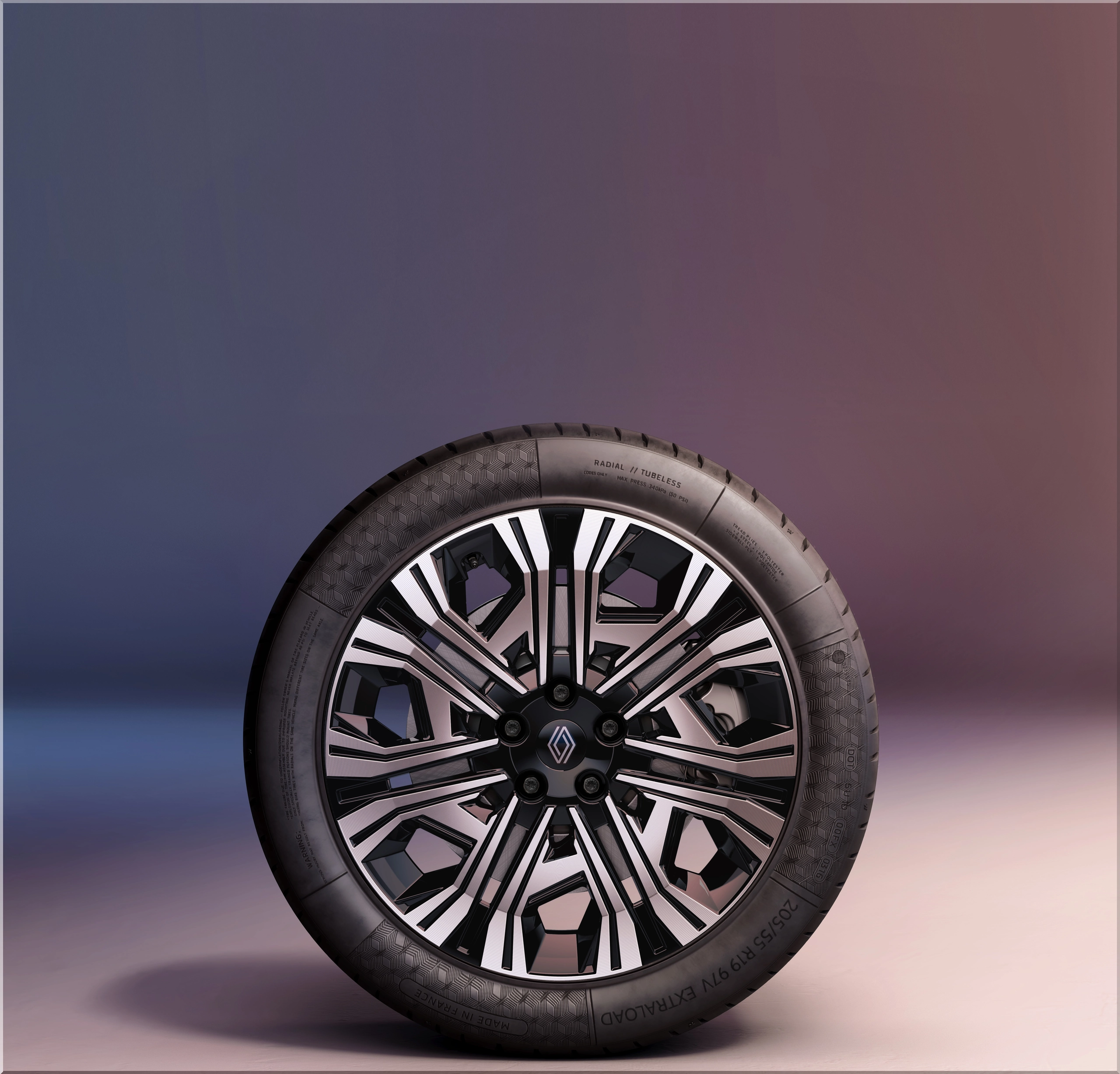
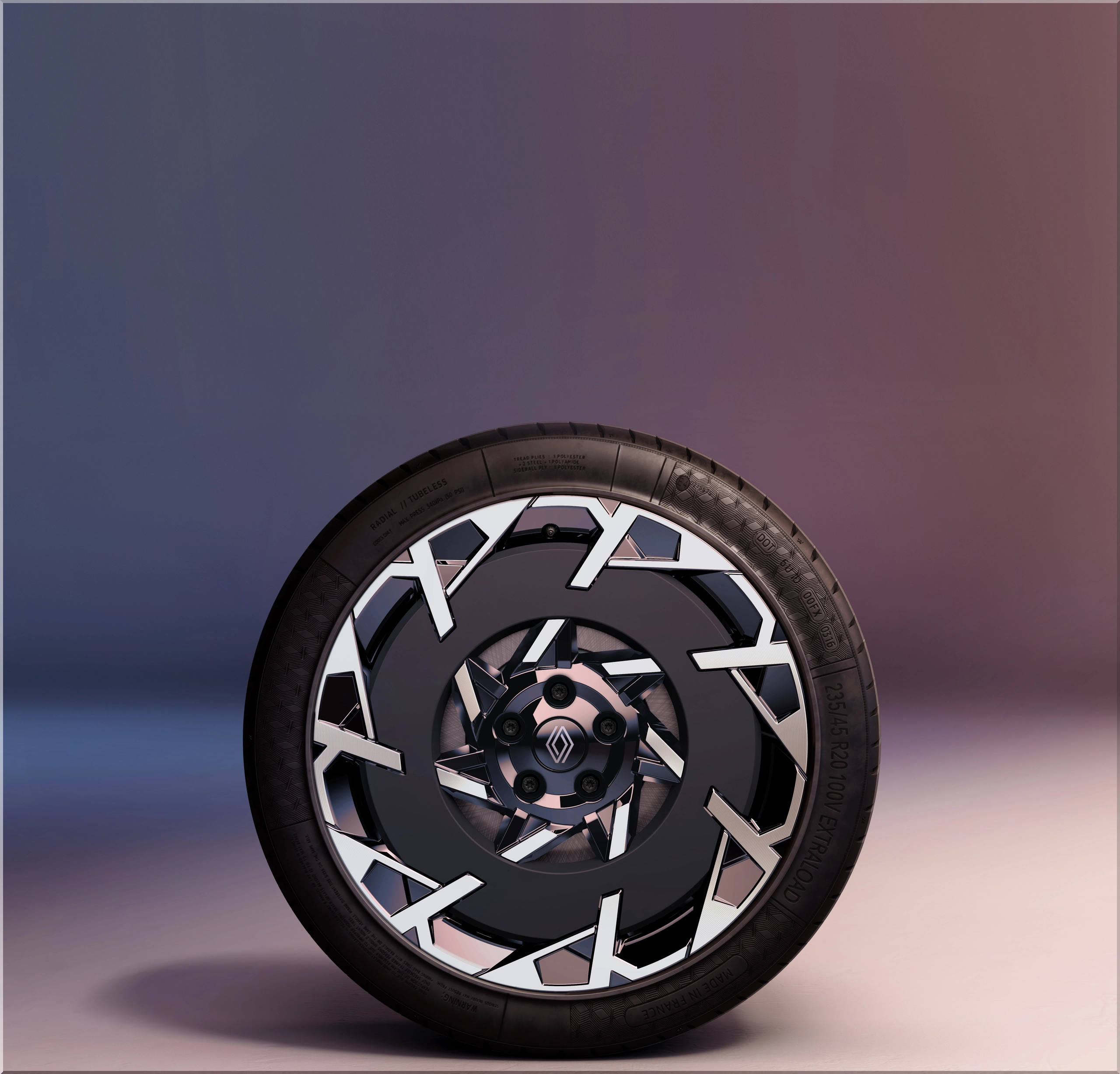
- New 19-inch and 20-inch wheel designs
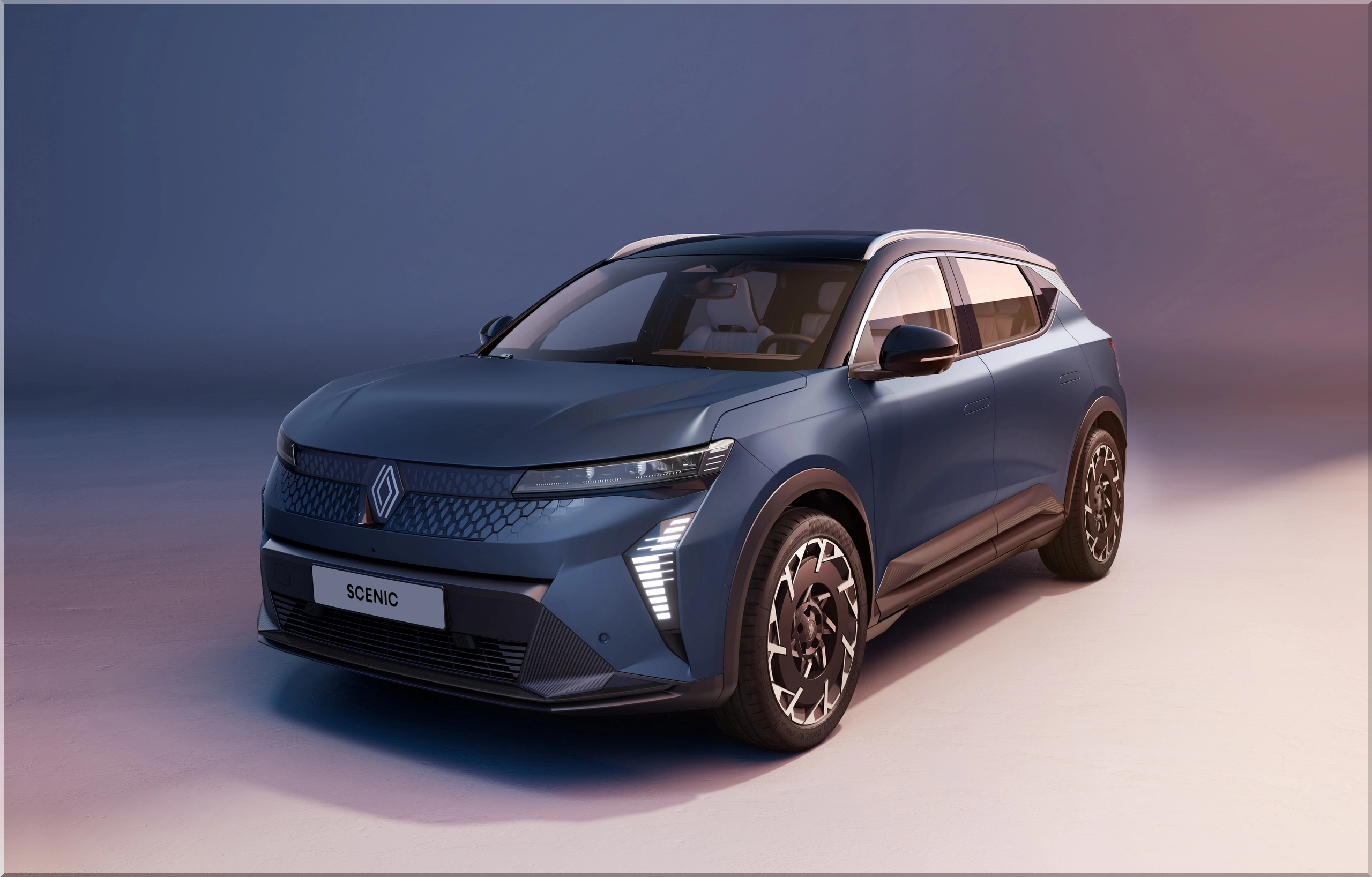
- Satin Slate Blue and Exo Galaxy Grey paint colours
Image gallery
French Prices Strengthen the Value Case
The updated 67-kWh Techno starts at EUR39,990 in France, EUR2,000 below the previous entry point. The 89-kWh Techno costs EUR46,990, while Esprit Alpine and Iconic configurations reach EUR49,090 and EUR52,590.
The 89-kWh version has already opened for orders, while the 67-kWh version arrives during autumn 2026. Market specifications and incentives will vary across Europe and the UK.
By comparison, many rival electric family SUVs ask buyers to choose between maximum range, fast charging and cabin space. The updated Renault Scenic E-Tech electric presents a more convincing balance: 642 km at the top of the range, 24-minute charging at the lower end and a 545-litre boot across the line-up.
Renault has focused its budget where owners will notice it. Longer range, stronger sustained charging and smarter cabin technology give the Scenic a meaningful update before its eventual full facelift.
- Add new comment
- 110 views